
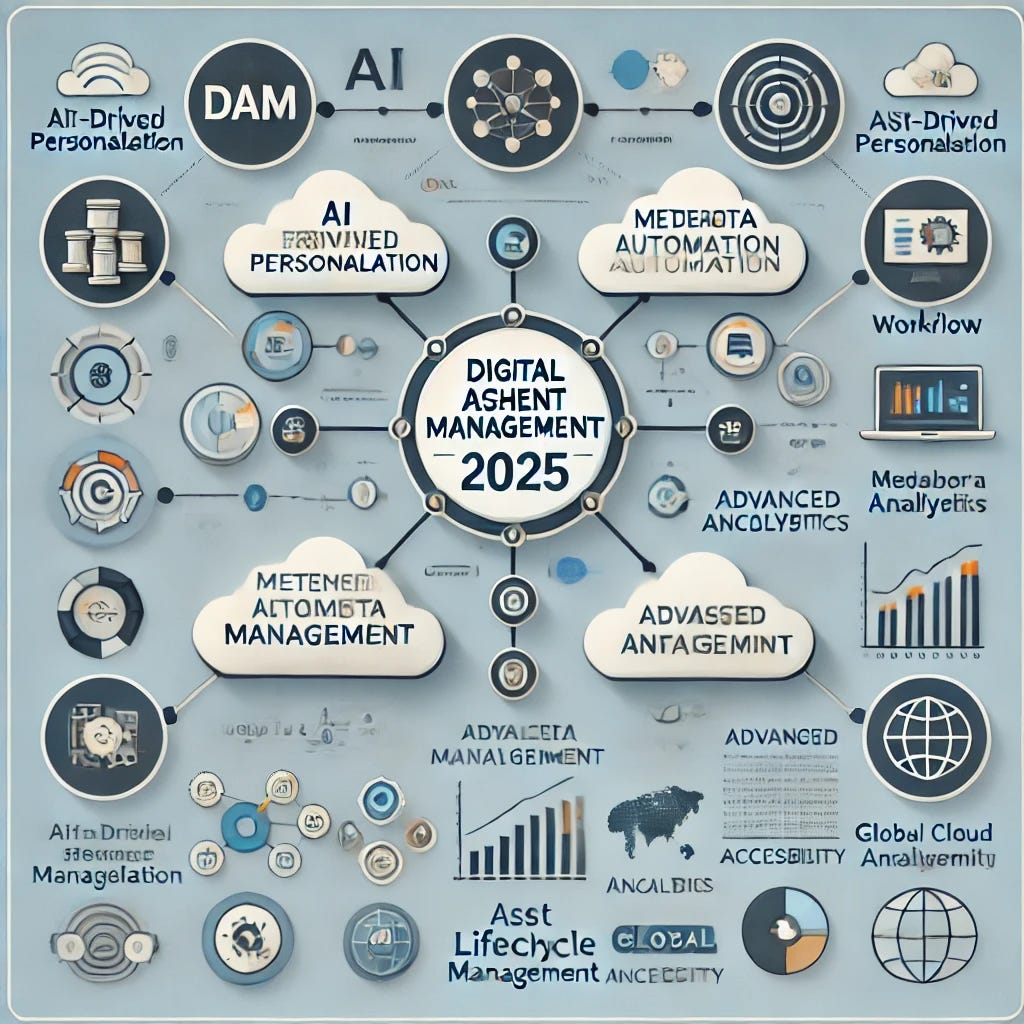
In recent years, the exponential growth of AI in content creation, management, and distribution has transformed the way organizations approach their digital asset strategies. With AI’s ability to optimize end-to-end workflows, organizations can enhance efficiency, improve personalization, and deliver more engaging customer experiences. However, the successful integration of AI into content workflows requires a strategic approach, starting with identifying priorities, challenges, and readiness across various teams.
Polls are a powerful and practical tool to initiate this process. They provide a structured and collaborative way to gather insights, align objectives, and build a roadmap for integrating AI into content workflows. Here’s why polls are an ideal starting point:
AI adoption impacts multiple stakeholders—executive leadership, marketing, IT, legal, and operations. Polls create a forum to gather diverse perspectives, ensuring:
Cross-departmental alignment on goals and priorities.
Transparency about current capabilities and gaps.
Identification of opportunities to leverage AI in specific workflows.
Polls help organizations assess their readiness to adopt AI by exploring:
The current state of workflows, including pain points and inefficiencies.
The potential impact of AI on operations, such as automating tasks or enhancing analytics.
Stakeholder preferences and concerns, such as budget constraints, training needs, or ethical considerations.
This approach enables organizations to focus on high-impact areas first.
By quantifying responses from stakeholders, polls provide:
Clear data on organizational needs and priorities.
Actionable insights to support resource allocation and technology investments.
A foundation for benchmarking progress over time as AI adoption scales.
AI adoption often requires a cultural shift. Polls:
Encourage collaboration and engagement, giving all stakeholders a voice.
Help identify resistance to change and provide insights into how to address it.
Serve as a starting point for education and training initiatives, ensuring employees understand the benefits of AI.
AI is not a one-size-fits-all solution. Polls uncover specific use cases and requirements, such as:
Automating metadata tagging and categorization.
Enhancing personalization through predictive analytics.
Improving asset lifecycle management with better rights tracking and version control.
This insight ensures AI solutions are tailored to the unique needs of the organization.
Once poll results are analyzed, they can be used to:
Develop a shared roadmap for AI integration.
Prioritize initiatives, from immediate quick wins (e.g., automating repetitive tasks) to long-term projects (e.g., AI-driven personalization at scale).
Set measurable goals and KPIs to track success.
Polls are not a one-time exercise. They provide a mechanism for:
Iterative feedback as AI capabilities evolve and scale.
Monitoring adoption rates and identifying areas for further optimization.
Keeping teams aligned on progress and goals.
As organizations navigate the complexities of adopting AI in content workflows, starting with polls ensures that decisions are informed, inclusive, and strategic. By engaging stakeholders early and gathering data-driven insights, you lay a strong foundation for successful AI implementation. Polls turn abstract concepts into actionable priorities, fostering collaboration and building momentum for transformational change.
Here’s a set of poll questions tailored to the outlined topics. These questions can be used in meetings, internal surveys, or workshops to gauge stakeholder opinions and priorities:
Goal: Align AI and content strategies with business objectives.
Question: Which of the following outcomes do you consider most important for AI-driven content strategies?
a) Improved customer engagement and personalization
b) Cost efficiency in content creation
c) Faster time-to-market for campaigns
d) Enhanced data-driven decision-making
Question: What level of investment are we willing to allocate for AI and content technologies in the next fiscal year?
a) Minimal (pilot projects only)
b) Moderate (targeted initiatives)
c) Significant (strategic transformation)
Goal: Understand adoption readiness and perceived value.
Question: How would you rate the importance of the following AI features for our content strategy? (Rate 1-5)
a) Automated metadata tagging
b) Personalization of customer experiences
c) Streamlined approval workflows
d) Advanced analytics for campaign optimization
Question: What are your primary concerns about adopting AI in creative workflows?
a) Loss of creative control
b) Complexity of new tools
c) Lack of training and support
d) Other (please specify)
Goal: Assess technical requirements and feasibility.
Question: What should be the primary focus for IT when integrating AI-driven DAM platforms?
a) Data security and compliance
b) System scalability and performance
c) Integration with existing tools
d) User-friendly implementation
Question: How prepared are our systems to support AI tools for content management?
a) Fully prepared
b) Partially prepared
c) Not prepared
Goal: Explore potential for data-driven insights.
Question: Which analytics capabilities would provide the most value for our content strategy?
a) Predictive modeling for personalization
b) Campaign performance tracking
c) Customer behavior insights
d) Cross-channel data integration
Question: Do you believe our current analytics tools are sufficient to support AI-driven content strategies?
a) Yes
b) No
c) Partially
Goal: Address compliance and ethical concerns.
Question: What is your biggest concern about implementing AI in content workflows?
a) Data privacy and security
b) Intellectual property rights
c) Ethical implications (e.g., bias, misinformation)
d) Other (please specify)
Question: How confident are you that our organization can comply with global data privacy regulations using AI tools?
a) Very confident
b) Somewhat confident
c) Not confident
Goal: Align content strategies with customer engagement goals.
Question: Which AI capability do you believe would most enhance customer engagement?
a) Personalization of content
b) Predictive analytics for customer behavior
c) Faster delivery of relevant content
d) Real-time feedback mechanisms
Question: How well do you think our current content strategies meet customer expectations?
a) Exceed expectations
b) Meet expectations
c) Fall short of expectations
Goal: Improve workflow efficiency.
Question: Which operational challenge would AI most effectively address?
a) Reducing manual tagging and categorization
b) Streamlining approvals and workflows
c) Managing version control and rights
d) Other (please specify)
Question: How confident are you that AI tools can improve content workflow efficiency?
a) Very confident
b) Somewhat confident
c) Not confident
Goal: Prepare for workforce changes and training needs.
Question: What is the most important priority for preparing our workforce for AI adoption?
a) Upskilling existing employees
b) Hiring specialized talent
c) Addressing cultural resistance
d) Providing ongoing support and training
Question: Do you anticipate any challenges in adapting the workforce to AI-driven workflows?
a) Yes (please specify)
b) No
Question: What is the biggest opportunity AI can bring to our content strategy?
a) Improved efficiency
b) Enhanced creativity
c) Better customer targeting
d) Other (please specify)
Question: What is your primary concern about AI in content management?
a) Technical complexity
b) Budget constraints
c) Ethical concerns
d) Lack of understanding or training
These questions can help identify organizational priorities, concerns, and readiness for adopting AI in content strategies.
Transforming your poll insights into a fully enabled, AI-driven Digital Asset Management strategy has never been easier. The DAM Playbook AI Consultant takes your organization's unique needs, identified through targeted polls, and crafts a tailored end-to-end workflow that:
Automates metadata and asset tagging for seamless organization.
Leverages AI to personalize content delivery at scale.
Integrates predictive analytics to optimize content performance.
Streamlines workflows, approvals, and distribution across channels.
Ensures compliance with intelligent rights management.
By turning your poll results into actionable strategies, we help you implement a scalable, AI-powered DAM ecosystem that enhances efficiency, boosts creativity, and delivers measurable ROI. Ready to unlock your content’s full potential? Let’s build your AI-enabled DAM strategy today!
Comments
Nothing yet. Say the first thing.
Sign in to join the conversation.