
The Michigan Supreme Court opened its Line 5 tunnel opinion Friday not with a statute, not with procedural history, but with water:
“The Great Lakes are the largest freshwater system on Earth... As the many Indian Tribes involved in this litigation point out, the Great Lakes and the Straits of Mackinac have nourished life in this region for thousands of years.”
Crediting the Tribes first tells you what the six-justice majority thought it was doing. This wasn’t an administrative appeal. It was a statute being restored to the purpose it was written for.
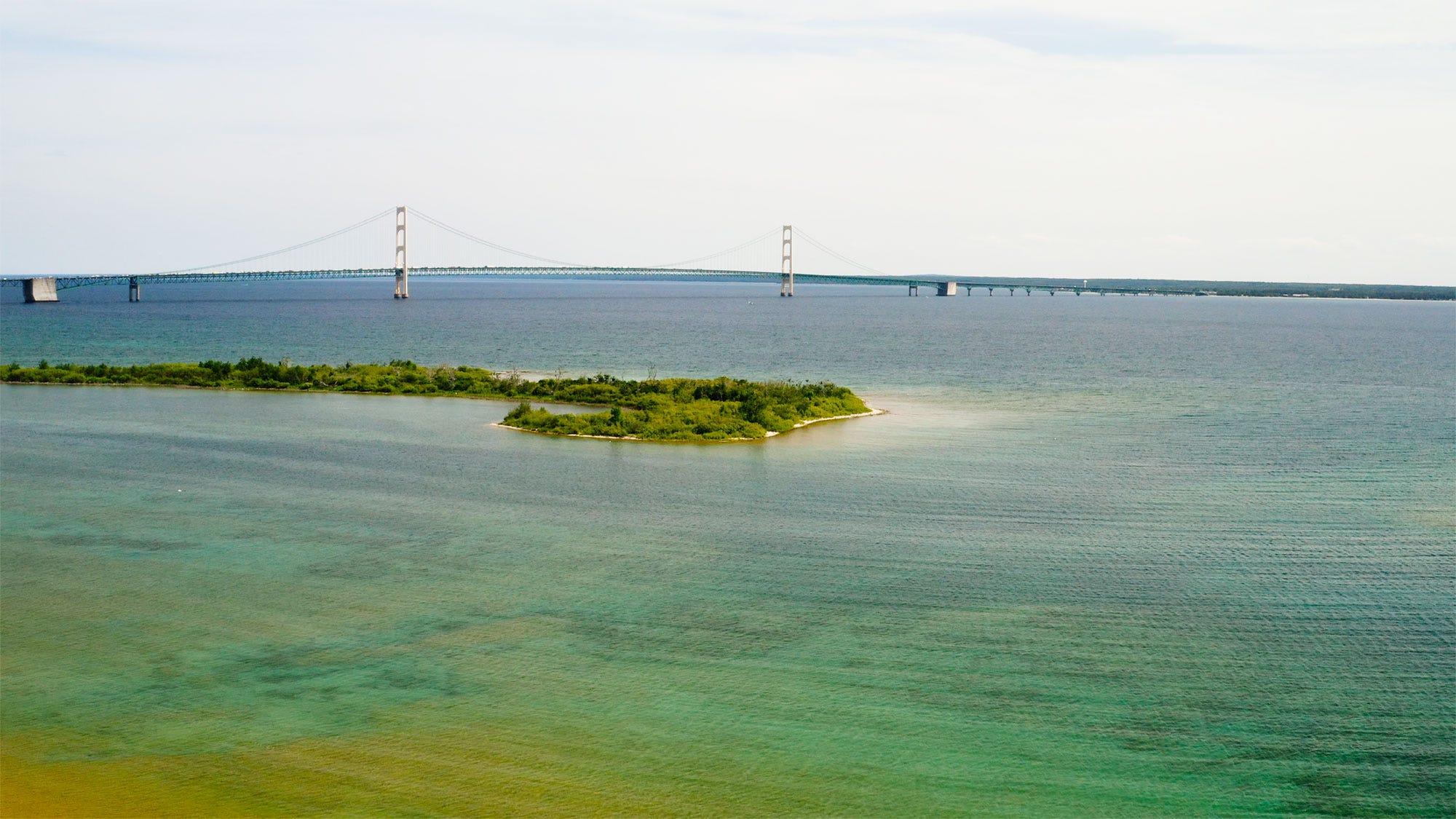
The case, In re Application of Enbridge Energy to Replace and Relocate Line 5, landed July 31 as the final decision of the Court’s term and 56 years to the week after Gov. Bill Milliken signed the Michigan Environmental Protection Act (MEPA) into law on July 27, 1970. At issue: the Michigan Public Service Commission’s approval of Enbridge’s plan to bore a concrete tunnel beneath the Straits and run a new 30-inch pipe through it, replacing the aging dual pipelines that sit exposed on the lakebed today.
Justice Elizabeth Welch, writing for Chief Justice Cavanagh and Justices Bernstein, Bolden, Thomas, and Hood, held three things:
Courts review MEPA decisions de novo with no deference to agencies like the PSC. The Court reversed the Court of Appeals, which had deferred to the PSC’s experts who sided with Enbridge.
The PSC, said the Court, drew the harm too narrowly. It confined its review to the four-mile tunnel segment and refused to ask whether the tunnel would extend the life and the spill risk of the remaining 641 miles of Line 5.
MEPA requires independent review of the public trust doctrine, separate from ordinary environmental harm. The statute protects “the air, water, or other natural resources, or the public trust in these resources.” The PSC said public trust wasn’t its job. The Court of Appeals agreed. The Supreme Court reversed and vacated the PSC’s approval.
That third holding is a genuine revival of public trust as a driver in environmental decision-making in Michigan. The first two are course corrections. The third rewrites what Michigan agencies have to consider going forward.
To understand why any of this matters, go back to a woman in Belmont who wasn’t a lawyer.
In 1968, Joan Wolfe founded the West Michigan Environmental Action Council. She’d cut her teeth fighting to ban DDT and learned the hard way that Michigan courts wouldn’t let ordinary citizens sue on the environment’s behalf. So in 1969 she asked University of Michigan law professor Joseph Sax to draft a bill that would fix that. Sax wrote it. Wolfe built the coalition– civic groups, the League of Women Voters, the UAW–and packed committee rooms with ordinary people.
The Michigan Chamber of Commerce fought it hard. It passed anyway. Milliken signed it in 1970 as Public Act 127, the first statute of its kind anywhere, later copied by at least seven states and echoed in federal environmental law. Milliken appointed Wolfe to the Natural Resources Commission, where she became its first woman chair. She died in 2021 at ninety-one.
MEPA’s impact wasn’t in the rules it created. It was in the standing it created, which is the right of any person to walk into a Michigan courtroom and defend air, water, and land they don’t own a share of. And crucially, the law didn’t hand standard-setting to an agency. As the Court put it again Friday, the Legislature “left to the courts the important task of giving substance to the standard by developing a common law of environmental quality.” That was a deliberate judgment about which institutions to trust. As the Court wrote in 1975, “Not every public agency proved to be diligent and dedicated defenders of the environment.”
Nine years after MEPA passed, Wolfe’s own organization proved the point. In West Michigan Environmental Action Council v Natural Resources Commission (1979), WMEAC challenged the DNR’s plan to permit oil and gas drilling in the Pigeon River Country State Forest, then home to roughly two hundred of the last significant elk east of the Mississippi.
The Supreme Court blocked the permits and laid down the principle at the heart of Friday’s ruling: “Courts can discharge their responsibility to make such determinations only if they make independent, de novo judgments.” Deference to the agency, the Court said, would leave MEPA unable to do its job, because environmental protection “demands” strict scrutiny.
The elk survived, and the DNR now counts roughly 1,150 in and around the Pigeon River Country, enough that the state’s problem today is surplus, not extinction. The symmetry is hard to miss: in 1979 it was an oil company drilling in a state forest, and in 2026 it’s an oil company running a pipeline under the Straits. Both times, the real question was whether an agency’s word was final.
Between 1979 and Friday, MEPA was quietly hollowed out. The sharpest blow landed in 2004, when a four-justice majority in National Wildlife Federation v Cleveland Cliffs Iron Co imported federal constitutional standing doctrine and gutted MEPA’s “any person” provision, the exact feature Wolfe had commissioned Sax to write in the first place. Her family later called the dismantling of her signature achievement one of the deep sorrows of her life.
The Court reversed course in Lansing Schools (2010), but by then years of citizen suits had already been shut out. The quieter erosion was procedural as permitting migrated into agencies and appeals routed through the Court of Appeals instead of circuit court, deference to agencies over citizens and courts swallowed the statute whole.
That’s the erosion Friday’s ruling fixes, and it fixes it in the direction of more judicial scrutiny, in a decade when courts, including the U.S. Supreme Court, have mostly been narrowing environmental review. Michigan just went the other way, on the strength of a 56-year-old state statute that was never merely procedural.
The smallest-sounding holding may be the most durable one. For decades, “public trust” sat in MEPA’s text doing almost no independent work, treated as roughly synonymous with “natural resources.” The Court held Friday that it means something separate and that a factfinder must ask not just whether a project pollutes the water, but whether it impairs the public’s ancient rights to fish it, hunt it, travel it. The Court got there because Tribal nations– Bay Mills, Grand Traverse Band, Little Traverse Bay Bands, Nottawaseppi Huron Band–and FLOW Water Advocates pushed it there. Which is exactly the mechanism Joan Wolfe asked Joseph Sax to build in 1969: ordinary parties, deputized to stand up for water none of them own.
Whether it holds is another question. The legislature could weaken MEPA; a future Court could rule differently. And when it comes to the future of the Line 5 tunnel, federal courts are considering whether Michigan has any right to protect the Great Lakes from this dangerous pipeline. But for now, MEPA is Michigan’s best friend for protecting the Great Lakes and environment. And Michigan’s citizens were reempowered Friday because some of them cared enough to go to court to demand the state government follow the law.
TAKE ACTION
Send Governor Whitmer a message now to listen to Michigan’s citizens and Tribal Nations, withdraw the administration’s support for the Line 5 tunnel, and finish the job by shutting Line 5 down.
No posts
Comments
Nothing yet. Say the first thing.
Sign in to join the conversation.