
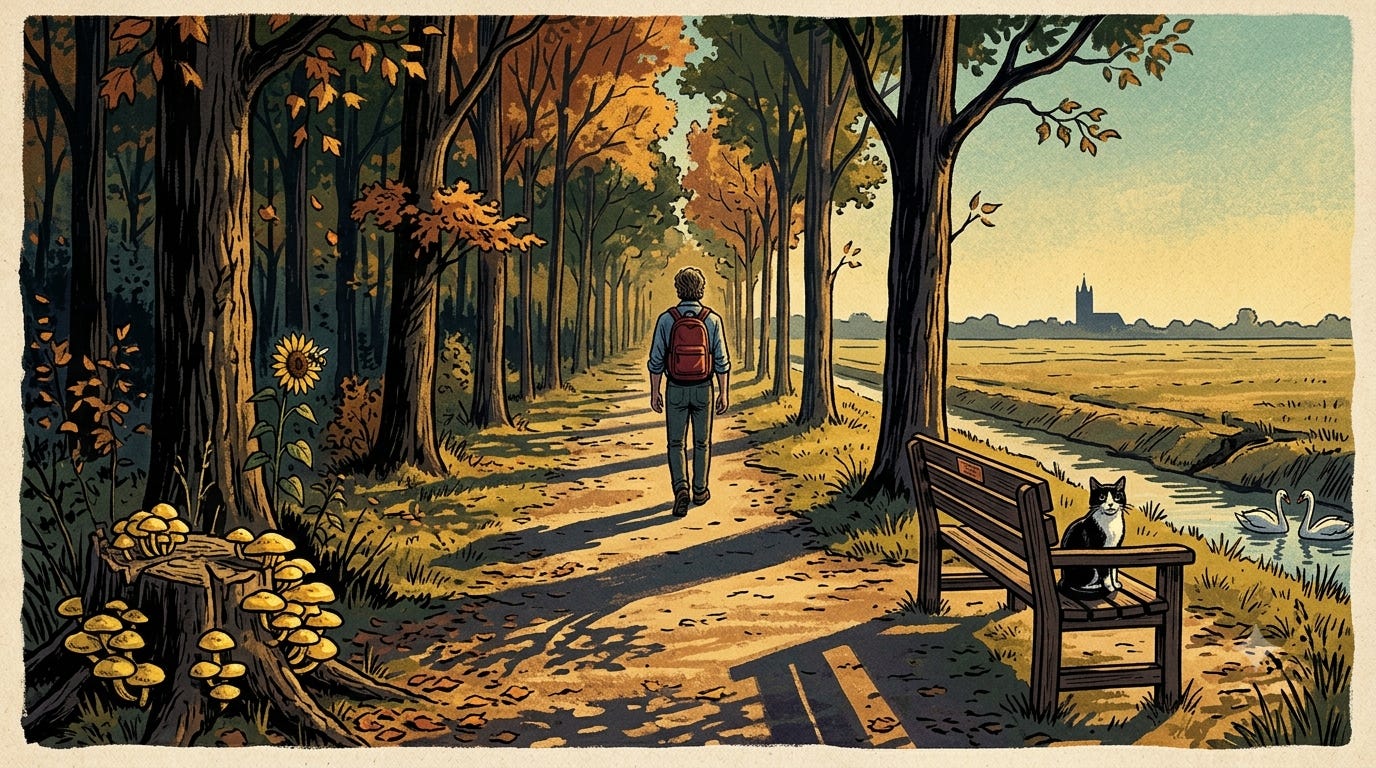
Dear friends,
The day began badly, which in my experience is often a sign that it will end well.
I had driven to Brummen that morning to continue my walk north toward Zutphen. I parked the car, put on my backpack, checked the route, and then tried to lock the door. Nothing happened. I tried again. The lock mechanism, which had been performing this basic function reliably for twenty-seven years, had apparently decided that today was the day to stop.
A twenty-seven-year-old car is, in automotive terms, a senior citizen. You make allowances. But you do expect it to lock. A car that cannot lock is not a car so much as a very large, expensive box with seats that anyone can open at any moment.
I had my laptop with me, significantly newer than the car. I was planning to work in the evenings. Leaving a laptop in an unlocked car in a village car park while I walked through the Dutch countryside struck me as optimistic in a way I was not prepared to be.
So I did what any reasonable person would do. I searched online for a hotel for the night, found one in Zutphen, drove there, checked in, dropped the laptop, drove back to Brummen, parked the now-irrelevant-to-lock car, put my backpack on again, and started walking. It was three o’clock in the afternoon.
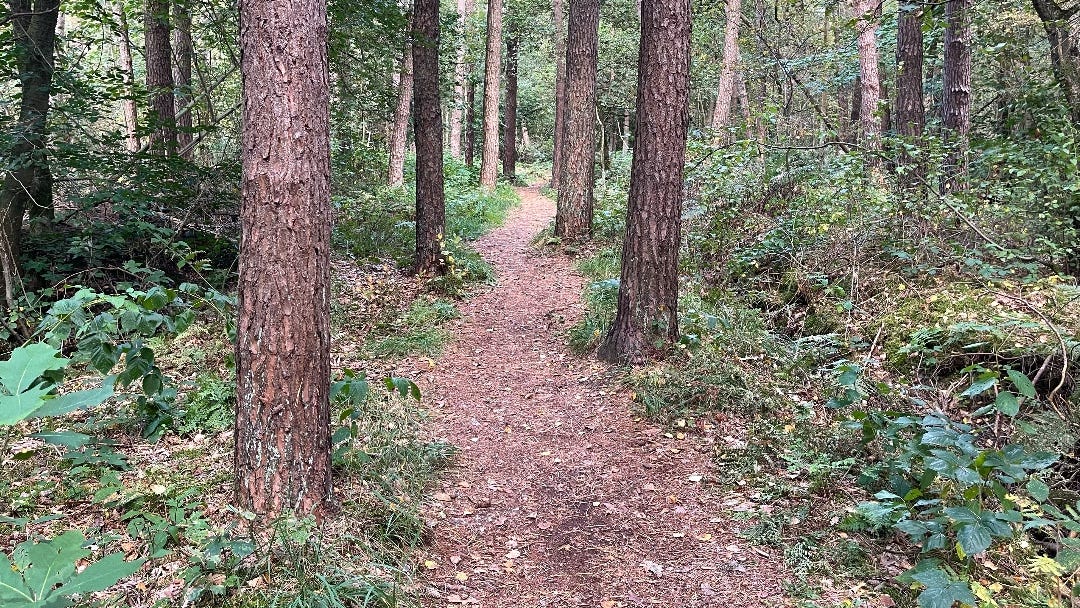
Immediately after leaving Brummen’s railway station, I was in a forest. This is one of the things I like about walking in the eastern Netherlands: the transition from town to nature is immediate and complete. One minute you are on a pavement, the next you are on a forest path with trees on both sides and the sounds of the town already gone.
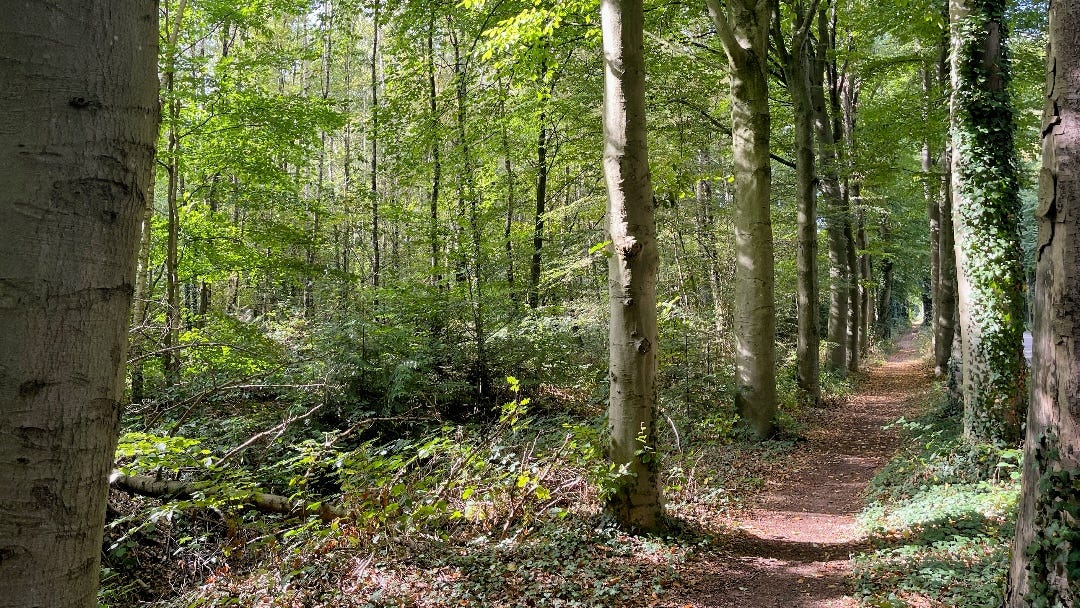
I noticed a sign on a tree. The Hanzestedenpad — the Hanseatic Cities Trail I had been following from Doesburg — overlapped here with another route I know well: the Trekvogelpad, the Migrating Birds Trail, which runs east to west across the Netherlands following the autumn migration routes. I have been walking the Trekvogelpad in sections for years. For a few kilometers here, the two trails run parallel before the Migrating Birds Trail turns west, and the Hanseatic route continues north.
I was, briefly, walking two trails at once. I found this disproportionately satisfying. Double points for the same kilometers. It does not happen often in walking or in life.
The last time I had walked in this region was late July. The difference was considerable.
In July, cornfields had been growing on both sides of the path, some still in flower, others already forming cobs. Now those fields were bare. Just dry stalks and packed earth, with the occasional forgotten cob lying where the harvester had missed it.
The leaves had begun to turn. Not dramatically — this is the Netherlands, not Quebec, and the Dutch autumn does not put on the show that North American forests manage every year without apparent effort. But color was appearing where there had been only green. One branch red among ten still-green ones. A single tree showing amber at the edges while its neighbors held on to summer. The ground had begun to collect what the trees were releasing, and walking through the first fallen leaves of the season made a sound I had not heard since spring.
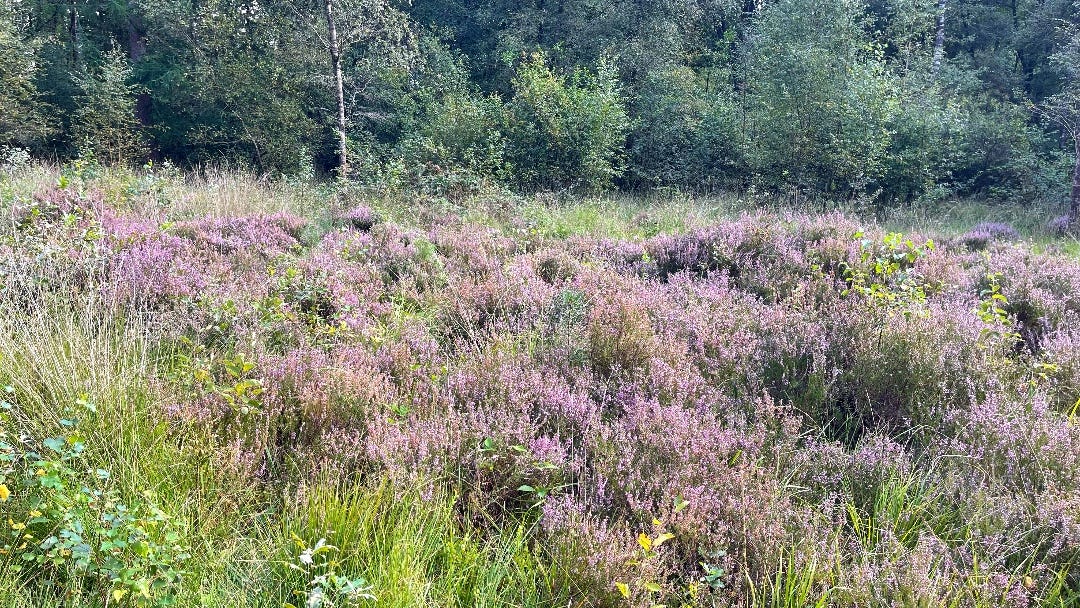
Heather was still blooming in patches, though the best of it was past. Heather has a relatively short window of magnificence — perhaps three weeks in mid-August — after which it begins to lose its vibrant colors. I had arrived slightly late for the peak, which is the story of my relationship with heather.
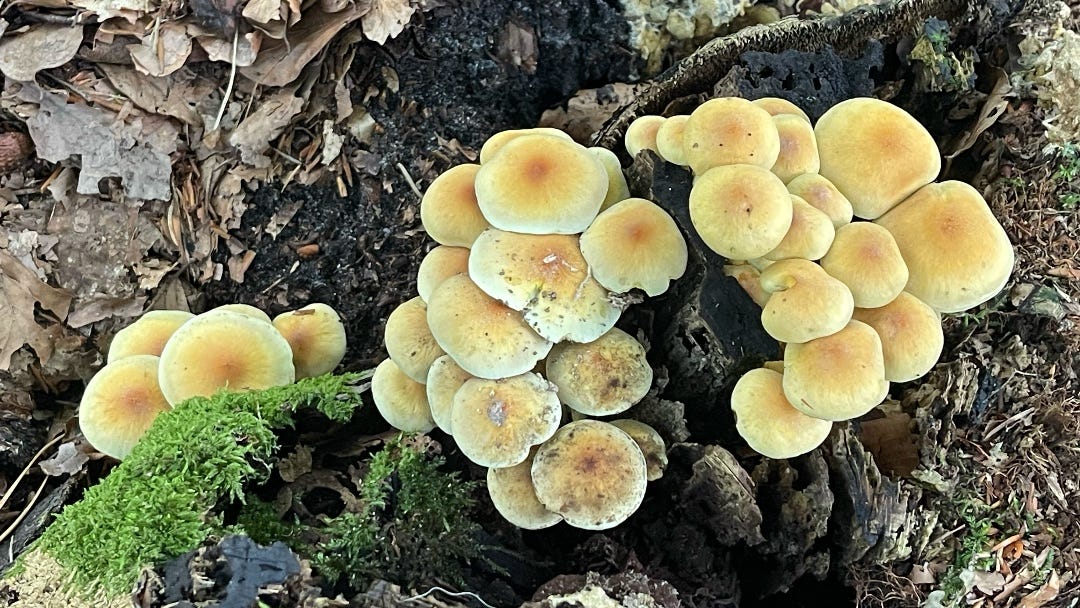
On a decaying stump beside the path, I found a dense cluster of mushrooms: sulfur-yellow caps with reddish-brown centers, growing in exactly the tight group that makes certain fungi look almost architectural. These were Sulfur Tufts, Hypholoma fasciculare, one of the most common autumn mushrooms in Dutch woodland and also one of the most reliably poisonous. Nausea, vomiting, and worse. They appear in late summer and autumn throughout the forests of this region in large, cheerful clusters that look almost welcoming, which is presumably how they have managed to cause so much trouble over the centuries.
I photographed them and left them where they were.
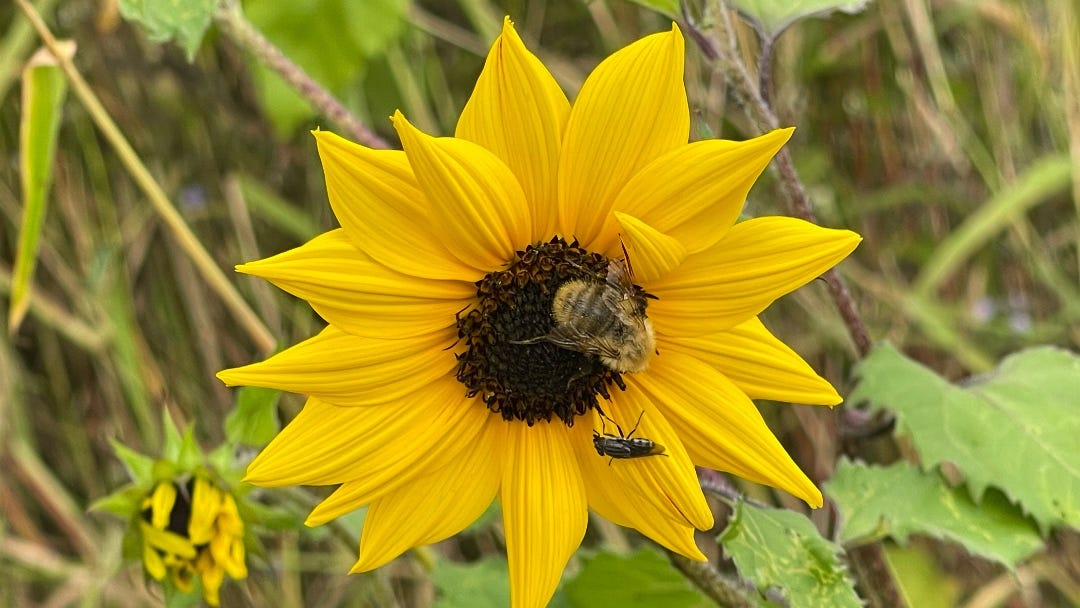
A little further along, a sunflower was still blooming beside a farm fence, a bee was working it with professional focus. The sunflower is my favorite flower, I like its uncomplicated commitment to facing the sun and making the best of wherever it finds itself. I have always found something admirable in that.
At a spot overlooking open heather fields, I found a bench with a copper plate attached to it. The plate named a person who had lived from 1947 to 2015 and had apparently loved this view enough that someone wanted to place a seat here in their memory.
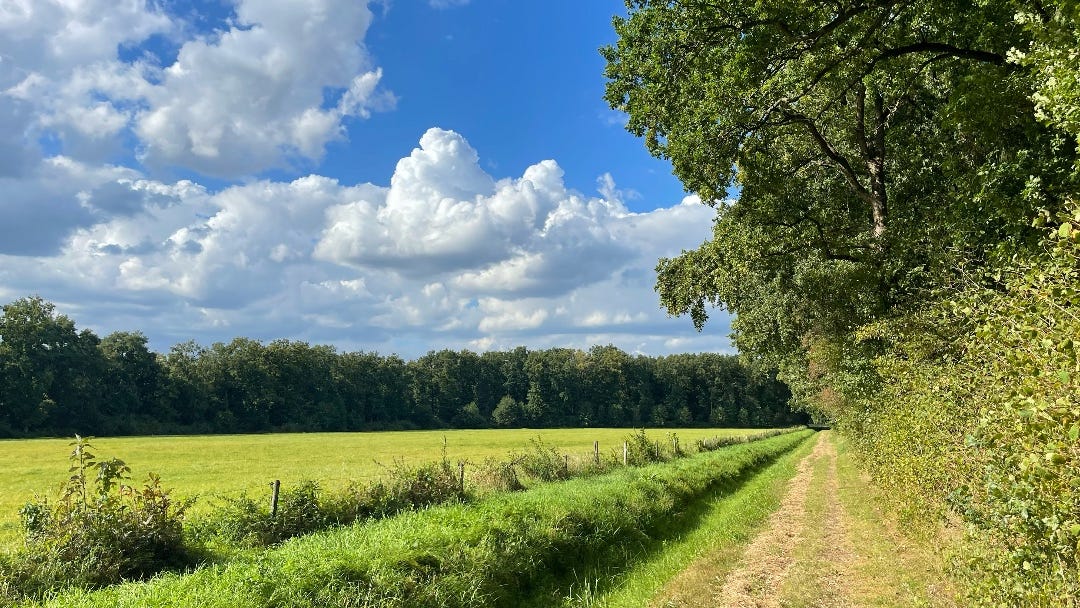
People put memorial benches in landscapes they loved. It is a very specific form of tribute: not a grave or a plaque on a building, but a place to sit and see what they saw. I sat on it for a few minutes. Wide open fields, heather stretching toward the horizon, the sky taking up more of the picture than the land in the way that only Dutch skies do.
I do not know anything about the person commemorated there. But the spot was well chosen.
If you want to follow the whole journey, consider becoming a paid subscriber. Paid subscribers also get access to extra posts, the full archive and directly support both my walks and writing:
Subscribe with 20% off the first year
Not far from the bench, through a stretch of woodland, I came to Landgoed Leusveld. From the path, it reads as a castle, though it is technically a hunting lodge — a jachthuis — built in 1911 for a man named Carel Anton Willem Nairac, designed by an Apeldoorn architect in a blend of art nouveau and neo-renaissance that manages to be simultaneously grand and domestic.
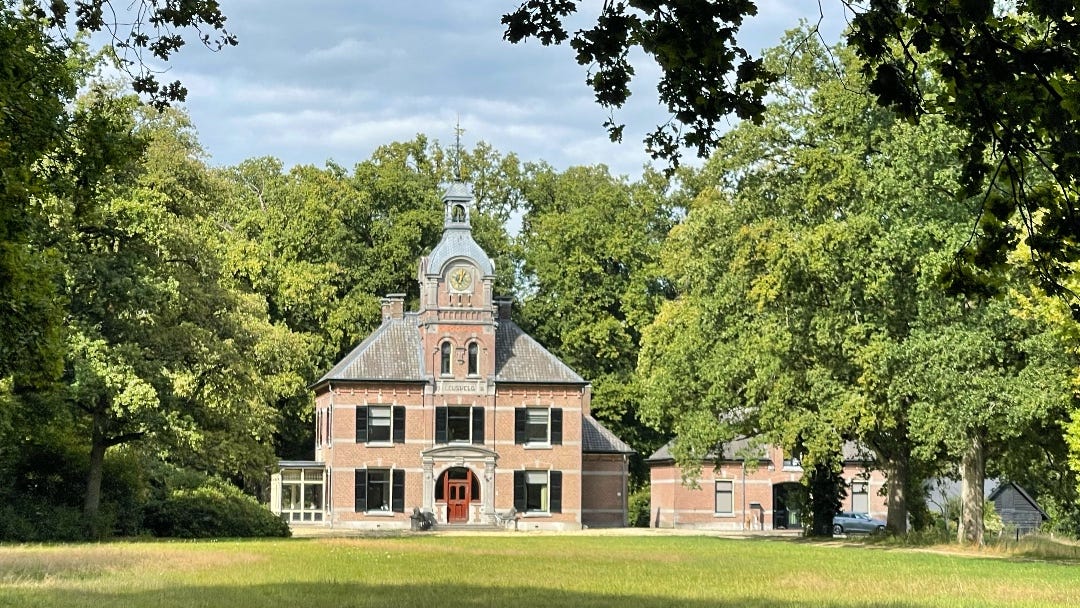
The symmetrical facade has a central tower with a small clock, and above the entrance, the name Leusveld is carved along with the date 1911. Stone lions flank the door, carrying the coats of arms of Nairac and his mother. Inside, I later read, restorers preserved original fireplaces, paneled doors, stucco ceilings, and animal reliefs above doorways — the hunting references built into every surface of a house designed for exactly that purpose.
Since 1971, the estate has been owned by Natuurmonumenten, the Dutch nature conservation organization. The jachthuis and its carriage house are now used as group holiday accommodations. Walkers on the Hanzestedenpad move through what was once a private hunting landscape and is now a Natura 2000 protected area.
Walking north from Leusveld, the landscape opened up again into fields and farms. I kept stopping to photograph them.
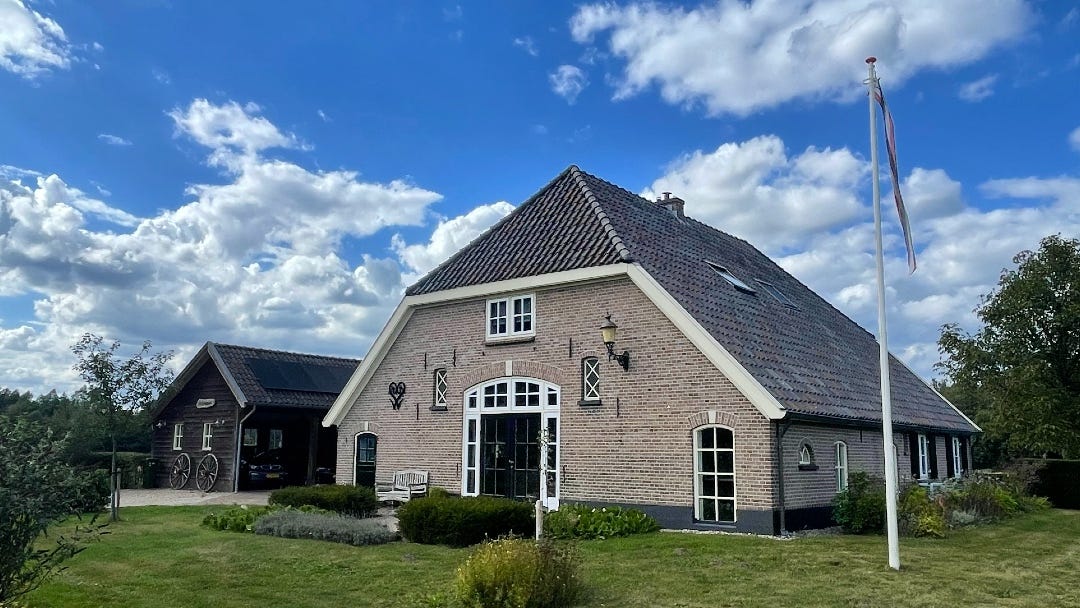
Farms in this part of Gelderland and neighboring Overijssel have a distinctive silhouette. The front door sits on the shorter side of a long rectangular building, and above it the roofline is cut diagonally, creating a triangular shape where the main ridge meets the front. The result looks, as I have mentioned before in this series, as if someone took a large sword and sliced off the top corners. This time, I did a bit of research.
The explanation, it turns out, is practical rather than aesthetic. These are traditional longhouses where family and livestock lived under the same thatched roof, with the animals at the back and the living quarters at the front. Over time, farmers rebuilt or modernized the front section — sometimes adding brick, sometimes realigning the gable, sometimes simply recapping the vulnerable lower thatch with tiles — while the older, deeper thatched volume remained behind. The diagonal line is the seam between old and new, between the thatched barn and the modernized house.
The wooden shutters on the windows played their own role: regulating light and temperature before double glazing existed, protecting windows during storms that sweep across the flat IJssel valley, and serving as identity markers that are often painted in family or estate colors, visible from the road at a distance.
This entire stretch of the Hanzestedenpad between Brummen and Zutphen was, in the 14th and 15th centuries, the working hinterland of a Hanseatic trading city. The farms and estates that line this corridor supplied grain, timber, and agricultural produce to Zutphen’s warehouses and quays. Merchants there then moved those goods north along the IJssel to Kampen and out into the Zuiderzee, connecting this quiet landscape of thatched longhouses and hunting lodges to the trading ports of Lübeck, Bergen, and Bruges. Walking this path in autumn, past bare cornfields and early-turning hedgerows, is walking through what you might call the backstage of the Hanseatic League: the supply landscape that fed the cities whose history I am following north.
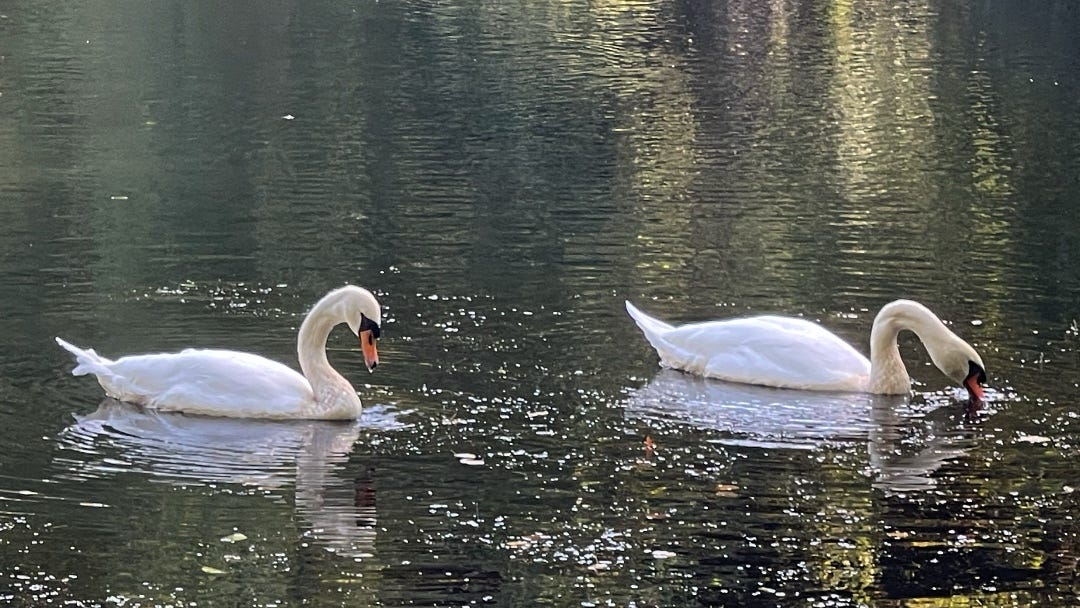
A dry creek bed crossed under a small bridge, it was bone dry after a long summer without enough rain, just cracked mud and a few dead reeds. Further along, where a drainage channel still held water, two swans were swimming together in the unhurried way that swans manage, close enough to touch but not touching, moving in the same direction at the same pace. Swans mate for life, these two looked like they had been doing this for years and planned to continue.
I photographed them and walked on.
I had been walking for many hours, through forest and field and the first autumn colors of a late Dutch summer, when I saw it.
Far ahead, on the horizon, a church tower. Rising above the flat landscape; Zutphen had announced itself.
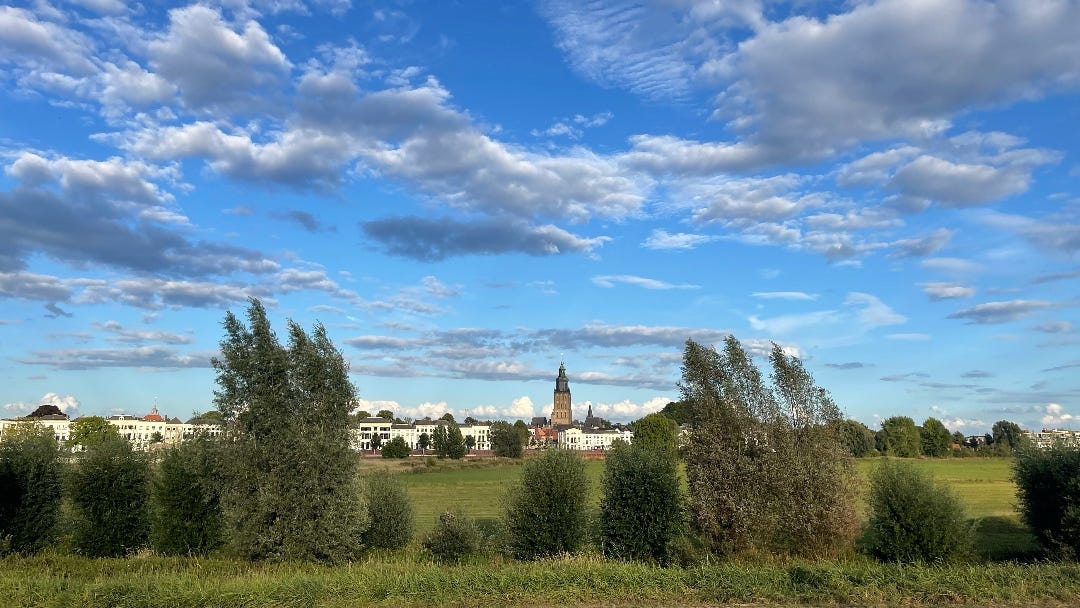
It was still some kilometers away, the road bending rather than running straight. The sun was dropping. I walked along a hedge on my left, huge open fields on my right with farms showing their chamfered rooflines against the sky. The tower did not seem to get closer for a long time, which is what church towers do. They appear on the horizon and let you walk toward them at whatever pace you can manage, neither encouraging nor discouraging, simply being there.
Then, as always happens, it was suddenly near, and the city formed around it, and the walk was over.
Zutphen. I had been moving toward it since the station at Brummen, through estate woods and heather fields and farms whose thatched roofs connected to a history reaching back centuries. The city deserves its own installment. I will tell you about it next time.
Cheers,
Alexander
The Curious Wanderer is where I share what my other newsletters have no room for: travel writing, walks through history, museum visits, and the kind of observations that only arrive when you move through a place slowly, on foot, with time to think.
If you want to follow the whole journey, consider becoming a paid subscriber. Paid subscribers also get access to the full archive and directly support both my walks and writing:
Subscribe with 20% off the first year
If you are not ready for a subscription but want to show your support, buying me a coffee goes a long way. ☕️
🌎 The Planet: My political newsletter, written from a European perspective. Analysis of democracy, power, and what’s happening in Trump’s America — with historical parallels and the kind of clarity that distance from Washington can bring.
☕️ Daybreak Notes & Beans: Every morning before dawn, I search for the best news you didn’t see. Science breakthroughs, conservation wins, human kindness, and beauty — delivered in time for your first coffee. Published most days of the week, positive, and unapologetically hopeful.
Subscribe to Daybreak Notes & Beans
✍️ More: where I publish 🧭 Morning Compass and 🎙️ Morning Comments
🧭 The Morning Compass is the best way to quickly catch up on the more serious news that’s going on during your first coffee. I also share what to expect in today’s news, what happened on this day in history, what I recently published, what I captured, and what I stumbled upon.
🎙️ My Morning Comments are short videos where I dive a little deeper into the story that stood out most that morning.
Screen Skills: A tech-newsletter for non-tech people. Short, practical digital literacy guides for people who want to use their devices with more confidence. No jargon, no condescension. Usually, I publish it every other working day.
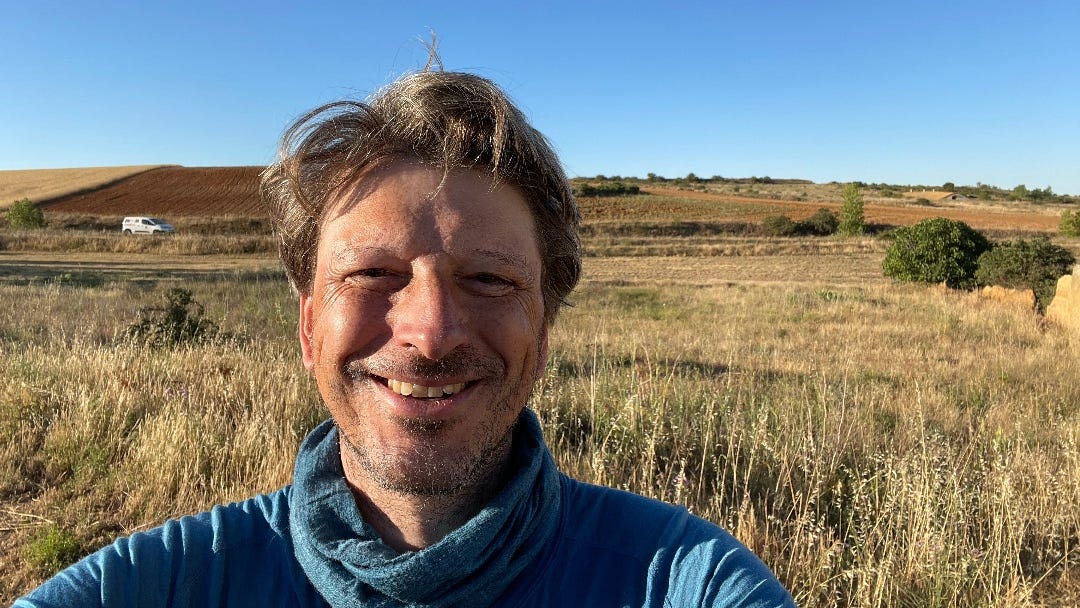
I write The Curious Wanderer for people who like to move through the world slowly and look at it carefully. If that sounds like you, please subscribe below; there is a paid option for those who want to support the writing directly.
Subscribe: 20% off for the first year 🎒
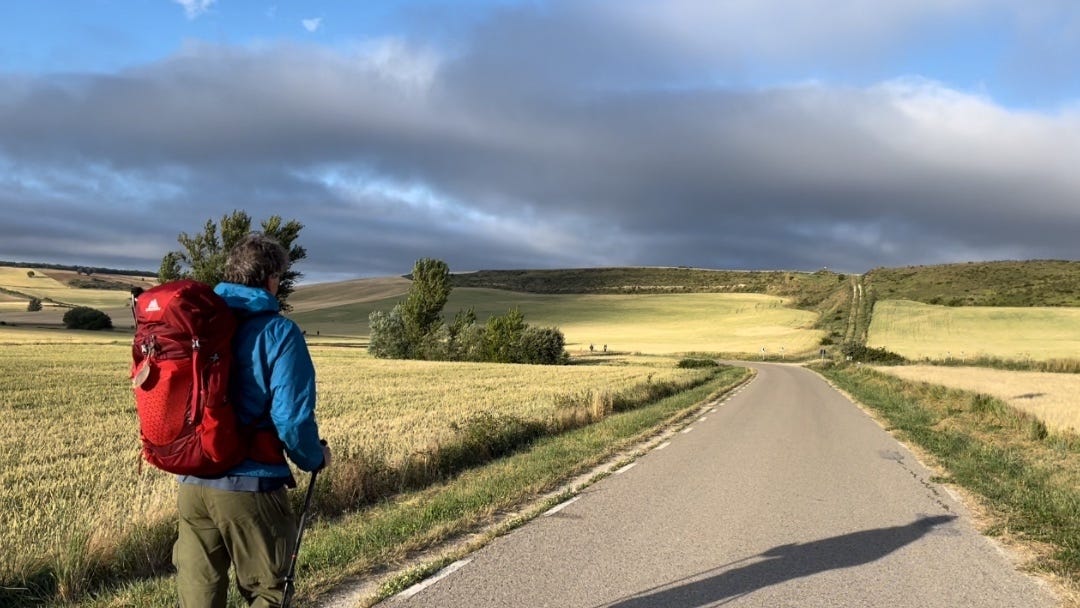
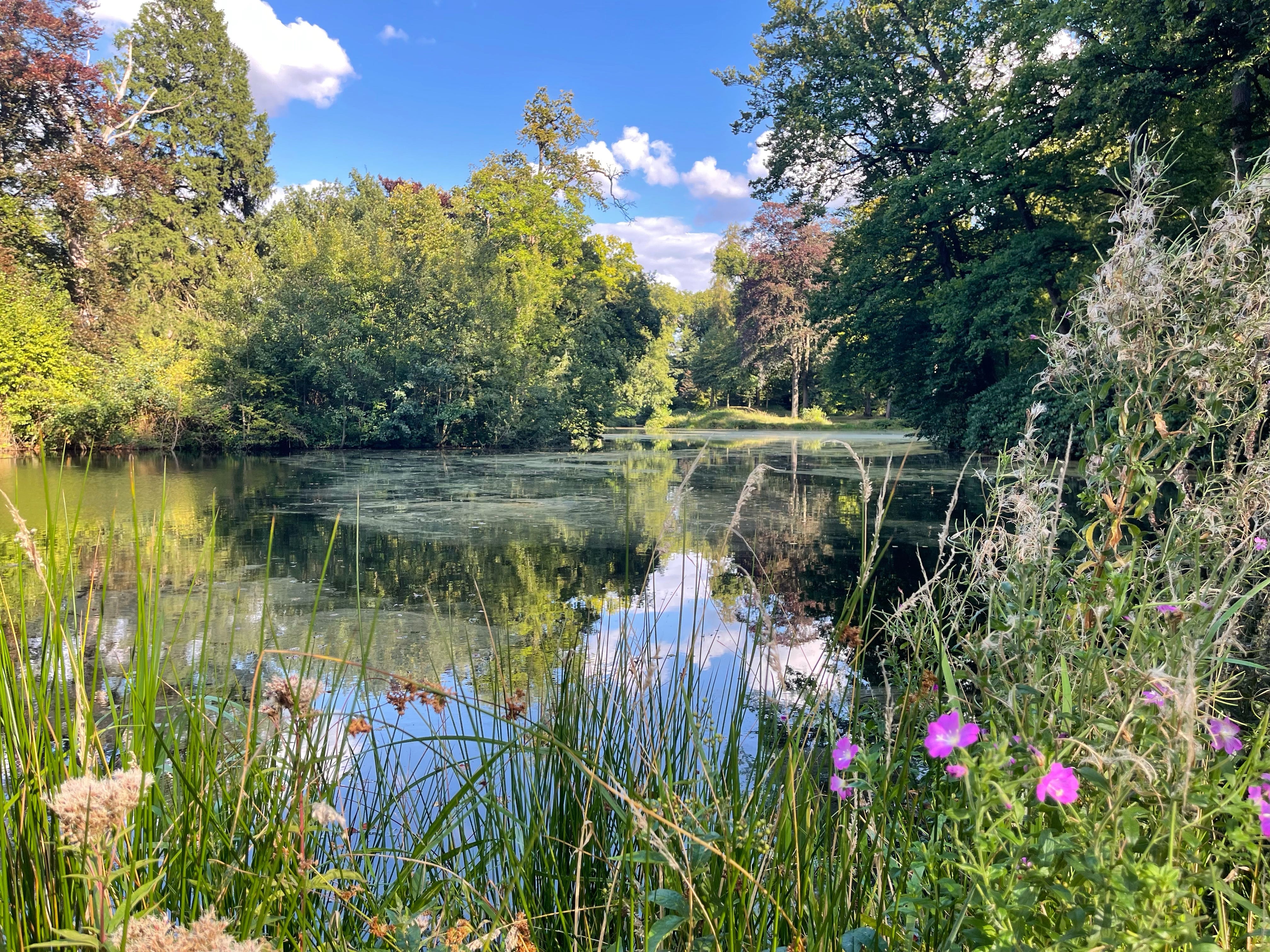
Still here? One more photo for you:
Comments
Nothing yet. Say the first thing.
Sign in to join the conversation.