
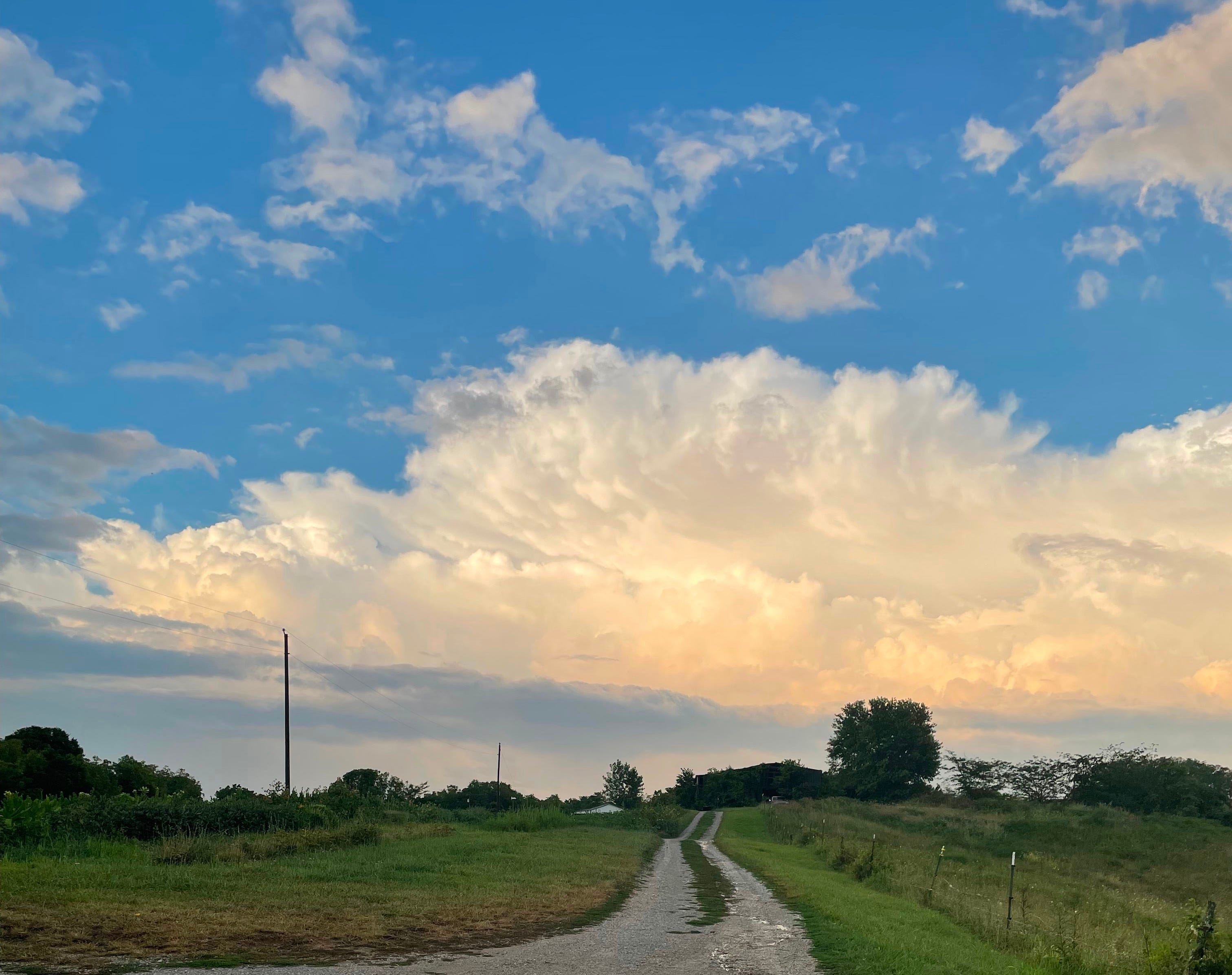
Usually our farm is pretty tranquil, and we live an idyllic life here, somewhat isolated from the problems of the world, which come to our attention through the little screens that we, like most others, carry around in our pockets. Often we are so preoccupied with the day to day problems of getting by and producing crops that we can lose sight of how messed up our country and the world has actually become. And indeed, the desire for such blissful ignorance of the outside world is a major part of why I decided to drop out of urban life and move from my hometown of Philadelphia, Pennsylvania, to rural Kentucky to become a homesteader and farmer exactly thirty years ago last month. Withdrawing from society by moving to the fastness of the wilderness or even just the countryside, is a time honored response to the pressures of civilized life. Only now, in our connected world of 8 billion souls and high speed internet, it is nearly impossible to get away.
Having moved to the woods of beautiful Cumberland County Kentucky 30 years ago to “front the essential facts of life” as Thoreau put it, I was quickly made aware that one of those facts was the necessity of making a living, even here in paradise. So, as any healthy green thumbed young man would do, I learned how to farm. The hows and whys of that process are a story for another time, but what I lacked in a university degree I quickly made up for in the raw experience that comes from working with plants, animals, the soil, and of course the weather. From the very beginning of my farming career I have been working with the fucked up weather that we have come to associate with global climate change. Myself and my partner, both young people in our early 20s once spent a month in a tent because it rained for 30 days straight and we couldn’t get the school bus we were planning on living in to its site due to all of that rain. Later that year, on that first homestead and the first garden I called my own, we had fresh greens all winter due the freakishly mild winter that followed, only to lose them, and all of the beautiful woodland wildflowers that surrounded our forest home, to the first real cold snap of the year, in April!
At the time people warned about global warming, and my hippie friends and neighbors warned about prophecies of the coming “Earth changes” and I worried that they already were upon us. We watched forest trees get sick and die, locusts, elms, pines, and later the tragic loss of all of the ash trees in our woods. When the first genetically modified crops hit our region, we were terrified about “frankenfood” and as organic farmers we avoided GMOs at all costs. We still do, though in our rural area, the grocery stores don’t even bother to stock anything else. We were terrified that “terminator seeds”, seeds that were genetically engineered to be sterile unless purchased new every year from a big ag company, would imperil the global food supply. That scenario, luckily, didn’t pan out. Life goes on, one finds a way, and we adjusted to the new climate, and even had a few years that seemed to pass for “normal”, you know, with regular rainfall, cold winters, and moderately warm summers.
At about the same time, in the fall of 1998, while my partner and I were finishing our cabin in the woods, hand built from timber harvested carefully from the land, we had our first experience with the horror that is large scale industrial agriculture. Our cabin was very remote, accessible only by 4 wheel drive vehicles and then only when the dirt access road was dry. The road ran perilously close to a precipitous drop from a bluff to the Cumberland river 400 feet below. Our homestead featured a gorgeous view of the meandering river valley, overlooking the agricultural fields on the rich bottomland below. One day in October, as we were literally driving the last nails into our new home, we noticed huge earth moving tractors leveling two of the large fields below our house, immediately across the river from our property and within a half mile of our house, smack dab in the middle of our view. They ran around the clock for the better part of several days and we had a terrible feeling that things were about to change in our neighborhood that would ruin the peace and privacy we sought when we bought that inaccessible piece of land.
After the machines were finished, crews arrived to build 16 large white metal barns, each 500 feet long. And then came the chickens, 25,000 in each barn, 400,000 total. The smell was horrendous. The fog which would blanket the valley at night was filled with the odor of chicken poop by the massive ventilation fans that ran day and night to keep the overcrowded birds from suffocating. In the morning the sun would heat the fog, causing it to rise and fill our house with the sickening smell. A Biblical plague of flies arrived the following summer. The birds were “harvested” every 8 weeks to be brought to a local slaughter plant, a process which was done only at night and which lasted 3 nights. The harvest involved teams of men catching the chickens, stuffing them in cages, which were loaded onto semi trailers and shipped to the plant to be killed. In addition to being terribly inhumane, the process is also very noisy and we endured three sleepless nights every 8 weeks filled with the beeping of skid steer loaders, the slamming of metal cages onto the trailers, and the roar of the semis, the dark country night lit up by brilliant foodlights for visibility. After enduring life there, in what should have been paradise, for another year, we began the search for another home, miraculously sold our place at a profit to some shady people, we thought they were probably meth cookers, who were attracted to the extreme privacy of the site, and eventually found our first farm. We then began our own agricultural career on the other side of the river, a few miles downstream, but out of sight and smell of the chicken “farm”.
In 2007, when we had lived on the farm for about seven years and had managed to establish a successful business as vegetable growers, we had a terrible drought. It didn’t rain for months and we struggled bravely, and successfully, I might add, to produce crops in temperatures that got as high as 107 in the shade. We managed to grow enough for our CSA program, even though our potatoes cooked in the ground and our peppers and tomatoes just died. I hand cut corn stalks every day to keep my small herd of cattle fed. I hauled water from a spring in my neighbor’s creek several times daily, pumping it into a trailer I pulled with my tractor and then driving it to the field where it gravity fed into irrigation tape, watering a few rows at a time.
I hauled water with dedication until one day my neighbors told me that I had to stop using their water because the creek was getting too low and they were worried that their cattle wouldn’t have enough water. I reluctantly agreed to stop pumping their water, and I almost lost my mind with anxiety and worry. That little spring was a lifeline for my plants and animals and until I came up with a better solution, I was screwed. The stress cost me my marriage and a few months later, that beautiful farm. My ex and I had grown apart over the years and were probably eventually going to go our separate ways anyway, but living through a drought and a heat wave with a stressed out farmer was more than she could bear, and she left. I also had an excellent and hard working intern, who had become one of my good friends, and one day I blew up on him and he left too. And there I was, alone on a drought stricken 50 acre farm in the middle of nowhere. Just me and a bunch of hungry, thirsty cows, and crops that needed to be watered, and no plan for the future.
In the fall of that year, as temperatures began to cool a bit, loneliness began to set in and I dabbled briefly in online dating. In short order, I met the woman who was to become my wife, life partner and the mother of my children, Esmee. She lived on a farm about 200 miles north of mine, which was also impacted by the drought. Since we were both farmers, we had much in common. I went to visit her on the farm where I now live. It definitely was a case of mutual attraction and love at first sight. As soon as I pulled out of her driveway after our first meeting to begin the drive back to southern Kentucky, a steady rain began to fall. The drought finally broke. This seemed like a wonderful omen. After a courtship consisting of a few mutual visits to each other’s farms, and faced with the depressing prospect of spending a winter alone on a farm that I loved, but would have to leave, Esmee and I decided that we should live together. In the months that followed, I packed up thousands of books, loaded my cows and enough hay to feed them, as well as my tractor and farm equipment onto trailers and vans and over the winter, and in many trips, with the help of new neighbors and the old ones I was leaving behind, we drove them all 200 miles north to my new home. We were married the following year in a beautiful and intimate ceremony on our farm.
Despite the happy ending, the drought of 2007 left me a bit traumatized, to be honest, and although I have seen some dry seasons, particularly in the last few years, I thank the gods that I haven’t seen anything like that fateful year since. But it’s there burned into my memory. And I know I will see something like it again, and maybe worse, possibly sooner rather than later. Every year when it doesn’t rain for a few weeks, a scenario which is becoming increasingly common, I think that time has come again. Weather patterns that used to be aberrations are becoming the norm. Europe is baking and burning, even in England’s green and pleasant land. I have been following the story of farmers in Mexico, who are watching their corn and bean crops, their lovingly tended maiz and frijol, wither and burn under the pitiless sun of an unusually hot and dry canicula. The canicula is usually a welcome short dry period within the rainy season, corresponding with the rising of Sirius, but which now has extended to a month or more.
The earth changes my friends had warned about 30 years ago are definitely here now. Globally, the climate has definitely shifted, and the worst is yet to come as temperatures increase worldwide, weather patterns have been permanently altered and our politicians are intent on accelerating the process by rolling back environmental protections. Are they deluded enough to actually believe that their God will make them a new heaven and a new earth after the old one is a smoking ruin? Or are they just greedy or insane?
This year, like the last three, has been a drier than average one for us at our place, however, neighboring counties have received freakish torrential rains of over 12” in one day, while we stayed dry and watched the storm clouds pass, shaking our firsts in impotent rage at the injustice of the ridiculous excess of water lavished on those who were literally drowning and flooded by it. In the past month alone, three tornadoes have passed within a few miles of our farm, the most recent just last Saturday. Esmee and I watched one storm enviously from our porch, only to see the uncanny sight of a tornadic updraft pulling the clouds up from the ground as, unbeknownst to us neighboring farms and communities were being levelled and our land stayed safe, but dry.
This weekend, after a month in which we watched some of our crops, at least those which we can’t irrigate, begin to dry out, wilt and die from lack of rain, another weather system which promised a saving rain was approaching the region. I went to Cincinnati that morning to deliver my produce, driving through pouring rain to get there, and sitting in the damp parking lot where I meet my CSA members, everyone one of them remarked that it had rained so much there that basements and streets in their neighborhood were flooded and all of them expressed shock that we, a mere 50 miles away, still hadn’t had any rain. One lady actually said “You must be cursed by God!” I didn’t know how to answer her, just saying well, we actually weren’t doing that badly, and that the tornadoes had missed us, and that if God had actually wanted to curse us for some reason (does she know about my unorthodox religious inclinations?), then surely “He” would have sent them right for us like He sent the fire from Heaven to test the patience of poor Job!
I am a brooder on things, so I did what I do. I brooded on that phrase, “cursed by God” because that is indeed exactly how one feels at such moments, as I know from bitter experience. But I am not a monotheist and I don’t believe the Divine is particularly angry at me. I actually am devout and religious in my way, prayer and offerings to the gods are a major part of my practice. While I don’t claim to be special in their eyes, neither do I believe I am singled out for misfortune. Actually, I believe we are very fortunate in many ways and are very grateful for their many gifts, and we actually are having a good year, agriculturally speaking, despite the long dry spells and near misses by the rains. Probably better than we would be having if we actually got one of those freakish rainfalls.
Most importantly, I do believe the Earth is divine, a living goddess actually, not merely symbolically. And I do also believe she may be cursing all of us, for our hubris, guilty and innocent alike, by withdrawing our life support system, the fair and predictable weather that allows us to feed ourselves by farming. She is showing her wrathful face as Nemesis, the punisher of the arrogant who violate the laws of nature. We are all in her power. She will outlast us, and we may just be her temporary experiments like the dinosaurs. Life will continue here even if it has to start over from rats and cockroaches. She is the true power here. We have been given the choice to work with her or to try to destroy her and over and over again we have chosen destruction for short term gain. We have sown the wind and we will reap the whirlwind. Literally. If you have ever sat on a nest of ants and tried to brush the biting, stinging insects off of you, that is how I picture the Earth’s attitude to humanity right now. With her storms and fires, she is trying to brush us off. If she opts for the volcanoes, she will probably succeed.
As if to drive the point home, now they are logging in the valley right below my home. Every day for the last two weeks we wake to the buzzing of chainsaws and the thunderous crash of big old trees falling to the ground. Our hearts ache at the sound. We love to sit on the porch and enjoy the view of the valley below and now we can barely stand to sit there. This isn’t the place to discuss the role of forest products in the local economy. I know that people need wood, but there is a better way to go about getting it. This just seems like an assault. Trees are taken without reverence, without regard for their indwelling spirits. There is no regret, no mourning of the loss of such grand and beautiful beings, just a tallying of board feet and dollars.
Esmee has taken to sitting in front of our house watching the loggers with binoculars, tears welling up in her eyes each time a tree falls, bearing witness to the destruction. She has lived on this farm most of her life and has always loved walking in those woods, especially in the spring, beneath the deep shade of the tall trees, lush with the bloom of wildflowers. Now she has to watch from a distance as the trees crash to the ground. Being of a passionate nature she gives the distant loggers a good cussing, but they’re so far away they probably can’t hear her over the roar of their saws and machinery. But it’s good for her to get the rage out.
Now, in a scenario eerily reminiscent of the arrival of the industrial chicken business in the community where I lived 30 years ago, developers and speculators are planning to build multiple data centers in the Ohio and Kentucky river valleys near my home. As with the chicken farms, these facilities will permanently destroy some of the best agricultural soils in the state and maybe the region. They will replace lands with life-giving, fertile black topsoil five feet deep with metal buildings full of mechanical contrivances that compete with humans for land and water, sullying the living air with the smog from electrical plants. They are planning to put one on a 500 acre river bottom farm we pass every time we go to town for groceries.
This ancient land has been inhabited by humans since the Ice Age. The Indigenous Adena and Hopewell cultures, and later the local branch of the Mississippian culture, and the Shawnee of more recent times have all flourished here. Fans of the work of Wendell Berry will also remember his tales of Port William, the well tended Kentucky River bottom farms, and the hard working agrarian culture of care and devotion to the land he celebrates in his stories. This is that place, the fictional Port William is the actual Carrollton, the town that sits at the confluence of the two rivers, and whose politicians have been beguiled by empty promises of revenue. That land, lovingly celebrated in Berry’s fiction and essays is this same land, a beautiful broad valley already despoiled by toxic agriculture and industry, where insult is to be added to injury for the prospect of profit for out of state developers.
The people who want to build these monstrosities are attracted to this region and specifically the Ohio and Kentucky River valleys by the abundant water provided by the rivers themselves as well as the plentiful electricity provided by the region’s many coal burning power plants. I can imagine that with worsening climate change, including longer heat waves and deeper droughts, these facilities will be in steep competition with the human residents of the region, us, that is for both of these resources. From what I understand, data centers are major sources of heat, and need all of that water to cool the electronic equipment. The Kentucky River and the Ohio too, are major sources of water for local communities. What will happen when the water is low and there is a conflict between corporate interests and the human communities that rely on that water?
Added to all of this is the unwelcome intrusion of smoke from burning forests a half continent away, obscuring the sky, turning the Sun and Moon an apocalyptic red, burning the eyes and irritating the lungs. We have been coughing every time the wind blows from the north, and we have lost our view of the valley below as visibility some days is reduced to less than a mile.
In addition, and adding to the dark dystopian vibes, government helicopters have been flying low over the land here, twice in one week, searching private property to see if people are growing the wrong kind of weeds, while local farmers have planted hundreds of acres with the “right” kind, only to be unable to sell it due to flawed policies. It’s absurd. Esmee and I each gave them the finger when they passed over our place and had the audacity to wave at us. That we grow all kinds of weird plants here must be apparent from the air, so I’m sure they were surprised that they didn’t find the one they were looking for. Bastards.
So, with all of this in mind as I sat on the porch to watch the storm roll in on Saturday evening, it came to me that the Earth, the land itself is hurting, is angry and full of wrath, and humanity is awash in stupidity and greed. The spirits of this ancient place are raging. The rain doesn’t come gently anymore, only in torrents with hail, tornadoes and floods. In between the rounds of storms the land bakes under heat waves, forests burn and crops fail.
I began to breathe slowly and chant, and tried to send healing to the hurting land, the smoky air, the devastated forest in the valley below. I chanted the Reiki mantra for emotional healing, not just for the land, but for those of us who live here as well, over and over again as the rain finally began to fall. Peace and gratitude began to well up in my heart from the depths of my being as the rain moved up the holler to the house where I sat watching, chanting and praying. And just then, our phones chimed out the warning tone that we were under a tornado warning. The same storm that brought cool and steady rain to our land and our crops spun up a small tornado on the next ridge over. Assured that our location was safe, as the rain continued, Esmee and the kids came out to join me on the porch and we all expressed our gratitude with shouts of joy, even my too cool teenager.
What is the takeaway here? What does it mean that as I chanted for healing, a tornado, albeit a small and short lived one, still formed? Was it just an exercise in vanity on my part? Was it the chanting that kept us safe? I don’t know, but I think it just underscores the point that it’s going to take more than just chanting and praying to calm the wrath of the angered goddess, it’s going to take action. I like to be uplifting with my writing, to give hope and inspire, and I’m sorry if the tone of this piece has been dark, but the situation we are all in is very serious. Honoring the Earth through ritual is a good start, and it can change our consciousness, but it is not enough. Inspired by reverence for Mother Earth, but without fanaticism, we must work to stop those who are hell bent on making this precious world of ours uninhabitable, while building a more beautiful way of life at the same time. I think we have all been born to this time for a purpose. Sometimes it seems like the forces bent on ecocide are unstoppable, and maybe they are. Maybe this is our Ragnarok, a battle against the forces of chaos in which, like the gods in that tale, we are doomed to lose, but in which we must fight bravely and do our best. Hope lives, however, and working together we may be able to prevent this awful outcome.
And by the way, this piece was definitely written without AI. You can scan it all you want. Others can do what they like, but there is no way I’m giving my energy to a technology that threatens our air, water, privacy, and liberty.
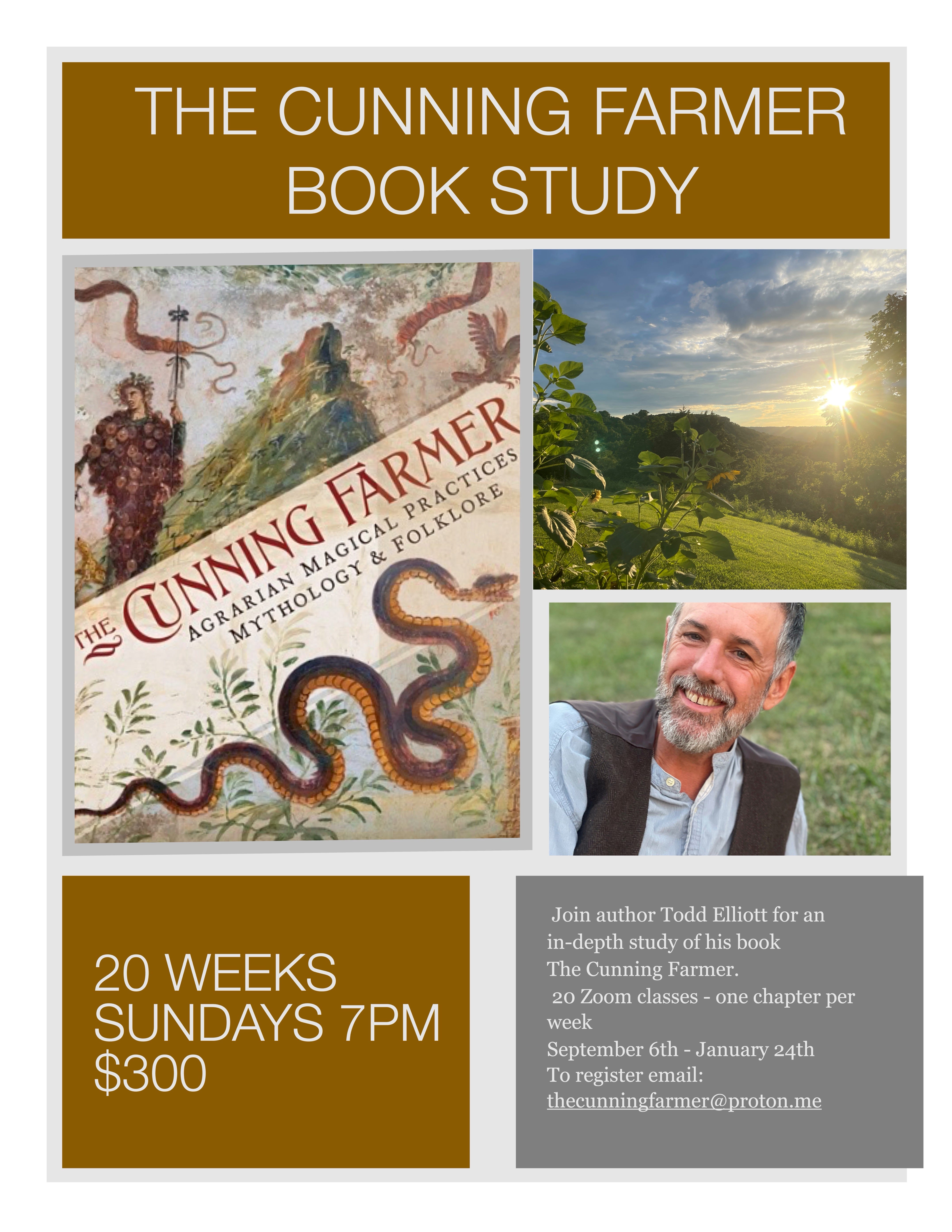
Hey folks, I will be doing a 20 week intensive course based on my book, The Cunning Farmer: Agrarian Magical Practices, Mythology, and Folklore. Here’s some more info, message me for details or visit my website by using the link below. Thanks!
:
No posts
Comments
Nothing yet. Say the first thing.
Sign in to join the conversation.