
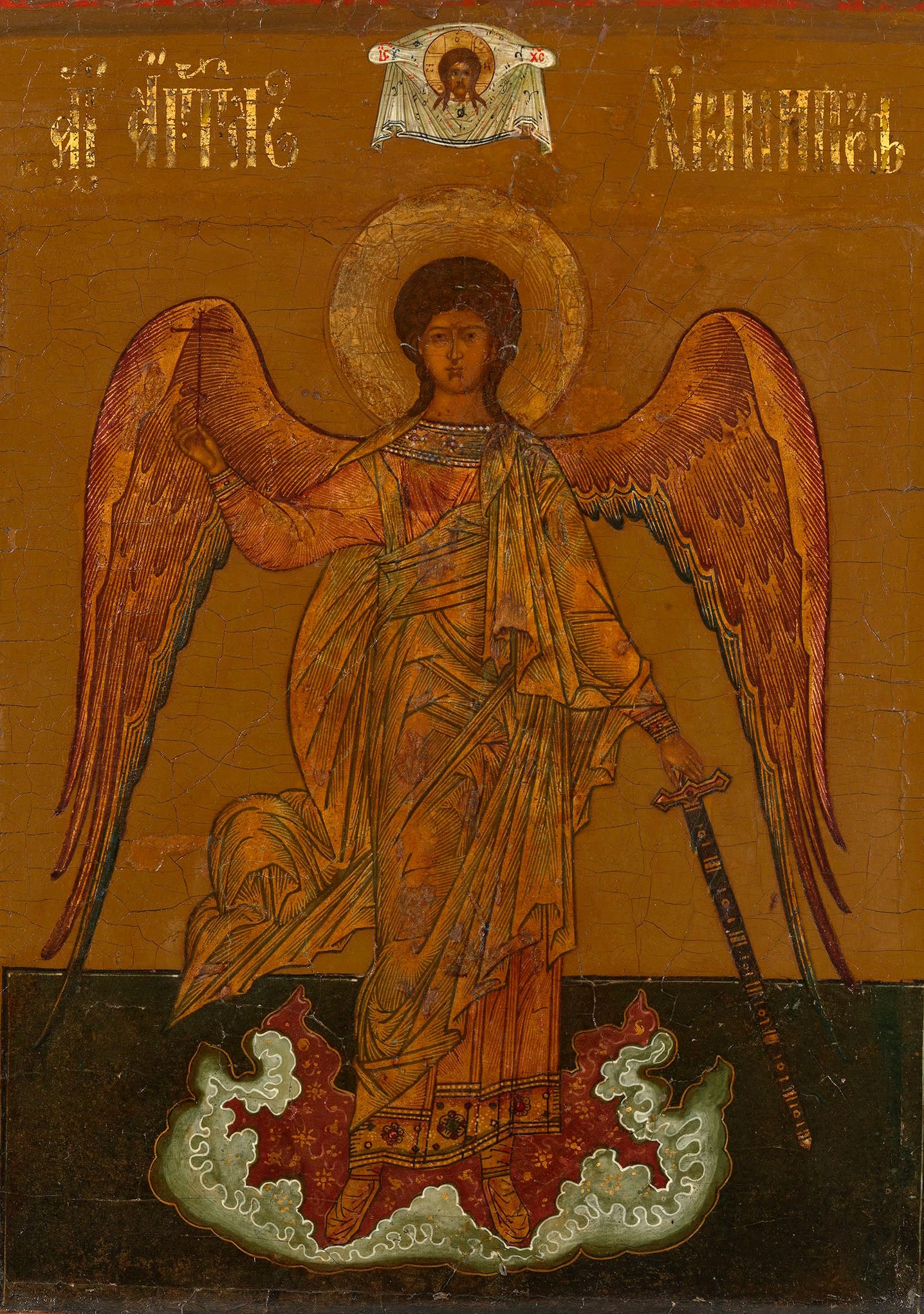
The idea that we have a guiding spirit or angel that watches over us and guides us throughout our lives is common to spiritual systems all over the world. From the daimonion of Socrates, the prophetic voice that would warn him when he was about to embark on an unwise course, to the fravashi, the Zoroastrian guardian spirit, esoteric lore from many traditions around the globe have this idea of a unique spiritual presence bound to the individual, guiding directing, and implementing the designs of fate for that person throughout life. In Judaism, a guardian spirit known as a maggid would come to mystics during deep meditation in order to reveal divine secrets. The guardian spirit is thus often a revealer, and a guide, an initiator.
In Plato’s Myth of Er, the wounded soldier of that name, while lying unconscious in a pile of dead bodies awaiting cremation next to a battlefield, awoke at the moment of his funeral, twelve days having elapsed since he fell in battle. When he awoke he related his vision of the world beyond, having had what we would now call a near death experience. He tells of the punishment of the wicked in Tartarus and of a psychedelic sounding vision of the machinery of fate, the Spindle of Necessity. He watches as the souls about to be reincarnated are given lots and each is given a chance to choose a life according to its lot. Each soul is then led before the Fate Lachesis who assigns each “the guardian of his life, and the fulfiller of his choice, the genius that he had chosen.” This guiding spirit then leads each soul to the remaining two Fates, Clotho and Atropos, who seal its destiny before it is led off to rebirth, but not before drinking the water of forgetfulness from the river Lethe.
The guardian spirit for Plato was the instrument of fate, assigned to us by the gods to carry out our destiny. It is the reason you have been born where you are and why you have been given the life that you have. Once you realize that, in that instant, you are given an opportunity to examine the circumstances of your life, no matter how difficult or privileged, from another point of view: that of radical acceptance. The daimon invites us, as Aleister Crowley put it, “to interpret every phenomenon as a particular dealing of God with our soul.” Unfortunately that means every phenomenon, not just the pleasant, easy, and happy moments, but the pain, sorrow, and the suffering too. If you pause for a moment to meditate on the awesome profundity of that simple statement, that everything that happens, not only to us, but every phenomenon we experience is a revelation from God to our soul, a terrifying chasm opens up under one, and one must either fall or learn to fly. It is both liberating and awful, beautiful and terrible, as is the God that it reveals.
According to the Neoplatonist philosopher Macrobius, the soul “descends” from the Divine, which in the old cosmology was seen as dwelling in the Empyrean heaven, the 9th sphere outside that of the fixed stars. The soul passes from the Divine realm down the Milky Way, which in Macrobius’ day crossed the Zodiac at the tropical signs of Cancer and Capricorn, the furthest North and the furthest South, respectively. It enters the Zodiac at Cancer, and as it descends, at the instant of its incarnation (there is some debate as to whether this occurs at conception or the first breath drawn at birth), it picks up influences from first the decans and signs that are active at the exact moment of birth, and then proceeds to pick up the various powers of the soul as it passes through the planetary spheres on its way to birth. From Saturn it receives reason and understanding, logistikon and theoretikon, from Jupiter, the power to act, praktikon, from the sphere of Mars, “a bold spirit”, thymikon, from the Sun, sense perception and imagination, aisthetikon and phantastikon, From Venus passion, epithymikon, from Mercury, the power of speech and interpretation, hermeneutikon. Finally, as the psyche, the soul, descends to the lowest sphere above the earth, that of the Moon, it receives its vital power, the phytikon, the so-called vegetative soul. As the soul passes through these layers, each respective power of the soul is stamped by strength or dignity as well as the aspects formed by the interaction of the various planets at the time of ensoulment. In this way, according to the ancients, the planets, the chronocrators, the gods of time leave their indelible imprint on each human soul. Thus, says Macrobius, “from the stars, the power of mind comes into our souls.”
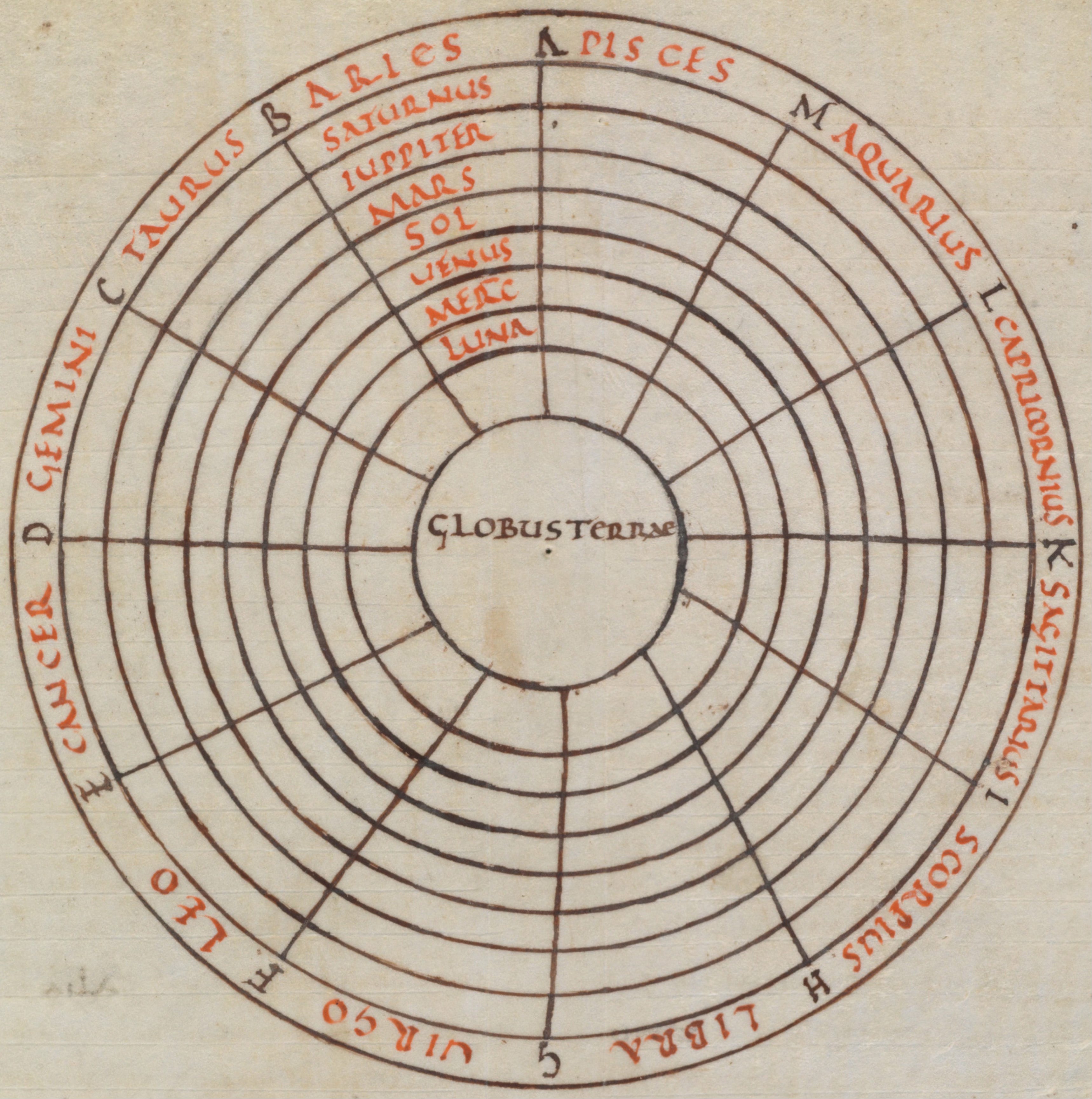
This overly simplified account of Macrobius’ theory of ensoulment is a mythos, a sacred teaching story, which attempts to account for the sympathy our souls have with the movements of the stars, and the persistent power the natal arrangement of the celestials has to describe our character. When coupled with the movement of those same celestial angels we call the planets against the background of the holy stars, as well as the angles and ratios they form in their eternal dance through time, they somehow describe the emanation of the themes of our mortal life. How exactly this functions on a practical matter must remain a mystery, for who can claim to understand the workings of the Divine Mind? It must be enough for us to describe and delineate the movements of the celestial gods and attempt to draw out from them some meaningful pattern in the changes and chances of earthly life.
To return to our topic, that of the daimon: as we saw in the myth of Er, it is the task of the daimon to lead us into the potentialities of our Fate, which we received from the Spindle of Necessity. Those potentialities are those we see reflected in the natal chart. It is, as it were, a snapshot of the whirling of the Spindle of Necessity at the time of our incarnation. It is this daimon that guides us to be who we need to be in this incarnation, to experience the soul lessons we must experience in this life. It seems that the daimon leads us into our trauma as well as helping us to find a way out of it.
I confess that this interpretation of the myth of Er and of the related concept of Fate makes me extremely uncomfortable, as it seems to justify some of the most horrible human experiences as “soul lessons” and that is absurd and sounds incredibly callous. And if interpreted on a shallow level of human psychology and humanistic ethics it is a monstrous thing to claim. There is no justification claimed. Maybe we do live in a monstrous universe, at least by human standards. We are without a doubt, playthings of the gods, who seem to be immense cosmic forces who care little for our tiny lives, at least on one level.
On the other hand, seen from the perspective of gnosis, we are emanations of the same divine who are trying to find our way back to that awesome state of wholeness and love from which we came, and we are aided in our quest by angels and powers who want to help us get there and, I believe, we are opposed by other forces who want to keep us trapped and suffering. This isn’t dualism, all of these things are emanations of the divine as we are, and everything has its function in the divine economy. If our daimon can lead us down into the generation and corruption of the material world, into embodiment, then by using that same embodiment, it can lead us back to our source. If we can figure out what our soul’s purpose may be, what it is in fact that we have embodied to do, and we can do that well, we are fulfilling the Divine purpose for us.
Herein lies the rub: We are often at cross-purposes in this world of conflict where we are all assigned different roles by the Fates. Life in this world is a divine game of high stakes and we must play well. I am beginning to believe that the people we believe to be villains are here to prove our mettle and sharpen our resolve. I hope this doesn’t sound like some sort of macho nonsense. I don’t mean it like that at all. For some of us proving our mettle and finding our calling will look like the decidedly non macho paths of showing love and mercy to the poor and downtrodden, caring for elders and the sick, the disadvantaged and the vulnerable. For others it is the way of the warrior. We all have our own return path, and that path is our calling in life. If the lots of our unfortunate brethren seem to us to be unjust, then perhaps the uncomfortable consciousness of that injustice is the whispering of the daimon urging us to live into our vocation. If the trampling of the weak and helpless by the wicked of this world seems intolerable to us, then that too is the call of the daimon which spurs us onward into the struggle against injustice.
The nature of the divine is Good, because there is nothing else true unity can be but perfect, but this is where our language begins to fail us, because as this God is the author of all that exists, it is also the author of all that is difficult and painful. We see this even in the scriptures of the Hebrew Bible, “I form the light and create the darkness; I make peace and create evil; I am YHWH, that doeth these things.” And more crucially for this discussion, in Proverbs 16:4, “YHWH made everything for his own purpose, Yea, even the wicked for the day of evil.”
The ancient scriptures and wisdom writings of the spiritual traditions are, to paraphrase Carl Jung, statements of the soul, a record of the struggles of humanity to come to terms with the brutal facts of existence and in many ways there truly is nothing new under the Sun. The eternal dance of creation and destruction is playing out in history right before our eyes.
Descending (forgive the spatial metaphors here, they are traditional) from the unity and perfection of the Good, it is only in falling away from unity into division that multiplicity and hence conflict enter into the emanated cosmos. In the sublunar sphere, only a small portion of the Light and Energy of the Source, as symbolized by the light of the Sun reaches the Earth in the form of physical light, this light is the basis of biological life, the physical energy source of all material beings. The fact that it is limited, and falls unevenly on the Earth, is the source of conflict and competition among biological organisms, as well as the origin of the greed and hoarding so evident in our world today.
In actuality, infinite life energy in the form of Spirit, wells up from within living things, sustaining them in being and life, healing and preserving them. Our daimon can be more than just the instrument of our fate, according Plato, it can be our connection to this higher life force, which he likens to a plant with roots in heaven:
“Now we ought to think of the most sovereign part of our soul as God's gift to us, given to be our guiding spirit (daimōn). This, of course, is the type of soul that, as we maintain, resides in the top part of our bodies. It raises us up away from the earth and toward what is akin to us in heaven, as though we are plants grown not from the earth but from heaven. In this, we speak absolutely correctly. For it is from heaven, the place in which our souls were originally born, that the divine part suspends our head, i.e., our root, and so keeps our whole body erect.” (Plato, Timaeus 90a)
Plato tells us that by cultivating our relationship with the divinity within, and by learning the harmonies and revolutions of the universe” we can correct the eccentricities and imbalances of our natal predispositions and “renew our original nature” and “attain to that best life which the gods have set before mankind”.
Neoplatonic sage Iamblichus wrote echoing Plato, that our daimon is chosen by us before our incarnation and that it guides us and directs our lives, until such a time that we can, “through sacred theurgy establish a god as the overseer and leader of our soul.” At which point, the personal daimon cedes its authority over the theurgist to the god. According to Gregory Shaw, however, “This was a privilege reserved for a very few souls. The great majority were best served by fulfilling the dictates of their own guardian daimons.”
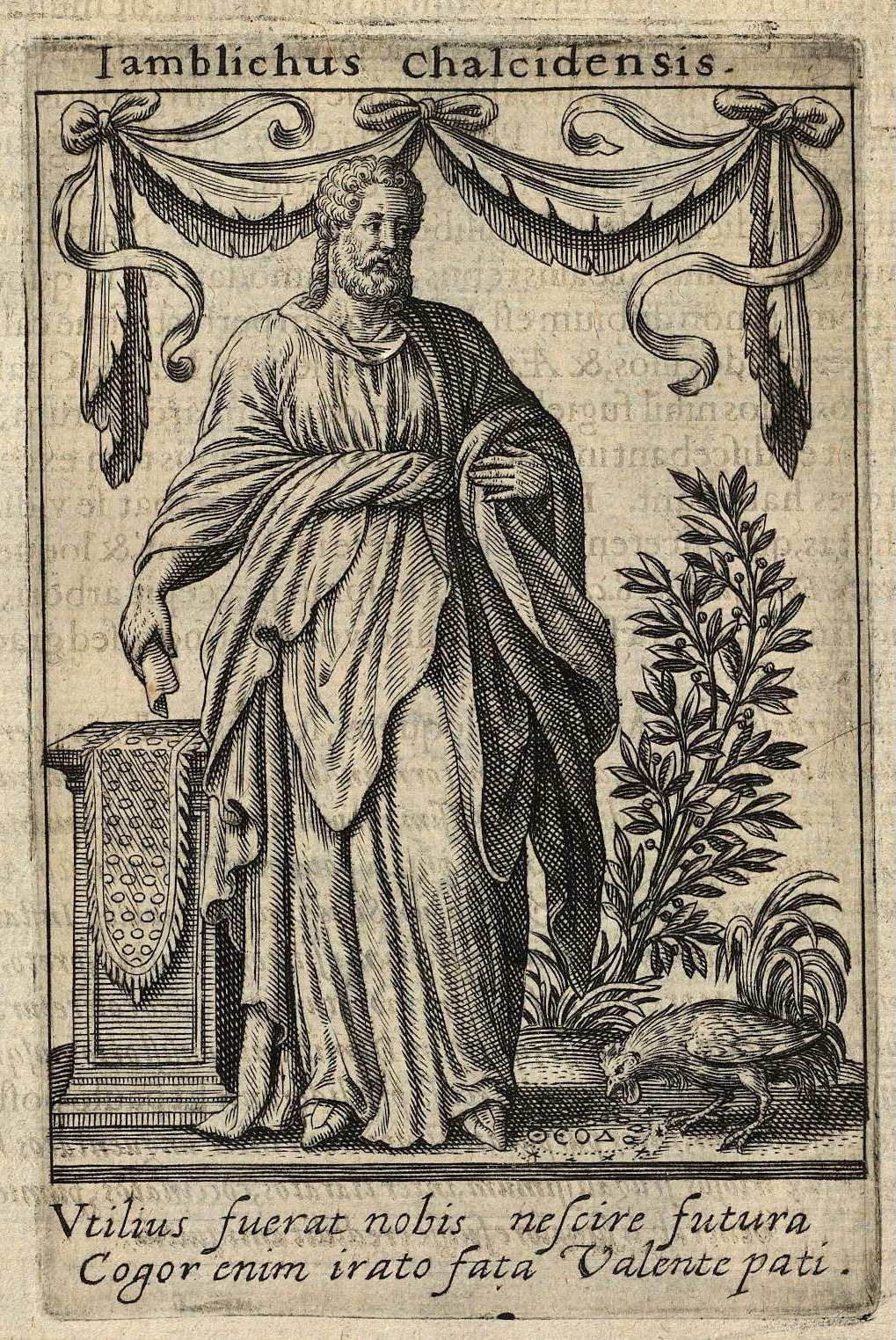
The establishing of a conscious relationship to one’s guardian daimon was of paramount importance to Iamblichus and his contemporary the philosopher Porphyry. Their 4th century debate about the practice of theurgy, or the ritual work of communication with the gods, is known to us principally through Iamblichus’ rebuttal which comes down to us under the title On the Mysteries of Egypt.
Porphyry's questions to Iamblichus in his alter ego as the Egyptian priest, Anebo, come down to us in a text known as the Letter to Anebo. Porphyry, an expert astrologer, asks Iamblichus a series of questions regarding the personal daimon, and whether it can be contacted through intimate knowledge of the natal chart and its ruling planet, the lord of the geniture, or most powerful planet in the chart. Porphyry expresses his faith that this knowledge is essential to set one on the path of liberation from fate:
“Concerning the peculiar daemon, it must be inquired how he is imparted by the lord of the geniture, and according to what kind of efflux, or life, or power, he descends from him to us? And also, whether he exists, or does not exist? And whether the invention of the lord of the geniture is impossible, or possible? For if it is possible he is happy, who having learned the scheme of his nativity, and knowing his proper daemon, becomes liberated from fate.”
Iamblichus’ reply is that astrology is insufficient to discover the daimon, because it is purely intellective and it is only mystical ritual knowledge, revealed through theurgic rites that will allow the daimon to show itself to the seeker. He also states that the daimon does not come to us through only one ruling planet, but from the whole composition of the cosmos at the time of birth. Only through ritual contact does “the personal daimon come to be with each person, then he reveals the mode of worship proper to him and his name, and imparts the particular manner in which he can be summoned.”
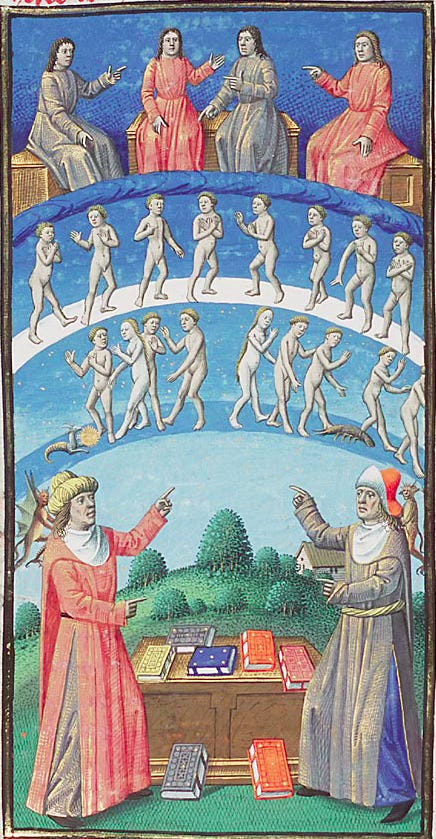
Successive generations of astrologers and magicians have sought techniques to invoke and summon the personal guardian angel or daimon. Indeed rituals to do just that form the subject matter of various famous grimoires, such as the Sacred Book of Abramelin the Mage, The Sworn Book of Honorius, and Aliester Crowley’s Liber Samekh, not to mention the ritual for contacting the Perfect Nature found in Book 3 of the Picatrix. Iamblichus’ negative opinion notwithstanding, astrologers have long sought means to draw the daimon out of the natal chart. Henry Cornelius Agrippa’s Third Book of Occult philosophy has a method to discover the name of the guardian angel by assigning a Hebrew letter to all 360 degrees of the Zodiac and taking a letter from five essential points in the natal chart. The resulting name, although somewhat artificially derived, can be an entry point into ritual work with the guardian angel.
A modern teacher of medieval astrology, the late Robert Zoller, says this of the arduous path of discovering one's daimon or guardian angel: “The knowledge of this Guardian Angel is something which is not going to happen simply by willing it into existence or by waking up one day and on a whim deciding that it would be a good thing to know one’s Guardian Angel. It requires considerable work over a considerable period of time or special theurgical techniques in order to achieve such knowledge. But once it is achieved, and only then, can the individual develop any real freedom from fate.”
Zoller’s take on Iamblichus is interesting, because he interprets Iamblichus to be saying that the daimon can be found in the horoscope and that there are rules for discovering it, but that once discovered it must be approached ritually through the spiritual hierarchy, by invoking a god or cosmocrator, in other words, the planetary spirit leading the hierarchy to which the personal daimon is attached. This ruling planet is the almuten figuris, the Lord of the Figure, which is distinct from the Lord of the Geniture, or the planet with the most dignity in the chart, or even the Lord of the Ascendant, which is the planet which rules the rising sign.
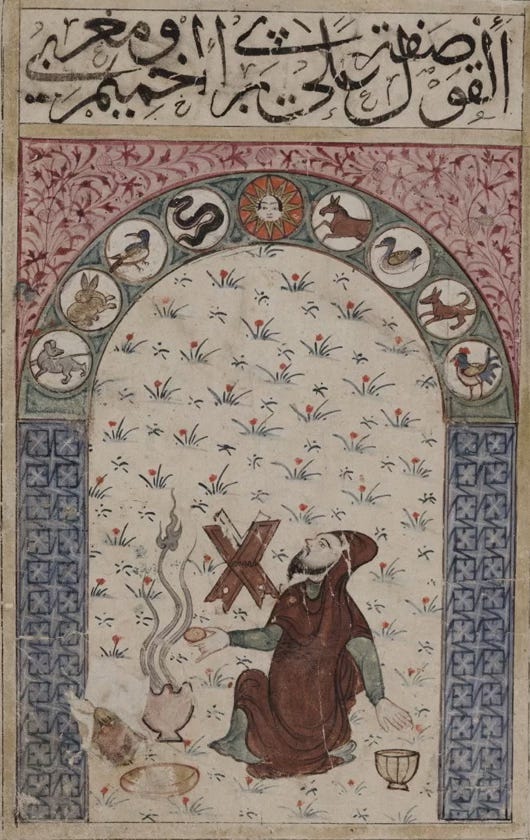
According to Zoller, the medieval Jewish astrologer and polymath Ibn Ezra had a method for discovering the almuten figuris, which most likely derived from sources close to the famous Sabians of Harran, the fabled pagan astrologer/magicians whose practice of astral magic and star worship survived well into the Middle Ages. Ibn Ezra’s sources for much of his astrological doctrines are the earlier Egyptian Jewish astrologer Masha’allah as well as the Arab astrologer Abu Ma’ashar who wrote in the 8th and 9th century respectively, and both of whom were familiar with the Hermetic writings which survived from late Hellenistic Egypt, and which were a repository of the surviving wisdom teachings of the ancient world.
Which brings us to the Picatrix and the concept of the Perfect Nature.
An essential concept in the well known medieval Andalusian grimoire the Picatrix, the Perfect Nature is yet another word for this idea of the guardian angel or personal daimon. This version, coming to us as it does by way of Arabic Hermeticism from the lineage of the fabled astrologer priests of Harran, is thoroughly associated with the astrological magic of the milieu in which it arose. Quoting an unknown text attributed to Hermes, the Picatrix tells us “A Perfect Nature is the spirit of the philosopher or sage in harmony with the planet governing him. It is that which unlocks the knowledge that is otherwise impenetrable and from which the effects of nature proceed directly in both sleeping and waking.” Thus a “Perfect Nature” considered as such in the sage or philosopher, is just as the teacher to his pupil, instructing him in fundamentals and easy things, then gradually proceeding to greater and more difficult things until the pupil is perfected in his knowledge.” The Perfect Nature is thus a spiritual guide and teacher, a revealer of the occult sciences that “fortifies the philosopher and strengthens both his wisdom and understanding so that he may accomplish all his works with greater ease.” But the Picatrix tells us in several places that in order to enter into contact with the Perfect Nature, the would-be sage must be inclined to it by the state of the planets in their nativity. In other words, the daimon doesn’t lead everyone to seek its higher form.
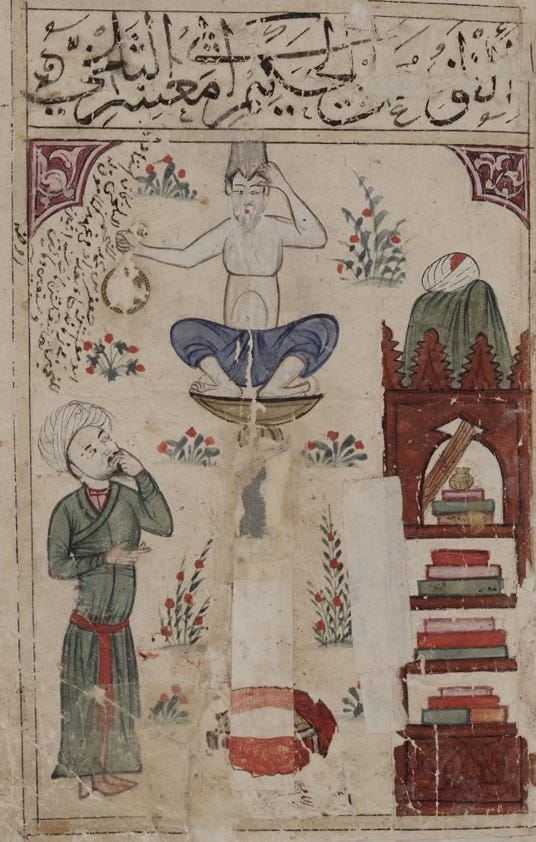
To the Hermetic philosophers the Perfect Nature was more than the merely psychological notion of the “higher self”, it was a guide, a muse, a teacher, a friend, anda connection to the Divine. Contact with this personal daimon and guardian angel was considered an essential requirement for success in the Hermetic arts as a magician, astrologer, or alchemist. Indeed, we can probably interpret many of the dialogues that form the Corpus Hermeticum as records of the colloquy between a sage and their personal daimon.
The Perfect Nature manifests in the life of the sage through the almuten figuris, their ruling planet. That planetary spirit which is both the bearer of fate and the key to liberation. It leads the soul down to incarnation, and back to union with the divine. According to Zoller “the Almutem figuris representing the peculiar Daemon represents a quality in the Soul, which so dominates us as to be our primary or chief feature. Something that is working behind the scenes in every aspect of our lives, physically, emotionally, spiritually, on every possible level.” It is necessary for the sage to find which celestial spirit presides over their guardian angel and enter into a relationship with it through the daily practice of theurgic devotion. As Henri Corbin says “The Angel is the face that our god takes for us, and each of us finds his god only when he recognises that face.”
Ibn Ezra gives us a starting point: a deceptive simple method for discovering our almuten figuris and through it connect with our guardian daimon. To make a long story short, the ruling planet is that which has the highest dignity in several key degrees, the five “hylegical” places, those which are used to calculate the hyleg, “the giver of life” as well, which is used in length of life calculations. The planet of the day and hour of birth are scored too, as are the houses in which the 7 planets are placed. (Here is a link to astrologer Christopher Warnock’s excellent website with the full Ibn Ezra method, as well as lots of other lore on the guardian angel/daimon.)The name of the guardian angel/daimon is ascertained by assigning a letter to each degree in the Zodiac and extracting a name from the letters corresponding to the same five hylegical places, and adding an angelic suffix -el or -iah, thus making it an angelic name. Following Agrippa, I prefer to use Hebrew names.
Thus armed with the name and planetary power ruling over the angel, the practitioner is ready to begin approaching the guardian angel with devotional practices. It is important to realize that this is only a starting point for contact. When contact is achieved, as Iamblichus said, the daimon may reveal its own name, and its own preferred method of being called. It does seem like this method lacks the spontaneity of a purely ritual method, and may seem a bit mechanical or artificial. It is, however, a method with an ancient pedigree and one that may come down to us as a direct transmission of the ancient Hermetic texts, and therefore is not to be taken lightly.
I believe there are as many ways to contact the guardian angel and develop a relationship with it as there are people, but ritual practice and cultivation of internal silence in order to be able to hear the sometimes quiet voice of the daimon is essential. As is discernment. The grimoires mentioned earlier in the essay are valid and powerful methods. There is no doubt that many months of isolation, seclusion, and constant daily prayer called for in the Abramelin ritual could not fail to put one in contact with the guardian angel. Unfortunately for most of us, that kind of commitment is not possible, and may not even be the right way to contact our personal daimon, which is unique to us and is to be contacted and known according to its own nature and planetary virtue. The daimon is many things to many people, according to their needs and tastes. It can be an angelic being of light or if you’re an edgier Saturnian sort, a darker shadowy figure, a warrior angel if you’re of a more Martial nature, a love goddess to the Venusian spirits, contacted with music and flowers, you get the idea. For some of us, the contact is unavoidable, the insistent angel won’t be denied. It urges us out of our comfortable life to embrace the calling of our destiny.
If you want help examining your natal chart for clues as to your angel’s design for your life, as well as to discover your guardian angel name and your ruling planet, the almuten figuris, please contact me to book a natal reading. You can message me on Substack or email me at thecunningfarmer@proton.me
If you like what you are reading here please consider supporting my work by becoming a paid subscriber, and by sharing, restacking, liking or becoming a free subscriber.
My book The Cunning Farmer: Agrarian Magical Practices, Mythology, and Folklore has finally been published by Inner Traditions International and is available through all major bookselling outlets. Please consider ordering a copy from your local independent bookstore or direct from the publisher by following this link.
Bibliography and Suggestions for Further Reading:
Greenbaum, Dorian Gieseler, The Daimon in Hellenistic Astrology
Greene, Liz, Jung’s Studies in Astrology
Stang, Charles M. Our Divine Double
Zoller, Robert, Diploma Course in Medieval Astrology book
Frater Acher, Holy Daimon
James Hillman, The Soul’s Code
Plato, The Apology, Timaeus
Macrobius, Commentary on the Dream of Scipio
Iamblichus, On the Mysteries
Attrell, Dan and Porreca, David, The Picatrix
Warnock, Chris and Greer, John Michael, The Picatrix
No posts
Comments
Nothing yet. Say the first thing.
Sign in to join the conversation.