
The Gist: Higher oil prices are ultimately needed. Otherwise, the Kingdom will have little choice but to continue increasing its debt burden.
Programming Note. We are away on vacation next week to the mountains of New Hampshire. I will be back in your inbox on the 27th. Hope you are having a great summer.
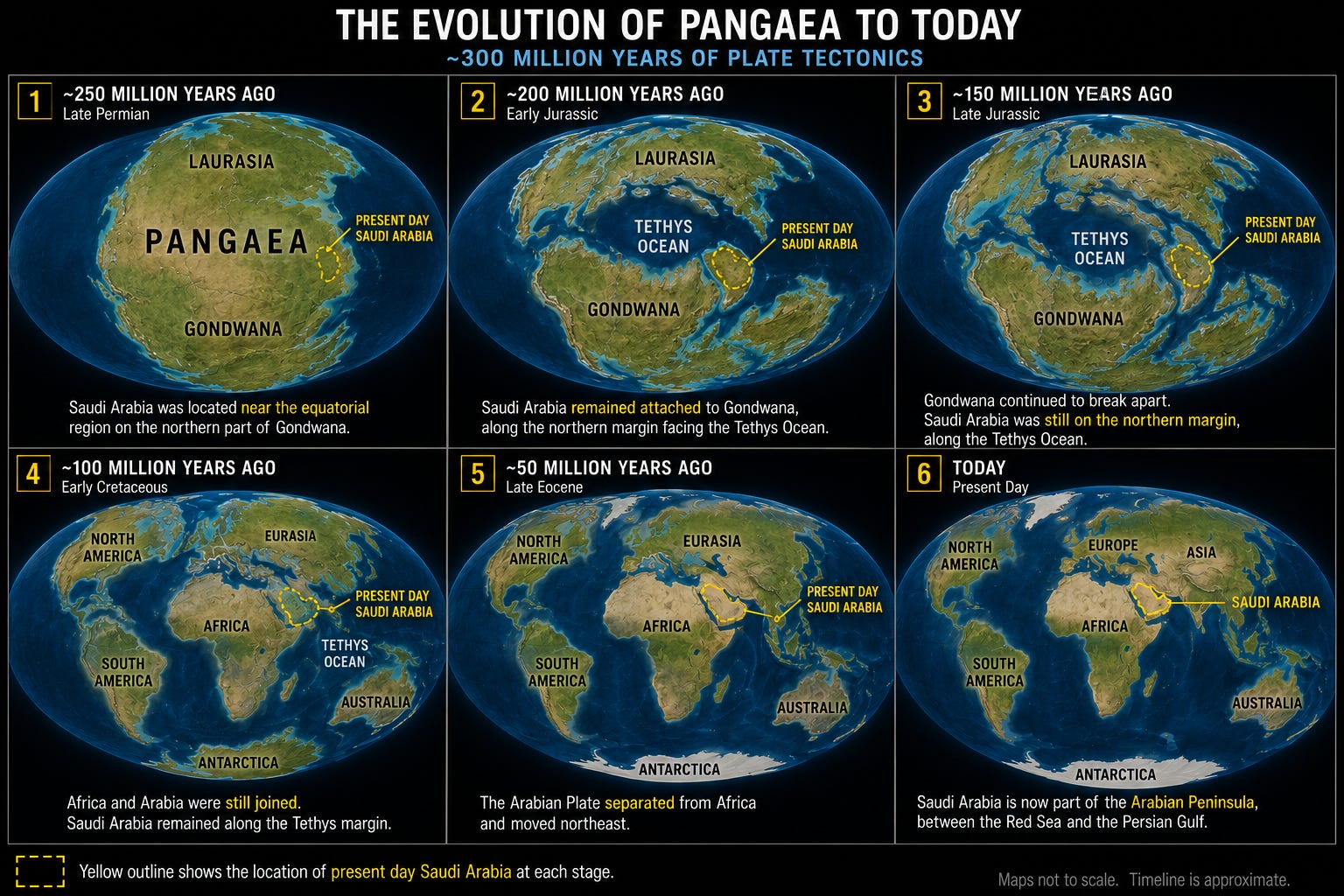
250 million years ago, all of Earth’s continents were joined together in a single supercontinent known as Pangaea. What would eventually become Saudi Arabia lay on the Arabian Plate, beneath the ancient Tethys Ocean.
The Arabian Plate—at the heart of present-day Saudi Arabia—was exceptionally fortunate from a geological perspective. It possessed nearly every ingredient needed to create one of the world’s greatest petroleum systems, and those conditions extended across an enormous area.
For millions of years, it was covered by shallow, warm, tropical seas—much like the modern-day Bahamas—providing the ideal environment for vast accumulations of organic material that would eventually be transformed into the oil and gas that powers today’s global economy.
Organic-rich marine source rocks generated enormous quantities of hydrocarbons, while thick carbonate reservoirs provided exceptional porosity and permeability to store them. Overlying layers of evaporites—formed as ancient seas repeatedly evaporated—created near-perfect seals, trapping the oil and preventing it from escaping.
For a petroleum geologist or reservoir engineer, it is about as close to the perfect petroleum system as nature can create.
This geological endowment makes finding, developing and producing a barrel of oil in the Middle East the cheapest in the world at approximately $8/bbl to find crude and $3.5/bbl to lift it out of the ground.
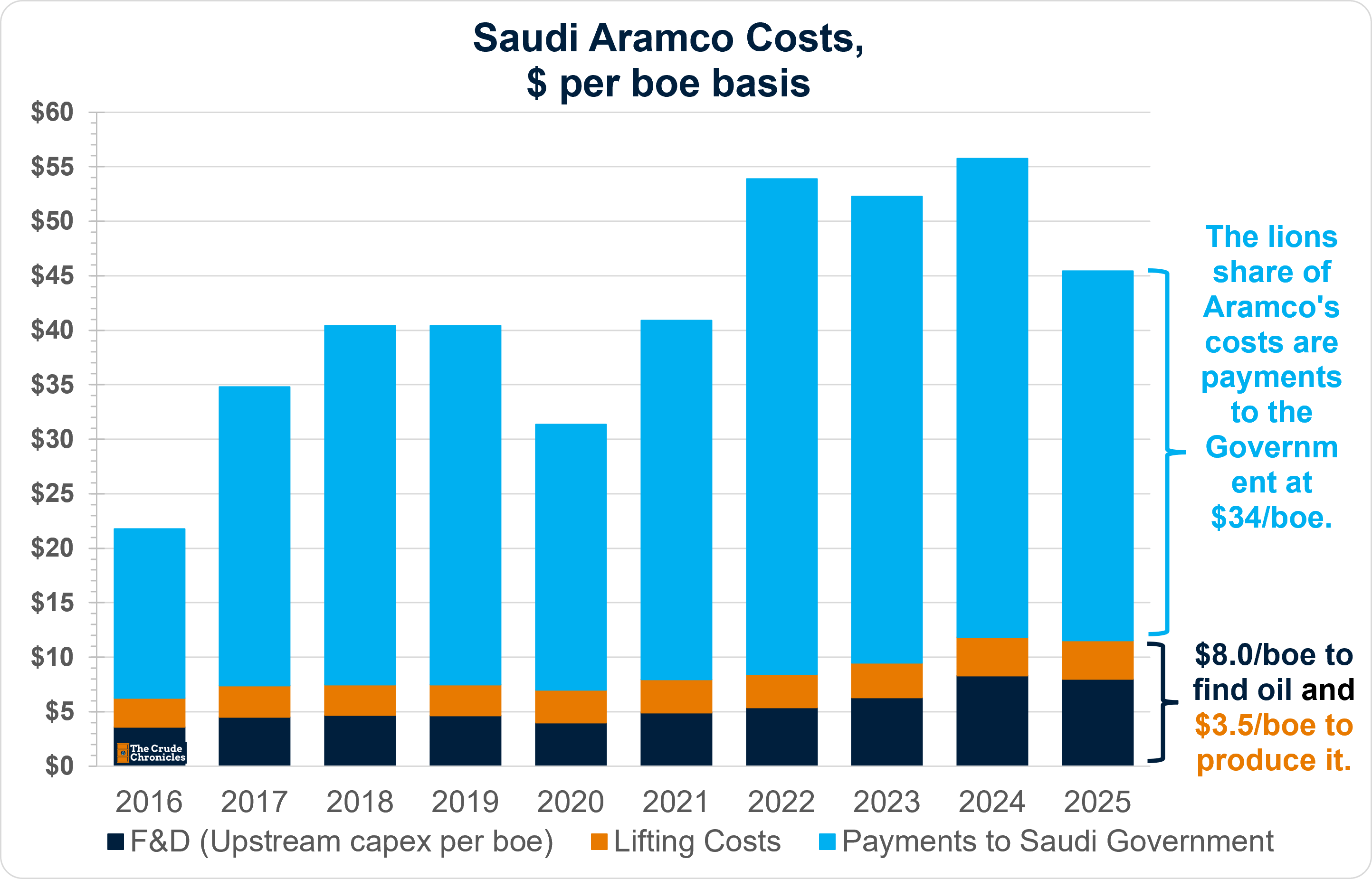
Contrast this with Western oil & gas companies where the cost of finding, developing oil producing oil is $30/bbl.
Comments
Nothing yet. Say the first thing.
Sign in to join the conversation.