
The Gist: Canadian Oil & Gas producers have become cost competitive with U.S. shales.
We’ve receive more and more requests to publish on the Canadian sector, so we spent our summer doing two things.
First, rewatching Game of Thrones. It’s just as good the second time around.
Second, we spent it gathering data on Canada’s oil & gas producers “North of the Wall.”
Much is made of the U.S. shale revolution, but Canada’s production story has been just as remarkable. Technological advancements have steadily lifted output to nearly 6.5 million barrels per day, with the oil sands now accounting for well over half of production through both in-situ operations (31%) and mining (27%).
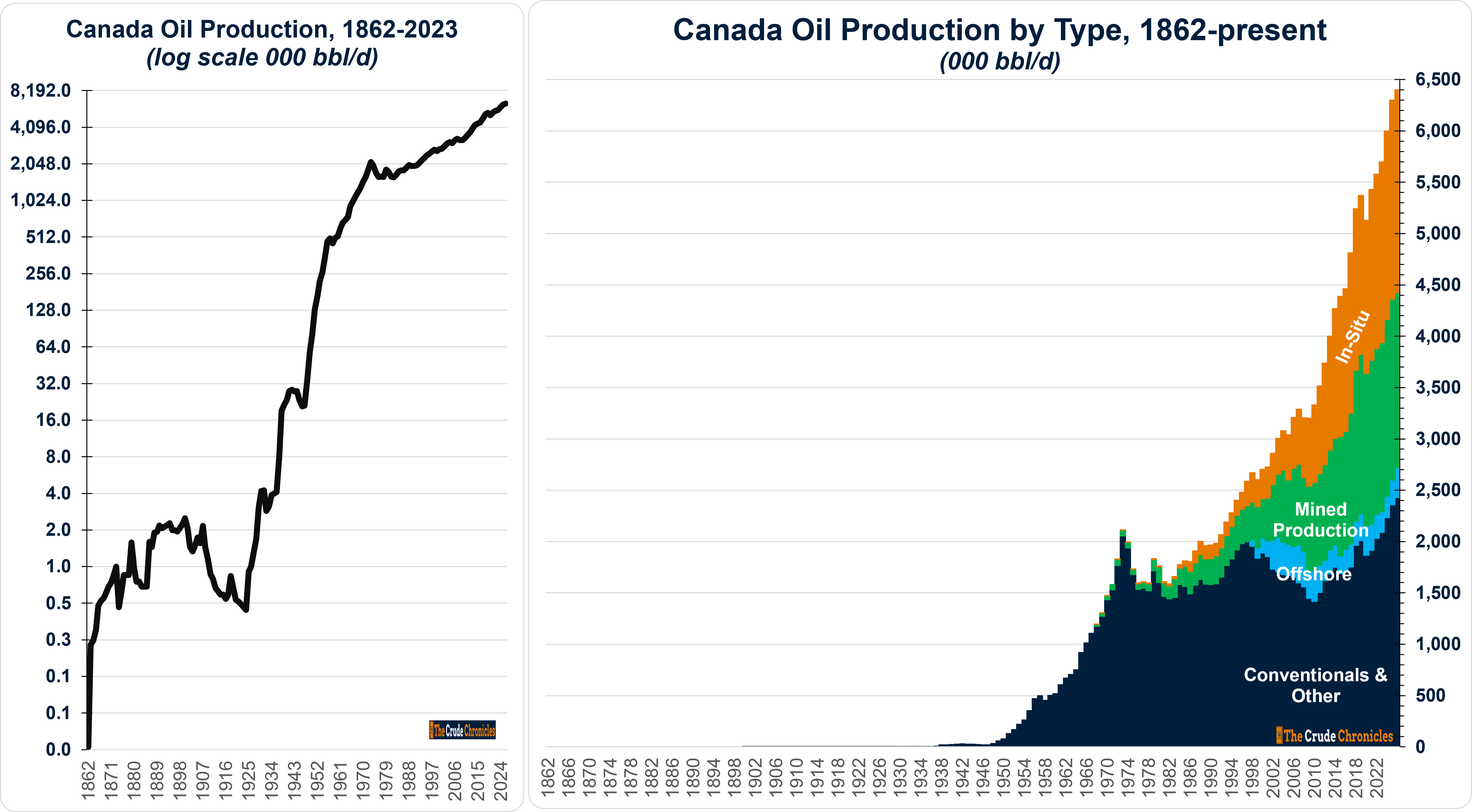
Growth was driven massive capital spending budgets during the 2000s to develop Canada’s oil sands—both in-situ and mining operations—as well as its conventional resource base.
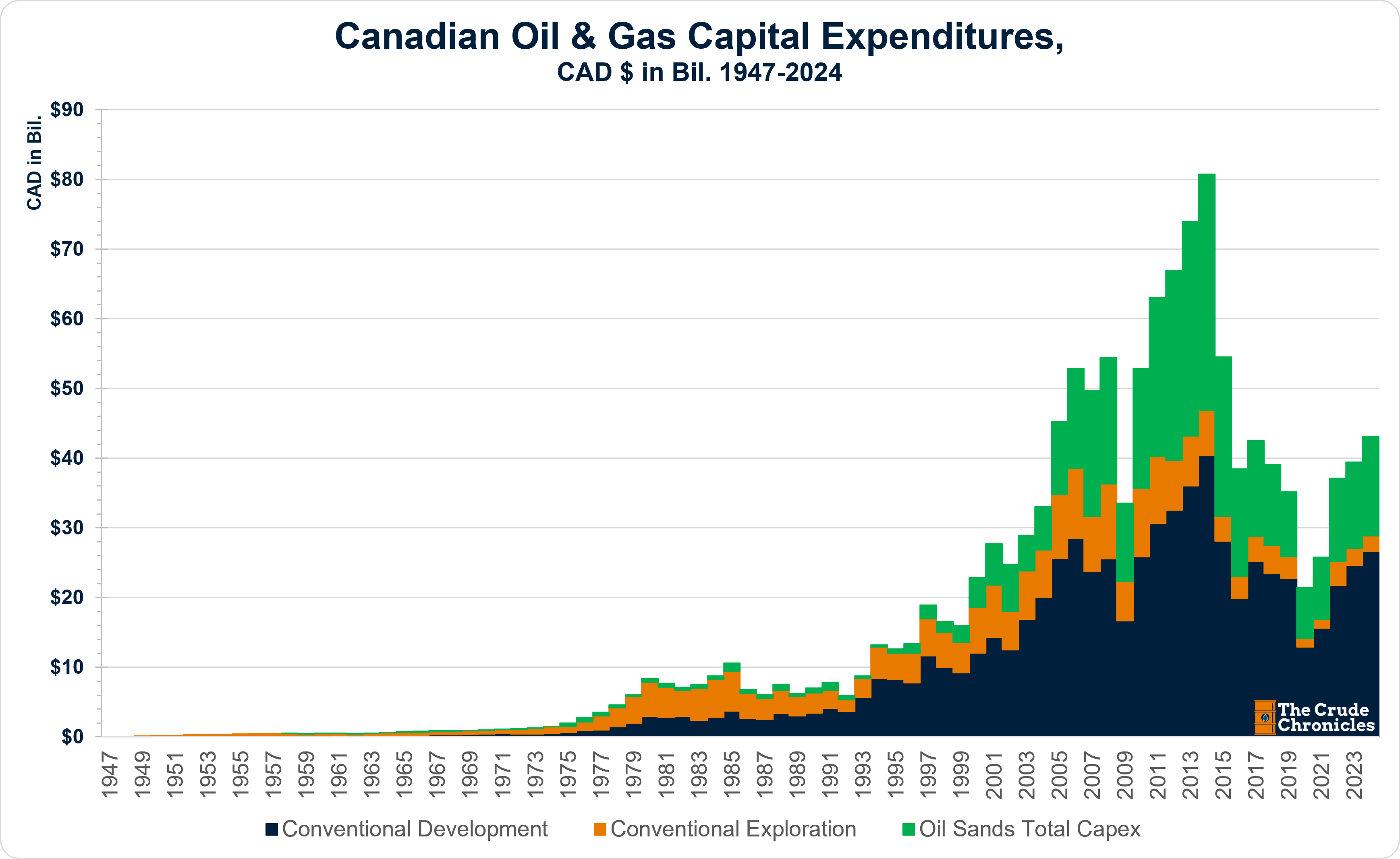
But because of this, returns and shareholder value were destroyed in the ensuing decade of the 2010s.
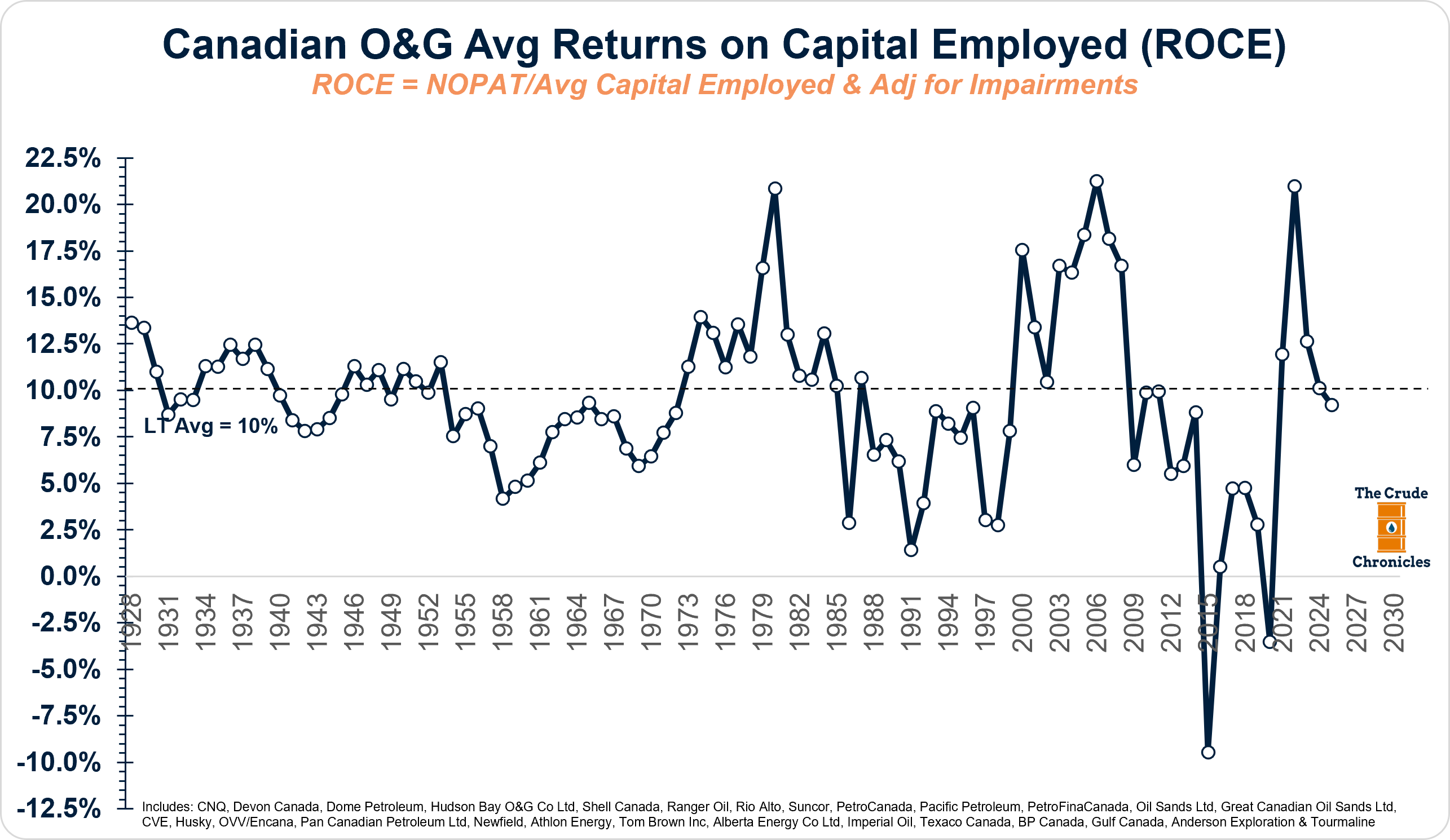
Those unable to create value for shareholders were eventually forced to an acquirer for the latter to unlock value.
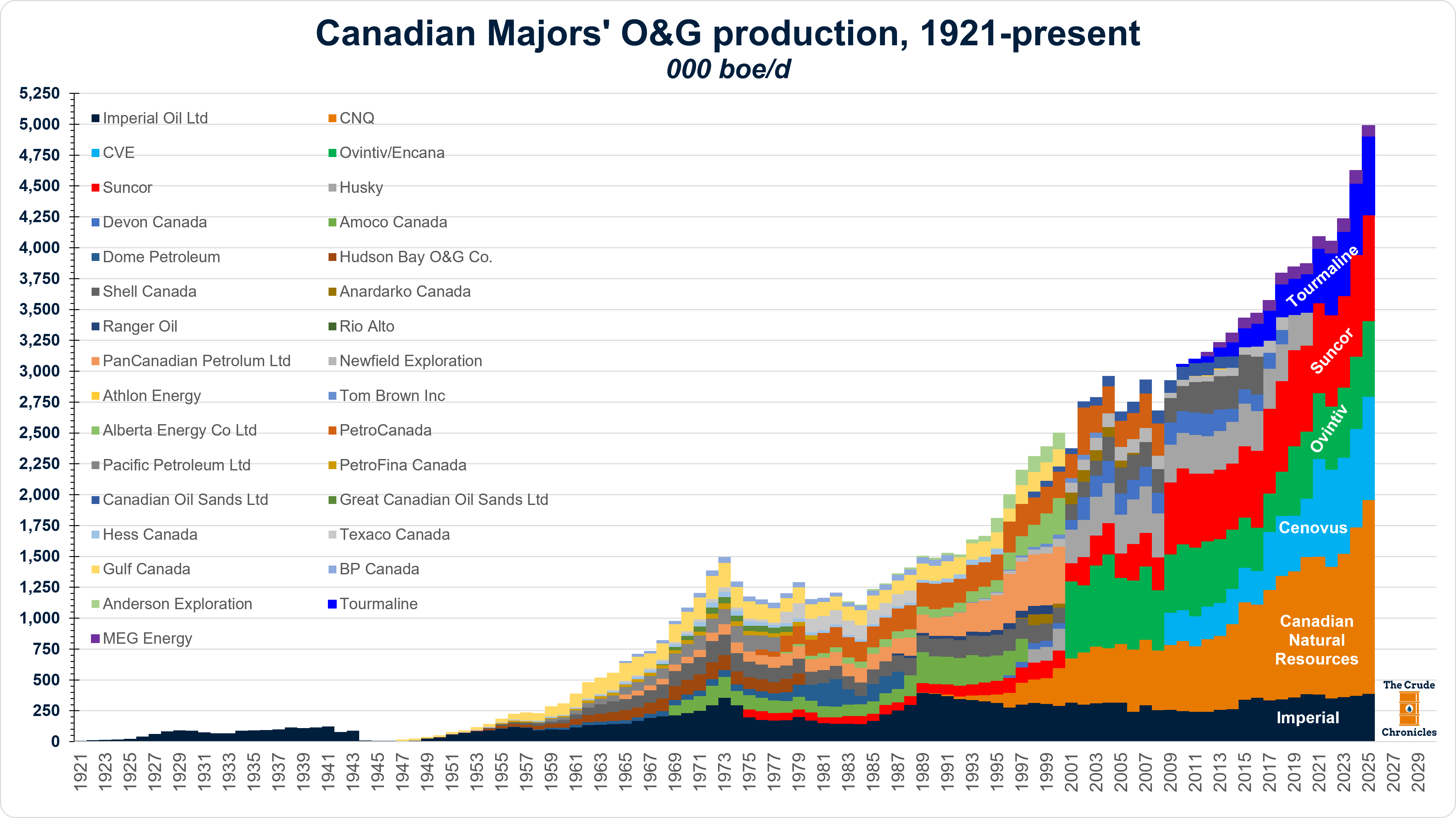
Side note: Nearly every O&G sector that has consolidated to create shareholder value has succeed or in the process of doing so. These include U.S. refining, U.S. oily E&Ps, Canadian producers, and offshore drillers. We hope the U.S. oilfield service industry would follow suit (HERE).
Canadian majors struggled to create value for shareholders because they became very capital intensive and lost their cost competitiveness.
Recall that our Oil Price Model 2.0 (HERE) is built on the premise that supply will always rise or fall to meet demand. As a result, it is the marginal cost of supply—not forecasts of inventories or demand growth—that ultimately determines long-term oil prices.
This model can also tell us who will become more competitive within the global oil markets.
Three components determine that marginal cost: the cost of finding and developing the next barrel, the cost of lifting it from the ground, and the taxes paid along the way. Because oil and gas are depleting assets, every barrel produced must eventually be replaced, forcing producers to repeat the process over and over again.
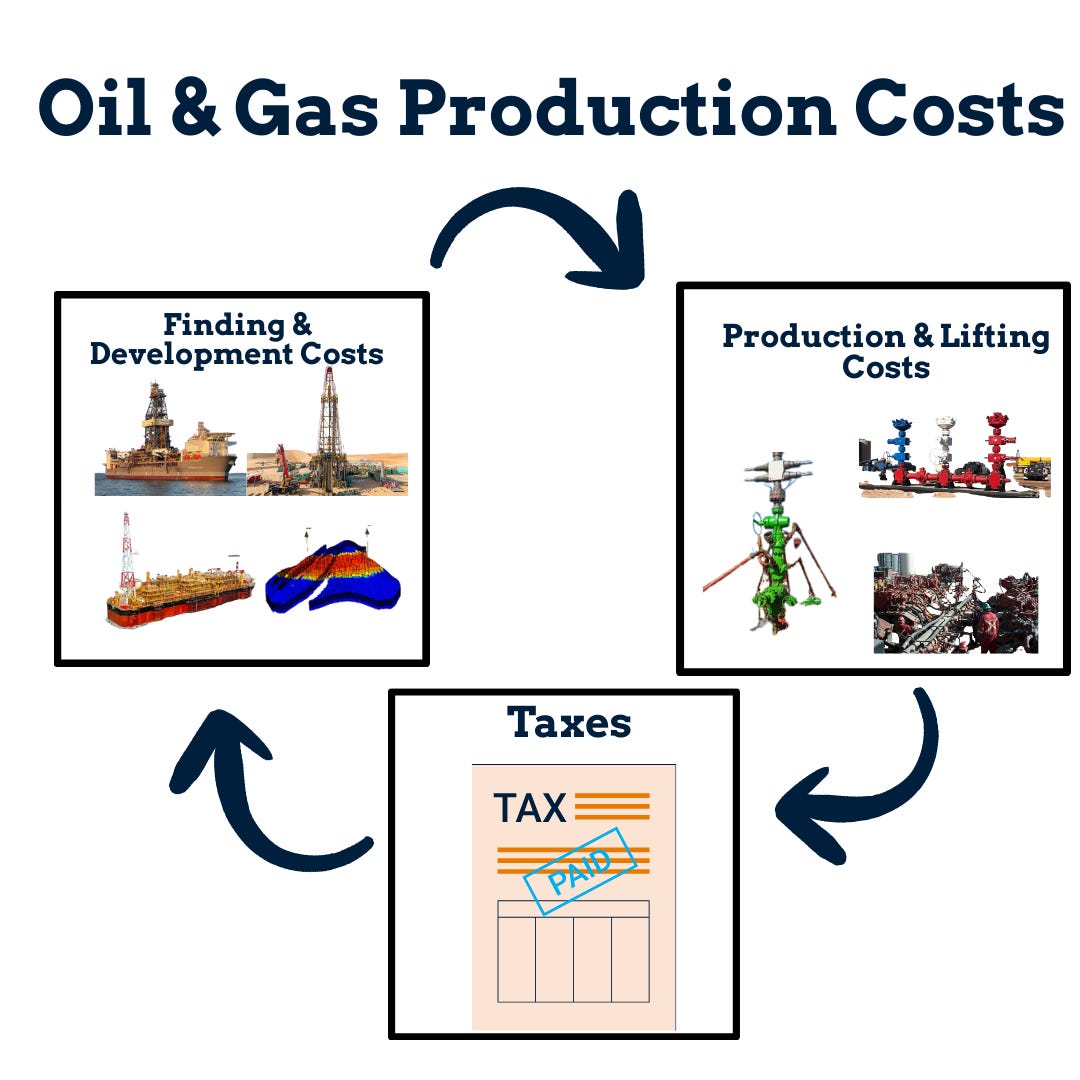
From 2014 through 2021, Canadian producers lost cost competitiveness to U.S. shales as shale E&Ps reduced finding and development costs at a much faster pace. Today, however, that advantage has largely disappeared.
Comments
Nothing yet. Say the first thing.
Sign in to join the conversation.