
The Gist: Big Tech executives are rewarded for growth, not capital efficiency. As markets increasingly question the returns on AI spending, relative share price performance has begun to suffer. Those same incentive structures may ultimately force management teams to reduce capital spending in order to protect the small fortunes tied up in the vesting of long-term equity incentives.
In August 2007, at the height of the housing bubble, Edward Leamer of the National Bureau of Economic Research (NBER) famously coined the phrase, “housing is the business cycle.”
For decades, that largely held true. When housing-related spending and employment faltered, so did the broader economy. Today, however, AI-related spending has grown to such proportions that it has become one of the primary pillars supporting both the U.S. and global economies.
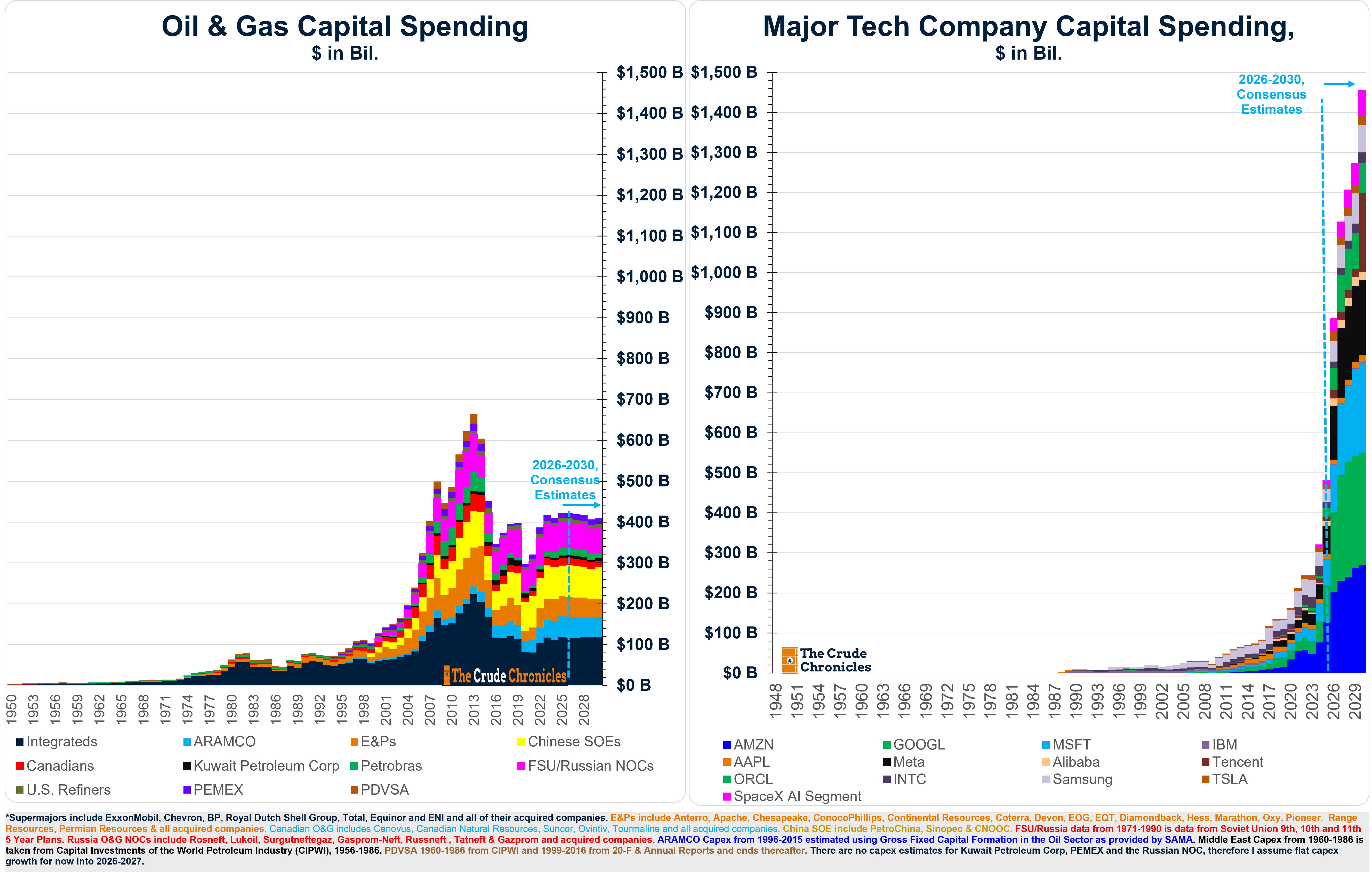
The mantra phrase has shifted and now "AI has become the business cycle."
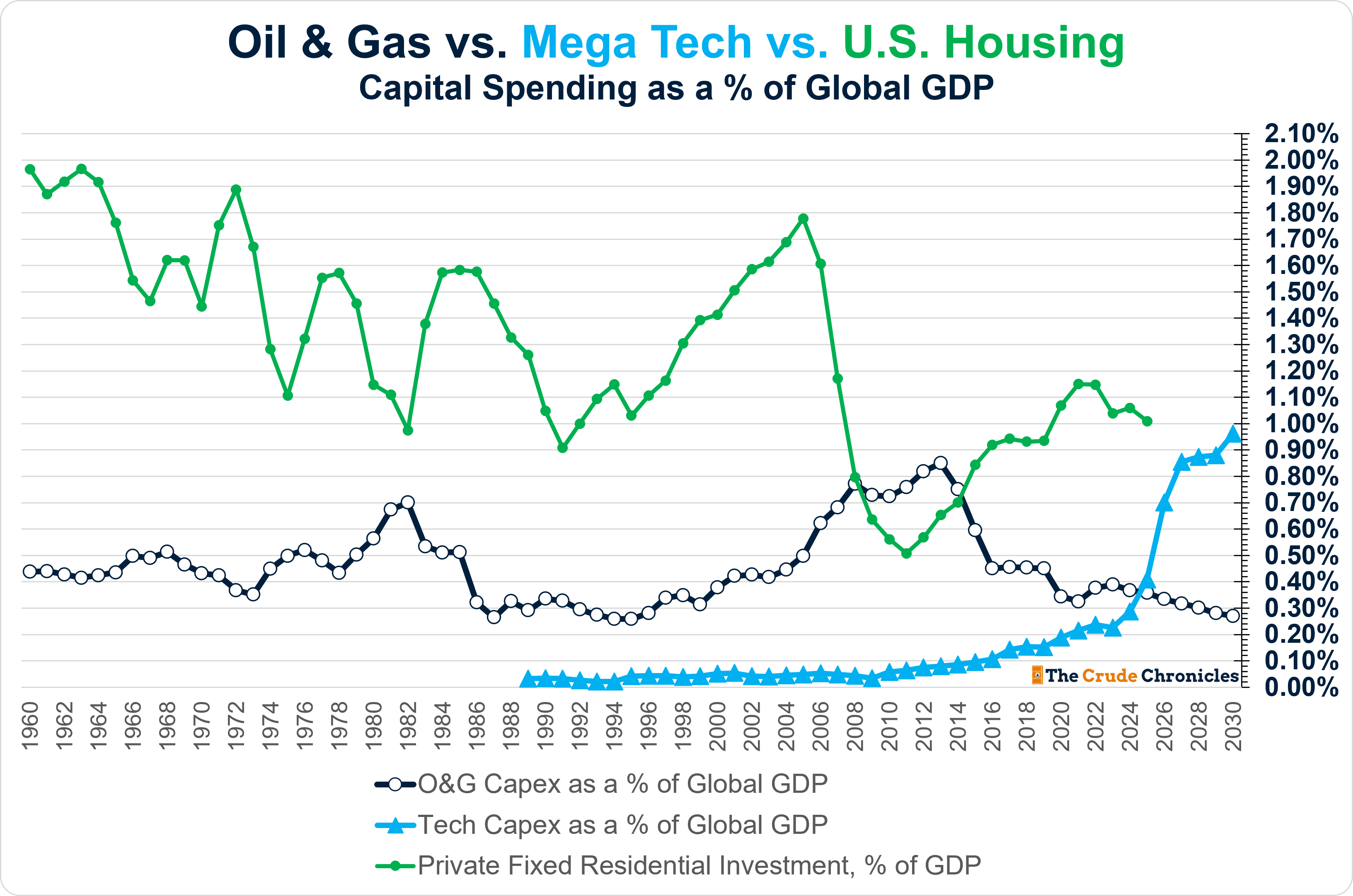
Every investment boom is wrapped in a narrative. More often than not, those narratives are framed in terms of national interests.
The housing boom of the 2000s was sold as a way for every American to achieve the “American Dream.” Instead, it ended in one of the most severe financial crises in modern history and a prolonged period of deleveraging.
The shale revolution of the 2010s was championed as a path to “energy independence.” Yet, as recent geopolitical events have reminded us, oil and gas markets remain global, and prices continue to be set at the margin on a global stage.
Today, the AI revolution is being framed through the lens of geopolitical competition, with governments and corporate leaders warning that falling behind in the race for artificial intelligence is a national security risk.
But executives do not allocate capital because of narratives. They allocate capital according to the incentives established by their boards. Therefore it is important to understand the incentives that are in place that drive this build out.
The shale revolution began in natural gas, where E&P executives were rewarded for growing production and reserves. Many compensation plans even granted management direct working interests in wells, effectively placing production growth ahead of shareholder returns.
So they drilled.
Comments
Nothing yet. Say the first thing.
Sign in to join the conversation.