
Welcome to Crisp Packet, a weekly dispatch of sharply observed, hunger-driven lifestyle recommendations, shared like a torn-open bag of ready salted in the pub. Sign up here:
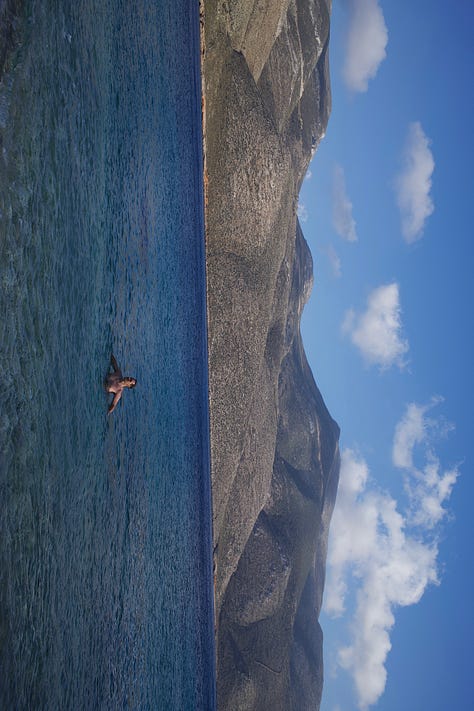
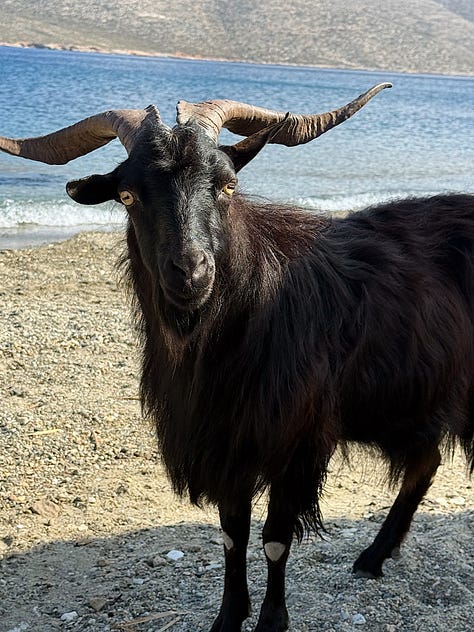
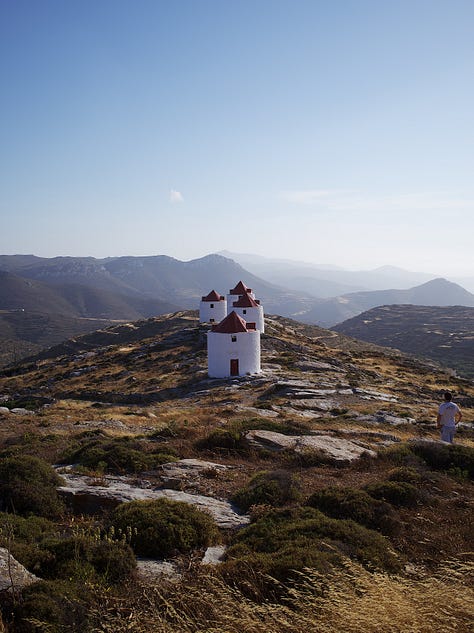
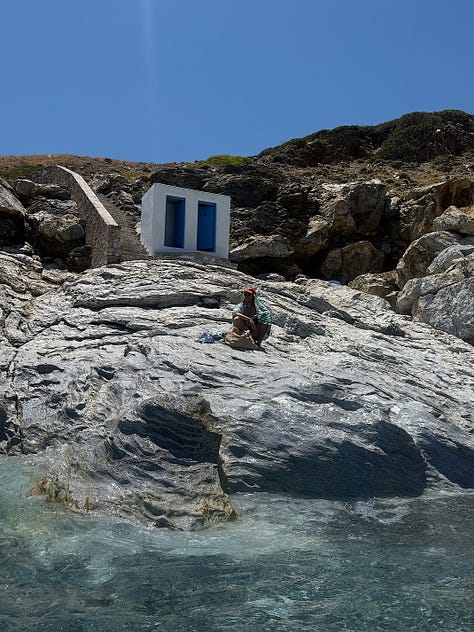
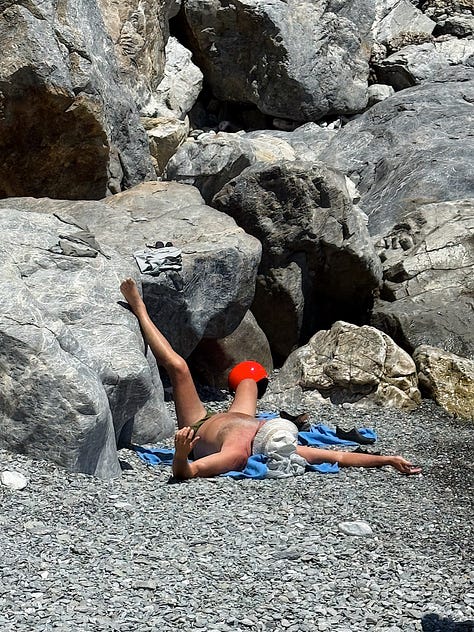
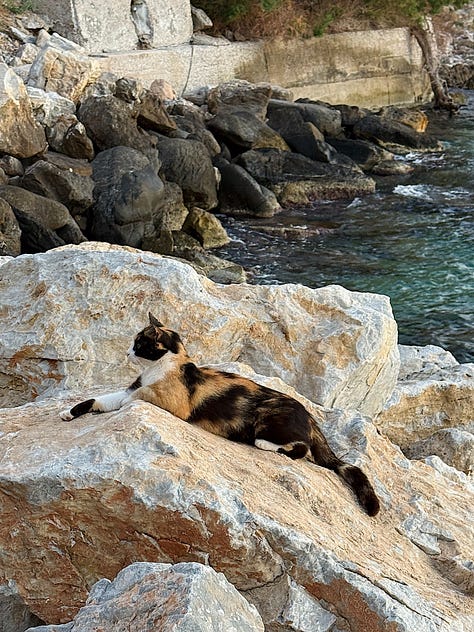
Since getting back from Greece three weeks ago, my other half occasionally asks if I’ve decided which Greek island is my favourite. And while I still haven’t made up my mind, when I start listing all the things I loved about each, the tally for Amorgos ends up being longer than the rest by some stretch. It’s quiet, the beaches are exceptional, it’s easy to get around, the tavernas are both atmospheric and affordable. The sunsets are stunners. Wild goats rule the roads. Everyone’s friendly. There’s a lot to love.
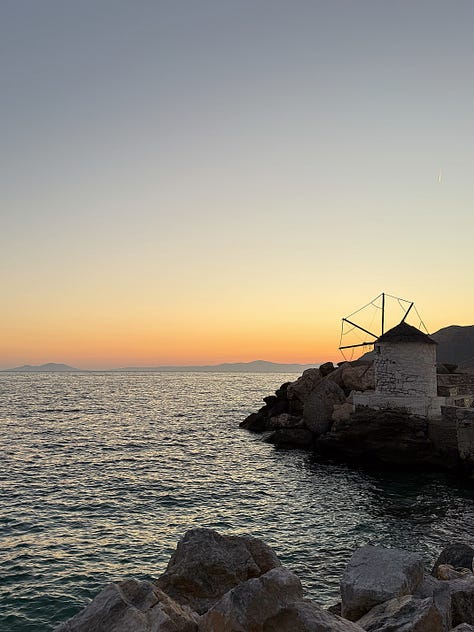
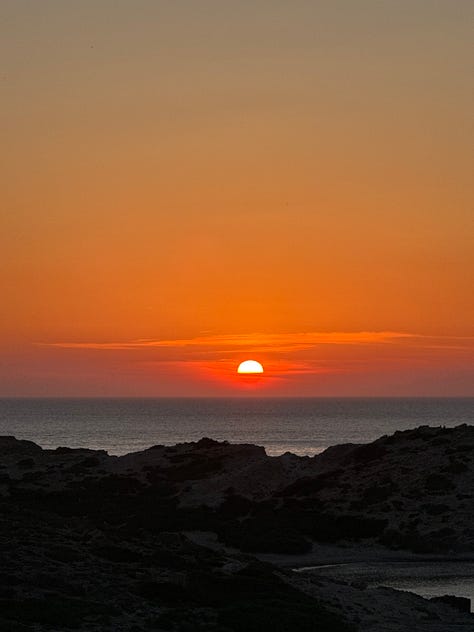
Those hirsute goats made an impression from the moment we arrived. Jumping off the ferry from Tinos and into our Suzuki Celerio, we’d accidentally timed our arrival for one of the island’s highlights – the drive north at sunset. The road takes you high before plunging down, and you’ll see plenty of goats clinging to the hills as you go. We arrived in Aegiali just in time to see the sun sink into the sea as we cooled off with a dip and a lemon Fanta.
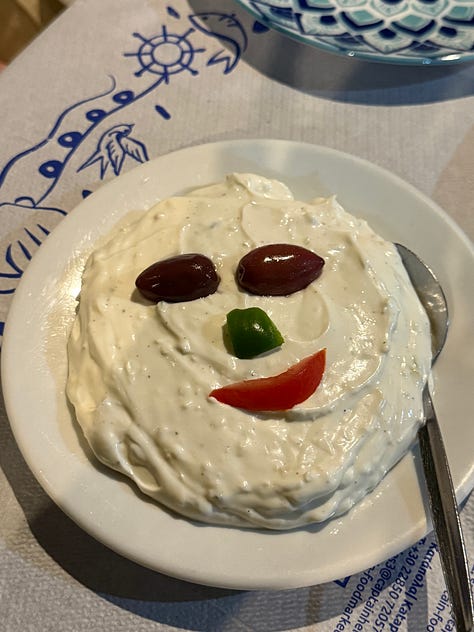
We stayed in Langada, one of two hilltop villages that tower above Aegiali bay. Although I’d have loved to have spent more time pottering around the streets and shops, I feel like we got to know it well. We loved Koubara – and chef-owner Andriani – so much we went multiple times. Her joy for cooking and looking after guests was infectious, and we enjoyed sharing her homemade raki with her as we paid the bill. Taverna Nikos was fun for a beer and a plate of tzatziki, which came with a grinning face made from olives and peppers, matching the smiling suns painted on some of the pavements throughout the village. Cake shop Tratarisma was great for picking up beach picnic supplies, while the tiny church built into the hill above Langada was well worth the step count.
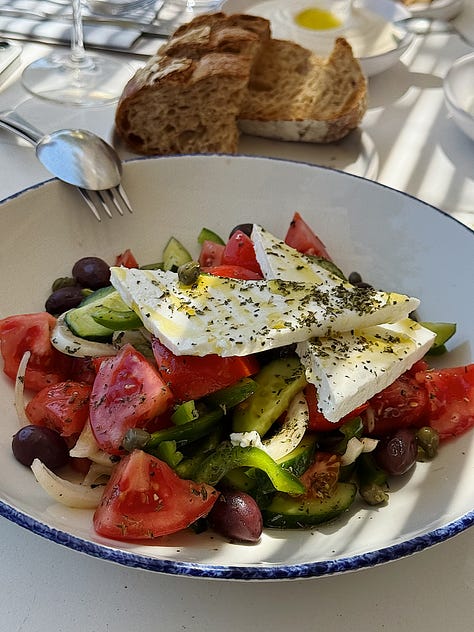
We also loved roaming around the mirror-image village of Tholaria across from Langada. Zaxaroplasteio O Nikolas was a great spot for morning coffee and a slice of orange pie (theirs came with a slightly chewy crust, like treacle tart), while Τhalassino Οneiro was a fun spot for fried feta and moussaka one evening. (Iannis and Sofia, who’ve run it for decades, were a delight). Our Airbnb host told us about two slightly hidden beaches to walk to from Aegiali. Paralia Levrossos is sandy with trees for shade seekers, with a lovely taverna where we shared chicken skewers and a greek salad. A 15-minute walk along the coast is Psili Ammos, even quieter and beautiful to swim from.
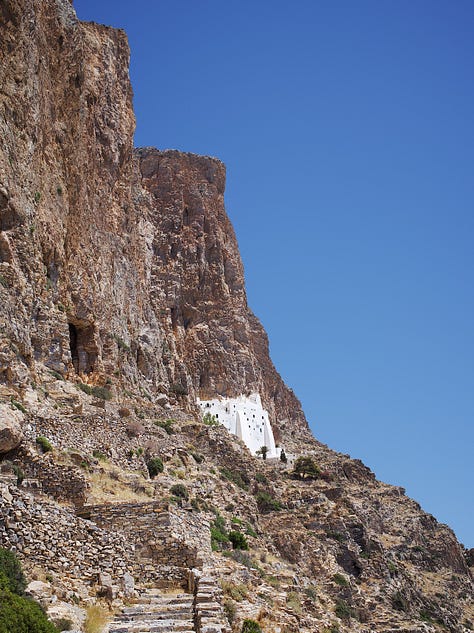
Our day in central Amorgos was a highlight. We spent the morning sunning ourselves on slabs of rock at tiny Agia Anna beach. I could have stayed there all day, dipping in and out of the water. If you swim out far enough, you’ll catch a glimpse of the Monastery of Hozoviotissa, which is nicknamed the ‘hanging monastery’ as it’s carved into the cliffs, 300m above the sea. It’s a steep but easy walk up to its gates. You won’t be able to enter in shorts and t-shirts, but there’s a selection of modest clothing tied to the entrance to wear if needed (wish I’d known about that before trekking up in trousers in 35ºC!). The views down into the deep-blue sea are impressive, but what left the biggest impression was the glass of raki and cube of loukoumi we were offered up in the monks’ living quarters. Just in time for sunset, we headed to the hills above Chora to walk among the island’s famous windmills, followed by an excellent made-to-order souvlaki at O Zoumeros.
Driving along the island’s main road, you’ll see Nikouria rising from the sea. You can visit it by catching one of the old fishing boats that regularly leave from Agios Pavlos. In 10 minutes, you’ll be on the sand, staring back at the peaks of Amorgos. There’s excellent hiking over here, and you’ll often stride alongside the goats that rule this uninhabited island. They were even chilling on sunbeds when we visited (there’s one beach that has parasols and a snack shack/bar). For one of the best swims of your trip, hike up to the church and drop down to the beach on the other side. We had the place to ourselves and it was glorious. We caught the last boat back to the mainland at 7pm on our final evening – just in time for one more sunset.
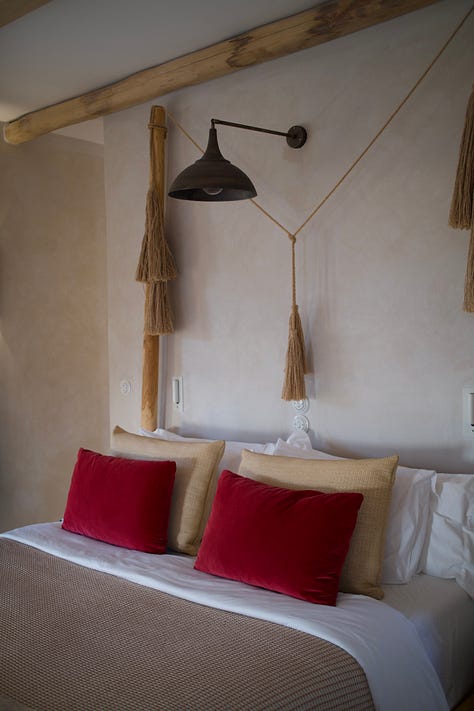
Where to stay: An Airbnb find, we booked in to stay with Marco up in Langada. Marco has four places – collectively named Alonistria – for between two and six guests dotted around his beautiful garden, which looks out towards the sea. Each evening, we loved sitting on the terrace with his cats, looking out over the sunset (armed with insect repellent) before we headed out for moussaka. He’s got a great eye for design – even the smallest home, which we stayed in, had lovely touches and I could happily have stayed there for a week. The quiet location also wins points – we even walked alongside a gloriously fluffy beech marten on our way to dinner one evening.
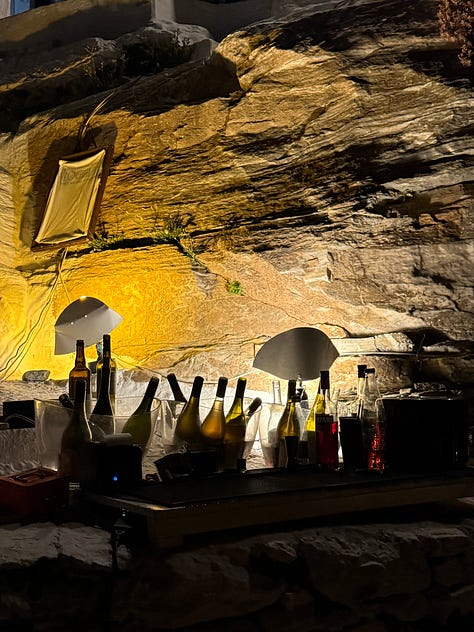
I’ll admit that we might have got off on the wrong foot with Sifnos. We dinged the hire car before we’d even left the rental car park, the Airbnb was hard to find and further away from the centre than we realised, our much-anticipated dinner at wine bar Loggia was a massive let down (although there was a lovely cat that curled up in my boyfriend’s lap all evening) and after the serenity of Tinos, Antiparos and Amorgos, the island felt heaving – full of Brits (guilty!), Aussies and Americans.
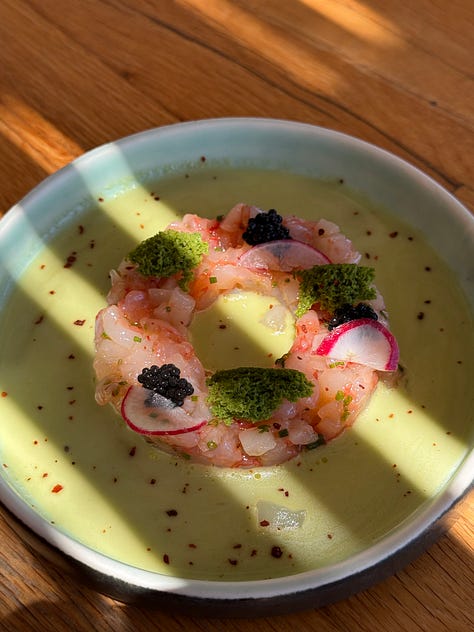
Things changed fast overnight. We woke up and meandered down the streets of Artemonas, grabbing coffee at Yellow Bicycle. We admired the goods in historic bakery Venios and the 70s Braun clock in the nearby church that clashed wonderfully with the rest of the gilded interiors. And – crucially – we had lunch at Omega3. Omega3 is a wonderful restaurant. On the beach in Platis Gialos, its covered terrace is festooned with colourful papier mache fish. We ate many things that blew us away: slices of cured amberjack in katsuobushi butter; raw shrimp and scallop in jalapeno sauce; a refined take on Sifnean chickpea stew served with trout and barbecued greens; a crayfish and ouzo orzo that’s had me cooking with lots of orzo since I got home. We finished with a homemade white chocolate and pistachio Magnum – followed by a swim and a wander to look at some pottery. Perfection.
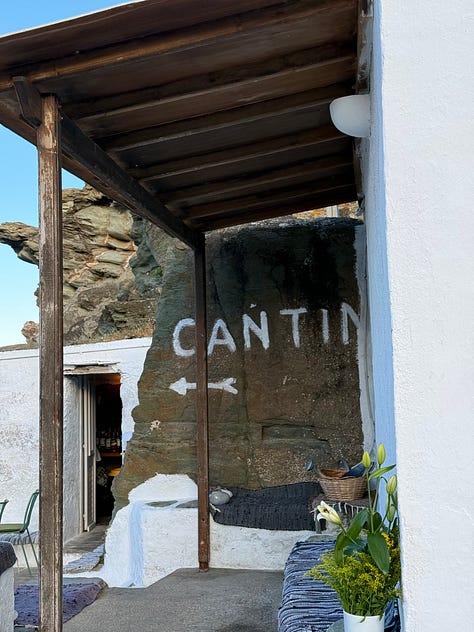
Across the board, the food we ate in Sifnos is some of the very best I’ve had in Greece. I’d been anticipating my reservation at Cantina as much as Loggia, but this one exceeded the hype. Down by a tiny bay beneath Kastro, it’s a gorgeous terrace that has two sittings a night. We sat with a lovely couple from NYC and next to a wedding party, so the vibes were high. Across a couple of hours, we ate grilled dragon fish with spicy greens (can’t get enough of ‘em), a plate of semi-cured bonito and a pudding comprising pretty much all my favourite things: brown bread ice-cream, fig jam and brown butter sauce. Cor.
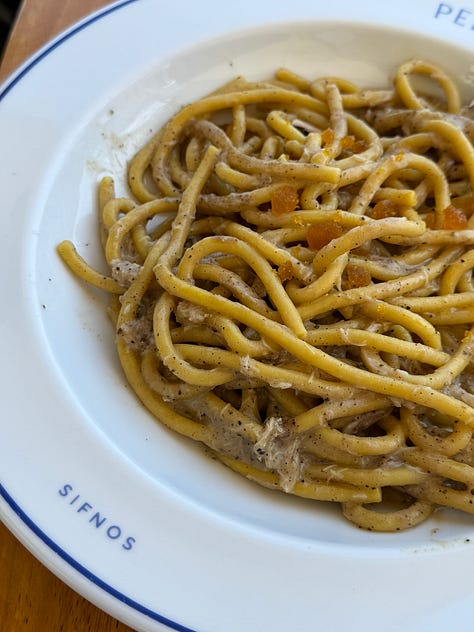
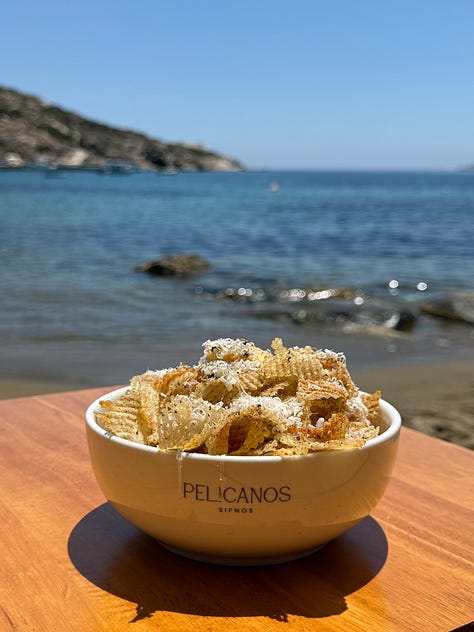
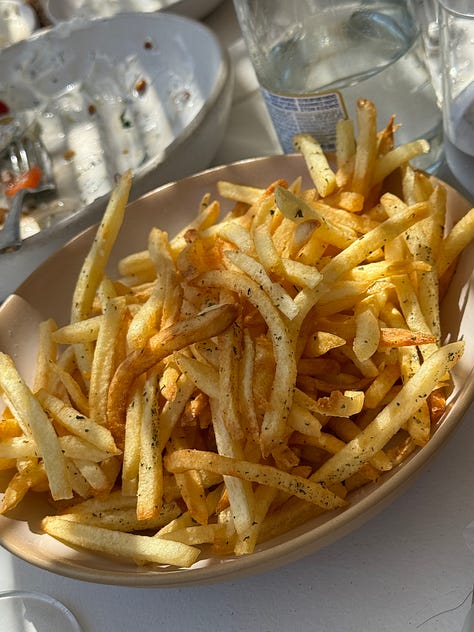
Sister restaurant Pelicanos at Faros beach had a lot to live up to the following lunchtime. But with a table and chairs that sank into the sand, the sea one metre away and a menu featuring tomato martinis, crab cacio e pepe and homemade crisps topped with local cheese and seaweed, not much could go wrong. All the above was sensational, but the Cycladic cheesecake – made with four cheeses from across Tinos and Sifnos, and drizzled with local honey – won best dish for me. Food on Sifnos is expensive compared to other islands, where the best meals can often be €40 all-in for two, but we ate creative and exciting things. I’m just gutted we were two days too early to catch the opening of Ofelos in Apollonia. Next time.
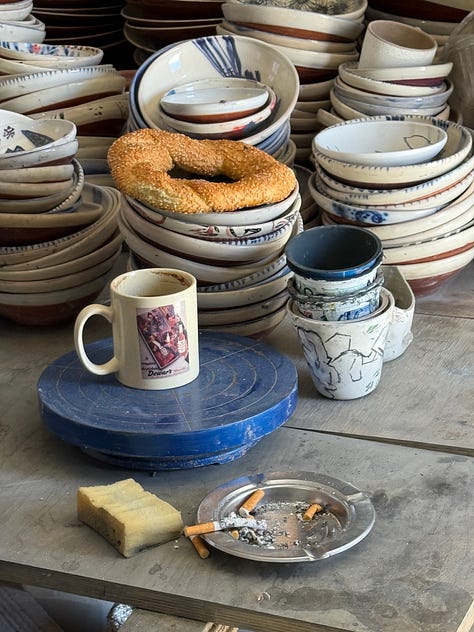
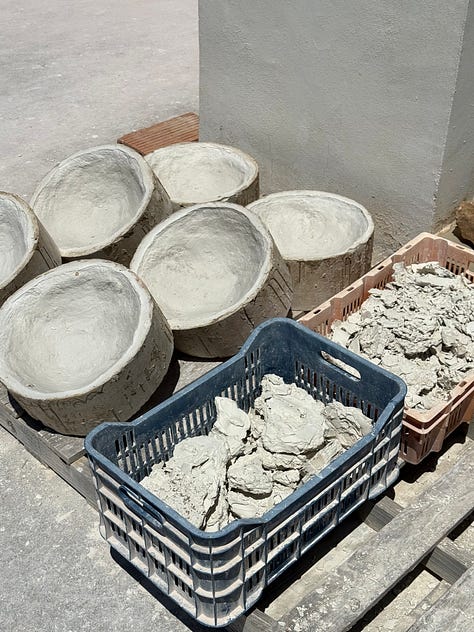
At lots of the restaurants, we spotted pieces by Sifnos Stoneware, a beautiful ceramicist in Artemonas. It’s easy to spot, as it’s on the side of the main road, but there are lots of smaller, old-school pottery workshops dotted about the village. My favourite was cash-only Lembesis. We could have bought tons, but settled for a bowl painted with goats, in honour of our Amorgos pals. I loved chatting to owner Ioannis – helpfully translated by a family member – as he sgraffitoed fish around the inside of a huge bowl. He told me it would take him two hours to do the whole thing. I loved his set-up, as seen in the middle photo above: an ashtray, a sesame koulouri for lunch and a mug of coffee on the go.
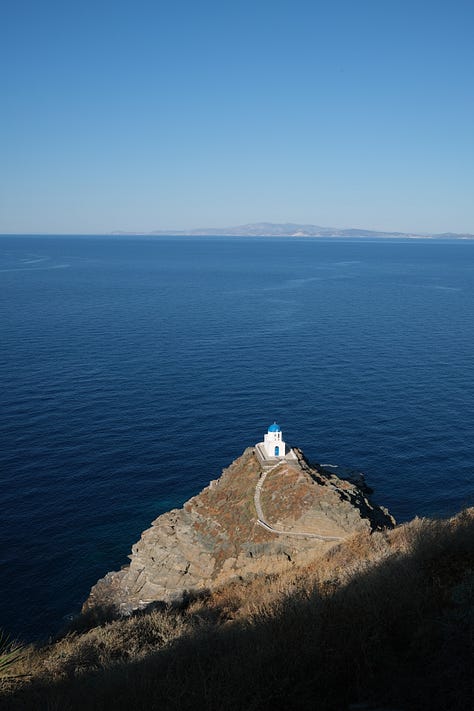
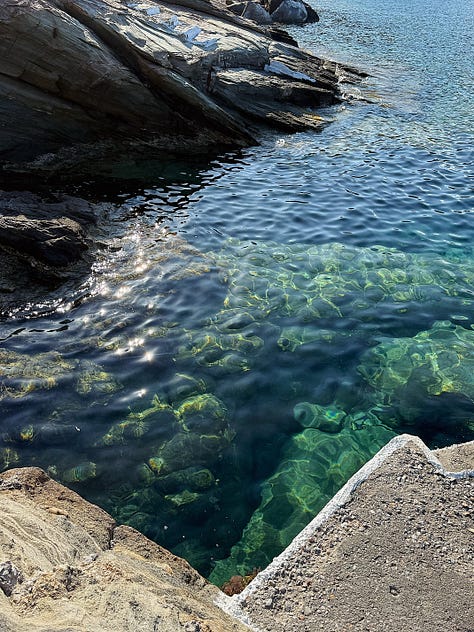
On the subject of coffee, we loved the extremely laid-back Kafenio Lakis in Apollonia – and went back for beers one night too. The owners are delightful. The fresh lemonade at Krypti on a baking-hot walk through Kastro and down to the Church of the Seven Martyrs was a lifesaver. But the best livener – whether first thing or post-lunch lull – was the swimming. I was so impressed with Sifnos’s beaches. My favourite swim of the whole holiday was at Chrisopigi monastery, where the flat rocks beneath become ready-made sun loungers. From Pelicanos, it’s a 25-minute coastal walk, with Apokofto, Vlicho and Faros beaches to stop off at if you’re feeling hot and need an extra coating of salt. Do all that and you’ve got a special afternoon.
Where to stay: We left trip planning quite late, so many of the hotels and rentals were booked up by the time we committed. We ended up in this Airbnb in Artemonas, which was nicely decorated with lots of local pottery, had decent air con and belonged to a really helpful host (but, if I’m being honest, felt pricey for what it was). Next time, I’d try to stay in Kastro so we could both soak up the scene without one of us having to drive. Elsewhere, Verina Astra and Stamna look like lovely hotels, this dovecote-turned-rental looks fun, and families might like this villa.
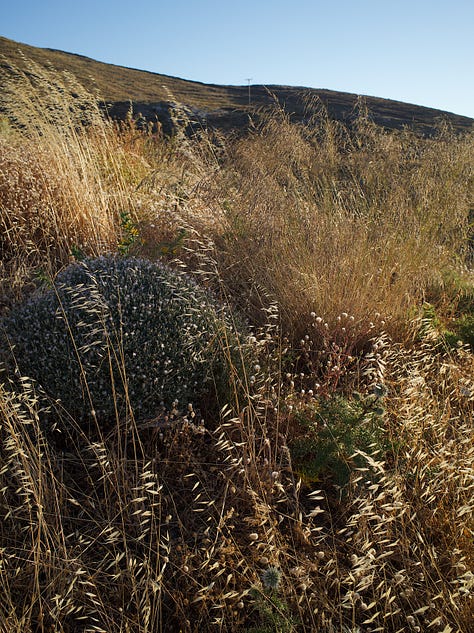
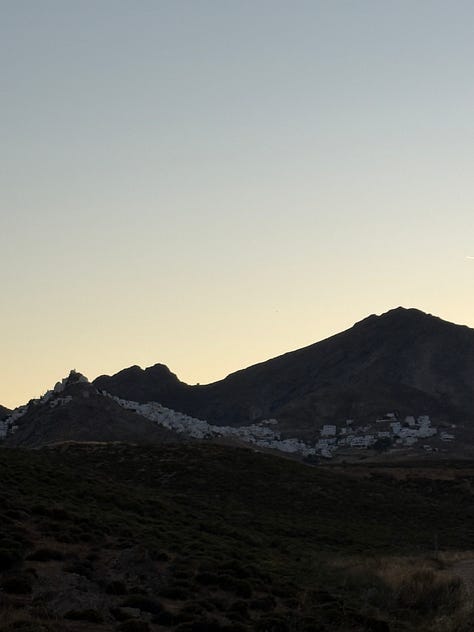
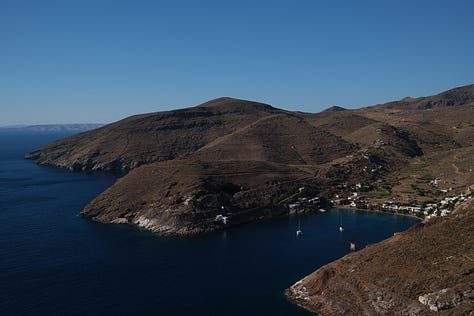
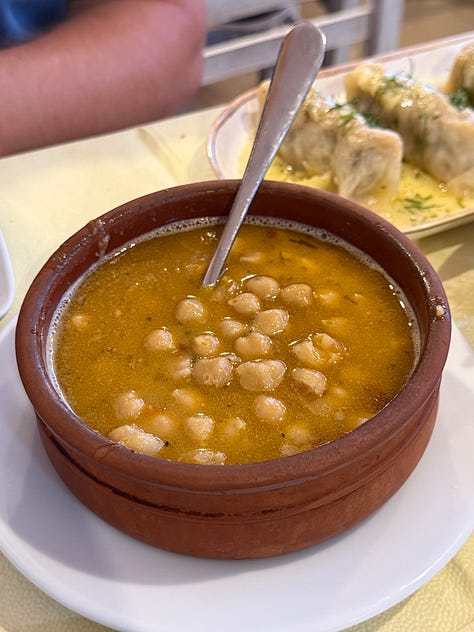
The home of the Cyclopes – according to locals, anyway – wild and rugged Serifos makes for a wonderful, quieter companion to nearby islands such as Sifnos, Milos and Paros. This was the last stop of our latest trip and it was the perfect place to sink into a more relaxed pace – I actually managed to read some of my book! – before voyaging back to Athens to fly home.
While Serifos is relatively small, you’ll want a car to explore the best beaches and stay somewhere that’s not in the port of Livadi or Chora. You can get a bus up to Chora – which is renowned for being one of the most striking of all Cycladic capitals, thanks to its crescent-shaped perch inside a dip between two hills – but that means you might miss ceramic workshop Kerameio, which is about halfway up the steep road to get there. It’s a lovely little spot selling different styles of pottery (ideal for last-minute present buying) and you can chat to the ceramicists as they work. We bought a rocking eye in honour of the Cyclopes.
Ahead of the Christopher Nolan film coming out next week, my other half spent the holiday reading The Odyssey. And when it came to the tale of Cyclops, we put the audiobook chapter on in the car as we drove around, looking for his lair and throne. It was a bit of a hairy drive to get there, but we made it – and it was worth it for the views alone. It also wasn’t much of a detour from a pair of handsome beaches on the south-west of Serifos – we were working on the classic ‘Greek island wind physics’ basis that if it’s windy and wavy on one side of the island (the east coast, where we were staying), it will be calm on the other. Paralia Vagia is almost lagoon like in a sheltered bay, while Megalo Livadi is a tiny bay lined with trees, neo-classical mansions and a handful of tavernas. We loved both.
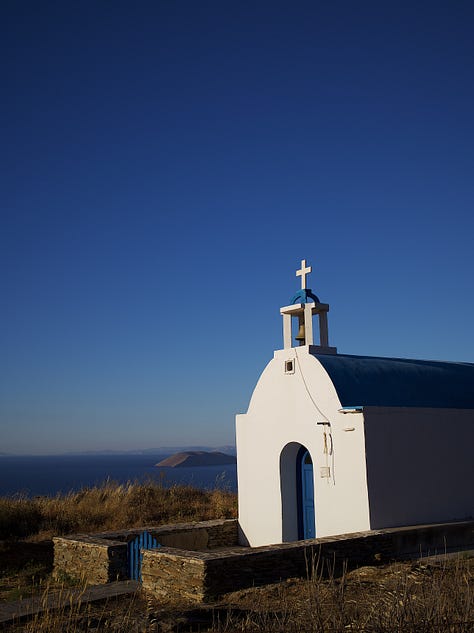
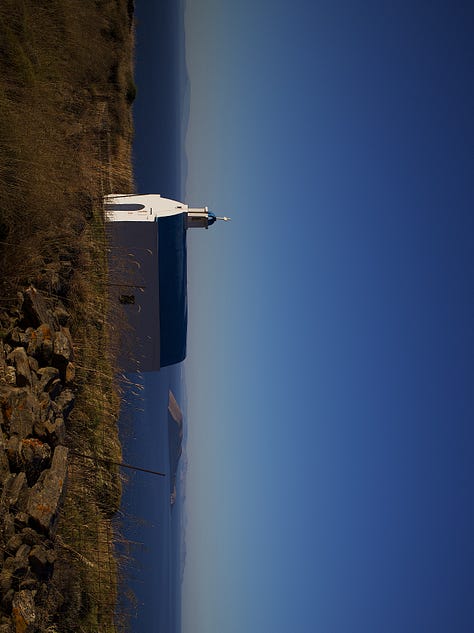
You’ll also want a car for one of the highlights of my trip to Serifos: driving the island loop at sunset. Starting from the south, where we’d been swimming at Megalo Livadi, it took around an hour to head north clockwise and explore the wilder parts of the island. Some of the mountains in the centre of the island even reminded me of parts of the Scottish Highlands. We pulled over before the junction heading down to Platis Gialos beach, lured by a classic, blue-domed Greek church called Agios Minas. From here, at the edge of the island, all was blue – and we could see across to Andros, Kithnos and Kéa, three islands on the list for our next Greek quest.
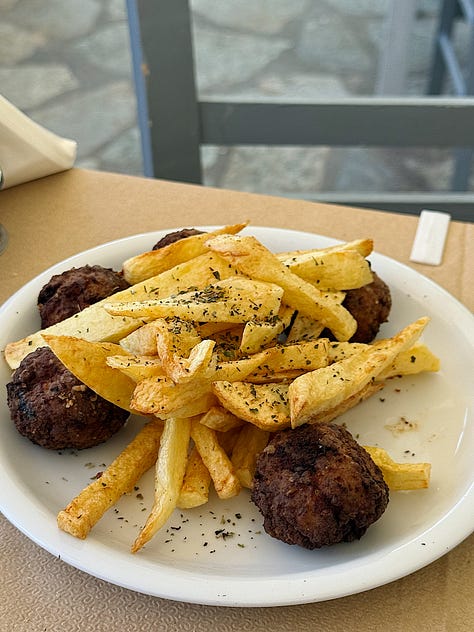
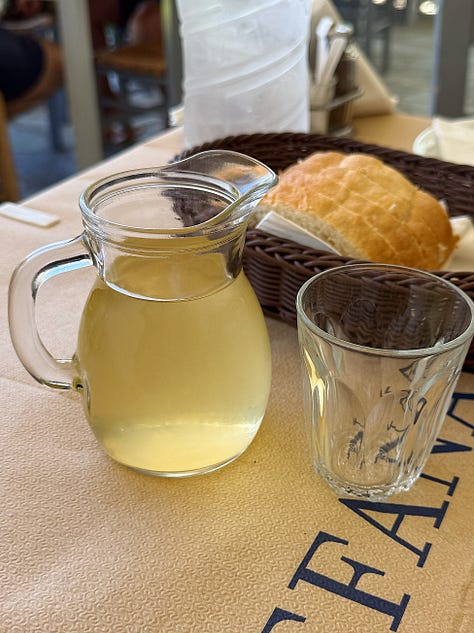
Naturally, there was good food to be found on the island. On the east coast, at Psili Ammos, we had lunch at Stefanakos, a family-run taverna on the sand serving excellent fennel fritters and cold carafes of white wine from Serifos vineyard Chrysoloras. Up in Chora, we had a fun dinner at Marathoriza, a small restaurant that looks down on the sea. Two local stews – one with capers, the other a revithada of clay pot-cooked chickpeas – were incredibly good while the fennel pie and cabbage rolls ensured we all but rolled out of the restaurant ourselves. Down in Livadi, a string of pricier seafood restaurants set the scene. After a negroni at Yacht Club, the oldest bar on the island, where mosquitoes feasted on my ankles, we had dinner at Thalami. We split a slab of pastitsio, a local bake featuring layers of ragu and penne, and a grilled whole sea bream, chosen by T who had been trotted off by our waiter to admire the fish counter and choose our catch. The pasta did us in, so we ended up giving the tail to a tiny stray cat, who ran off looking like it had won the lottery.
Halida, a bakery at the very top of Chora that dates to 1900, was the only place we wanted to grab feta-laced pastries for our ferry ride back to Athens. Before we left, there was time for one final caffe freddo at Karnagio on the front, a bar that had been blaring Led Zep as we ate our fish the night before (the wall of CDs and deaf owner explained a lot when I went up to order). Two older gents were playing backgammon as we paid the bill and began dragging our suitcases over to the ferry. As we kept saying while we were there, we should have stayed for one more day.
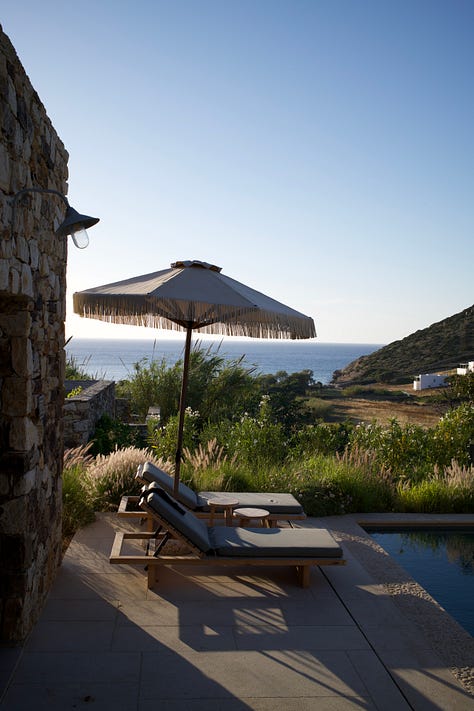
Where to stay: We spent two nights at Nature Eco Living, which is a seven-minute drive from the port, but feels remote. The stargazing from the dust track that winds down to the hotel was astonishing. With a chilled breakfast, lots of hammocks and sofas strewn across its gardens and direct access to a beach, our stay was relaxing, if not quite as luxe as it looked online (our entry-level room was tiny). However, it’s a friendly place and the price felt fair (newcomer Perma shares the same beach, but looks to be at least three times the price). Another note on the beach: it’s a nudist hotspot. Again, this didn’t bother us – the stretch of seafront by our flat in Brighton pretty much borders the naturist beach – but it’s worth knowing, as it’s not listed as such anywhere.

Comments
Nothing yet. Say the first thing.
Sign in to join the conversation.