
Lyon is my firstborn.

There is nothing quite like doing everything for the first time with your first child — the first fever, the first heartbreak, the first time you realize you have absolutely no idea what you’re doing and you’re just hoping love is enough to fill the gaps.
This past week, he finished freshman year of high school. And I exhaled in a way I didn’t know I’d been holding my breath. Something has shifted in him this year in the best possible way. The teenage turbulence that consumed so much of middle school has started to quiet. He’s gaining perspective. He’s maturing into someone I genuinely love talking to. He is becoming, right in front of me, the person I always believed he could be.
And in that exhale, I found myself thinking about everything I wish I had known before August. Not the logistics — the school supplies, the schedule, the parking situation. The real things. The conversations I almost waited too long to have. The lessons that don’t appear in any syllabus but shape everything about who your son becomes.
So I wrote them down. All twenty of them! Yayyyy….

1. Find the thing that shows him what he’s made of. Before high school starts, your son needs a moment — not a trophy, a moment — that proves to himself he can handle hard things. For Lyon, it was wrestling. In 8th grade, another kid started something in the gymnasium. Lyon finished it calmly and efficiently, with the technique of a boy who had spent years being the smallest guy on the mat learning to use leverage instead of size. I’m not proud of the fight. I’m proud that he never needed to start one, and that when it came to him, he had the training and the confidence not to fall apart. That’s what a hard sport, a hard season, a hard something gives a boy. Find it before freshman year finds him first.

2. Talk about his body before someone else does. Not a book on the nightstand. A real conversation. Growth spurts, voice changes, the way his body will feel foreign to him in waves. Lyon was one size in September and barely recognizable by spring. Boys who aren’t prepared for those changes feel ambushed by their own bodies, and a boy playing defense against himself before first period is already behind. Talk about puberty early, update the conversation every year, and don’t wait until something happens to start it.
3. Talk about the birds and the bees. All of it. The anatomy, the pleasure, the emotional weight, the commitment involved. Start simple and go deeper as he matures. Your son is going to encounter information about sex whether you initiate that conversation or not. The only question is whether he hears it from you first, with your values and your love attached to it, or from somewhere else entirely. Don’t flinch. He needs you to go there.
4. Teach him how to treat women. Starting at home. How he treats his mother, his sister, his grandmothers right now is practice for how he will one day treat his girlfriend, his wife, his daughter. Talk about women with respect, kindness and humility. Not as a lecture, but as a standard that is simply assumed in your house. Lyon has watched his father love me well his entire life. I believe that is the most powerful lesson no classroom will ever be able to teach.

5. Talk about bullying. All three sides of it. The boy being bullied. The boy doing the bullying. The bystander who says nothing. Your son will occupy all three roles at different points and pretending otherwise doesn’t protect him. Teach him what bullying actually looks like because most of it isn’t a movie moment. It’s the group chat he’s not in, the joke that lands the same way every single day, the exclusion that’s impossible to name but impossible to miss. Ask him “is there anyone at school you don’t feel great around?” rather than “are you being bullied.” He’ll say no to that question every single time.
6. Talk about discrimination openly and without softening it. Race, class, privilege, what it means to walk into certain rooms as the person he is. Lyon is a Korean American boy growing up in Atlanta and there are conversations we have at our dinner table that are simply part of raising him with clear eyes. Talk about compassion. Talk about community. Talk about what it means to be treated as less than, and what it means to see that happening to someone else and choose to do something about it.
7. Build his self worth before the world starts defining it for him. High school is a four year exercise in comparison and your son needs an anchor before he walks in. Talk about his dreams without attaching your expectations to them. Help him develop a growth mindset. Avoid comparisons to siblings, classmates, anyone. Teach him that who he is becoming is worth trusting, even when the process is messy and slow. His value is not his GPA, his stats or his social standing. He needs to hear that from you before he starts looking for it somewhere else.

8. Teach him how to grieve. Whether it’s a lost game, a family pet or a grandparent, walk through it with him. Don’t rush him past the feeling. Don’t tell him to shake it off. Boys who are never taught how to sit with grief become men who don’t know what to do with pain, and that gap costs them more than anyone talks about. Let him feel it. Show him that hard emotions don’t make him weak. They make him human.
9. Give him a faith foundation. Talk about prayer as his way of communicating with God, for comfort and peace, for guidance and strength, for reflection in the moments life gets loud and confusing. Lyon knows that when things get hard, which they will, he has somewhere to turn that isn’t just his own mind running in circles at 2am. Giving your son something larger than himself to anchor to is one of the most quietly protective things you can do.
10. Have a plan for the hard things before they arrive. Peer pressure. The first time he encounters pornography. Being turned down by a girl. His first experience with alcohol at a party. Disappointment that floors him. His relationship with screens, money, social media. These things are coming whether you talk about them or not. Most parents wait until after the moment to have the conversation. I learned to have it before, plainly and early, without making him feel like he’s already in trouble for something that hasn’t happened yet. He needs to know you are the person he can call no matter what.
11. Stop chasing straight A’s. Build study habits instead. I learned this one slowly. A kid coasting to perfect grades in easy classes is not being served. A kid who earns a B+ in something that genuinely stretched him has learned something that lasts. What I told Lyon: school is not a performance for me. It is an investment for you. The study habits built in 9th grade, how to focus, plan, sit with hard material and recover from a bad grade with his head up, are the ones he will carry into college and every deadline after.

12. Make him go to office hours. Introduce himself. Email when he’s lost. Say thank you when he’s not. Almost no one does this consistently and it changes everything. Teachers are rooting for your kid. They will advocate, go to bat, write the recommendation letter that actually says something real, but only if he has given them something to root for. That is not about being a teacher’s pet. It is about being a person, not just a name in a grade book. Lyon had a teacher this year who became someone he genuinely looked up to. That relationship didn’t happen by accident.
13. Protect his sleep like it is a sport. A sleep deprived teenage boy is a completely different human being. Reactive, moody, retaining almost nothing. I watched this play out in real time this year. Late nights are not a badge of honor. They are a performance killer. Set the boundary early before the habits calcify and become impossible to undo.
14. Teach him to shake hands and make eye contact. The boy who can walk into a room, introduce himself and hold a real conversation with an adult is already ahead of most of his peers. Practice this at home, at the dinner table, before family events, at every opportunity you can find. It is a skill, not a personality trait, and it can be taught. It will open more doors than any grade ever will.
15. Let him be bored. Don’t fill every gap. Seriously. Boredom is where boys figure out who they actually are and what they genuinely want. The overscheduled kid never gets that chance. Some of the best things Lyon discovered this year happened in the spaces I didn’t plan, the afternoons I didn’t fill, the stretches of time where he had to figure out what to do with himself.
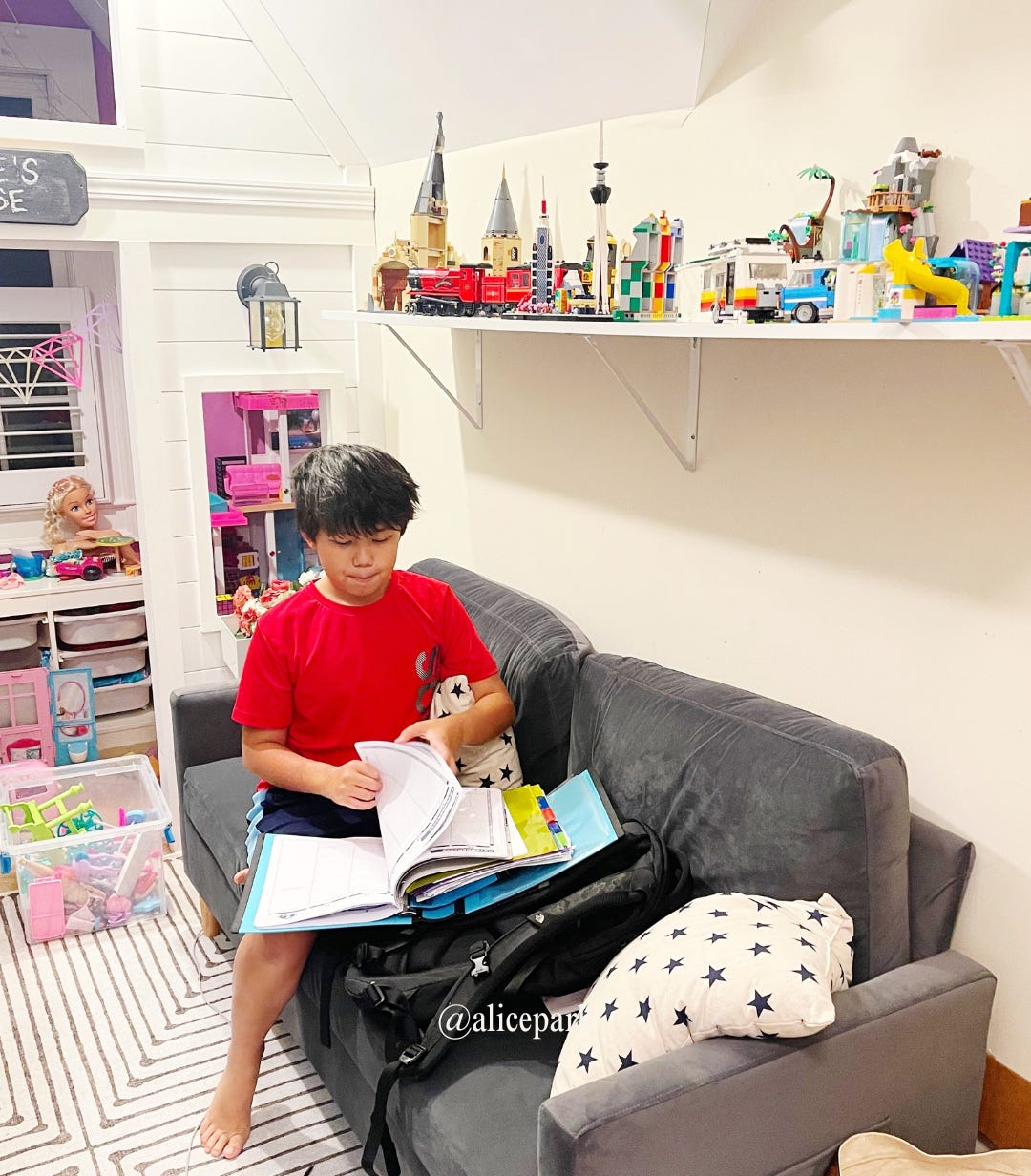
16. Make sure he has one adult at school who isn’t his friend. A coach, a mentor, a teacher he trusts and genuinely respects. Someone who sees him clearly and will tell him the truth. That relationship can quietly redirect a bad semester before you ever know something was wrong. Lyon had one this year. I am more grateful for that person than I have ever told them.
17. Teach him to lose well. Not gracefully. Well. Shake the hand. Feel the loss privately. Come back with something to prove. Boys who never learn to lose become men who cannot handle failure, and high school will hand him plenty of chances to practice. I learned not to rescue him from the disappointment. My job was to sit with him in it, and then watch him stand back up on his own.
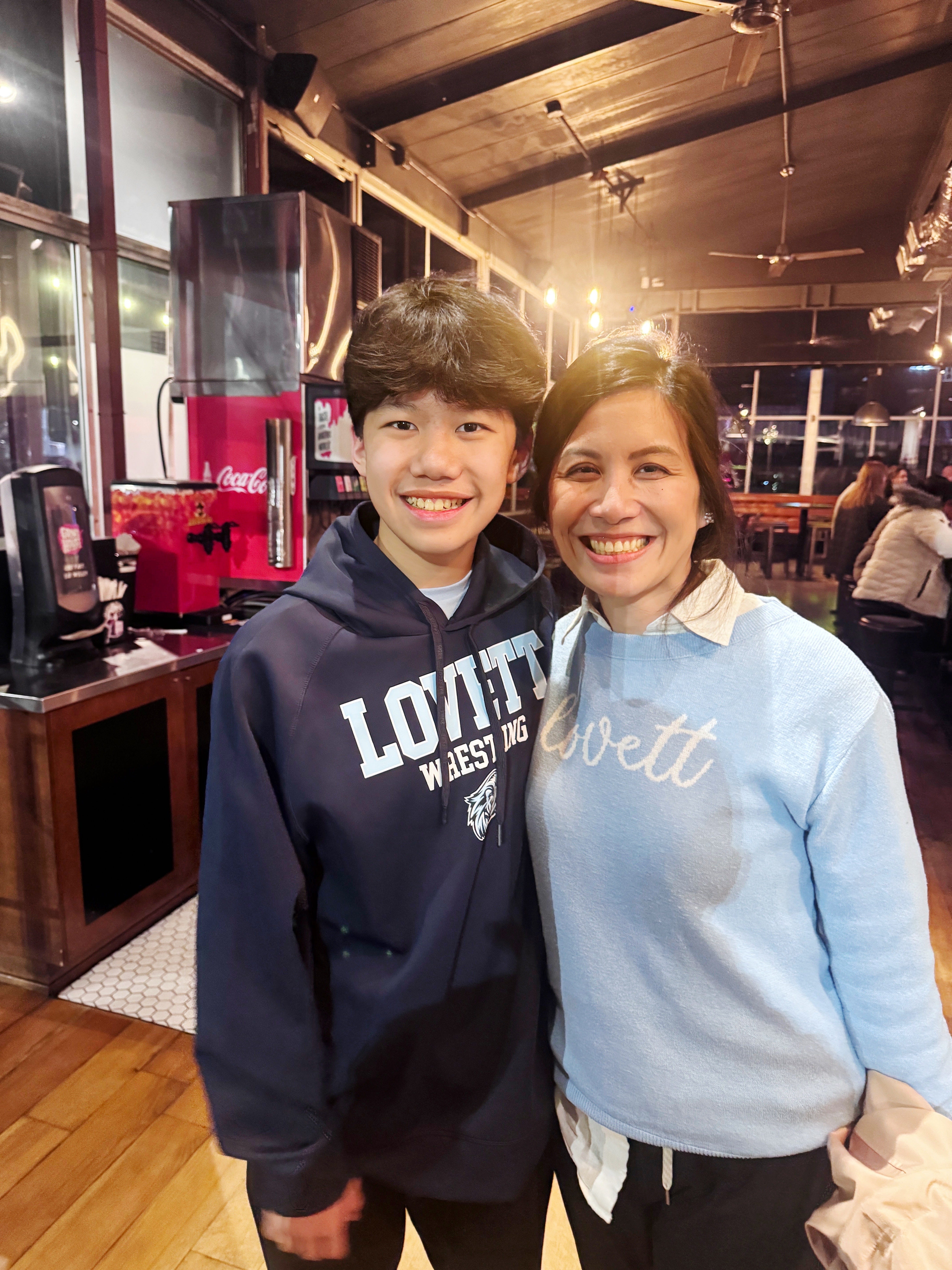
18. Talk about integrity constantly. Not as a rule. As a standard. Who is he when there is no grade, no parent, no coach in the room? That is the only version of him that matters in the long run. I learned to hold this up as the thing I am most proud of. Not his times, not his GPA, not his accolades. Who he is when doing the right thing costs him something. That is the boy I am raising.
19. The friends he chooses will shape him more than I ever will. This is the lesson that kept me up at night the most. You can do everything right, every conversation, every value you’ve tried to instill, and then he walks into high school and the social gravity shifts entirely. What I told Lyon before freshman year: look at your closest friends and ask yourself honestly, do they make you better? Not cooler. Not more popular. Better. Do they push you? Do they show up when things are hard? Do you feel like yourself around them? You cannot choose his friends. But you can ask those questions consistently, without judgment, and make home the place where the good ones always want to be.

20. The college conversation can wait. Freshman year is not the time. Let him find his footing first. Let him discover what he loves. The kid who walks into junior year knowing who he is will write a far better application than the kid who spent four years trying to build one. I have learned to trust the long game on this one.
Lyon is fifteen now.
He is taller than me and funnier than I expected and full of opinions I’m still catching up to. He navigated this year in ways I’ll never fully know, and honestly, that is okay. That is the job. You pour everything you have into them and then you watch them start to find their own footing, and you stand close enough to catch them but far enough back that they learn to balance on their own.
If I could go back to that August morning, pulling into the school parking lot, watching him walk through those doors for the first time as a high schooler, I wouldn’t say a word about grades or college or any of it.
I’d just hold on a little longer before I let him go.
And then I’d whisper: you are more ready than you think. Choose the people who bring out the best in you. Show up for the adults who are in your corner. Find the thing that sets you on fire and run toward it.
And no matter what this year looks like, come home and tell me about it.
That door is always open. It always will be.
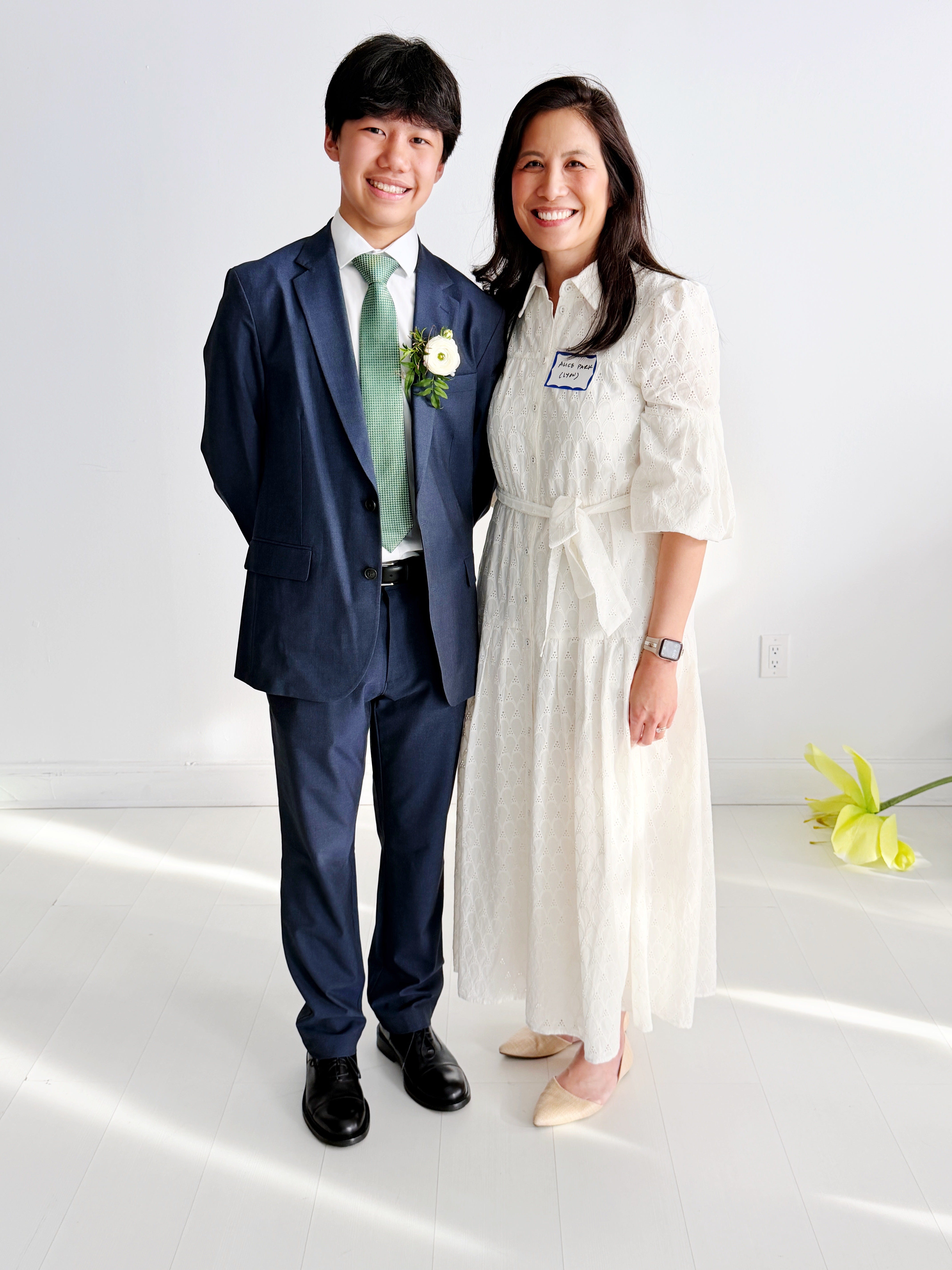
Girls’ version is coming before fall. If this resonated, please share it. You never know whose son or whose family it might reach!
No posts
Comments
Nothing yet. Say the first thing.
Sign in to join the conversation.