
Channel 4 have announced a new documentary exploring the ‘myth’ of ADHD. There are sooooo many questions they need to answer about this.

Dear Channel 4, Minnow Films, and anyone else involved in this production.
Hello, I’m Dr Dean Burnett. I’m a neuroscientist, bestselling author, broadcaster, go-to TV and radio science expert, mental health ambassador, research associate, former psychiatry lecturer, mental health ambassador, and someone closely linked to a great many neurodivergent individuals in both the professional and personal senses.
It is while wearing all of these hats that I write this.
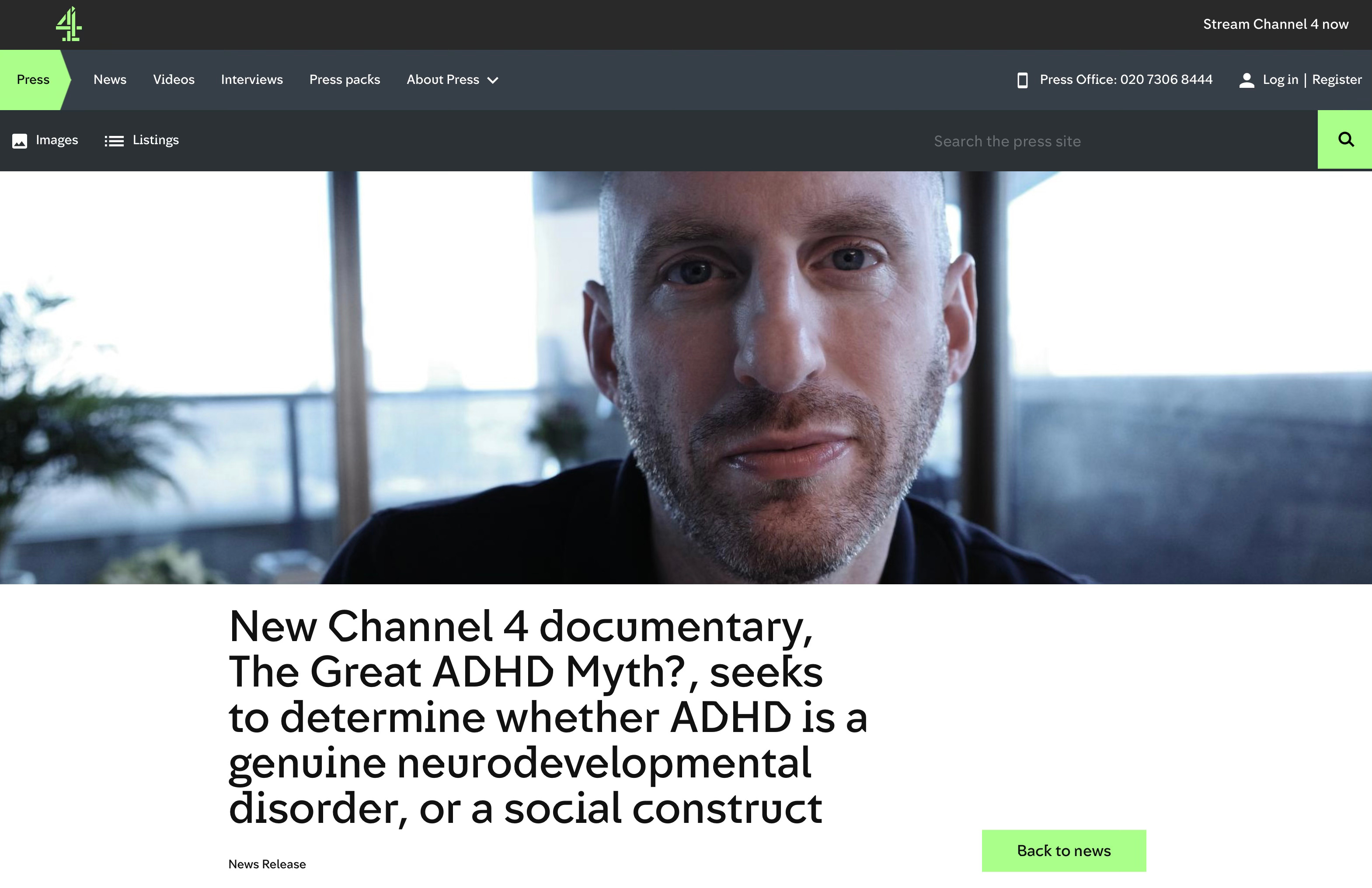
I was recently made aware of your upcoming documentary ‘The Great ADHD Myth?’, via the associated press release, and I have some questions about it, and your decisions regarding commissioning and making it, that I feel would be in the public interest to have answered.
Question 1: Why did you feel it necessary to make this?
I am genuinely curious about this. In your article/press release, you state the following:
“The rise of ADHD is one the most prevalent health issues of the modern age. NHS data shows that there has been a 200% increase in the number of people being referred for an ADHD diagnosis between 2020 and 2025.
While the traits of ADHD undeniably exist – the question is why they exist. Is ADHD actually a neurodevelopmental disorder? Do people with ADHD have differently wired brains? Or does our world – with phones, ultra-processed food, and regimented education system – serve as the catalyst for certain responses and patterns of behaviour?
And with such uncertainty around the condition, should we really be giving children mind-altering drugs to treat it?”
Presumably that uncertainty is the justification for this production?
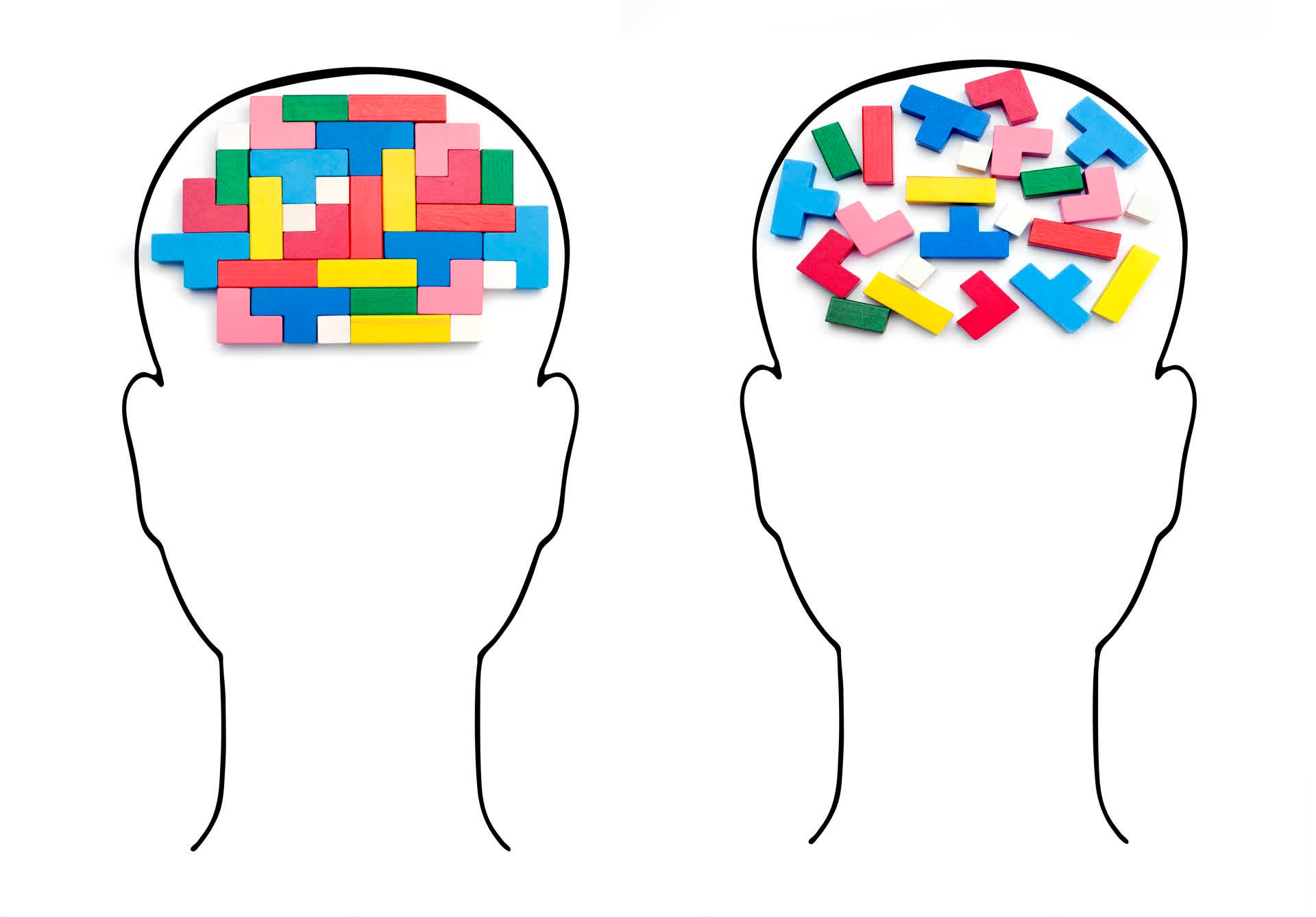
As a career neuroscientist who has written about this matter on multiple occasions, I can assure you that ADHD is absolutely a neurological phenomenon, you could see it on brain scans almost two decades ago. There is also decades worth of evidence revealing that there’s a very strong genetic factor at work with ADHD. So yes, people with ADHD absolutely have ‘differently wired brains’. That’s probably why ADHD has long been recognised by all leading medical organisations.
Could you possible point me towards any robust evidence-based arguments that phones, processed foods, or the current education system are potential causes of ADHD? Because I’ve never seen anything like that, and I’ve been looking.
I’m actually curious as to what the actual mechanism would be, for phones or schools to create deep and fundamental differences at both the neurological and genetic levels. That usually requires hundreds of thousands of years of evolutionary pressures.
Is it being suggested that sustained exposure to YouTube is causing direct changes to the underlying structure of young people’s brains? Or that the boredom caused by overly rigid lesson plans in class is altering the DNA of certain children? Because that’s the only logical interpretation of the claims made in your press release.
If you do have evidence of such things happening, I and the rest of the medical science community would be very keen to see it, as we’d have to re-write all the knowledge we’ve built up over centuries of research.
It would also be unsettling to me on a personal level because, when I was a child, my folks kept telling me not to sit so close to the TV, or I’d end up with ‘square eyes’. Even then, I dismissed this as a nonsense exaggeration, especially when my tendency to watch TV with my nose against the screen was revealed to be due to my severe myopia.
But if you have proof that simply looking at things on screens can alter your fundamental biology, perhaps I should have taken such warnings more seriously? Tere may be children out there who did indeed end up with square eyes, rendering them completely blind and in screaming agony as their eyeballs morph into eyecubes and their skulls change shape to match.
You’d think we’d have heard about that happening, but then it was the 1980s.
So, to return to my original question, where does this ‘uncertainty’ around ADHD, and how it’s caused, stem from? Because according to the abundant scientific evidence there is none, yet you’ve dedicated an entire documentary to it?
And just to pre-empt the obvious response, ‘many people’ being concerned about, not understanding, or disliking the rise in ADHD diagnoses is not the same as the scientific consensus being uncertain. For example, many people are concerned about, don’t understand, or dislike your upcoming documentary, but it still clearly is happening.

Question 2: Why did you use particular sources and contributors?
The documentary press release cites supposedly qualified individuals and sources, but I must ask why these ones in particular were selected? Because that matters.
For instance, you say “boys aged 10-14” are the largest group being medicated, but cite a study and data set that are 20 and 10 years old, respectively. However, your justification for the documentary refers to the 200% increase in ADHD diagnosis referrals between 2020 and 2025. You also suggest that smartphones may be to blame for the current levels of ADHD.
So, why are you referring to data that predates the rise in ADHD, and the widespread proliferation of smartphones, by almost a decade? How’s that even relevant? If I wrote an article on the impact of long COVID and only cited sources from the 1990s, I would be roundly, and rightly, mocked. I certainly wouldn’t get to make a documentary based on my ‘findings’. I am curious as to what the rationale was here.
Similarly, without wanting to impugn anyone’s professionalism, I have some concerns about the experts citied.
You highlight the following quote
“It is certainly not a medical condition as far as I’m concerned” – Dr Iona Heath, Former President of the Royal College of General Practitioners
I don’t doubt Dr Heath’s contribution to medicine, but again, it’s worth flagging up your focus on the ‘modern’ issue of excessive ADHD diagnoses, and the word ‘former’ regarding Dr Heath.
Specifically, Dr Heath retired from clinical practice in 2010. She hasn’t dealt with a patient in almost two decades. And while any decent doctor spends their whole career learning and developing as medicine advances, Dr Heath obtained her medical degree in the early 1970s, almost thirty years before ADHD was even recognised by the NHS, and almost forty years before it was first recognised in adults.
That’s also around ten years before it was recognised that contemporary medical training led to an overly rigid, counterproductive, even dismissive view of mental health problems in medical students.

Basically, while she’s entitled to her opinion, it’s not surprisingly that Dr Heath does not recognise ADHD as a medical condition. Winston Churchill wouldn’t recognise the Euro as a valid currency either. You ideally wouldn’t put much stock in that stance, though.
Then there’s this
“We’ve replaced corporal punishment with giving [children] a pill” – Dr Sami Timimi, consultant child and adolescent psychiatrist and psychotherapist
It’s unclear what Dr Timimi is saying here. Is it that medicating children is as bad as beating them? Or worse? Is he implying we should go back to striking children… for the sake of their mental health? Again, I’d be keen to see any evidence for this conclusion.
The most generous interpretation is that he thinks we should neither be medicating nor beating children, but such things really shouldn’t be so ambiguous in a mainstream press release. Unless you’re actively encouraging controversy, of course.
More importantly, Dr Tamimi is a vocal proponent of the anti-psychiatry movement, and has been regularly rebuked by the medical establishment for his poorly informed, anti-ADHD claims. I also have it on good authority that he has been laughed out of psychologist conferences for insisting that neurodivergence doesn’t exist, although I have no direct evidence for this so take that with a pinch of salt.
Basically, he is a very questionable ‘expert’ to deferring to so prominently.
Then there’s the host, Dr Max Pemberton. While entitled to his views, a psychiatrist who specialises in eating disorders and addiction isn’t the obvious person to front a documentary about ADHD, which is neither of those things. It may also be worth noting his regular contributions as a writer to the Daily Mail and The Spectator. Again, being as diplomatic as possible, neither publication is known for ‘ideological neutrality’, which does suggest some external motivation beyond what is stated in the press release.
In summary, when there are thousands of qualified experts, and hundreds of thousands of sources, who could provide a valid, up-to-date overview of the reality of ADHD in 2026, it’s bizarre how you’ve managed to overlook literally all of them.
I’m not saying that you’ve actively worked hard to cherry pick sources that support the idea that ADHD is not legitimate. But I am thinking it pretty hard.
3. What do you mean by a social construct?
You claim to determine whether ADHD is a ‘genuine neurodevelopmental disorder, or a social construct’. What exactly is meant by the term social construct, in this context?
Wikipedia defines social construct as “any category or thing that is made real by convention or collective agreement”.
In that respect, ADHD is a social construct, but in the sense that all health issues and disorders are. It’s all ultimately just ‘someone’s body and/or brain doing things that most bodies and brains don’t’, and we assign labels and meanings to them based on data and accumulated knowledge. Ergo, they are social constructs.
However, you say a ‘genuine neurodevelopmental disorder, or a social construct’. This binary choice means, logically, that a social construct is not ‘genuine’.
Basically, it looks like you’re using ‘social construct’ as a less-direct way of saying ‘made up’, ‘fictional’, or ‘not real’.
None of those things describe ADHD in any way, so it begs the question, why are you suggesting otherwise, via a mainstream documentary? One that’s apparently science-led?
Speaking of…

4. Why do you say this documentary is ‘science-led’?
To quote Channel 4’s commissioning editor Tim Hancock, the makers of this documentary “…have taken a science-led approach to look at one of the biggest health stories of our times, with fascinating results.”
However, nothing described so far suggests a science-led approach. The documentary will apparently follow one individual boy for a few weeks, to see if he can ‘come off medication altogether’.
It really can’t be stressed enough that this isn’t how science is done. One person spending a few weeks off medication doesn’t mean anything about ADHD and the vast wealth of evidence the current approach to it is based on.
Is there a control group, where kids without ADHD medication are made to play more sports, to see what happens then? Was this study blinded, so those doing the research couldn’t influence the outcome to get the results they wanted?
And how was the subject found? I sincerely hope the young boy at the centre of this study consented to all this? Was he even old enough to? Because otherwise his parents would have had to consent for him. If so, were they screened appropriately? Presumably it wasn’t just a matter of finding some parents who really don’t like that their son has ADHD and were willing/keen to deprive him, a neurodivergent child, of prescribed medication for the viewing entertainment of millions of strangers? That’s an ethically horrifying possibility.
Ultimately, from what’s described, this documentary is only ‘science-led’ in the same way that pushing someone off a cliff is science-led research, because gravity is physics, and all that.

Can you confirm I’m wrong about all this? Because I really hope I am.
5. Do you genuinely believe that asking a question is not the same as making an accusation?
It’s interesting that the documentary is called the ‘The Great ADHD Myth?’, not ‘The Great ADHD Myth’, without the question mark.
A documentary called The Great ADHD Myth, as a statement, would clearly be perceived as a major TV channel stating that ADHD is a myth, in stark defiance of all known medical expertise and centuries of accumulated evidence. This would create significant hardship and stigma for those who have ADHD or are seeking/awaiting a diagnosis, as occurred after the recent BBC Panorama investigation into private ADHD clinics. It would basically make life much worse for those already enduring a great deal.
However, as you would no doubt point out (as many already have), you’re not stating that ADHD is a myth. You’re just asking the question. So it’s OK, that’s perfectly fine.
If that is the stance being adopted to here, I must ask my own important question.
Is everyone involved with the making of this programme on the sex offender’s register?
Now, I have no direct evidence to suggest this is the case, but I do know some people who have expressed such concerns. They’re not exactly experts in this issue, but that doesn’t matter, the concerns are the main thing, aren’t they?
And obviously it’s a very important thing that would directly affect the wider public, so there ideally needs to be a documentary about it, right? Perhaps there could be a study where we follow one member of the production team for several weeks, and if they engage in any physical contact with someone who did not 100% consent to it ahead of time, we could conclude that there really is a valid issue here?
You might think this is a wild accusation to make, which would make the lives of many innocent people much harder, for no reason beyond getting attention by generating controversy. And who would do such a thing? But don’t worry, it’s not that. It’s just a question, and it’s not an accusation if you put a question mark on the end, right?
6. Are you aware that ADHD isn’t a ‘drain’ on public resources?
As a random thought experiment let’s pretend this documentary is part of an ongoing campaign to delegitimise ADHD diagnosis, presumably in order to reduce support and get people ‘back to work’, despite the actual recent data revealing ADHD is still significantly underdiagnosed.
The conceit is that too many people are being diagnosed with ADHD when they shouldn’t be, which means they don’t work, claim too many benefits, require too much support, and put too much strain on the public purse. A stance I’ve had articulated to me when I mentioned the documentary online, by strangers using words like ‘scroungers’ and ‘scum’. Make of that what you will.
Are you aware that this is a flawed premise? For many reasons? Like how ADHD does not prevent you from working, or can even make you more productive, if accommodated for? Given how untreated ADHD can be the cognitive equivalent of trying to jog while carrying a microwave.
Or how ADHD is regularly wrongly diagnosed as other things, like depression etc., so a later life ADHD diagnosis means several diagnoses, and the support required, are no longer applicable, which reduces demand on resources?
Admittedly, this whole argument rests on the premise that someone should only be given appropriate medical help and support if it makes them more productive in some way. But even with this deeply cynical worldview, trying to delegitimise ADHD diagnosis is, ironically, counterproductive.
7. Is the timing with the rise in ADHD diagnoses in women just a coincidence?
Related to the previous question, it’s probably nothing, but the most recent data reveals that ADHD medication being prescribed to women has increased twenty-fold in the past decade.
There are, of course, many valid reasons for the spike in ADHD diagnoses in women. For one, ADHD was long believed, wrongly, to be a condition predominately experienced by young boys, but the data reveals it’s always been something women experience too. It just manifests differently, so wasn’t as easily recognised by a medical system with a long and rich history of ignoring or dismissing female-specific health problems and conditions.
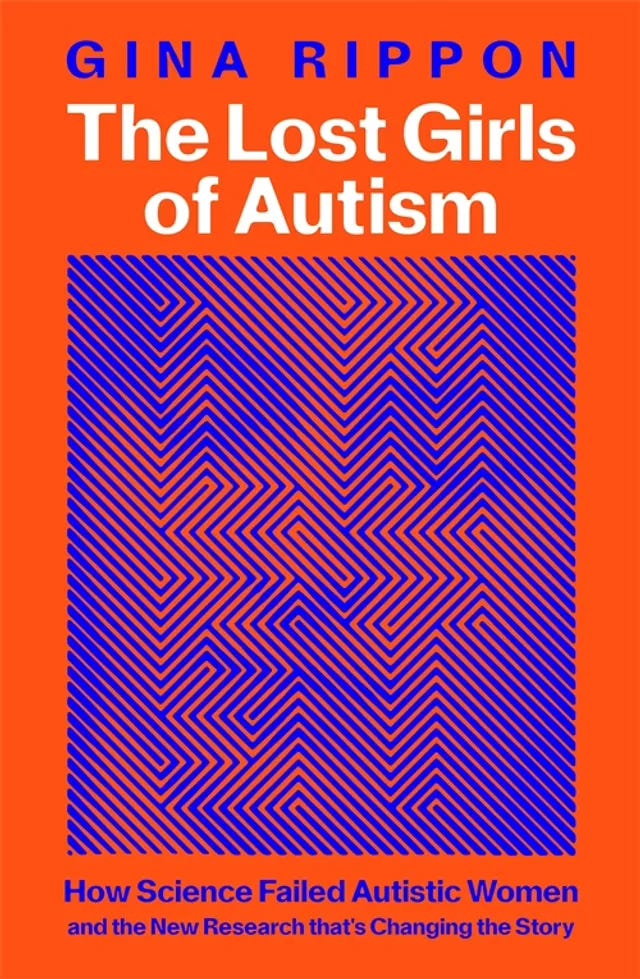
This has, to some extent, been corrected in recent years, thanks to advances and awareness of the issues. So, we’re now seeing countless women who should have had an ADHD diagnosis decades ago, finally getting one.
And suddenly there’s a mainstream documentary suggesting that ADHD isn’t even a real thing.
The timing seems a bit off, is all. Like how society very slowly got a point where the consensus became “You know what? It’s bad that women were being regularly groped in the workplace”, and we then got what felt like thirty million articles and posts about how feminism ‘has gone too far’.
8. Are you OK with genuinely endangering lives with this documentary?
Because you could well do.
Countless people, or all ages, benefit tremendously from an ADHD diagnosis and treatment, and the main problem, according to all the legitimate scientific evidence, is that not enough people are being diagnosed, not too many.
And it’s particularly hard for them, because in the wider population, ADHD is still misunderstood, dismissed, doubted, or treated with hostility and scorn. People are definitely being better educated and becoming more aware, but we’re a very long way off from a situation where everyone gets the support and help they need.
As it stands, this documentary will do substantial harm to that progress, and genuinely lead to actual harm for many, as they support they need or depend on is withdrawn, at best, because ADHD is made up. It must be, it’s on TV!
You may argue that we shouldn’t be making judgements on the title and initial description and actually watch the whole thing. But if the outcome is so different to what’s being described, why describe it that way at all? Especially when it’s long been established that most people form their conclusions based on headlines and opening statements alone. That, plus the very hard to defend reliance on outdated evidence and less-than-relevant experts, throws substantial doubt on any claim that this is a good faith exercise. I am, however, happy to hear evidence that reveals otherwise.
The current situation with ADHD diagnoses is like a bus turning up three hours late, at a stop in a very dodgy, isolated area, where hanging around too long puts vulnerable people in increasing danger.
Your documentary, and the viewpoint it encourages, is the equivalent of looking at this overdue bus, and the many people frantically trying to get on it and those who will be left behind, and launching a national campaign to cancel the bus service altogether, because walking is healthier.
That would suggest a degree of ignorance and lack of empathy, or a level of cynicism, that borders on the sociopathic. Is that the case?
I’m just asking.
The 10-year anniversary edition of Dean Burnett’s bestselling (and entirely evidence based) book The Idiot Brain, is out now.
No posts
Comments
Nothing yet. Say the first thing.
Sign in to join the conversation.