
In the long history of humans eating, there have always been trends. For our purposes, we’ll use Merriam-Webster to provide a foundation. Two of the definitions are: 1. a prevailing tendency or inclination; 2. a current style or preference. The first is a great encapsulation of cuisine as a whole: each culture is going to have “prevailing tendencies and inclinations” as to what makes up the food they eat. What ingredients are available to them, cooking methods, food storage, how seasonality affects both ingredients and types of dishes made, what religious practices and rules impart on food choices…there are tons of reasons why cuisines around the world are definable. That we can describe a cuisine shows that there are customary rules, or trends, that illustrate a culture through its food.
The second definition, as far as food goes, isn’t a new concept. After all, Jell-O salads ruled the 1950s, Julia Child’s French influence dominated the 60s, and blue raspberry the 90s. But social media has changed the reach and speed of food trends in a new way. We’re constantly fed new food trends: what can’t cauliflower be? How many ways can you eat a whole cucumber? What foods can you make using the inspiration of a dirty martini? There are butter boards, mason jar salads, tanghulu (those candied fruit skewers everyone was making)…there are restaurant trends like when everything was deconstructed, when brussels sprouts were on every menu, smashburgers are now the king of the genre…it never ends.
Most of these are fun, and show just how creative we as cooks and eaters can be. Some, of course, are ridiculous. Others take a page from the fashion industry: trends are cyclical. One from the last few years that’s had staying power is the rebirth of tinned fish.
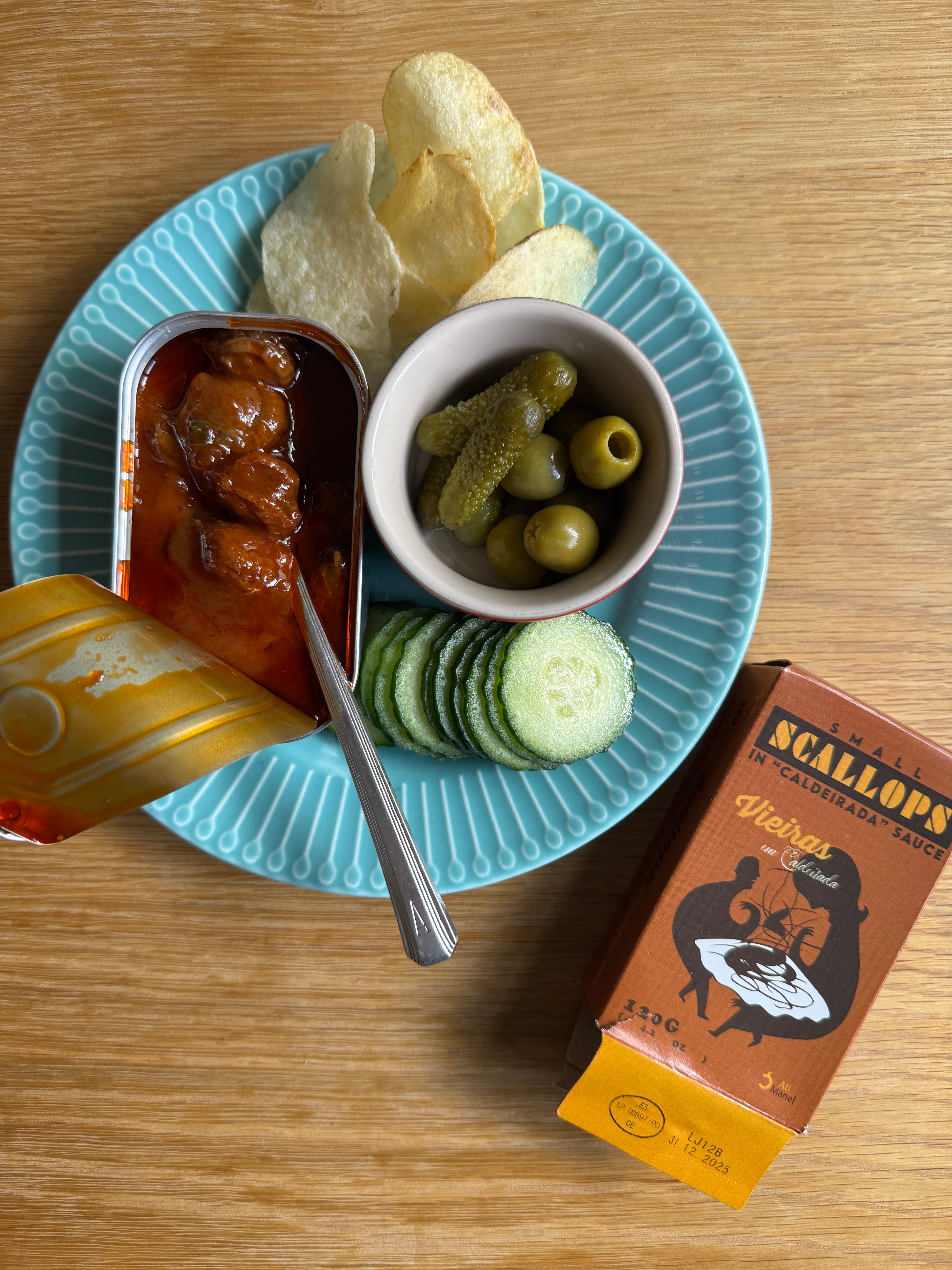
As a lover of tinned fish for most of my life (see previous post about tuna salad), it’s a particularly interesting food trend to live through. There’s the cyclical aspect of it: tinned fish was popularized out of necessity and innovation. The preservation of foods has had a long history before canning was invented, but the first signs of this technology came in the early 1800s when a Frenchman, Nicolas Appert, published his new method of bottling fruits. In 1810, he published Art de conserver, or The Art of Conserving, which explained the method of preserving not just fruits, but also vegetables and meats. He proceeded to open the world’s first canning factory in 1812, using his technique with jars and bottles, but the invention of tin-plated cans followed soon after, and he switched to this format by 1822. Interestingly, it was 50 years after the release of his book that Louis Pasteur proved how the technology actually worked.
Another part of tinned fish that I find interesting is the downswing of its popularity. For this conversation, I’m limiting this to America, because plenty of other cuisines have maintained a strong tinned fish culture for generations. I think there are two reasons why tinned fish fell out of fashion. First, the “cheap” characterization of tinned foods: as we have prioritized freshness of ingredients, not to mention the in-trend idea of knowing where your food comes from, foods that come in a tin (aka, not fresh, and often, like many vegetables, of unknown provenance) are less desirable. The convenience of canned foods and meals was relied upon during World War II, and then in the ensuing years (which could be its own post), became a standard part of the “homemaker” kitchen. Of course, these days, you can find tons of tinned fish (and other foods!) that tell you exactly where the ingredients came from, and often, these can even be luxury items, with tins of fish running from about $2.50 to upwards of $75.
The other aspect of the dislike of tinned fish isn’t unique to this category: the smell. There are many foods, though seafood often dominates the conversation, that are deemed undesirable because they have strong smells. A list of foods you wouldn’t take on a plane is often topped by tuna, or you’ll hear you shouldn’t bring fish to microwave at work. Many times, the “smelly” foods list includes cuisines with strong aromas, that people aren’t used to. Stories of third culture kids getting bullied for their lunches at school have sadly become commonplace in recent history. And just like more kids are willing to eat foods that smell different, more people are turning to tinned fish.
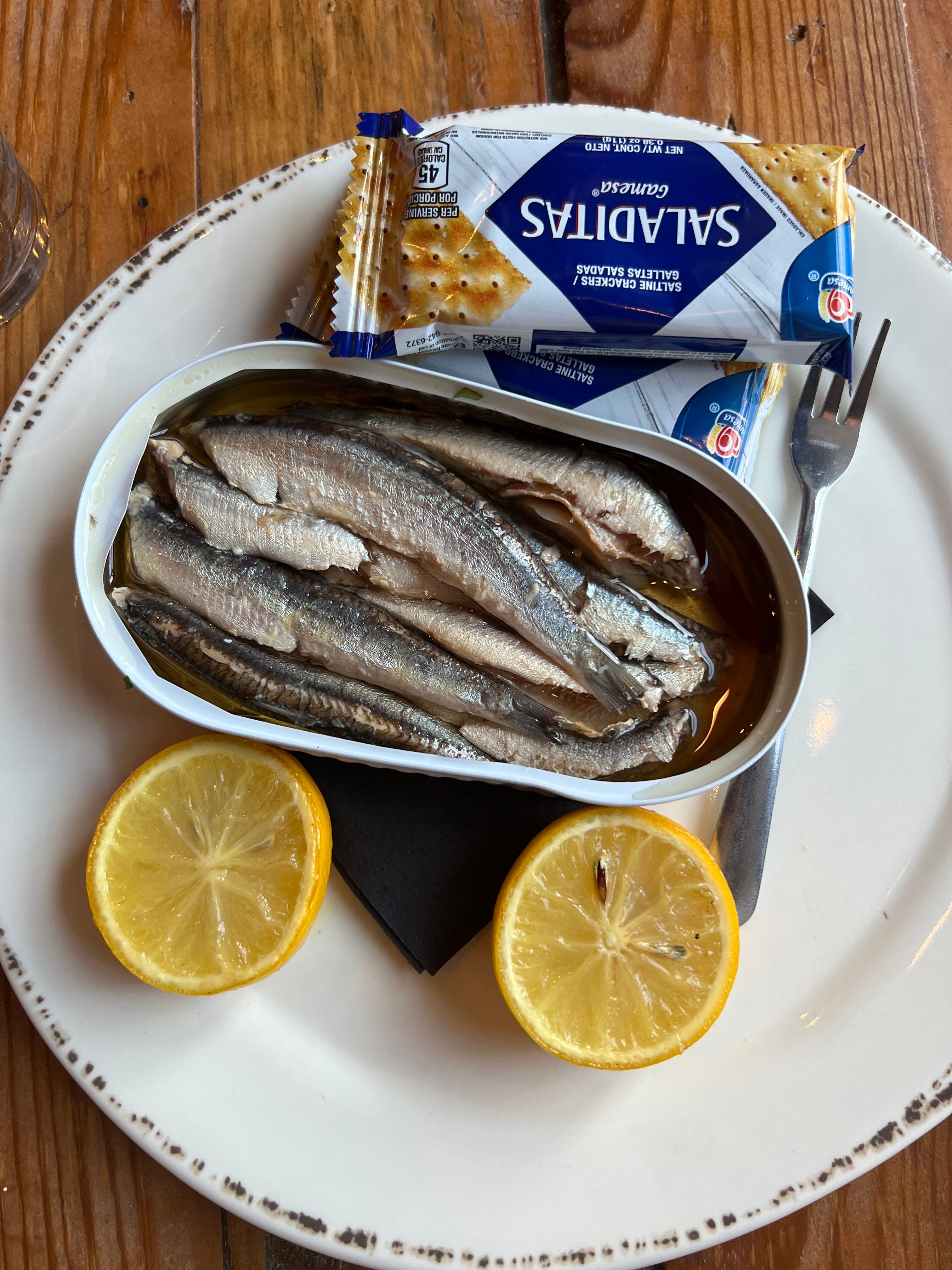
And so here we find ourselves, in a time where tinned fish is so desirable that you can buy chocolates that look like tinned fish, Christmas tree ornaments, hair clips…not to mention the cookbooks. Though niche tinned fish cookbooks date back years, three different cookbooks have been released in the last four years alone, including one by popular tinned fish brand Fishwife. I have Tin to Table by Anna Hezel (who I briefly worked with at Epicurious), and it is a great book, full of both recipes and brand recommendations.
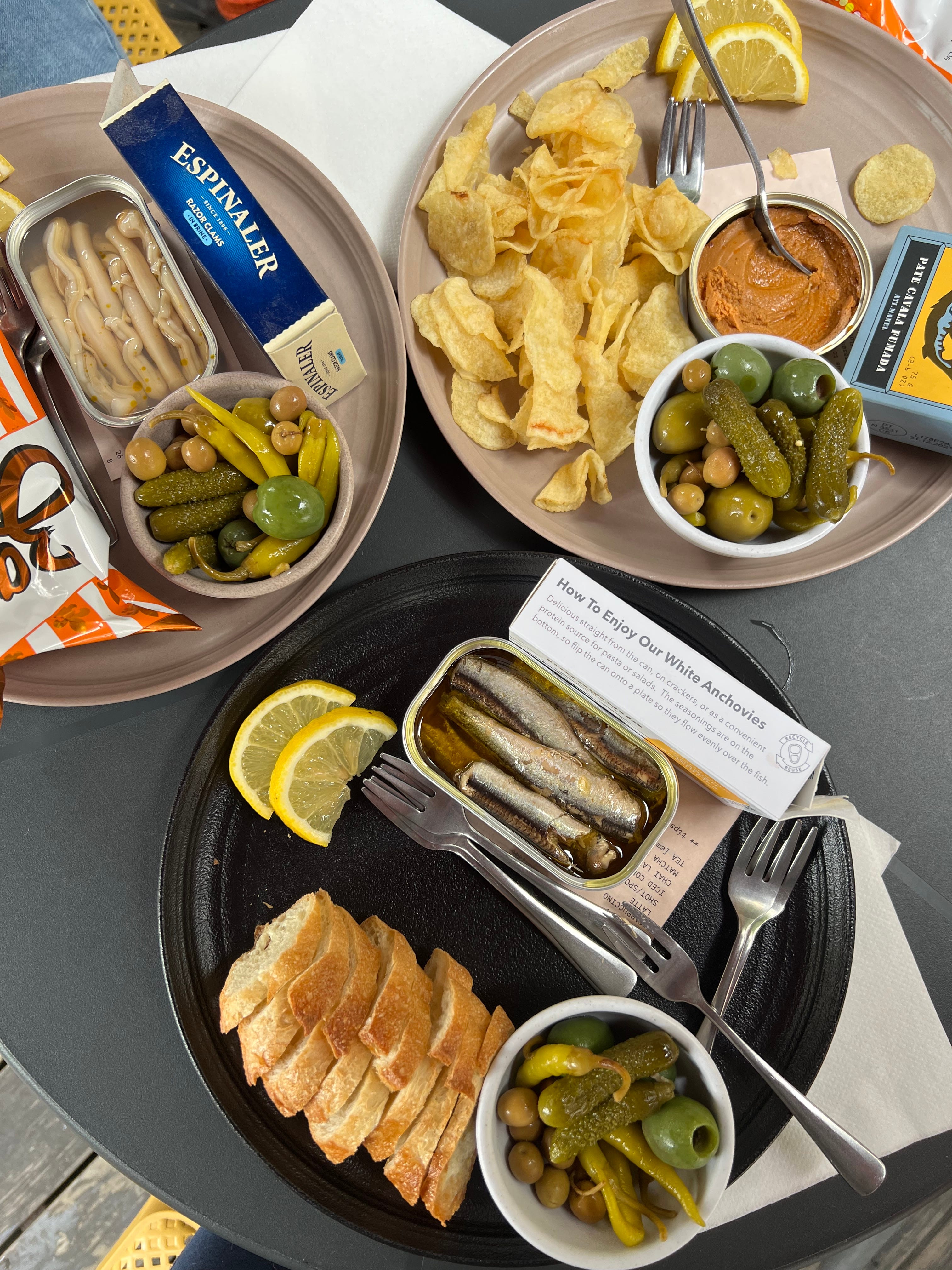
There’s also the restaurants. Tinned fish isn’t just limited to girl dinner, but can be a meal out. There’s Kippered in LA, Saltie Girl in LA and Boston, Maiden Lane and Le Dive in NYC, and my personal favorite here in Atlanta, Larakin.
As a millennial, we’ve coined the phrase, “I liked x before it was cool!” and I hate to be that classic millennial, but that’s how I feel about tinned fish. I love it. I love that I can now get it everywhere, that there are so many tins to try, with so many kinds of seafood. I have a whole school locker-style cabinet that I use to store pasta (that’s another story), but the bottom shelf has a box that is reserved entirely for my collection of tinned fish.
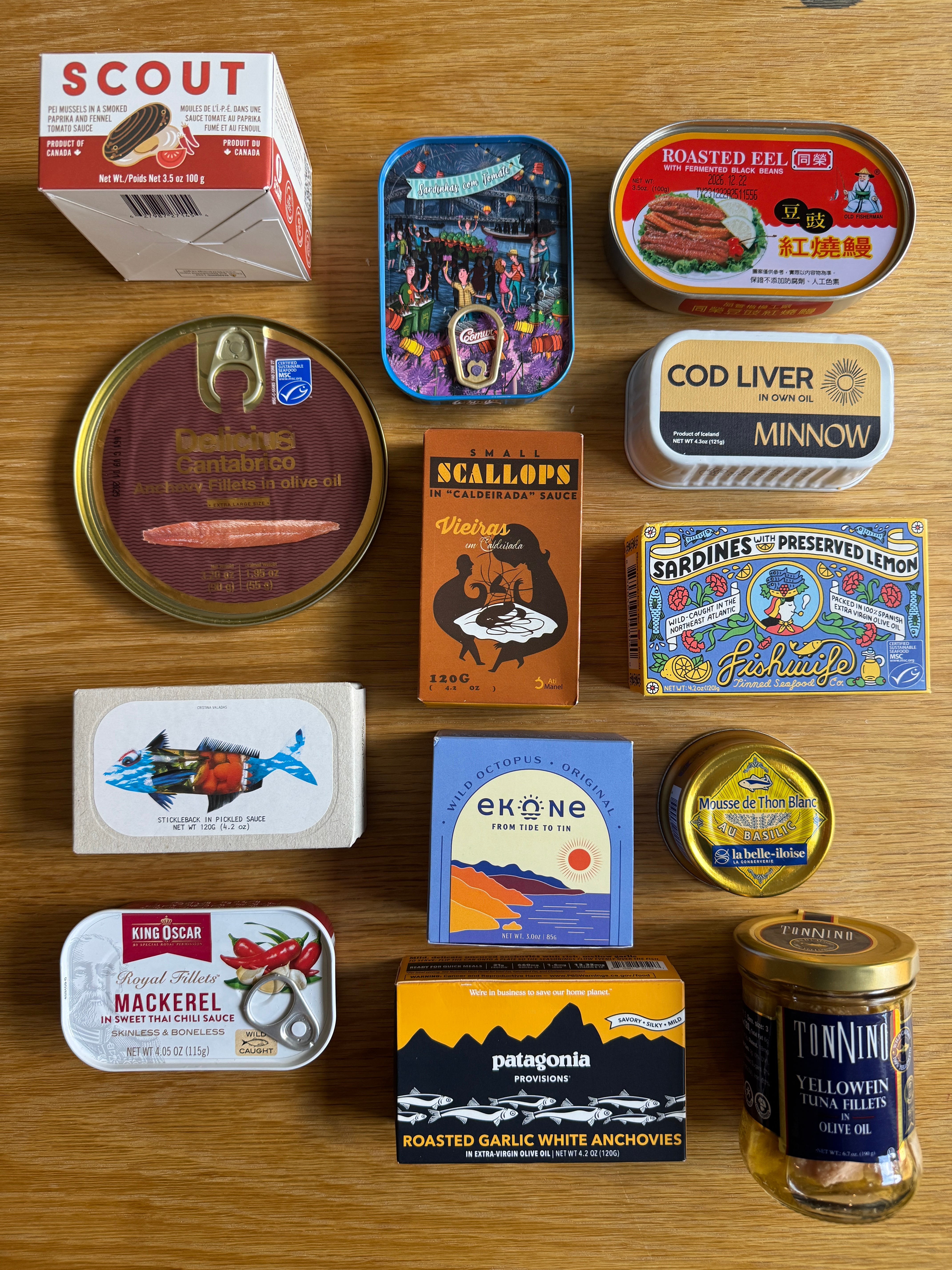
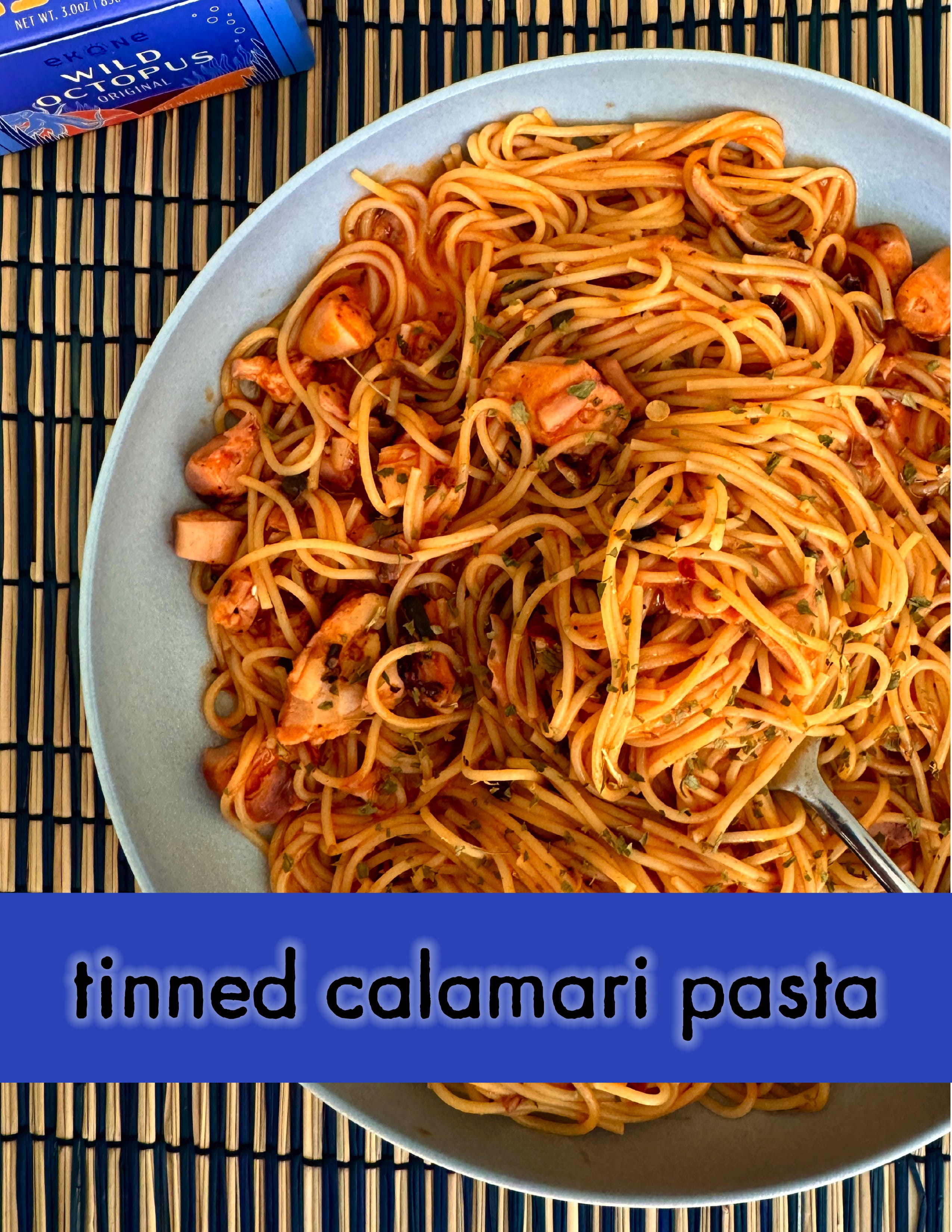
So how to enjoy the plethora of options out there? You can always crack one open, and enjoy with some sliced baguette and pickles. You could take a tin of Japanese tinned fish and make a rice bowl. Or you could try the recipe I’ll share with you here. I love using tinned seafood as pasta sauce, especially a tin of mussels (I like the Scout PEI mussels in a smoked paprika and fennel tomato sauce) or octopus or squid. For this recipe, I used Trader Joe’s Calamari Pieces in Olive Oil which is an excellent deal at $3.99 a tin. It’s the perfect solo meal, which is great, because no matter how many times my husband loves tinned fish, he’s convinced that he doesn’t.
Comments
Nothing yet. Say the first thing.
Sign in to join the conversation.