
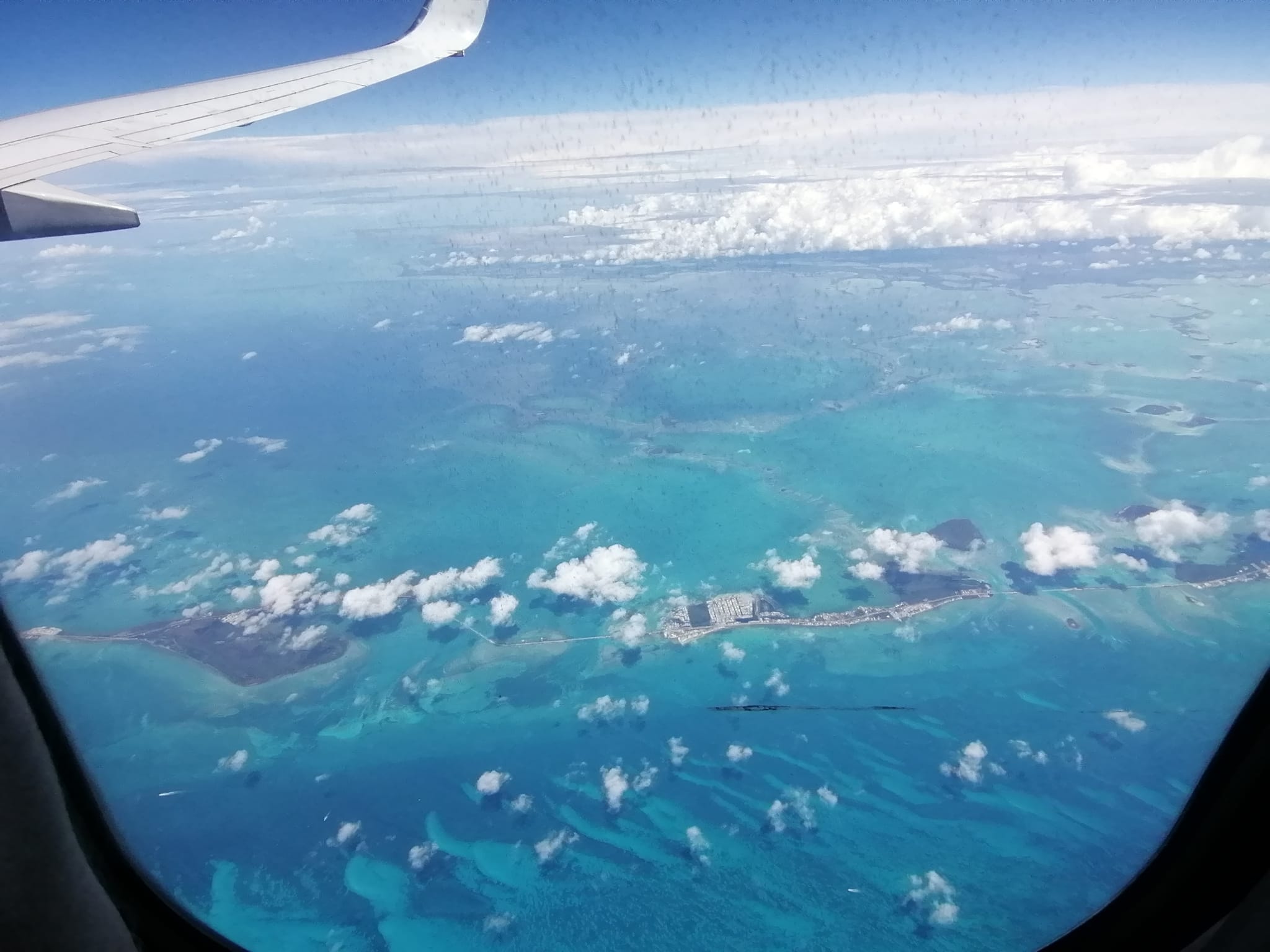
Jessica longed for the feeling of cruising through the sky, high above the ground, gazing at the endless oceans and scattered land masses below. After finishing university, she immediately moved to a remote city in Manitoba named Thompson. There – at great expense – which she persuaded her parents to pay, she was able to fly small planes in a variety of challenging weather conditions until she gained the necessary flying hours for her pilot’s license.
Her first airline job was as a co-pilot with a regional airline based out of Winnipeg. She knew those skies. She understood them and never panicked when they threw surprises at her. It didn’t take long before her abilities caught the eye of everybody around her, from the captains she assisted to the workers in the various towers she would speak to throughout the province. Soon, the shoes of co-piloting had become too small, and she was in line for a promotion to captain within the same regional airline. It was a promotion she gladly but quietly accepted, knowing she wanted more.
After a few years, she had outgrown the regional airline and with an array of recommendations, she ventured east to Toronto. There, she applied for a pilot’s job at Air Canada. The legacy airline was already well aware of her. Many of her colleagues from Winnipeg had already called ahead, raving about her incredible skills and passion for the skies. As a result, in what seemed like no time at all, she was in the cockpit of an Airbus a320, flying for Air Canada.
* * *
Turbulence was a normal and relatively harmless part of flying. Regardless of the plane or destination, it was common, and nothing to worry about. From the first time Jessica had been in the cockpit of a small, single prop Cessna several years earlier and experienced her first bout with rough air, she enjoyed feeling that all too familiar shaking, dipping, and rumbling caused by shifts in air pressure. She believed it made her feel more in tune with the sky’s temperament. However, during the spring of 2027, the bumps started feeling different. They were more unpredictable and severe. She wasn’t the only one noticing those differences either. Many of her colleagues had said the same thing. More worrisome than the turbulence itself, however, was the inability of the plane’s instruments to spot it. Like a ghost, it just appeared, and often did so with a vengeance.
Usually, even the most inexperienced of fliers knew turbulence was coming when flying over mountain ranges, through storms, or into thick clouds. Even clear air turbulence wasn’t a big surprise to most people, especially when flying over oceans or extremely hot areas. But the severe turbulence Jessica was encountering with increased frequency was happening under circumstances that just didn’t match the ferocity.
When working on a routine early morning flight from Toronto to Montreal on an Embraer E190, the weather report that she and the captain of the flight – a fifteen-year veteran named Irene – read said they were in line for a smooth flight with a burn time of forty-two minutes. Nothing about the flight’s first few minutes seemed out of the ordinary. The take-off was uneventful, visibility was excellent, and there were indications of any turbulence ahead. That all changed at the flight’s halfway point.
Out of nowhere, and with no warning from either the plane’s radar or from other pilots cruising nearby, or even from the control towers in Toronto, Montreal, or the alternate airport in Ottawa, a surge of severe turbulence struck the plane like a godly hammer.
Jessica had never feared crashing because of turbulence. Even during her roughest flights in the most brutal winter days in Thompson, she never believed her plane would succumb to the abuse. But, at the twenty-three-minute mark of the flight, she started doing something she had never done before: she prayed. Meanwhile, Irene exhibited the same fear as Jessica. Yet, despite the panic they both felt, their decades of flying experience helped them miraculously get through the nightmare.
When the plane finally landed at Montreal’s Pierre Trudeau airport, Irene and Jessica hugged each other, knowing they had survived an experience they genuinely believed they wouldn’t. When they opened the cockpit door and saw the flight crew and passengers they saw the same horror on their faces they saw on each other’s just a few minutes earlier. Many of the passengers were still too shaken to even get up from their seats. Many people had thrown up, and several children were still crying, but none of the passengers or crew were injured. Jessica was about to say something to the passengers before they disembarked. She held her tongue however, when she saw the terror on those people’s faces dramatically increase as they glared at their phones. Already pallid faces managed to look even grimmer in an instant, and the crying heard from the distressed children had been suddenly drowned out by the crying of the adults surrounding them.
Jessica asked the lead flight attendant what was going on. Sharing her confusion, the flight attendant said they didn’t know before pulling out their phone. A moment later, with his face instantly stricken with the same horror as the passengers, he turned to Jessica and Irene and said, “We were the lucky ones.”
* * *
During Jessica’s forty-two minute flight, there were seventeen fatal plane crashes in North America.
Sitting in her hotel, Jessica watched her computer screen with obsessive concentration. She didn’t eat, didn’t move, and did her best to resist even going to the washroom, knowing she was witnessing something that was as monumental as it was horrifying.
Reports of more crashes continued coming in – one after another – in a seemingly endless stream of tragedy, and as the amount continued to increase, so did the scope. After North America, reports of crashes started coming in from South America, Europe, Africa, Asia, Oceania, and even Antarctica. By three o’clock in the afternoon, the number of crashes had exceeded three hundred, including seven different sports teams’ planes, three government planes – one of which had a prominent G7 head of state on board – and a royal plane. The estimated body count of all of the crashes was in the tens of thousands. The event was called a catastrophe of epic proportions and what made it even more terrifying was nobody had any idea why it was happening.
By ten-o’clock in the evening, speculations about the cause of the unprecedented event had started pouring in from every corner of the world. Despite not a single iota of proof, several government officials, predominantly in the United States and Europe, insisted there had to be a terrorist origin.
Later that night, with exhaustion forcing her eyes closed, Jessica was suddenly back in the cockpit of the same Embraer E190 she was flying earlier in the day. She was experiencing the same, violent turbulence, except when she looked to her left Irene wasn’t there. At the mercy of a furious sky that refused to show her any, she shouted and cried. Every light in the cockpit shut off. Nothing worked. The plane’s nose started dipping. The engines, first the left, then the right, sputtered before shutting off completely. The nose dipped even further. The plane started freefalling. Her screams were overpowered by those of the passengers and crew on the other side of the cockpit’s door. She tried desperately to regain control of the plane, to somehow realign it, but there was no use. The plane had become a missile aimed at a city she recognized the closer she got to it. Her stomach was in her throat. She held her breath. She could make out cars, then the people inside of them. The hard, unforgiving ground was seconds away. She tried to unleash one final scream before the plane slammed into the ground, but nothing came out.
She woke up, sprawled on the surface of her hotel room’s bed, covered in sweat that soaked the clothes she had not even changed out of since her harrowing landing the day before. Breathing rapidly, she took off her clothes and took a long shower.
After drying herself and putting on a change of clothes she kept in her small suitcase, Jessica opened her laptop and accessed her social media accounts. One of the first headlines she read stated that all flights around the world were grounded, no exceptions. It didn’t matter if the flights were military, government, private, or commercial, not a single aircraft of any type, shape or size was permitted to leave the ground. The skies – for the first time in more than a century – were to be completely devoid of human life.
Jessica frantically scrolled through her news feed, trying to spot a headline explaining why the events of the day before had occurred, but no such headline presented itself. Instead, the only headlines she saw were numerical, expressing number of planes that had crashed and the number of souls on each one. Both numbers were staggering.
She closed her laptop and turned on the TV. She started changing channels, and they all had various newscasters trying to make sense of the nonsensical. After settling on one newscaster she recognized, she listened to him detail the aftermath of the previous day’s chaos.
“Highways around the world are jammed for miles, as people are desperately trying to get to wherever they thought they would be flying to.”
Jessica gazed in amazement as traffic jams were shown from seemingly every corner of the globe, from Boston in the United States and Guadalajara in Mexico, to Rome in Italy and Kuala Lumpur in Malaysia.
“With the skies suddenly becoming closed, there are just not enough roads to accommodate the relentless flow of humanity. Everything around the world has come to a standstill.”
Jessica turned off the TV and started hoping that whatever had caused the closure of the skies was a temporary occurrence that would correct itself over a short amount of time. At least that would ensure everything she had put toward her dream of become a pilot wasn’t a waste. Immediately after trying to cultivate hope for her own future, she started feeling guilty and turned the TV back on.
The same newscaster was still talking about the prior day’s nightmare, except he was now joined by a woman, whose high-ranking government position and elite academic credentials and were written in large, bold letters at the bottom of the screen.
“We are already seeing the suffocation of major highways around the world, as people are already starting to succumb to panic, believing if they don’t get to where they want to go immediately, they may never get the chance to get there again,” the woman said. “However, this is just the tip of the iceberg. With the skies no longer accessible, the flow of human beings will not be the only system of delivery that will be shut down. Supplies intended for isolated towns, villages and regions will be cut off, resulting in a massive worldwide displacement of people who will then slowly make their way to already overpopulated cities.”
The newscaster did not speak, but simply nodded, gesturing for the woman to continue.
“The effects will only get worse the longer the skies stay closed. For example, if the skies remain closed for a year, transportation as a whole will completely change. Anybody wishing to visit other countries separated by oceans will have to resort to methods used before the first commercial airline ever took to the sky.”
“You mean ships?” the newscaster said.
“Precisely.”
“Is that a viable option?”
“It is an antiquated option,” she replied, “especially when you consider the world’s population back when it was a viable option was a fraction of what it is today. You also have to account for the different mentality people had toward travel back then. The idea of venturing across an ocean was a pipe dream for the majority of people, something only reserved for the wealthy. Now, the idea of travelling over oceans is an expected, and oftentimes affordable, fact of life. For many, it has become more of a right than a privilege, but with the skies shut down, that will no longer be the case. And if this is a permanent situation, the question becomes: how will the world’s population respond?”
“It seems there are far more questions than answers at this point,” the newscaster said.
The woman nodded.
“You brought up the word permanent. Do you believe it’s possible the skies could remain closed to air travel forever?”
“Two days ago, we would have never imagined it was possible that hundreds of planes around the world would suddenly crash, killing a still unknown number of people, so to rule out the possibility that air travel may no longer be an option would be foolhardy. At this point, we can’t say with any kind of certainty what is and isn’t possible.”
“I have to ask the question I know everybody is wondering. What caused this catastrophe?”
“There are speculations, of course. Climate change is obviously at the forefront of many people’s minds. Perhaps it is a question of air pressure changes, or an abrupt shift in the atmosphere that we don’t yet understand. The only thing we know for sure is that nobody, anywhere, anticipated something like this happening, and to rule out anything at this point would be reckless at best and dangerous at worst. The fact is, right now, we just don’t know why it happened, but until we do, the skies will remain closed for the foreseeable future.”
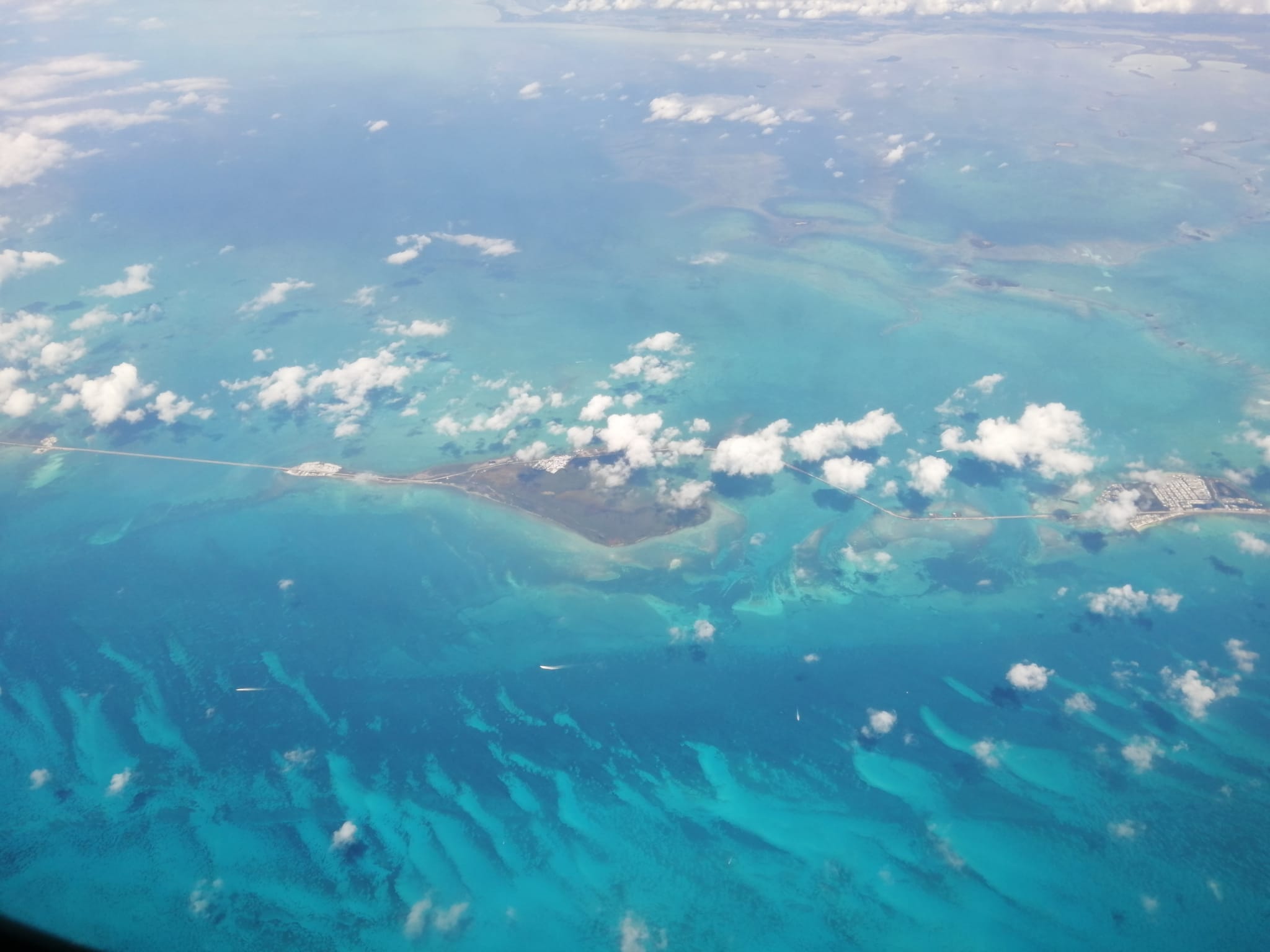
Jessica turned off the television and fell back atop the bed. She stared at the ceiling, preferring that to the view through the window of a sky she believed had suddenly turned on her, despite the intense love she had showed it throughout most of her life.
* * *
Six months had passed since the skies had been shut down.
Jessica, who spent most of her life training for a job that was now considered obsolete, was still unable to find gainful employment. Her resume was considered worthless by many, and the few jobs she was able to interview for were too low paying to consider. Initially, she believed her experience flying planes would make for an easy transition to driving other vehicles. However, it quickly became apparent to her, and anybody unlucky enough to sit in the passenger seat of her parents’ car, that she was not a good driver. So, while she watched people around her get well paying jobs in the exploding bus and truck driving industry, Jessica spent more time diverting her attention from herself and aiming it at the world around her, as new effects from the sky’s closure were constantly being revealed.
All airlines around the world had shut down operations and many of them would remain shut down even if the skies opened back up due to bankruptcy. Every major sports league in the world that depended on air travel saw their operations halted indefinitely, while minor league teams saw an explosion in popularity, as people were desperate to fill the void in sport entertainment.
Another result of the closed skies was the suspension of all NASA and other international space programs’ operations. At first these announcements were met with positive reactions, as many people believed the programs’ were already an enormous waste of money. However, when it was revealed that several astronauts from a number of countries who were scheduled to return to Earth months earlier were left stranded in the stations where they were posted, reactions shifted. Compounding matters was the dangerously low level of supplies the stranded astronauts had, and with no means to provide them with more, they only had a few weeks left until they would starve and die on those stations. People from around the world begged their respective governments to do something to save those unfortunate souls who were marooned in the endless abyss of space, but there was nothing to be done.
Economically, the last six months had been disastrous. Many nations, including Thailand, India, the Philippines, Vietnam, and Indonesia, as well as countries in Oceania, southern Asia and Africa, suffered tremendously as the year-round tourism from Europeans and North Americans that provided them with billions of dollars had completely evaporated, leaving thousands of once bustling restaurants, resorts, bars, and popular attractions, empty. As a result, hundreds of thousands of people who depended on those tourists were abruptly left penniless. With an increase in poverty came an increase in desperation, and with an increase in desperation came an increase in crime. Chaos reigned in most of the world, but with no access to what had been coined the “unfriendly skies”, that chaos remained largely unseen since it could not be captured on film because no helicopters, planes, or drones could record it from above, and many journalists were too afraid to record it from the ground.
The demand for gasoline had skyrocketed, and powerful oil corporations were in a position to profit tremendously. Using all of their vast resources, many of those corporations drove up their prices, forcing people in the lower classes to abandon travel all together, while those in the upper classes basked in the freedom of continued movement. Cruise lines and other seafaring enterprises rushed to meet the skyrocketing demand for marine travel, but with only so many ships at their disposal and orders for more still in their construction phases, they did what any business in their position would do: they hiked their prices exponentially. Governments around the world tried to combat the private hijacking of travel by implementing fixed prices on gas, and other travel related costs for an indefinite period of time, and in some countries those efforts were successful, while in other countries they weren’t.
Finally, scientists, while still unable to come to a consensus as to the exact cause of the sky closure, had been able to unanimously agree that the cause was not a natural phenomenon, but a condition, a “sickness of the sky” as some have called it, caused entirely by human beings. And while some people – particularly those who profited from the actions now deemed responsible for the sky closure – vehemently denied those charges, the scientific community, in a rare act of solidarity, remained firm in their stance. Yet, despite the urging of a unified group of brilliant minds, there were no signs of any real solutions on the horizon. Instead, on an almost daily basis, quick fix responses from around the world, some creative and helpful, others ridiculous and destructive, came to pass, with few of them showing any kind of sustainability.
* * *
Months turned to years.
Like so many aspects of human history, what was considered normal in the past had become a ridiculous notion in the present.
Whenever older people discussed air travel, which was quite often, and how convenient and affordable it was, and how it shrank the world in the best of ways, younger people laughed, dismissing what they considered to be absurd anecdotes about the impossible. That laughter increased ten-fold when those same older people said in their time air travel was considered the safest way to travel.
While the wealthier countries were able to adapt, and in some instances benefit from the closure of the skies, other less fortunate countries were not so lucky and spiralled into states of depression that economists around the globe were convinced they would never recover from. Many of those countries however, despite being forced into states of vulnerable isolation, did end up re-embracing their cultures in ways not seen since pre-colonial times. As a result, many popular American and European based name brands suffered. Worldwide fixtures of fast food, from McDonalds and Burger King to Domino’s and KFC watched their staggering number of overseas franchises dwindle as international tourism continued to wane, while local populations turned their collective backs on those brands in favour of their own cuisines.
International conflicts had transformed entirely. With the possibility of drone strikes no longer an option, and the tactic of flying in thousands of troops into a chosen target off the table, and with other options being deemed too expensive, warfare had become an entirely online affair. Cyber-attacks became the sole means for one country to assault, harass, or destabilize another.
Meanwhile, faraway places had once again become far away. As a result of diminished tourism, islands around the world started to recover and return to their former natural glories. There were even reported cases of many stranded budget travellers forced to call some of those islands home, since there were no affordable means for them to return to their native countries. However, the oceans surrounding those islands were in worse conditions than ever before, as the number of ships in their waters had increased with every passing month in an effort to meet the unceasing demand for sea travel, ultimately reaching a point where ship to ship collisions had become common place. Traffic jams along popular shipping lanes were so routine that companies started planning for them, while wealthy passengers just laughed them off as an inconvenient part of their adventures.
In the midst of it all, Jessica, the once happy, dedicated, and talented pilot – something she kept to herself whenever possible – spent most of her time laying on an old, haggard couch in her parents’ basement, which they allowed her to live in rent free. From there, she watched her favourite news channel and laughed at the newest story about the newest failed response to the newest devestating result of the sky closure before getting bored and changing the channel.
Written in May of 2020 in Toronto.
Comments
Nothing yet. Say the first thing.
Sign in to join the conversation.