
Two weeks ago Charlie Kirk was assassinated and the world has not stopped talking about it since then. The more facts that have come out in the last week plus, the clearer it is that Charlie was targeted for his beliefs, in particular his beliefs on gender and sexuality. The Bible and his Christian faith inspired Charlie’s convictions on those topics.
No matter where you fall politically, Charlie’s assassination should be deeply troubling. To kill a man because of his beliefs is evil, and it marks a low point for our society, because even in deep disagreement, we should still be able to talk and debate without violence.
It’s been nearly two weeks, and I still find myself struggling to process the reality of it. I’ve taught the same things from Scripture that Charlie believed, and to think that those convictions might cause someone to want to take my life is sobering.
But what has troubled me almost as much as the murder itself is the way many Christians have responded in the days since. Social media has been flooded with a one-sentence take that goes like this:
“If your pastor didn’t talk about Charlie Kirk, then find another church.”
I should say up front, I understand where this strong reaction comes from. Tragedy can easily leave us raw. People grieve, and in grief, we want shepherds to help us process, guiding us through darkness. I’ve spoken with many pastors in the past two weeks, and every single one is wrestling with how best to serve their people in a time of shock and sorrow.
But here’s the problem: that statement—“If your pastor didn’t talk about Charlie Kirk, find another church”—is not only unhelpful, it’s divisive. And worse, it contradicts the very fellowship Christ died to create. Let me highlight two particular reasons I, as a pastor myself, find it wrong.
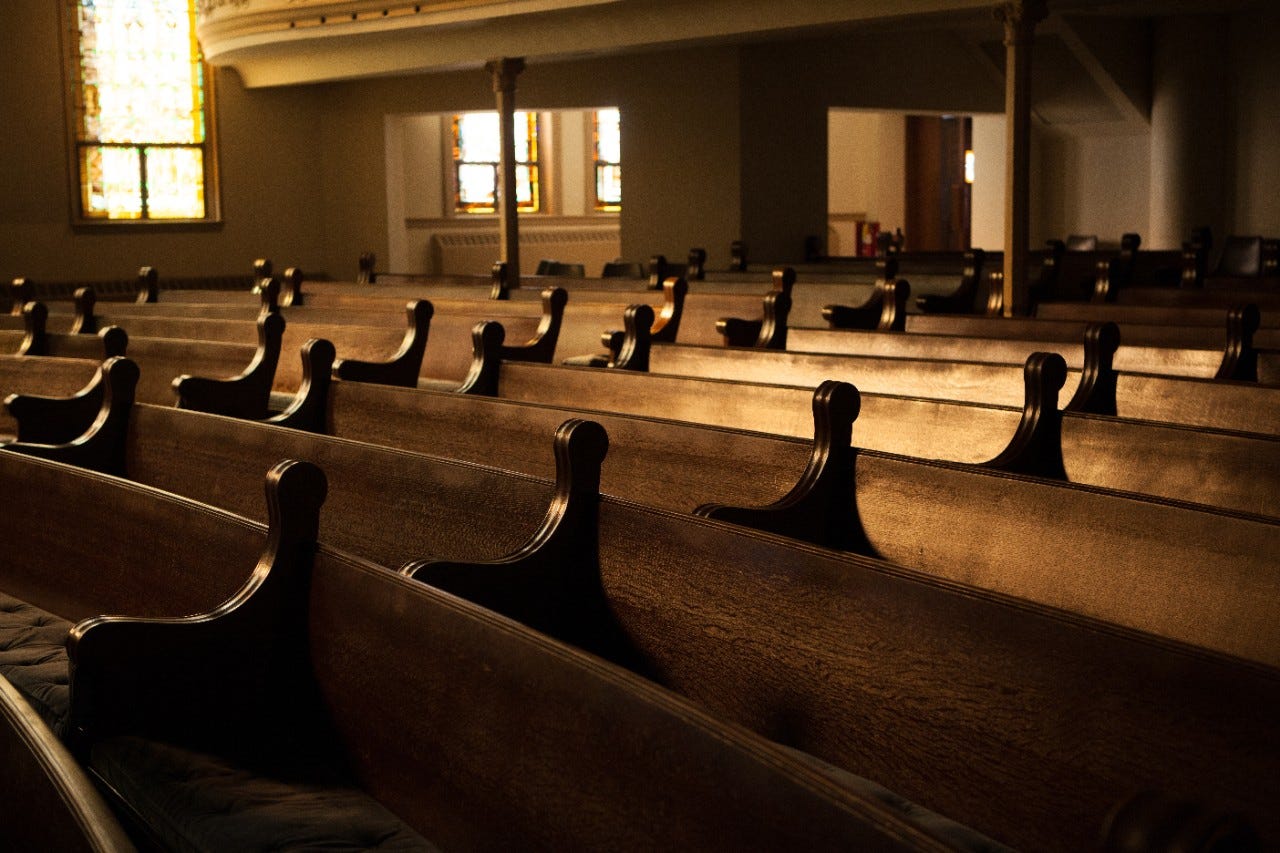
Leaving a church because a pastor didn’t talk about Charlie Kirk the way someone wanted relies on a false assumption that our political associations and ideologies are more significant than our spiritual fellowship in the body of Christ. Following that false assumption, if a pastor does not address this politician, this tragedy, or this cultural moment in the way we want, then we quickly jump to a church that will. As I’ve written about before, the church is not a political platform; it is an outpost of God’s kingdom.
Scripture doesn’t measure the health of a church by its political commentary, but by its devotion to Christ, its faithfulness to the Word, and the fellowship of believers. As Peter reminds us in 1st Peter 2:9, “you are a chosen people, a royal priesthood, a holy nation, God’s special possession.” Our first loyalty is not to a political identity but to the kingdom of God.
This is exactly what Jesus modeled in the way He chose His disciples. Among the 12 were Simon the Zealot. He was a part of a group of far-right political revolutionaries who wanted to overthrow Rome due to its occupation of Israel. Matthew the tax collector was seen as a left-leaning sellout for working for Rome. Politically, they could not have been further apart. And yet Jesus brought them into the same circle of fellowship, not because they shared the same ideology, but because they shared the same Savior.
When Paul wrote to the Corinthians, he didn’t tell them to divide over political loyalties or personal preferences (1 Cor. 1:10); he called them to unite under Christ alone. Our churches are not meant to be political echo chambers. They are meant to be outposts of the kingdom of God, which defies our earthly categories.
If we measure faithfulness by whether a pastor said the one thing we wanted them to say on a Sunday morning, we’ve reduced the church to a platform for our preferences.
Even more concerning is the division created by encouraging people to leave over something unsaid on a Sunday. 1st John 1:6–7 ties together a contrast between darkness and light, and the one example John provides of what it looks like to walk in the light is being in fellowship with one another.
This creates an important lesson: anything causing a fracture in the fellowship of God’s people is representative of darkness and does not honor the Lord.
That same teaching is found within other parts of the New Testament. Romans 16 warns believers to avoid those who cause division because of the harm it brings to Christ’s body. In 1 Corinthians 10, Paul urges the church to resist the patterns of the world that divide and destroy. Division is not a small matter because it is a direct assault on the unity Jesus purchased with his blood.
This is why the social media post is so grievous. It encourages people not to have conversations with their pastors, not to seek understanding or mutual care, but simply to leave. This only throws fuel on the fire of division. Even more than those leaving churches because of something not said on one particular Sunday, the Lord will judge harshly those who divisively encouraged that choice.
The past two weeks have tested the fellowship of the church. Charlie’s murder should grieve us deeply, and it should remind us of the cost of following Jesus in a world that increasingly resents His truth. But in our grief and our anger following an evil act, we must be careful not to let the darkness multiply.
The fellowship of believers is precious. Christ died not only to reconcile us to God but to bring us into a family with one another. To divide that fellowship over whether a pastor mentioned one name on one Sunday is to despise what Christ has purchased.
So yes, mourn the evil. Yes, stand firm in the truth of God’s Word. But do not let grief or outrage become the excuse for division. Instead, let us walk in the light as He is in the light, together, because a divided church cannot stand against a destroying enemy.
For those looking to read more on this topic, let me also recommend a post from pastor Glenn Packiam on this subject, as well as an Instagram post from pastor Greg Ford explaining his own thought process in what to say and how to say it over the recent weeks.
No posts
Comments
Nothing yet. Say the first thing.
Sign in to join the conversation.