
as the founder of the unwritten club, a journaling community designed to improve our relationships with ourselves and others, i often reflect on whether romantic partnership and more specifically, marriage, prevents women from fully realizing liberation.
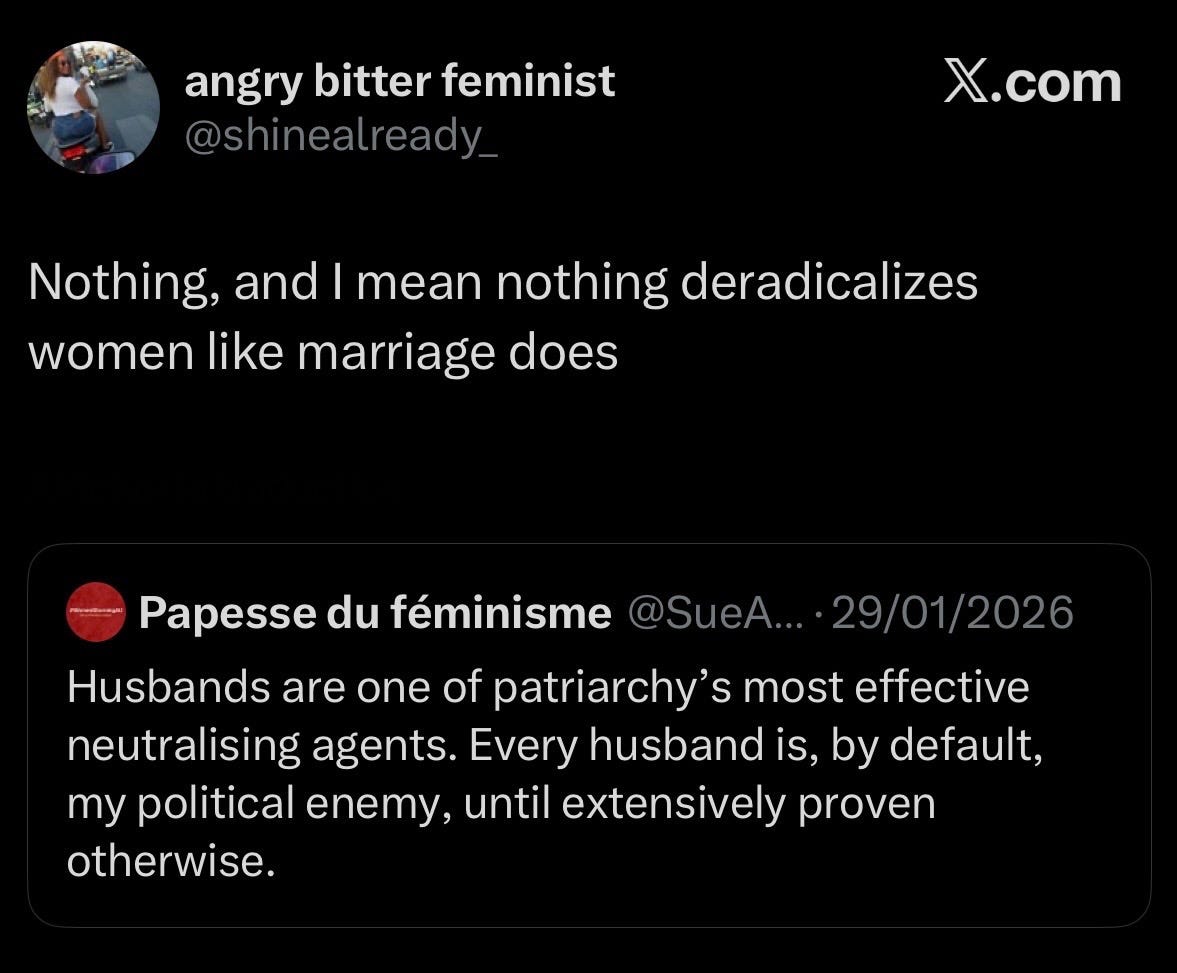
and while i have yet to arrive at a clear ‘yes,’ or ‘no,’ i do believe that more and more women in partnerships today are priming themselves for that by “radicalizing.” i want to share my very nuanced observations on why this is happening and offer my two cents on how married women dreaming of living more freely while in partnership can do the same.
i’d be remiss to not begin by exploring how our attitudes about marriage have shifted throughout time. though each generation is thoroughly taught to embody and perpetuate supremacy and its many oppressive ‘isms,’ that programming presents itself differently depending on when we were born. a concrete example of this is how Simone De Beauvoir expresses her discontent with the institution of marriage much differently than does bell hooks, and hooks, much differently than does Jia Tolentino; nonetheless, all three express discontent with how the institution of marriage oppresses women—both themselves and those they’re in proximity to.
this generational shift coincides with significant social movements across the last hundred years, including Second Wave Feminism, which set the foundation for Me Too, which is accelerating and giving way to the popularization of 4B. at no other point in time have women been able to opt out of motherhood and marriage so openly; it’s currently happening so often that globally, the total fertility rate is the lowest it has ever been and twelve countries are offering financial incentives to young people to have children. socially, we live in a vastly different world from the one Simone De Beauvoir was living in when she penned The Second Sex, and even from the one bell hooks experienced while writing all about love. thirty-somethings like Jia Tolentino and myself are now reaping the benefits of those shifts and speaking candidly about marriage in ways that women from hooks ‘generation and later may still be unwilling to admit:
marriage demands the lion’s share of women’s labor and attention.
in Trick Mirror: Reflections on Self-Delusion, Tolentino names 27 steps brides are often expected to take during a standard, 12-month long engagement: “immediately start planning an engagement party, look for a wedding planner, choose a venue, and fix a date. with eight months to go she’s expected to have created a wedding website and selected her vendors. she should have purchased presents to propose to her bridesmaids, assembled a wedding registry, chosen a photographer, and shopped for a dress. with six months to go, the bride should have arranged for the engagement photos, designed invitations and programs and place cards, and figured out where they’ll go on their honeymoon. at four months out, get wedding rings, purchase gifts for her bridesmaids, find gifts for the groomsmen, secured wedding favors, done her wedding shower, ordered a wedding cake. and as the wedding draws near, apply for a marriage license, do her final gown fittings, test out her wedding shoes, go away for her bachelorette, prepare the seating chart, send a music list to her band or dj, do a final consultation with her photographer. in the days before the wedding, do the rehearsal dinner.”
and that is at the start of the marriage. yes, more and more grooms are taking an active role in the wedding planning process, but they have yet to be the majority. this oppressively long to-do list is a direct reflection of the seemingly endless amount of labor—physical, emotional and now, financial, expected of wives.
2. institutionally, marriage was designed to oppress women.
In The Second Sex, Simone De Beauvoir writes, “[men] look to marriage for an enlargement, a confirmation of their existence, but not the mere right to exist [unlike women]…in marrying, woman gets some share in the world as her own; legal guarantees protect her against capricious action by man; but she becomes his vassal. he is the economic head of the joint enterprise, and hence he represents it in the view of society. she takes his name, his religion, his class, his circle; she joins his family, she becomes his ‘half…’ she gives him her person, virginity, and a rigorous fidelity being required.”
up until the 1970s and 1980s when women started legally being able to open their own bank accounts, women’s survival depended on men—either their husband or their father.
3. numerous studies have found single, childless women to be happier
various social and behavioral researchers working at London School of Economics, University of Toronto, University of Essex, York University, Pew Research Center, and The National Institute of Health, amongst others, have found that not only are single, childless women happier, they also live longer than their married counterparts, and are less concerned with romantic relationships than men.
this isn’t surprising given the ample benefits men gain from marriage, which as bell hooks says in all about love, comes down to power: “many men, especially, often turn away from true love and choose relationships in which they can be emotionally withholding when they feel like it but still receive love from someone else. ultimately, they choose power over love. to know and keep true love we have to be willing to surrender the will to power.”
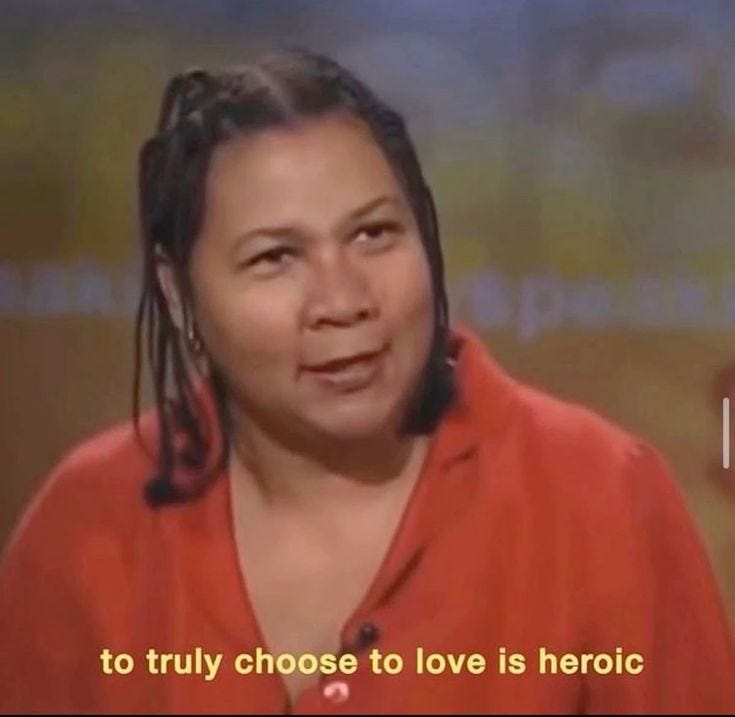
despite these facts, many billions of women, feminists included, will continue to get married. it is true that a great number of women are delaying marriage until their thirties, but that doesn’t automatically make the experience any less oppressive. like leaders and members of any liberation movement, married women must also make material demands to ensure that their union is liberation-centered—even in same sex couplings as queer folks are taught to mirror cishet dynamics, too. what a married woman includes on her list is subject to how her relationship functions, but without a doubt, maintaining some amount of financial autonomy must be high on that list.
feminist content creator, Lauren Urasek, went viral for sharing hers:
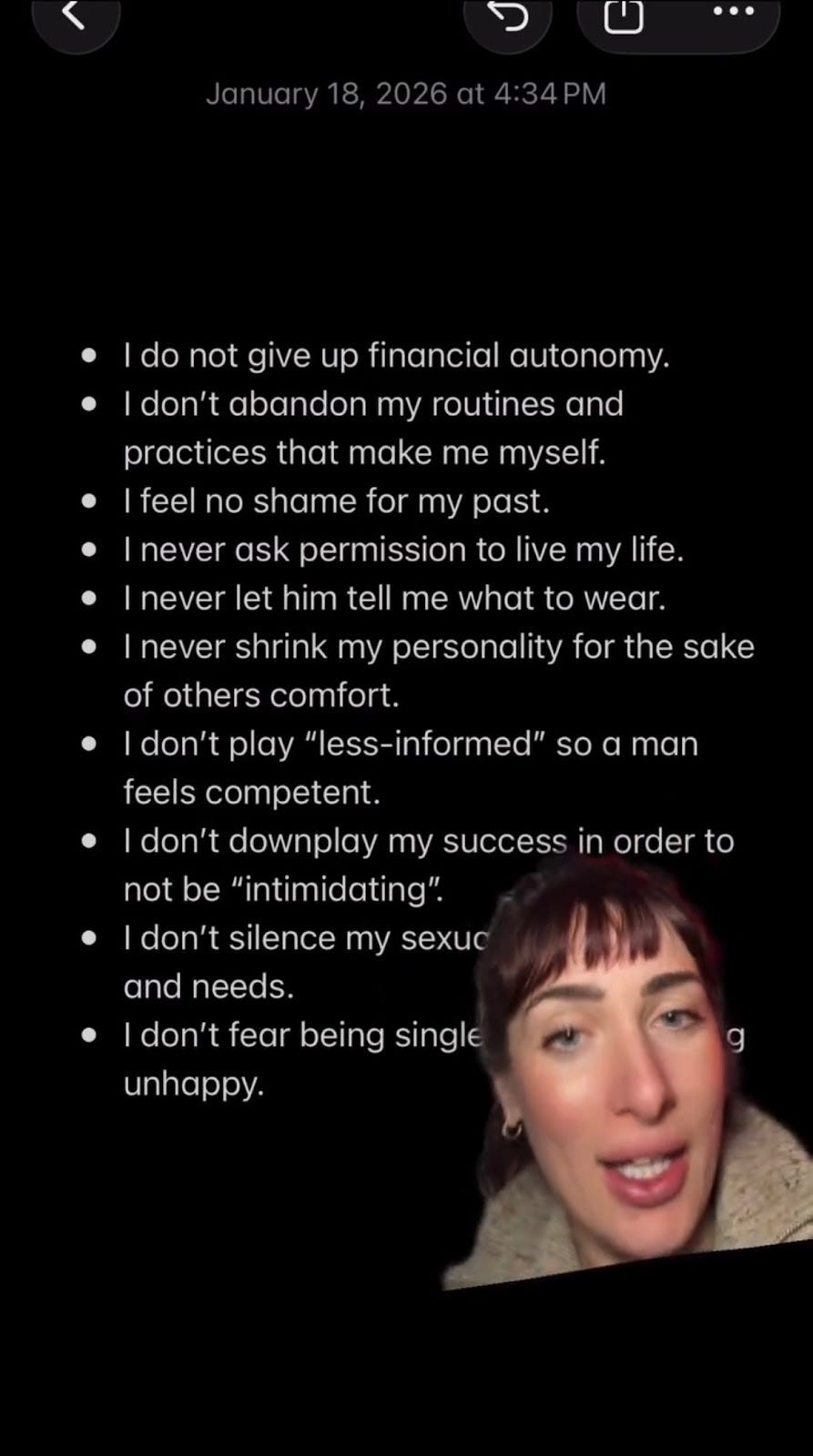
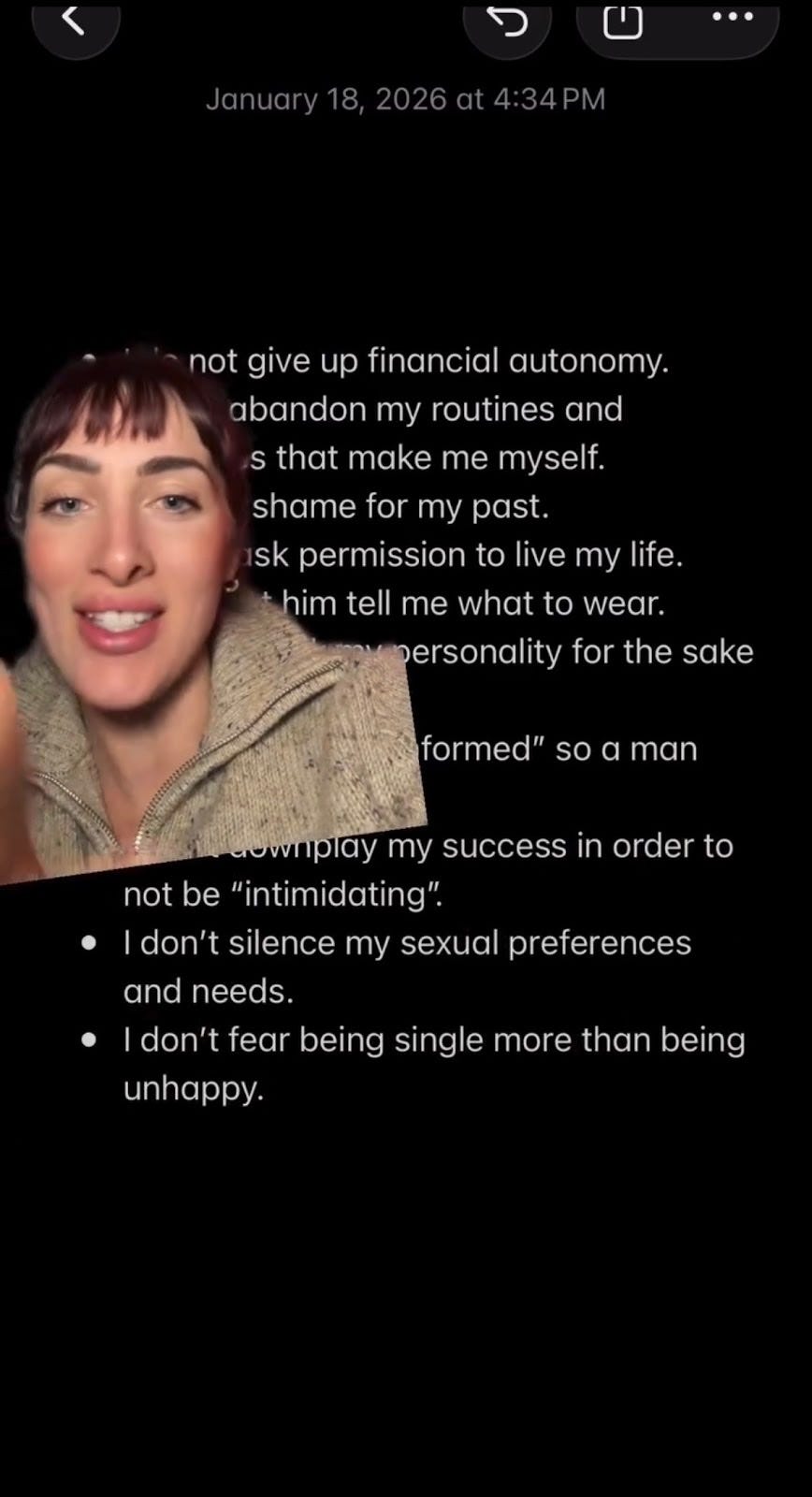
social media is rife with stories from women in the midst of divorce or post-divorce after fully relying on their partners for financial support over the years, and now have no clue how they’re going to survive. as a woman, having a stream of income independent of your partner is necessary, no matter how traditional or in-love you are. some degree of financial self-sufficiency can not only literally save our lives and keep our minds sharp, it also makes it easier to set boundaries with your partner around splitting your household’s labor. clear communication to your partner from the very beginning of the relationship helps to put all of this in place. as is showing up fully as yourself from day one—which is not only a stress reliever for women, but also helps us quickly discover who we are best suited to partner with.
if you’re currently in a space within your marriage where you don’t feel like yourself, communication is shaky and you’re financially dependent on your partner, all hope isn’t lost—but making the shift to a liberation-centered union will take a lot of time and energy, and will likely be a point of contention if your partner doesn’t believe in your vision for more autonomy. in that environment, it probably is not be safe for you to make material demands right away, but you can begin the shift needed within yourself by taking even ten minutes each day or week to journal through your vision for a liberation-centered life. give yourself five minutes on each prompt:
when considering the current state of my partnership, i feel…
what do i need from my partner for this relationship to feel more fulfilling or expansive to me?
what am i most scared to admit to my partner about my current needs?
what do i need from them to feel safe to communicate these needs?
what is my ‘best case scenario’ regarding household labor between my partner and i?
what is my ‘best case scenario’ regarding emotional labor between my partner and i?
what is my ‘best case scenario’ regarding how i show up for myself right now? what ways would i like to grow?
what is my ‘best case scenario’ for how i’d like my partner to show up for me beyond our household and emotional labor? does this align with who they are currently?
when was the last time i communicated my needs to my partner? what was the result of those conversations?
when is the next time i can communicate my needs to them? what would i like the result of those conversations to be?
discomfort will likely arise as you journal through these, and that is ok. you can be your safest space to communicate your needs, no matter what. as you move forward, begin honoring that you are yourself before you are a wife, mother, homemaker, or a career-woman. you are many things and you owe it to yourself to make space for everything you are, and everything you wish to become.
if you’re ready to go deeper in your unlearning, email theunwrittenclub@gmail.com to join our journaling cohort, “calling in more: creating a fuller life after an unfulfilling relationship.” our range of journaling sessions (both live and pre-recorded) on radical love of self and others, unlearning limiting beliefs, trusting yourself and building a supportive, liberation-centered community, and so much more are available here.
Comments
Nothing yet. Say the first thing.
Sign in to join the conversation.