
We are Stella and Amy. We share firsthand stories at the crossroads of tech, business, and culture, helping leaders craft actionable cross-cultural strategies. Together, we bridge cultural divides and bring the world a little closer—one step at a time.
This summer, one of the highlights of my trip back to Taiwan was volunteering as an English teacher at a local elementary school’s summer camp. Since our class fell on July 4th, we decided to introduce the Taiwanese kids to a slice of American history—and the meaning behind Independence Day.
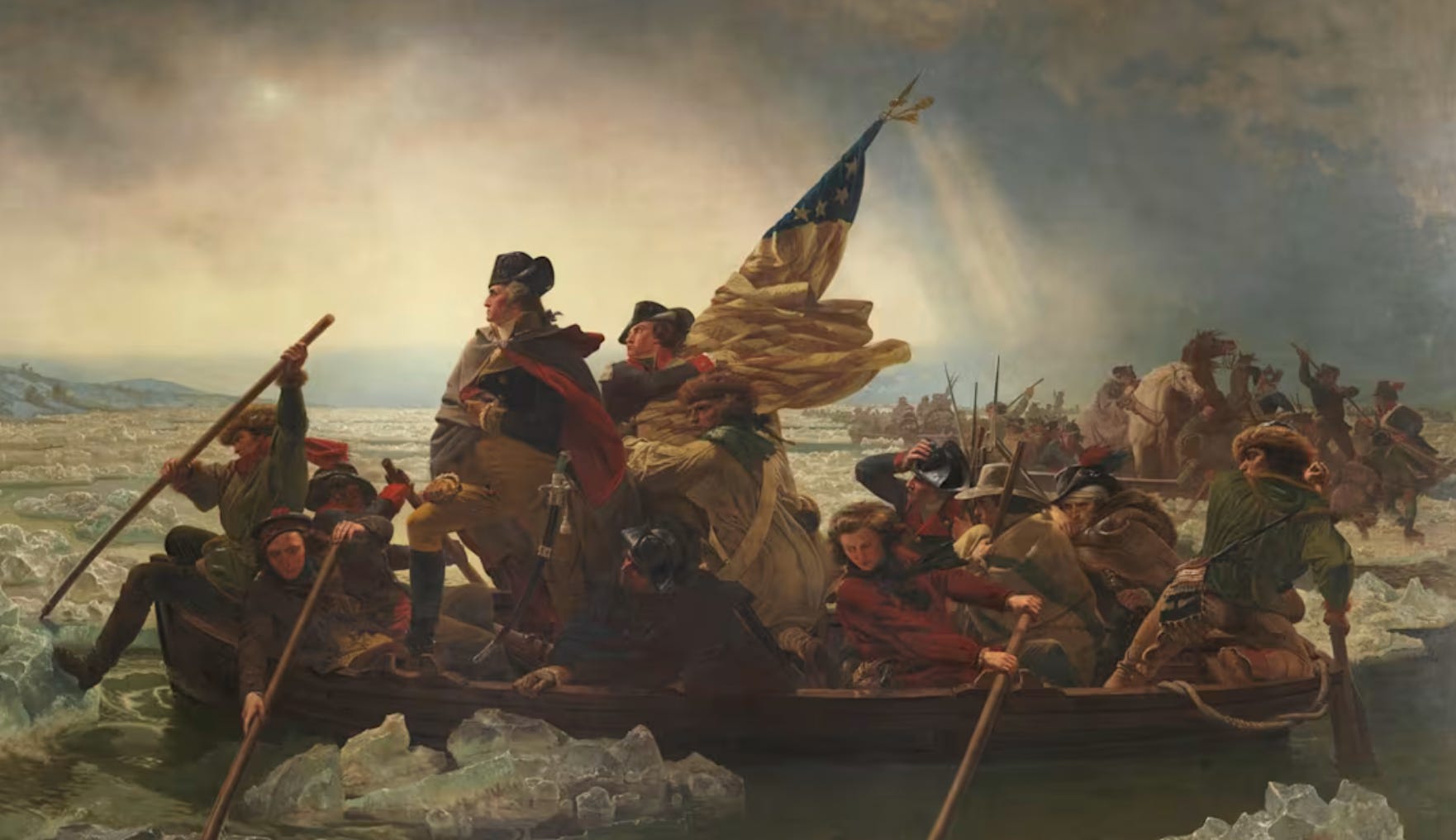
The class was a roomful of curious second and third graders. As we explained the American Revolution, we showed them the iconic painting Washington Crossing the Delaware.
A boy in the front squinted at the screen.
“Is that AI-generated?” he asked, pointing at picture of the oil painting.
“Yeah, for sure,” another chimed in. “I’ve never seen a picture like that.”
I froze. I hadn’t expected that question. After a pause, I said, “No, this was painted a long time ago. It’s based on real history.”
The first boy tilted his head. “Are you sure it’s all real?”
Hmm. I knew the answer wasn’t simple.
Because no—it’s not all real. Emanuel Leutze’s painting wasn’t created during the war. It was painted nearly 75 years later in Germany. And it’s full of historical inaccuracies. For one, Washington didn’t stand that way on the boat. The painting shows the American flag with stars and stripes. However, this flag wasn't adopted until 1777, nearly a year after the crossing.
While these thoughts were flying through my head, the kids started questioning whether The Surrender of Lord Cornwallis was also AI-generated.
“This picture must also be AI-generated. It didn’t happen.”
Well, in The Surrender of Lord Cornwallis, Cornwallis (the British Army Officer) didn’t even show up. He sent his second-in-command.
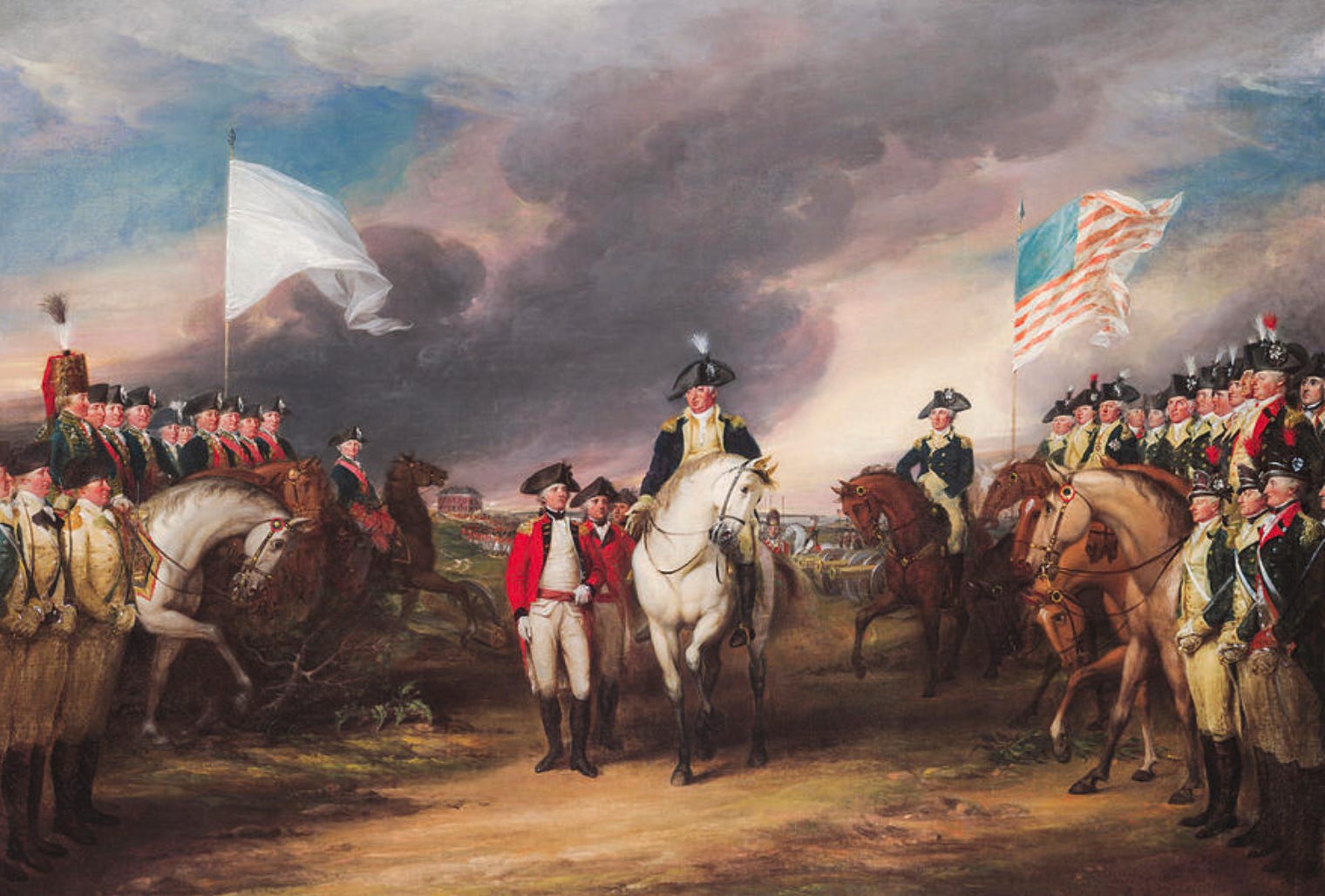
Another teacher jumped in to help: “So, in the painting of the surrender… Cornwallis didn’t really surrender like that. The painting is a bit dramatic.”
The boy nodded with the kind of smug certainty only kids can get away with. “So it is AI. I knew it.”
After class, I was exhausted—not from teaching English, but from trying to explain the grey.
After the camp, I keep thinking about that exchange. The way these kids process information is fundamentally different. They grew up in a world saturated with generative AI. When they see something unfamiliar or beyond their knowledge, they don’t ask who painted it or why. They ask if it’s fake. And if it looks too perfect or too polished, it’s dismissed as AI.
In our podcasts and The Cocoons newsletter, we often talk about what it means to “be responsible” with AI-generated content. We embrace AI, but with nuance, discernment, and a firm sense of control.
But control assumes clarity. And clarity assumes we already know what truth even looks like.
But what if we don’t?
What if the next generation grows up believing that every story is either fake or AI-generated—and no longer sees a reason to ask what parts are human?
When everything is potentially fake, what should the kids believe in?
And more importantly: What’s left to learn?
If you are interested in working with us more closely, we offer tech / business consulting service. Refer to [this article] to see why working with builder-strategists like us is different from traditional business consultants.
Email us at stellaxamy@gmail.com or
Become a member and meet with us monthly.
Comments
Nothing yet. Say the first thing.
Sign in to join the conversation.