
Both are statements of hope for a country governed by and for the people and they are deeply connected–even as our collective understanding of who makes up “We the people” has expanded beyond the limited understanding of 1776.
The Declaration of Independence is not law. It’s a statement of values and grievances with a moral force. It is also a political document, representing collective action by people with a common-enough purpose, doing their best to say what they believe and why they will not put up with tyranny and corruption. It’s light on specifics about the future. But it claims broad rights, freedoms, and powers, meaning the ingredients are there, and the details can come later. It holds that governments derive “their just powers from the consent of the governed.” That means power starts with us. All of us.
The 26th Amendment came out of the Vietnam war era and the draft. The unifying theme was: old enough to fight, old enough to vote. Like the truths set out in the Declaration of independence, this too seems self-evident. Unlike the Declaration, this one is law. But given how poorly it’s been treated, you would hardly know.
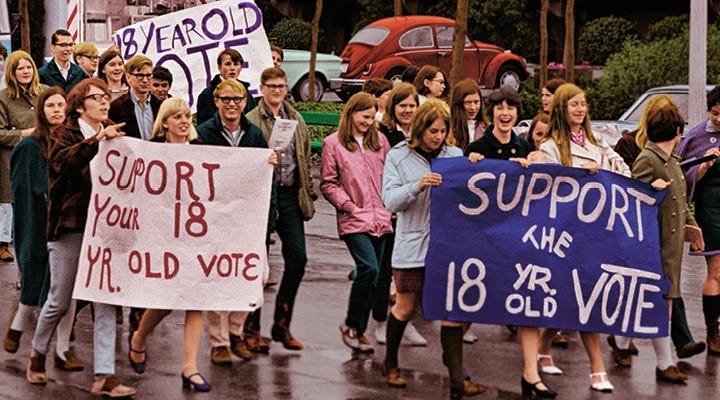
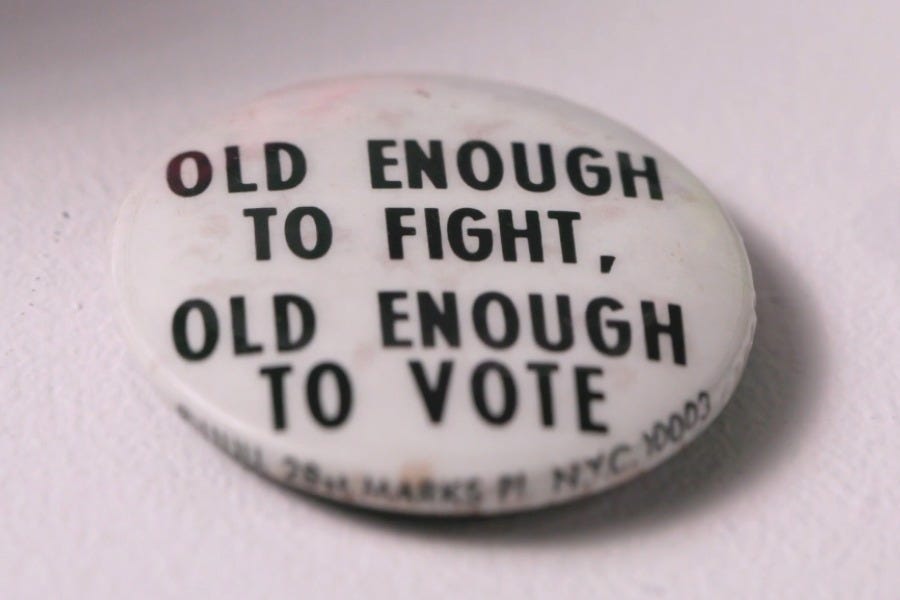
There is no day off from school, no special song, hat, or cake. No parade or wreath. No emoji. No widespread fireworks, public celebration or tradition telling young people, democracy is for all of us. We want you. Why have our united and independent states not done more to uphold this right?
Anniversaries invite us to look at events from the past and bring the joy or pain they represent into the present and the future. The truth is, we do not need laws to sing or bake, to design hats or hold parades. We are free to declare our belief in equality and that tyranny and oppression have no place. We do not derive these powers from the government. We are endowed with them, regardless.
Absent official action to implement laws like the 26th Amendment, we citizens can build the kinds of trusted relationships that translate aspirational pledges into real-world impact and progress. For example, helping high schoolers register to vote. But official support sure makes it easier to succeed at scale!
Comments
Nothing yet. Say the first thing.
Sign in to join the conversation.