
On February 12, 2026, the US Environmental Protection Agency (EPA) finalized the revocation of its own 2009 Endangerment Finding: the scientific and legal foundation, upheld across four subsequent administrations, that greenhouse gas emissions harm public health and welfare and must therefore be regulated under the Clean Air Act.
What does this mean exactly? The United States federal government has officially declared, as a matter of law, that the air we breathe, the heat we endure, and the climate we have destabilized do not constitute a threat to human health sufficient to warrant federal action.
We could spend this newsletter on the legal architecture of what was dismantled, or on the politics of how it happened. Others are covering that ground well. Instead, we want to make a different argument. The revocation of the Endangerment Finding is, in a strange way, a clarifying moment. It forces a question that cities have been quietly answering for years: what if the health case for climate action doesn’t depend on federal declarations at all?
It is worth pausing on what has just been discarded. The 2009 finding was not an act of political will. It was the conclusion of a rigorous scientific process, required by the Supreme Court’s ruling in Massachusetts v. EPA, which determined that EPA had a legal obligation to assess whether greenhouse gases endangered public health. The resulting finding drew on thousands of peer-reviewed studies. It was reaffirmed in 2016. It was the legal foundation for vehicle emission standards, power plant emission rules, and oil and gas regulations that have, over sixteen years, prevented an extraordinary quantity of air pollution from entering the lungs of American people.
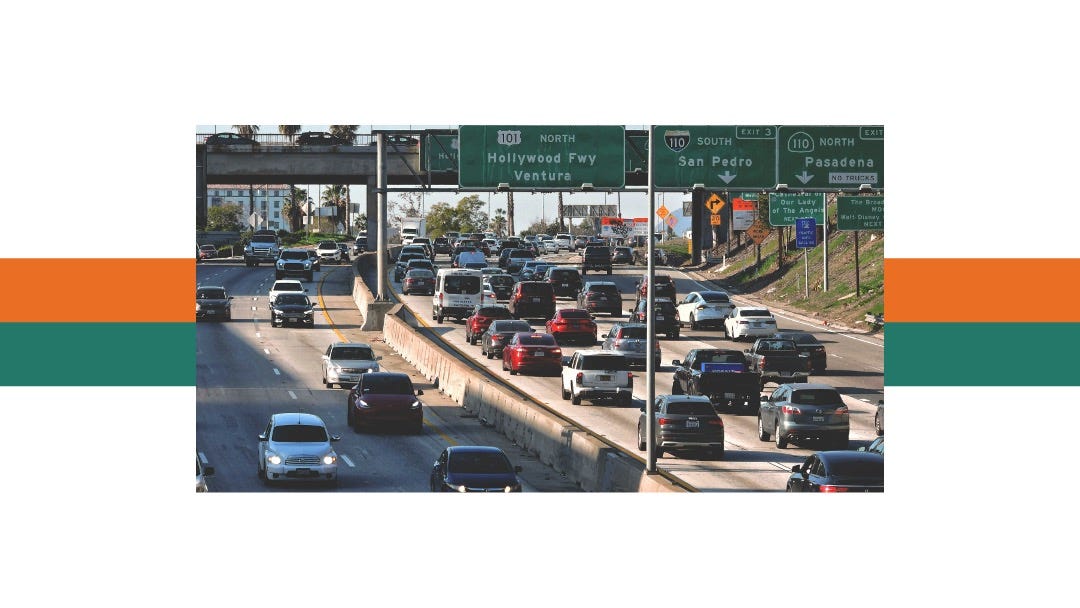
By repealing the Endangerment Finding, the EPA removes the scientific and legal basis that requires federal regulation of greenhouse gases, weakening protections for people, the environment and the economy. The EPA itself acknowledges that transportation is the single largest source of greenhouse gas emissions in the United States. The vehicle emission standards now also revoked were projected to prevent billions of tonnes of carbon pollution. The health costs of abandoning them will affect all U.S. residents, but will fall most heavily on communities that have already been historically marginalized.
There is something almost breathtaking in the reasoning the administration has chosen. Rather than simply arguing that the costs of regulation outweigh the benefits, or that Congress should decide, the EPA’s final rule makes a more brazen claim: that greenhouse gas emissions do not, in fact, endanger public health in a way that requires federal regulation. The agency goes further, asserting that even eliminating all US vehicle emissions would have no material impact on global climate concerns.
Effectively, the scientific basis for climate-health regulation, accumulated over decades, agreed upon by every major health institution on earth, has been officially rejected by the government of the United States. The American Lung Association and the American Public Health Association, among many others, filed a lawsuit against the EPA opposing this revocation. The evidence that greenhouse gas emissions endanger public health and welfare has only grown more compelling since 2009. More and more Americans have directly experienced climate-exacerbated natural disasters, whether hurricanes or wildfires or extreme heat.
To every city leader, every urban health officer, and every climate practitioner reading this newsletter: the federal abdication of responsibility for climate and health is not a reason for hopelessness. It is a reason for cities to move faster, and to make the health case for climate action more loudly and more rigorously than ever before.
This has always been the C40 model. Cities acted on climate when national governments would not. They built the evidence base. They showed what was possible. They made the political and economic case that climate action was not a cost but an investment in cleaner air, in cooler streets, in healthier children, in more liveable places. Crucially, city residents overwhelmingly supported these initiatives.
The revocation of the Endangerment Finding is, perversely, a clarifying moment. It strips away any remaining pretence that the federal government of the United States will protect urban populations from the health consequences of climate inaction. That responsibility now falls, as it has increasingly fallen for years, on mayors, city councils, local health departments, and the networks of cities that have chosen to act together.
The practical implications are significant. US cities that have relied on federal vehicle emission standards to improve local air quality now face a regulatory vacuum. Cities in every country will feel the downstream effects of increased US emissions on global temperature trajectories. And everywhere, the political argument that climate action serves public health needs to be made more forcefully and with better evidence than before.
What cities do on climate could be some of the most consequential public health interventions available to them. Cleaner air from electrified transport. Cooler neighborhoods from urban greening. More active lives from walkable streets. These are not abstractions. They are measurable, near-term, local improvements in how long people live and how well they feel.

In the latest episode of Cities 1.5, our host David Miller discusses with C40 Cities experts, Mariana Batista and Charlie Worthington, how the fossil fuel industry mirrors old tobacco industry tactics to greenwash its image.
You can find the episode on all podcast platforms or at this link.
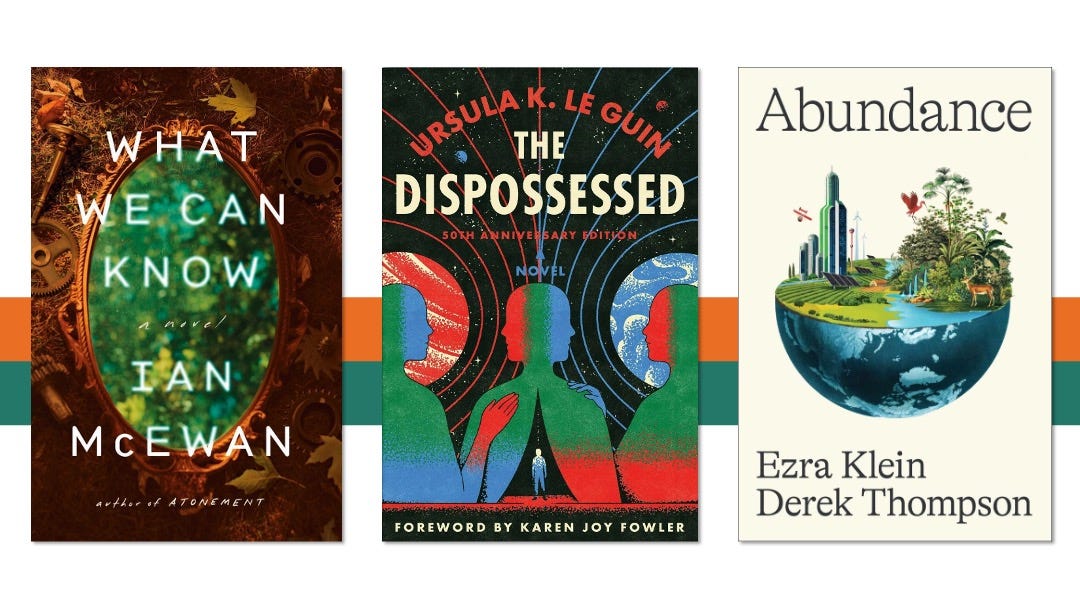
David Miller: Ian McEwan’s What We Can Know. Set in a post climate disaster world, an academic searches for a lost poem of a great 21st century poet. As the title suggests, the book is an exploration of what we can know—about ourselves, the world, and even the afterlife: but the backdrop is climate.
Francesco Mellino: Hoping to find solace from the state of the world, I turned to sci-fi and started Ursula K. Le Guin’s The Dispossessed. Alas, I found myself reading about two planets with opposing views and values—one capitalist, one collectivist—and whose main understanding of each other is based on prejudice and misinformation. Granted, when something written in 1974 still feels like a sharp condemnation of the conflicts in today’s society is probably a sign of a good book. (The description of the social organisation in the collectivist world makes me question why the left doesn’t hold this book to the same regard as the right does Ayn Rand’s Atlas Shrugged.)
Quinn Adams: I recently finished Abundance by Ezra Klein and Derek Thompson, which explores barriers to progress in the United States on issues such as affordable housing and climate change. This book provides a very thought-provoking assessment of how “chosen scarcities” have impacted American life and progress.
Comments
Nothing yet. Say the first thing.
Sign in to join the conversation.