
By Gary Gately
Pope Leo XIV has a message for all those who feel forgotten, abandoned, invisible — especially the elderly.
The Lord assures us through the prophet Isaiah, “I will never forget you,” Pope Leo reminds us in his message for the sixth annual World Day for Grandparents and the Elderly.
The prophet’s words, Leo wrote, “fill us with comfort and hope” — particularly for “all those who feel that their lives are of no interest to anyone and are being neglected.”
“The painful feeling of being forgotten is, unfortunately, shared by many people, and among them are quite a few elderly people,” the pontiff said in his message.
“The lives of many elderly people, in particular, seem to be covered by a veil that blurs the features of their faces and shrouds them in oblivion. This is what happens in homes where loneliness reigns and also in those care facilities where each person’s uniqueness risks being reduced to a bed number or an illness.”
The annual World Day for Grandparents and the Elderly, Leo wrote, provides “an opportunity to rediscover that the Church is called to be a mother to all and that at any age it is always possible to recognize ourselves as sons and daughters of God.”
The Church, Leo continued, “understands the suffering of her elderly members; she knows full well that they are all too often viewed through the lens of stereotypes and considered a burden” and recognizes that many elderly people are left behind by children who are forced to migrate or to fight in wars.
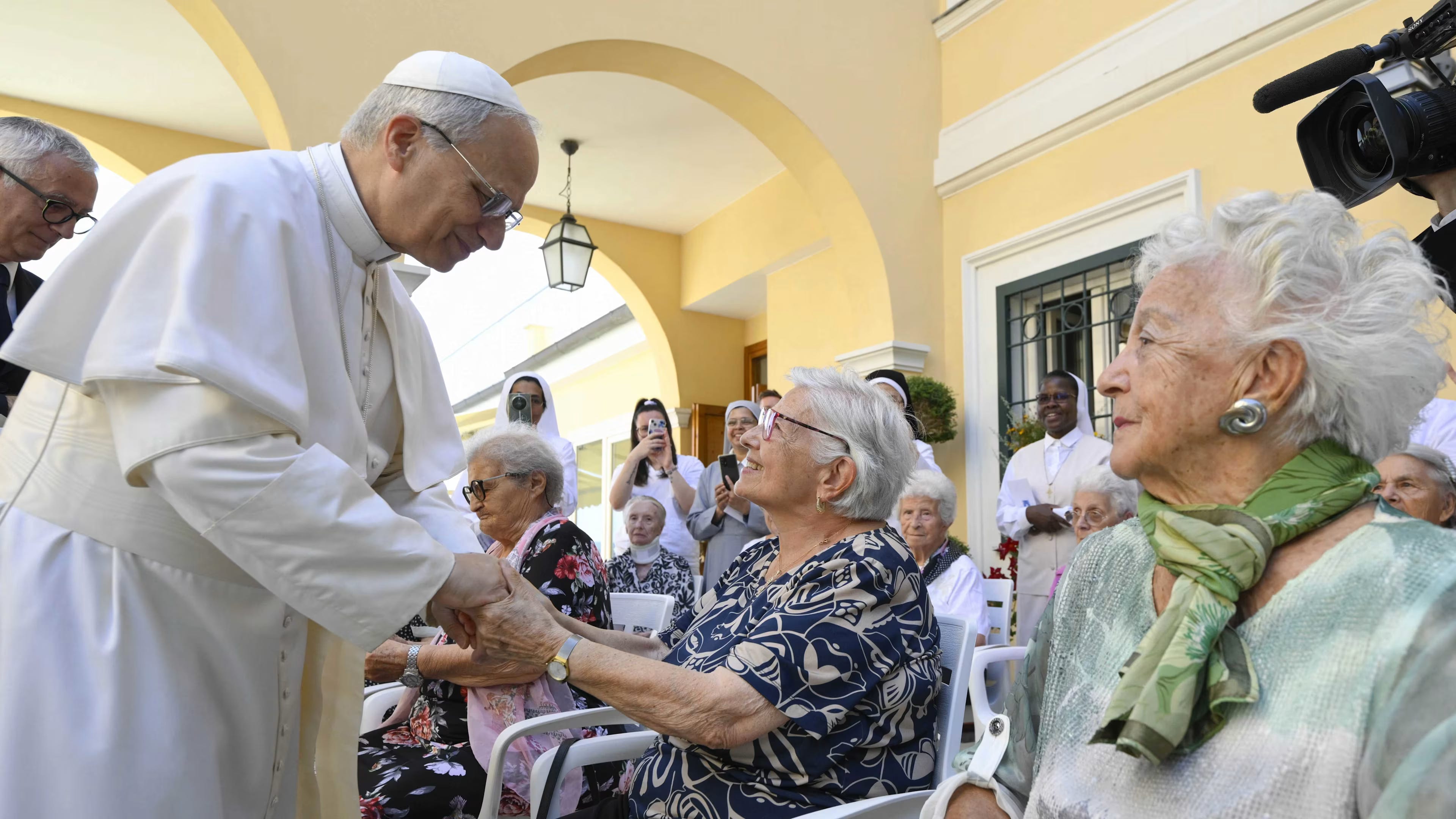
The 70-year-old pope called on the faithful, particularly the young, to visit grandparents, other elderly relatives and those who have no family left.
“Ensure that the words of the prophet, ‘I will never forget you,’ take the form of a tender and affectionate encounter,” Leo wrote. “God’s love, which forgets no one, offers itself as an act of justice and a response to the anonymity in which human life all too often ends up lost.”
In his message, Leo quoting from his encyclical Magnifica Humanitas (“Magnificent Humanity”), stressed that connecting online provides no substitute for “care and recognition from attentive minds, kind words and hands capable of tenderness.”
“The digital culture,” he wrote, “multiplies connections and offers new opportunities for interaction; yet, the human heart retains an irrevocable need for genuine closeness.”
The leader of the 1.4 billion-member Catholic Church also urged elderly people not to fear the human frailty that often accompanies old age. By acknowledging it, he said, “Our hearts become open to supporting one another and to invoking the One who can grant what no human power can ensure: the profound reconciliation of hearts and, with it, true peace.”
Leo said it’s increasingly common to reach old age “without having had a genuine experience of faith.” But that need not be cause for despair, he added.
“Old age — beginning with the questions that arise with greater urgency during this season of life — can become the right time to begin or resume a spiritual life…. To God, who draws near to us and whom we learn to recognize in his tenderness, we can now turn with filial trust in prayer. It is never too late to begin turning to him. It can be a great gift for everyone.”
Pope Francis instituted the annual World Day for Grandparents and the Elderly in 2021, to be celebrated on the fourth Sunday of July close to the July 26 feast day of Saints Joachim and Anne, the parents of the Virgin Mary. (But the annual celebration is now observed in the U.S. on the first weekend after Labor Day in September, to coincide with National Grandparents Day.)
Francis, who died at age 88 in April 2025, repeatedly called on society to cherish the elderly as a source of wisdom but lamented that they are often viewed as a burden in a “throwaway culture” that casts them aside because they are no longer productive.
Leo’s message comes against a backdrop of an epidemic of loneliness among the elderly. In the U.S., Africa, Asia, Central and South America, multiple studies show that about 1 in 3 elderly people (usually defined as those 60 or 65 and older) experience loneliness and social isolation. Rates are reportedly slightly lower in Europe (around 25%).
Other research has found that loneliness among the elderly significantly increases the risk of coronary heart disease, strokes, depression and anxiety; weakens immune system function, leading to higher vulnerability to chronic illnesses; and can shorten life spans.
Comments
Nothing yet. Say the first thing.
Sign in to join the conversation.