
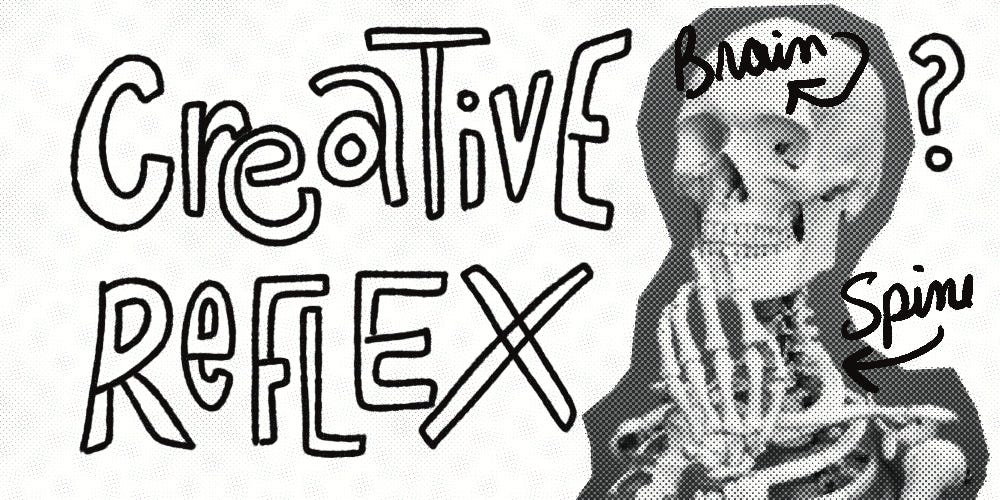
Maybe your leg kicked out after a doctor tapped under your knee. Or your hand flinched before you knew it. That’s a reflex. Pure, simple, instinctual.
Reflexes are involuntary. They’re unplanned, fast, and deeply connected to our nervous system. It’s the part of us that notices subtle shifts in the world and responds before we even have a chance to think about it. Some reflexes are small, some are strong, but all of them exist for one reason: to keep us
alive and in rhythm with the world around us.
Now, imagine that same kind of reflex showing up in your creativity.
Creativity doesn’t always come from careful planning or overthinking. Sometimes, it comes from that unknown spark. It can be a split-second instinct firing in your mind and body at the same time. Words spill out, a brush moves, a photo gets captured. You don’t think it, but somehow, it just happens.
It’s a creative reflex: a moment when your brain, your body, and your imagination are all in sync. A whisper of instinct that knows exactly what to do before you even realize it.
Here’s the difference:
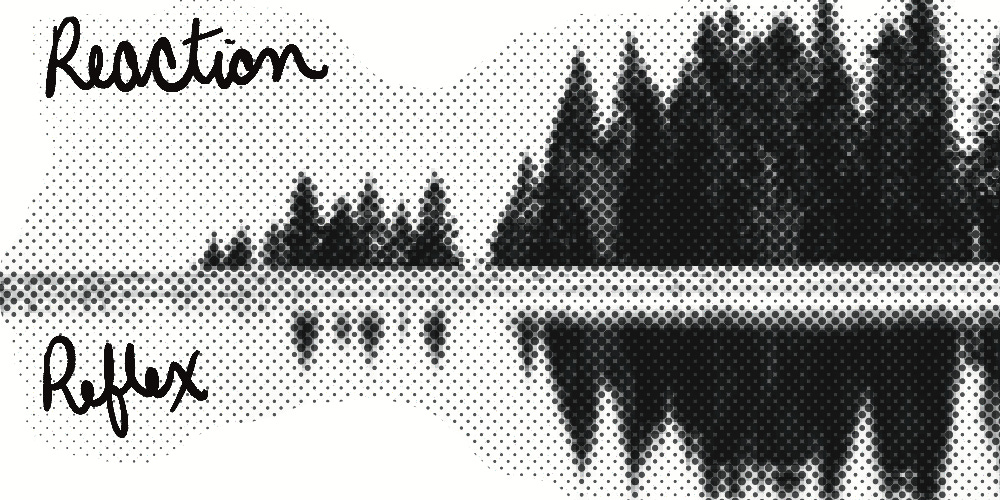
Reflex: fast, involuntary, non-thinking
Reaction: slower, voluntary, involves brain processing
Reflexes can bypass the brain entirely. The signal travels through the spine to the body, and a response occurs. Reactions? They take the scenic route, passing through the brain before any movement.
In creativity, this is gold. It’s the moment when you can stop overthinking, and all you need to do is move. It’s when your hand instinctively knows what the brush should do. When the words flow faster than your brain can get them planned out. When a photo captures a perfect perspective you didn’t even know you were looking for.
Prepare your space
Tools
Brushes
Camera
Notebook
Anything you may need to get the job done
Make the initial decisions
Set up
Choose your palette
Open the blank page
Start the conversation
Step back
Stop thinking
Let your reflex take over
Try it out:
Writers: speak your words instead of typing. Let them tumble out.
Painters: trust your trained hands and let them move first.
Photographers: follow that weird, sudden idea and see where it leads you.
The trick is noticing it, trusting it, and letting it happen. Reflexes are quiet, instinctual, and deeply personal. They live in your body long before your thoughts catch up.
So here’s my invitation: notice your creative reflex today. Prepare, step back, and see what moves through you. You might be surprised by what your body already knows how to do.
Creativity isn’t just about what you plan; it’s about what you allow. Your creative reflex is what happens when you stop managing the art and start letting it move through you.
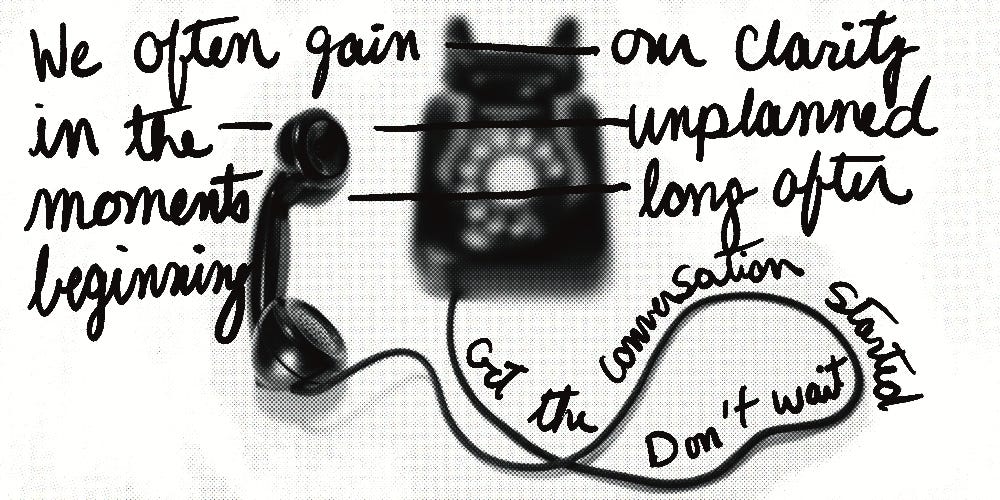
Take five minutes today. Set a timer.
Close your eyes and breathe for a moment.
Pick your tool of choice: a pen, a brush, a camera, or even your phone for voice notes.
Do not plan. Do not overthink.
Let your body and mind respond. Let a line be drawn, a word be spoken, a photo be taken. Do whatever comes naturally.
No editing. No judgment. Just flow.
Afterward, look at what emerged. Notice what surprised you. That’s your creative reflex at work. It’s the part of you that literally knows more than you think.
Try this every day for a week. Watch how quickly your instincts start to guide your work. Watch how your creativity begins to move before your mind catches up.
Because sometimes, the most powerful art happens before we even think.
No posts
Comments
Nothing yet. Say the first thing.
Sign in to join the conversation.