
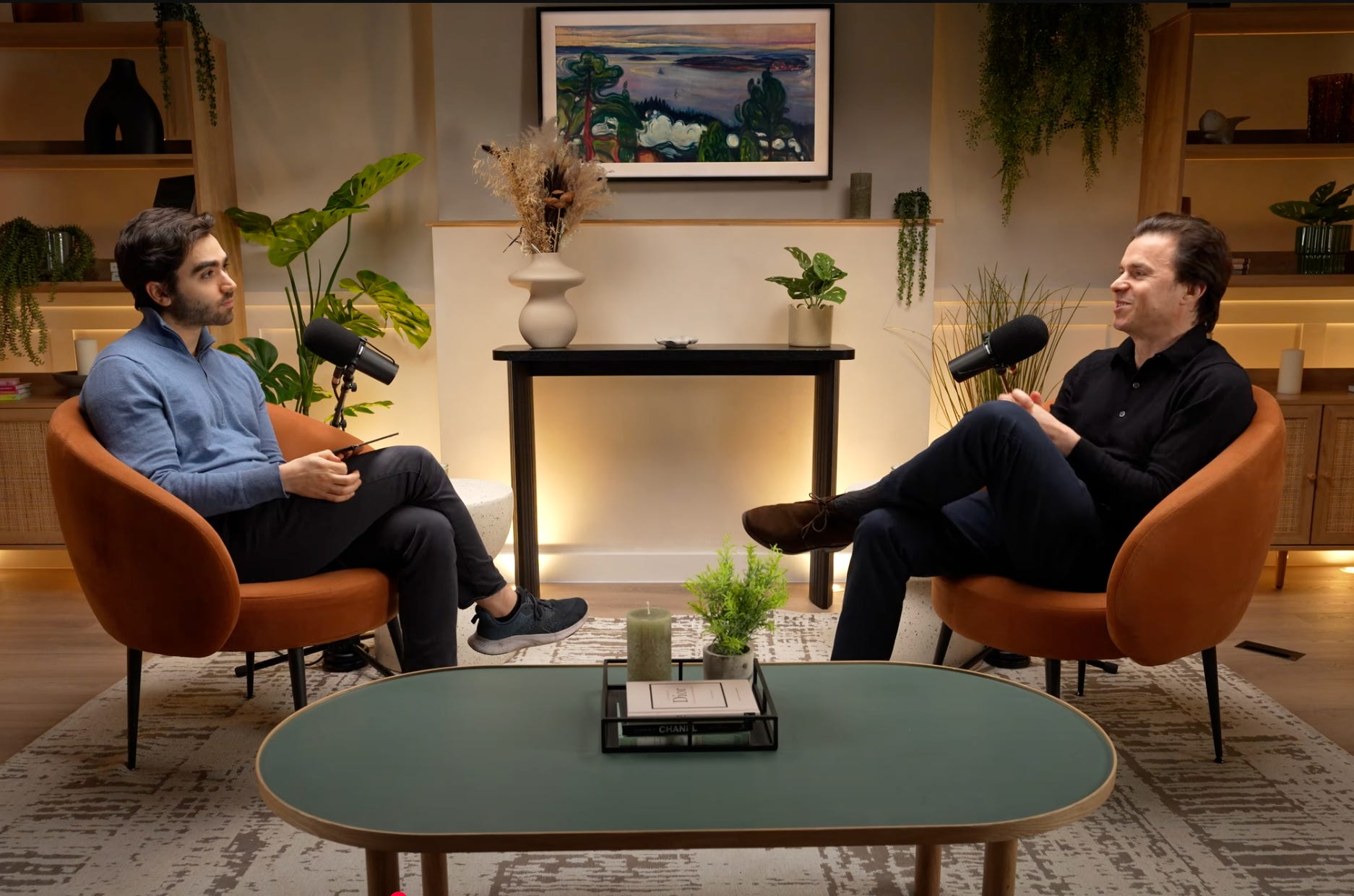
In this fascinating episode, I sit down with my friend and long-time research collaborator, Dr. Mark Ungless. Mark is the Director of Data Science, AI, and Research at Mental Health Innovations (MHI), a UK-based charity that has provided mental health support to millions through their Shout text messaging service.
With two decades of experience in neuroscience and psychology, including tenures at the University of Oxford and Imperial College London, Mark's authored seminal research papers published in Nature and collaborated with prestigious institutions like Imperial College London, Oxford, and MIT.
Mark’s research fundamentally shifted how we thought about dopamine—challenging the simple idea of dopamine as mere reward signalling, and revealing separate dopamine systems involved in encoding rewarding experiences and aversive experiences like loneliness. This nuanced view has huge implications for how we understand behavior and mental health.
Watch our full conversation on YouTube, Spotify, or wherever you get your podcasts!
Much of our discussion revolves around dopamine's role as a teaching signal and the striking parallels with techniques used in AI reinforcement learning. Neuroscience breakthroughs in dopamine informed influential AI discoveries like temporal difference algorithms used by DeepMind. We consider the intriguing debate: do modern neural networks truly mirror biological brains or are similarities merely surface-level analogies?
As Mark points out, human brains are far more intricate than today's AI models treat them, with distinct neurotransmitters, varied temporal scales, and specialized neuron types. AI might draw deeper insight from the brain's complexity as we aim for true artificial general intelligence (AGI).
Mark’s recent work focuses on digital mental health. We dive into the controversial “serotonin hypothesis” of depression, now increasingly challenged. SSRIs do increase serotonin in the brain, but the straightforward idea—“low serotonin equals depression”—doesn't hold up cleanly. Mark discusses how therapy, exercise, and behavior changes are equally capable of rewiring our neural circuits—highlighting the role of neuroscience as one “level of explanation.”
MHI's Shout service has empowered a million people through mental health crisis. Yet, mental health demand constantly outstrips available human resources. Could AI therapy fill the gap and improve mental health support availability?
Mark believes we might soon surpass the capabilities of the average therapist using well-trained AI models, perhaps sooner than anticipated—as long as safety and ethical concerns can be responsibly addressed.
We talk about our research collaboration and the work Slingshot has done developing the first foundation model for psychology, supporting SHOUT volunteers, and our work towards offering AI support to people in mental health crisis at scale.
We finish on practical philosophy, with Mark discussing his scientifically-informed affinity for stoicism, and especially the idea that what's most vital about a situation isn't always the outcome, but our response. How we choose to interpret events directly shapes our emotional and mental reality, including distinguishing between what we can and can't control, focusing on our own actions, and where we can strive to be better.
Don't miss this full episode—find it now on YouTube, Spotify, or wherever you get your podcasts!
No posts
Comments
Nothing yet. Say the first thing.
Sign in to join the conversation.