
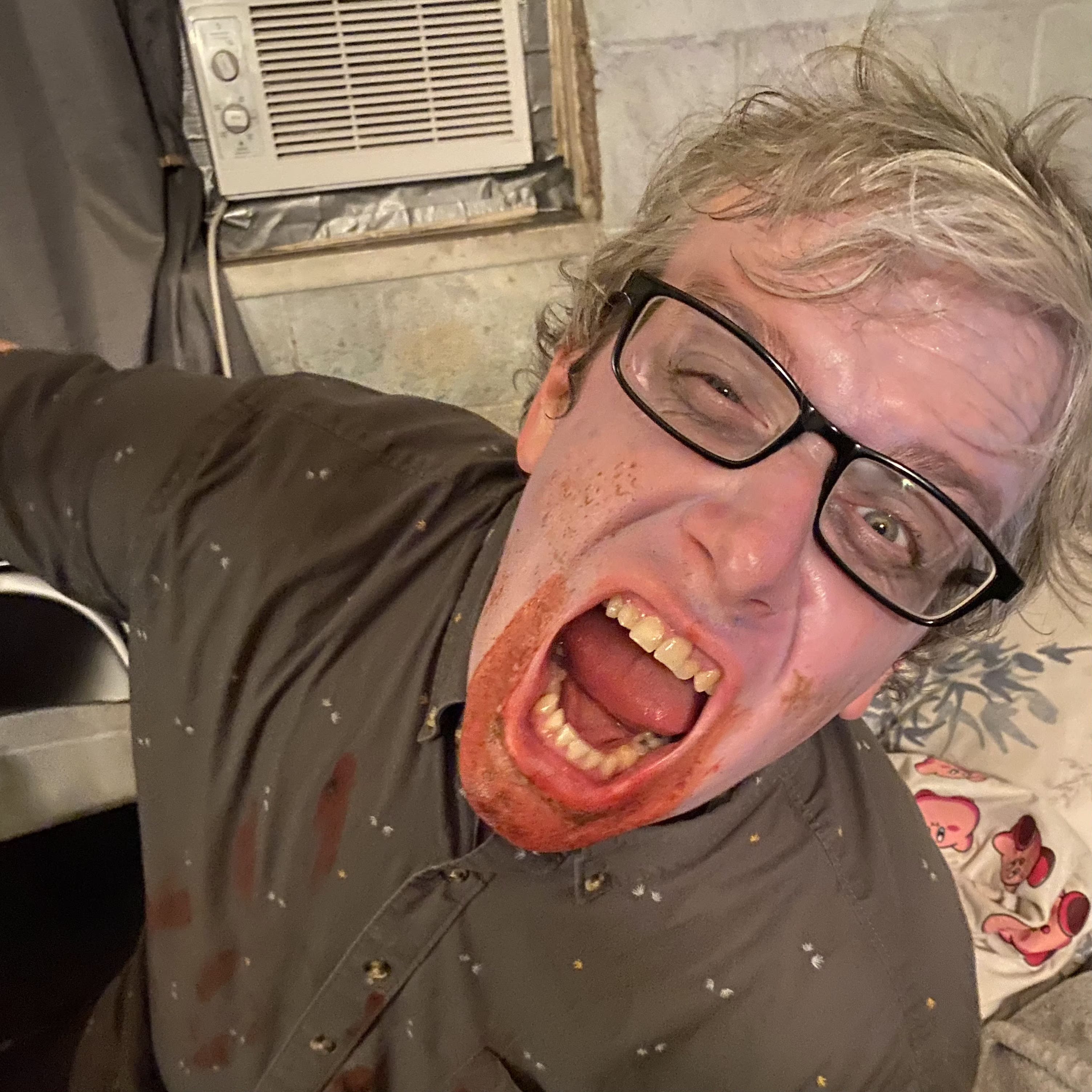
1. Extreme horror isn’t for the faint of heart. What drew you to writing stories that push readers beyond their comfort zone?
When I’m asked that I always think of a quote from Rob Zombie. It’s from The Devil’s Rejects behind the scenes Documentary, “30 Days of Hell.” Bill Mosely had a hard time filming the infamous motel scene. In response, the director said, “Sometimes, art isn’t safe.” I’ve always been obsessed horror films and fiction ever since my mother introduced me to Night of the Living Dead and Stephen King novels, but that quote gave me an insight into a different type of visceral, no holds bared, unsafe, horror and I was fascinated by it. I’ve also always been interested in media that isn’t made for mass consumption and had a punk-rock, underground feeling to it.
2. Was there a particular book, film, game, or real-life experience that convinced you, “This is the kind of horror I want to write”?
When I was just out of high school (around 2007 or so), I worked coding HTML for a guy’s website. To put it simply, the dude was a pornographer who also sold bootleg horror DVDs. The films he specialized in (besides the skin flicks starring himself) were banned or hard to find horror films. I lieu of payment, I asked for him to send me some of these horror films.
One movie was August Underground, a faux stuff film. It was very extreme, and after watching it I had an overwhelming feeling of THIS THIS THIS. That was the type of horror I wanted to make, the type of ART I wanted to create: unrelenting, controversial. I wanted to write, and essentially, not give a fuck about what people would think about it.
Later on around that same year, I attended a horror convention called Fangoria’s Days of Darkness. I grabbed a magazine called Red Scream Magazine, which had an extreme horror short by Wrath James White. This just spurred me farther on the path to extreme horror. I felt like I found my exact niche and interest. There is a whole genre of horror created by people who don’t give a fuck about what anyone else thinks.
3. Tell us about your latest release. What fresh nightmares can readers expect from your upcoming projects?
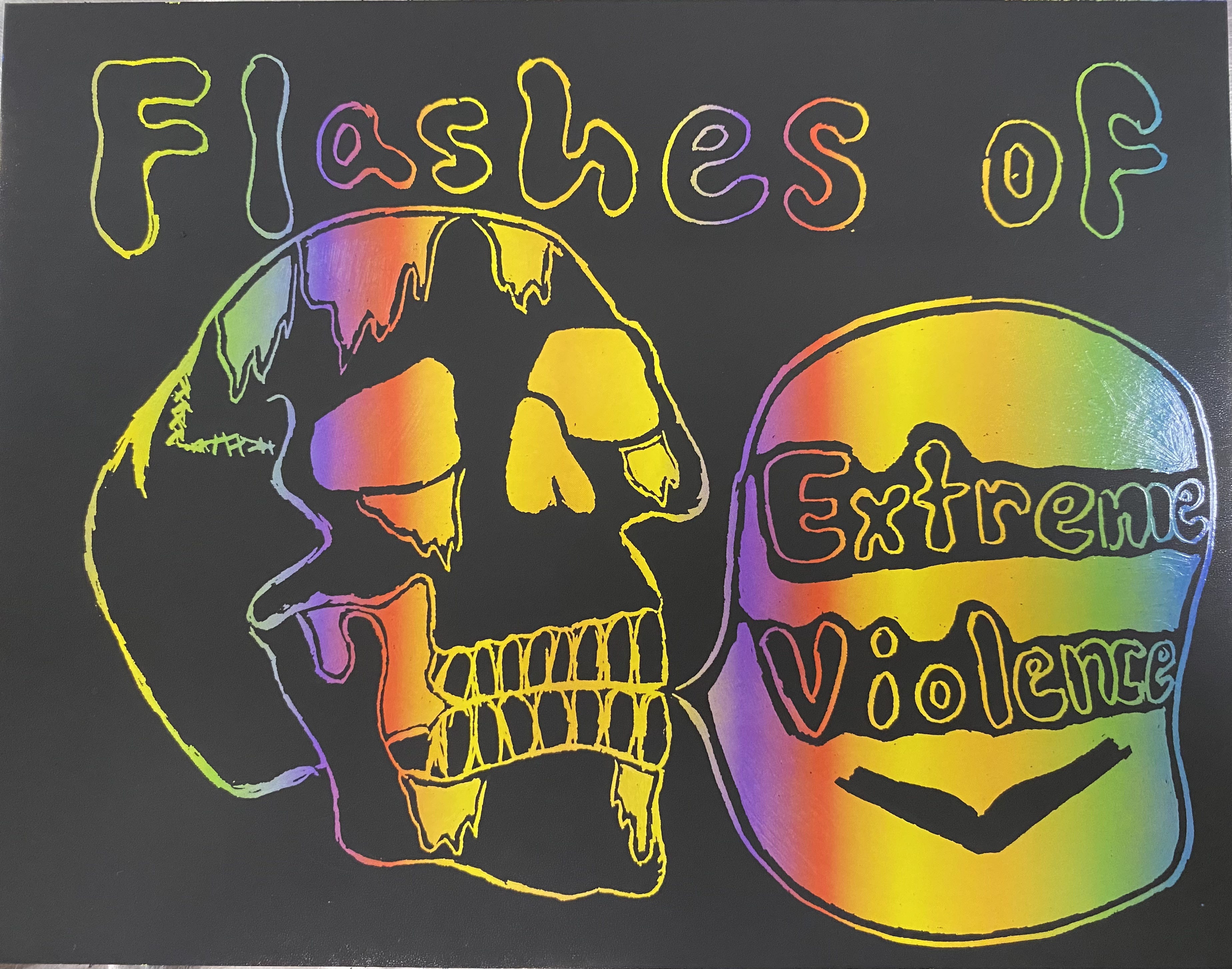
My latest release is a story called Fuck me Like a Zombie on Carnage house. I am also planning a big project for my Substack: Flashes of Extreme Violence. I will be releasing a weekly extreme flash fiction or drabble piece, plus some commentary on what inspired me, possibly with some recommendations. Please come explore splatterpunk and extreme horror with me!
4. Extreme horror is often misunderstood. What’s the biggest misconception people have about the extreme genre and its authors? What do you wish they understood?
We’re not psychos. It is an accusation that’s usually levied at any horror writer in general, but people seem to think that there’s something especially wrong with writers and fans of extreme horror. The things that we write about disturb us as well, but that’s what I find interesting about the genre. It’s important to know where ‘the line’ is and its cathartic to cross it and come back in one piece. Some mainstream horror films definitely straddle the line, but rarely does it completely crossed.
I can’t speak for everyone, but I don’t think we’re just writing down our nastiest fantasies and fetishes, but rather doing a deep dive on humanity’s darkest side.
5. Every writer has a process. When you’re creating your bloodiest scenes, are you outlining every gruesome detail, or do you let the carnage unfold naturally? Any particular playlists, or bizarre writing habits to get you in the mood?
I don’t outline anything. I know that outlines may help out a lot of writers, but I rather have a vague set of events and ideas that I want to write about. Everything is always in flux in my head. Like actual people, I want my characters to be unpredictable and probably a little unstable. Sometimes, I’ll have a scene planned, but it feels like the character will tell me, “Nope. I wouldn’t do that.” Then, I would have to turn the story around and approach it from a different angle.
I don’t write using a laptop connected to the internet. I use a AlphaSmart Neo 2 word processor. No internet. No spell check. I just write. Anything else can be fixed in the editing stage(s), but I found I work bettered if I just let everything flow. That’s really the way to remove any barriers and write the sickest scenes I can think of. The red and green lines that pop up during spelling and grammar checks seem to snap me back into reality and distract me.
As far as music, I find the “fun” and ridiculous gore scenes work better with Death Metal, while I listen to Black Metal for the more serious, pitch-black scenes
6. Looking back at everything you’ve written, is there one scene, character, or death that still makes you smile... or makes you wonder what was wrong with you when you wrote it?
I think my story, “Zombie Pussy,” will always be something I am proud of. A hillbilly guy raping a zombie was pretty interesting and hilarious when I thought of it and still is. Spoiler: I don’t know what possessed me to make the zombie his dead mother, but mommy issues seem to run deep with serial killers and hillbilly psychos.
7. What’s one taboo, fear, or everyday situation that you think extreme horror hasn’t pushed far enough yet?
I feel the thing about Extreme Horror is that it’s almost all taboos. It’s all about going too far, it’s the main thing I appreciate about the genre. Recently, an Extreme horror writer, Anne Snow, had a couple of her short works removed from Amazon due to ‘content violations.’ The stories had a lot to do with SH (self-harm) and the repercussions from it, especially when it’s encouraged by random strangers on the internet. (the books are still available on Godless.com, for those interested.)
The writers themselves are not the ones who are going to limit themselves, but censorship and content violations are what would prevent the genre from pushing anything too far. Maybe, the world isn’t ready for extreme horror about SH and the dark web, and the internet’s influence on young minds (to be fair, the world itself is still just learning about these consequences), but Extreme horror writers will always be ready to push beyond.
8. Which horror trope will you defend until your dying breath, and which one deserves to be buried six feet under?
I will always defend a good Zombie apocalypse. I know that The Walking Dead kind of did some damage to Zombie media due to overexposure and making it a soap opera instead of a commentary on society a la George A. Romero. The Walking Dead never really goes beyond the theme of “if the apocalypse happens, everyone will just be really mean about it.”
No matter what era we are in, what political climate we’re in, there’s always room for a thoughtful zombie apocalypse.
I don’t know if it is a “trope” or not, but I cannot stand Mascot Horror, like Poppy’s Playtime or Five Nights at Freddy’s. My daughter loves those series’, so I’ve tried to give them a chance. Mascot Horror seems to take the most generic, uninspired parts of horror and clumsily mates them with the worst parts of capitalism. It seems like the creators are already designing merchandise and plushies before trying to create a decent story.
9. If you could spend an afternoon talking shop with any other writer, who would it be, and what would you want to learn from them?
I would love to hang out with Edward Lee or Wrath James White. They are my extreme horror icons. I love their gross out, base ideas that are also mixed with surprising high minded and polished prose. White especially excels on bringing an amount of nuance to his stories. Instead of being a base exploration of how many ways he can rip apart and violate the human form, he wants to explore the psychological repercussions of it as well. His “good” guys are not always completely right and his “bad” guys are not always wrong.
Edward Lee gets a lot of flack for being schlocky and edgy and gory for the sake of being gory (which, honestly, I don’t have a lot of problems with), but its also mixed with just good writing. Lee knows how to tell a compelling story.
10. You’re trapped inside one of your own stories. Which of your characters do you hope finds you first, and which one do you pray never does?
Tina from Zombie Pussy has a good head on her shoulders, and being a trans woman in the zombie apocalypse would make her a lot tougher than others. The Trans community has been going through a sort of their own apocalypse due to the current American Authoritarian regime, so they’ll be very prepared when society falls.
Everyone should pray that The Chainsaw Father, the patron saint of Fuck-ups, the father to the fatherless, the cosmic vortex of suffering, never finds them.
11. Finally, where can readers find your books, follow your work, and keep up/connect with you online?
The best place to find me would be on Substack and Tiktok. I make all my major announcements on Substack.
American Farm - Samantha has been kidnapped. The farmers have forced her to work at The Farm of Suffering to make dark web content for the rich and powerful. The entire farm is run by a mysterious religious figure called The Chainsaw Father.
Witches of the Black House - The Black House: Its very foundation was built on hate, rape, murder, genocide and infanticide. The entire home was designed using ancient, cursed mathematics in order to appease a mysterious entity. Bethany just moved in and is about to experience a multi-generational haunting powered and slowly nursed by the deep-seated hatred of an entire small town.
Comments
Nothing yet. Say the first thing.
Sign in to join the conversation.