
Walk down any historic block in New York City and you’ll hear them all called the same thing: Brownstones. But while they may share the same iconic sandstone facades, not all Brownstones are created equal.
Behind those stoops and carved doorways is a rich architectural history that spans over a century, with each era bringing its own distinct style, craftsmanship, and personality.
From the understated elegance of Greek Revival homes to the ornate bracketed cornices of Italianate rowhouses and the grand French influence of Second Empire, each style tells the story of New York’s growth and the changing tastes of the people who built the city. But can you tell them apart?
One of our favorite parts of restoring these homes is learning the architectural clues that make each one unique. Whether we're repairing a carved cornice, restoring an original stoop, or uncovering long-hidden details beneath layers of paint, every project offers a deeper appreciation for the craftsmanship of the era.
And once you know what to look for, you'll start noticing that every block has its own personality, and every Brownstone has its own story. Consider this your guide to identifying the architectural styles that define New York's most beloved homes.
Time Period: 1785-1830
Characteristics: Symmetrical facade, red brick exterior, tall narrow windows, restrained ornamentation
Found mostly in: Brooklyn Heights, Greenwich Village, West Village
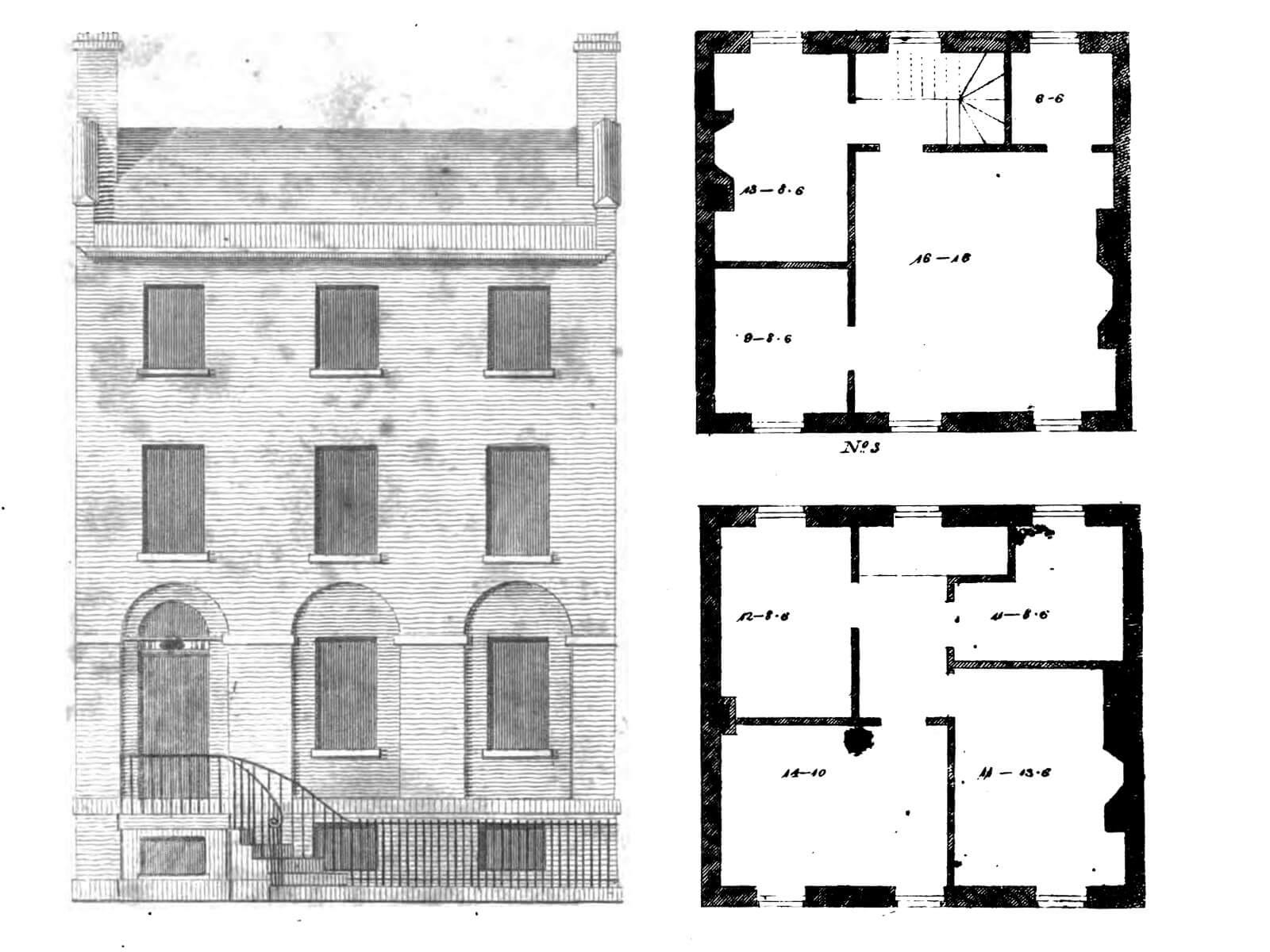
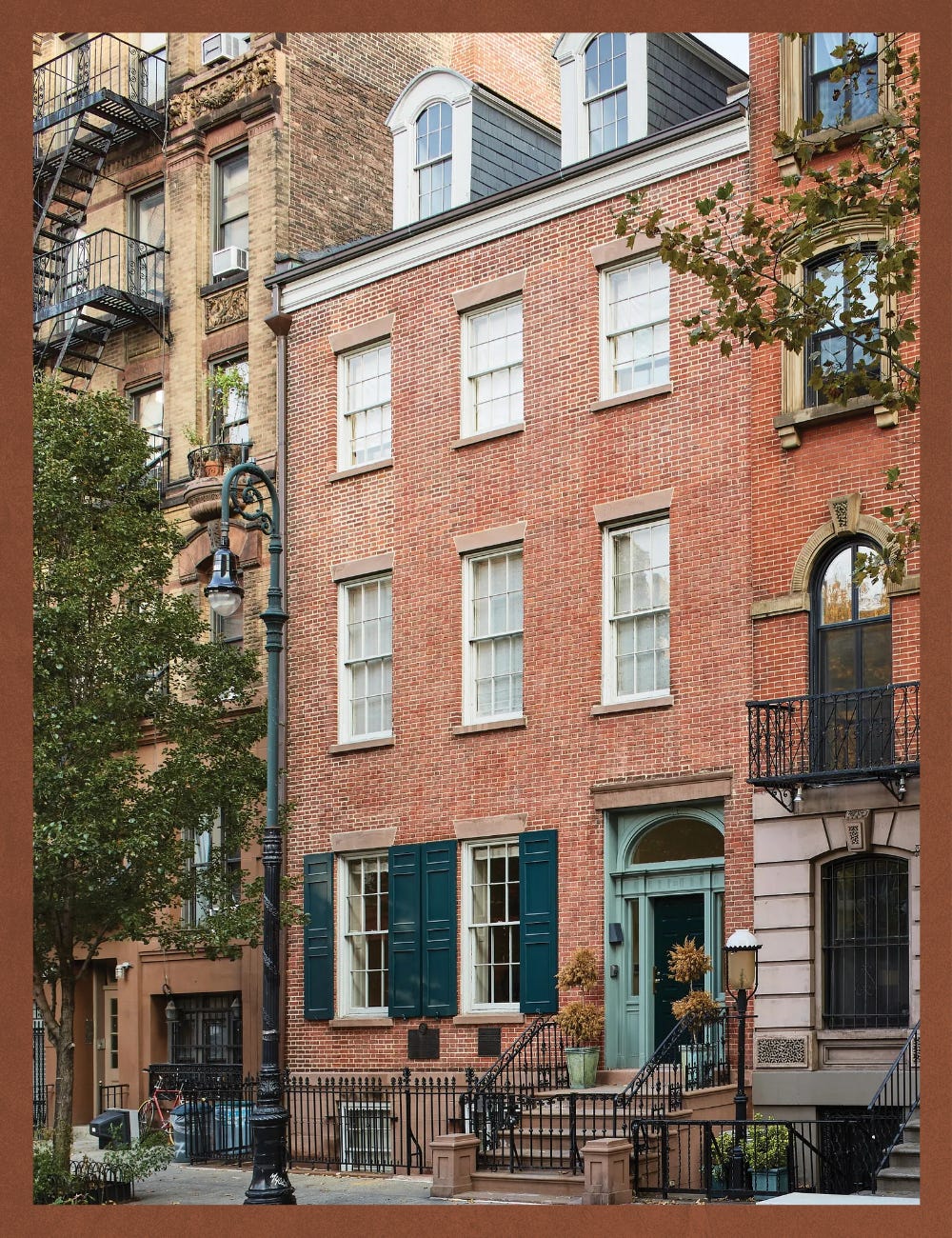
Only buildings built between around 1785 and 1830 can be true Federals. These rowhouses represent one of the earliest stages of the city’s rowhouse tradition, which later evolved into the larger, more ornate Brownstones of the mid-to-late 19th century. Most NYC Federal rowhouses are made of brick that is laid in Flemish bond, a style of bricklaying with each row of brick laid in alternating headers and stretchers, aka the short and long sides of the brick.
Time Period: 1830–1855
Characteristics: Temple-like entrances, heavy cornices, simple rectangular windows, restrained ornament
Found mostly in: Greenwich Village, West Village, Chelsea, Brooklyn Heights, Cobble Hill
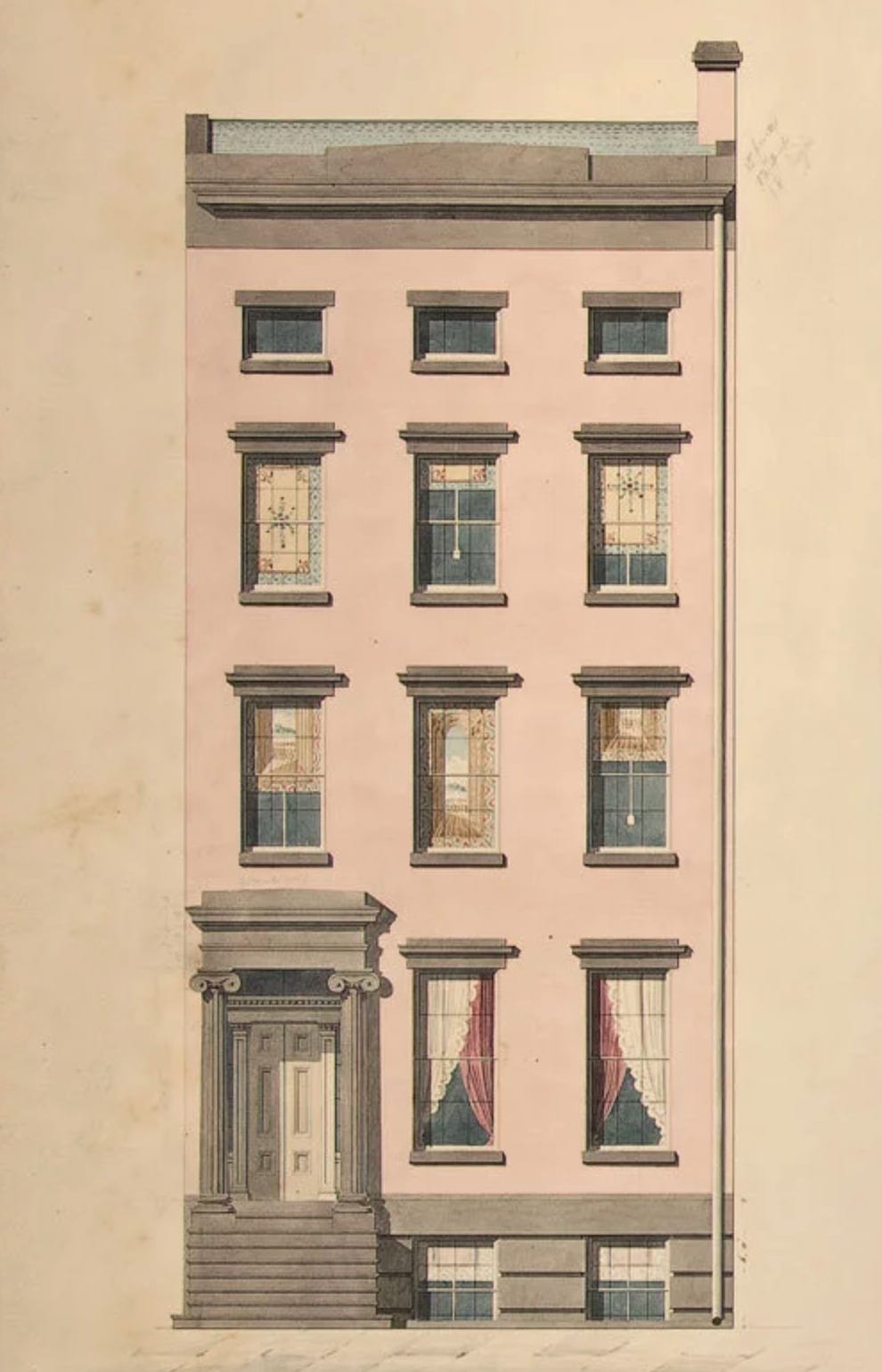
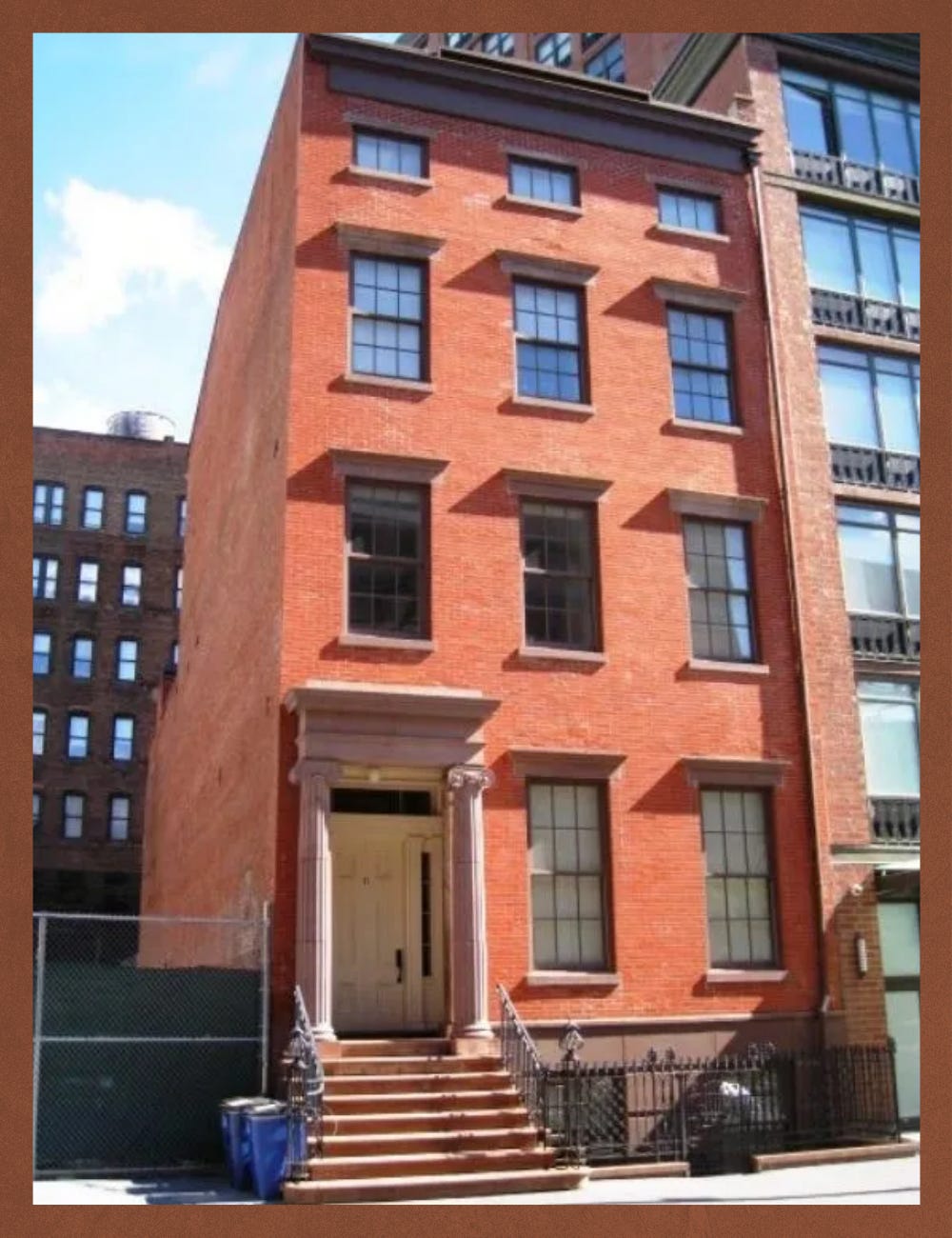
Inspired by the architecture of ancient Greece, Greek Revival Brownstones feature temple-like entrances framed by pilasters or columns, geometric forms, and subtle decorative detailing rather than elaborate carvings, creating a refined and monumental appearance.
The interiors of Greek Revival brownstones typically feature generous ceiling heights, formal parlors, decorative plaster moldings, marble fireplace mantels, and grand staircases, all organized within a practical floor plan designed for both family life and entertaining. A great example of Greek Revival architecture in the city is the Samuel Tredwell Skidmore house located at 37 East 4th Street, just steps away from the Merchant’s House Museum!
Time Period: 1845–1885
Characteristics: Tall narrow windows, elaborate brackets under cornices, arched windows, high stoops, decorative moldings
Found mostly in: Park Slope, Brooklyn Heights, Chelsea, Boerum Hill, Clinton Hill
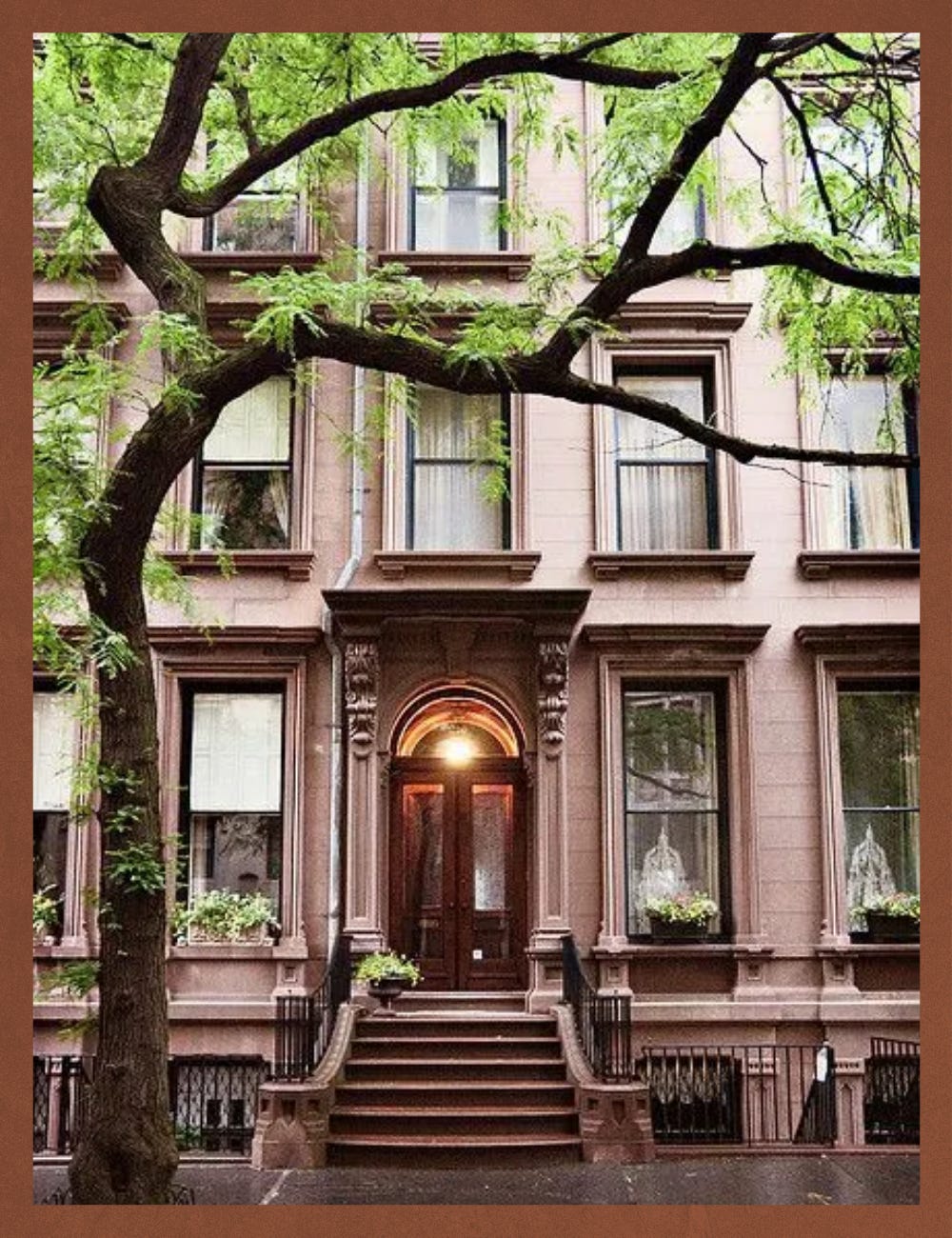
Italianate Brownstones are among the most iconic of the 19th century, distinguished by their tall proportions, elaborate bracketed cornices, arched windows, and richly carved stone details. High stoops, decorative moldings, and elegant window surrounds give these homes a graceful, romantic character inspired by Italian Renaissance villas.
Time Period: 1870–1885
Characteristics: Angular incised carvings, geometric ornament, sharp lines, stylized classical details
Found mostly in: Park Slope, Upper West Side, Harlem, Prospect Heights, Fort Greene, Bedford-Stuyvesant.
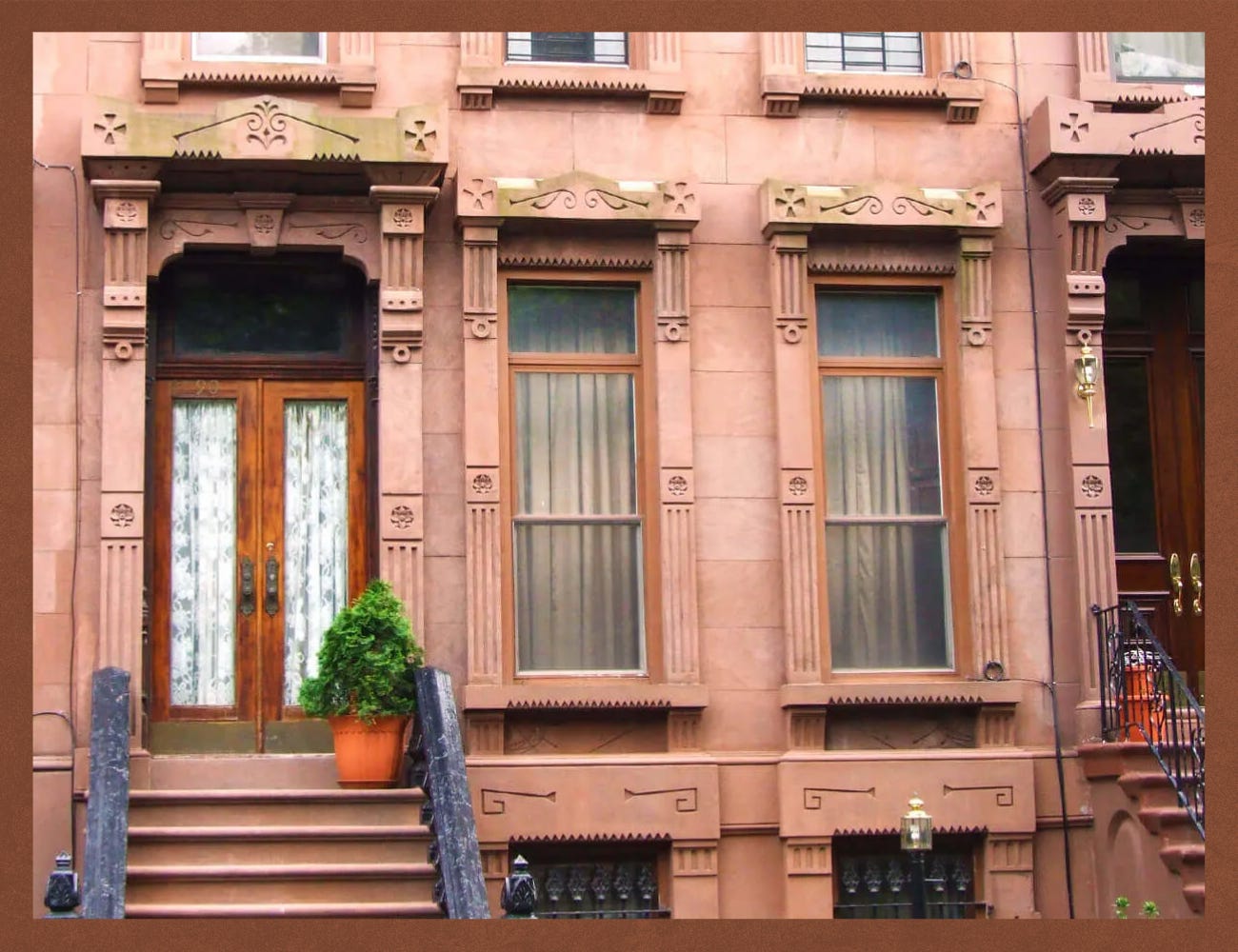
Neo-Grec, which translates to New Greek, refers to a 19th-century movement that reinterpreted the art and architecture of ancient Greece in a more modern, stylized way. Brownstones in this style often feature incised carvings, stylized floral motifs, crisp lines, and decorative lintels, resulting in a more modern and graphic interpretation of traditional classical architecture.
Time Period: 1880–1910
Characteristics: Asymmetry, bay windows, terra cotta panels, decorative brickwork, varied textures
Found mostly in: Park Slope, Bedford-Stuyvesant, Clinton Hill, Upper West Side
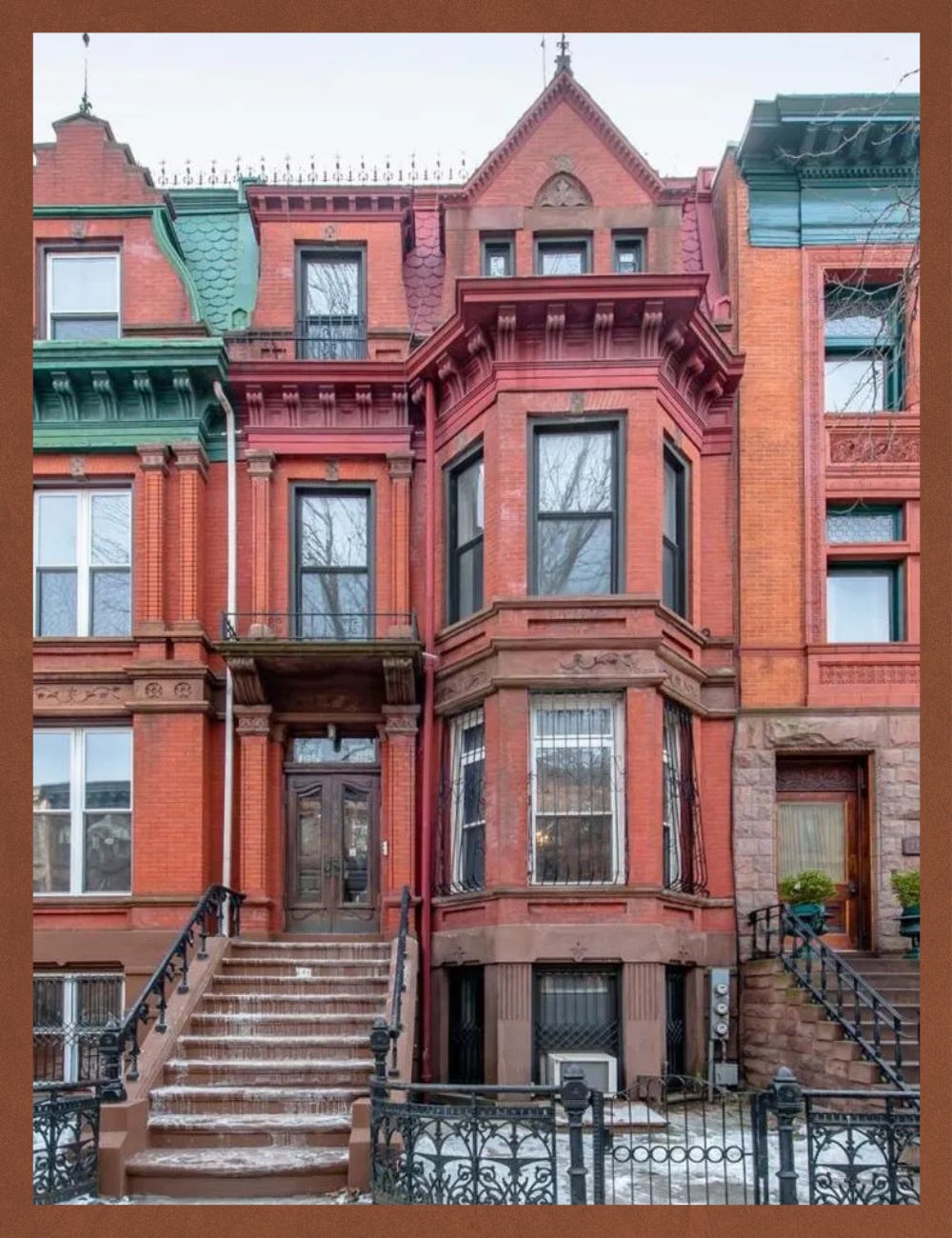
Queen Anne brownstones became popular in New York City during the late 1800s, when architects embraced more decorative and expressive designs. Unlike the balanced symmetry of earlier rowhouses, Queen Anne homes celebrate variety, featuring asymmetrical facades, bay windows, patterned brick and stonework, terra-cotta panels, carved woodwork, stained glass, and intricate iron railings. Rich in craftsmanship and decorative detail, each home has its own unique character, making Queen Anne brownstones some of the city's most visually distinctive historic residences
Time Period: 1880–1900
Characteristics: Massive stone arches, rough-cut masonry, squat columns, deeply recessed entries
Found mostly in: Harlem, Upper West Side, Bedford-Stuyvesant, Park Slope, Crown Heights
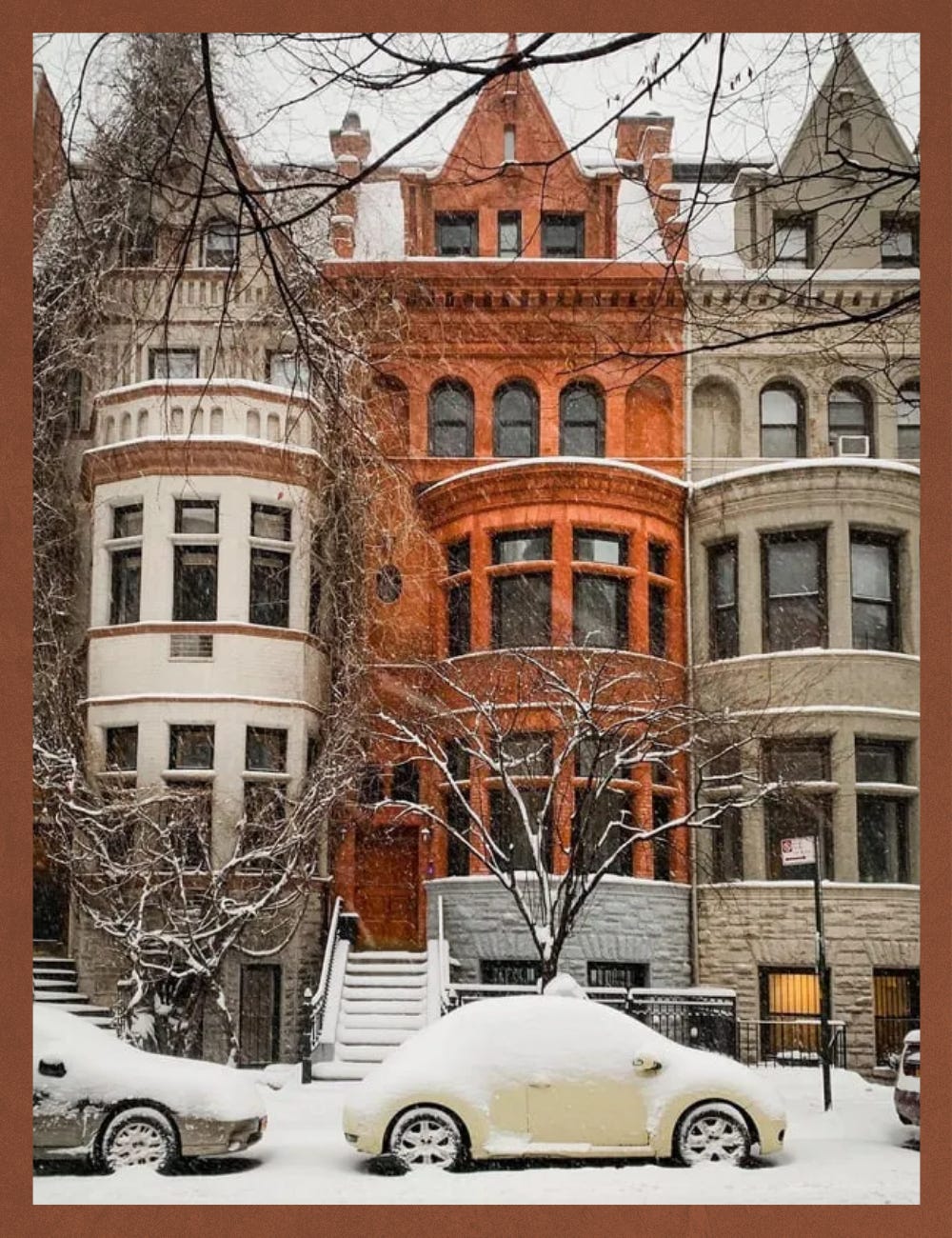
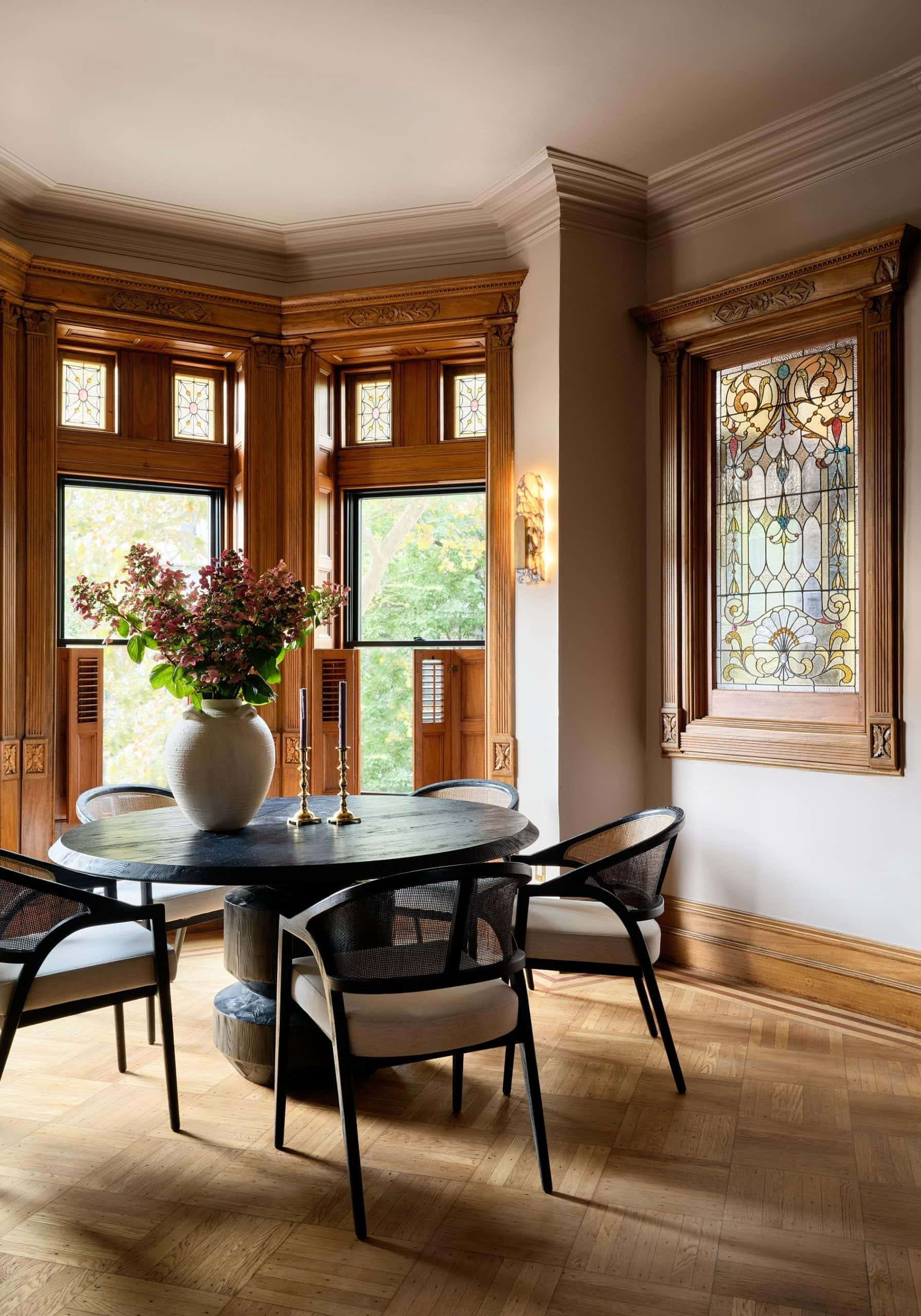
Romanesque Revival Brownstones have a bold, almost castle-like appearance that makes them stand out from other rowhouses in the city. Popular in the late 1800s, the style was inspired by medieval churches and fortresses across Europe, which is why these homes feel so sturdy and dramatic.
You'll often notice large rounded arches over doors and windows, rough-cut stone, deep entryways, thick columns, and carved stone details that add plenty of character. Instead of focusing on delicate decoration, Romanesque Revival homes make an impression through their size, texture, and solid construction, giving them a timeless sense of strength that still stands out on city streets today.
Time Period: 1880–1915
Characteristics: Symmetrical façades, classical columns, pediments, rusticated lower stories
Found mostly in: Upper West Side, Harlem, Park Slope, Prospect Heights, Crown Heights
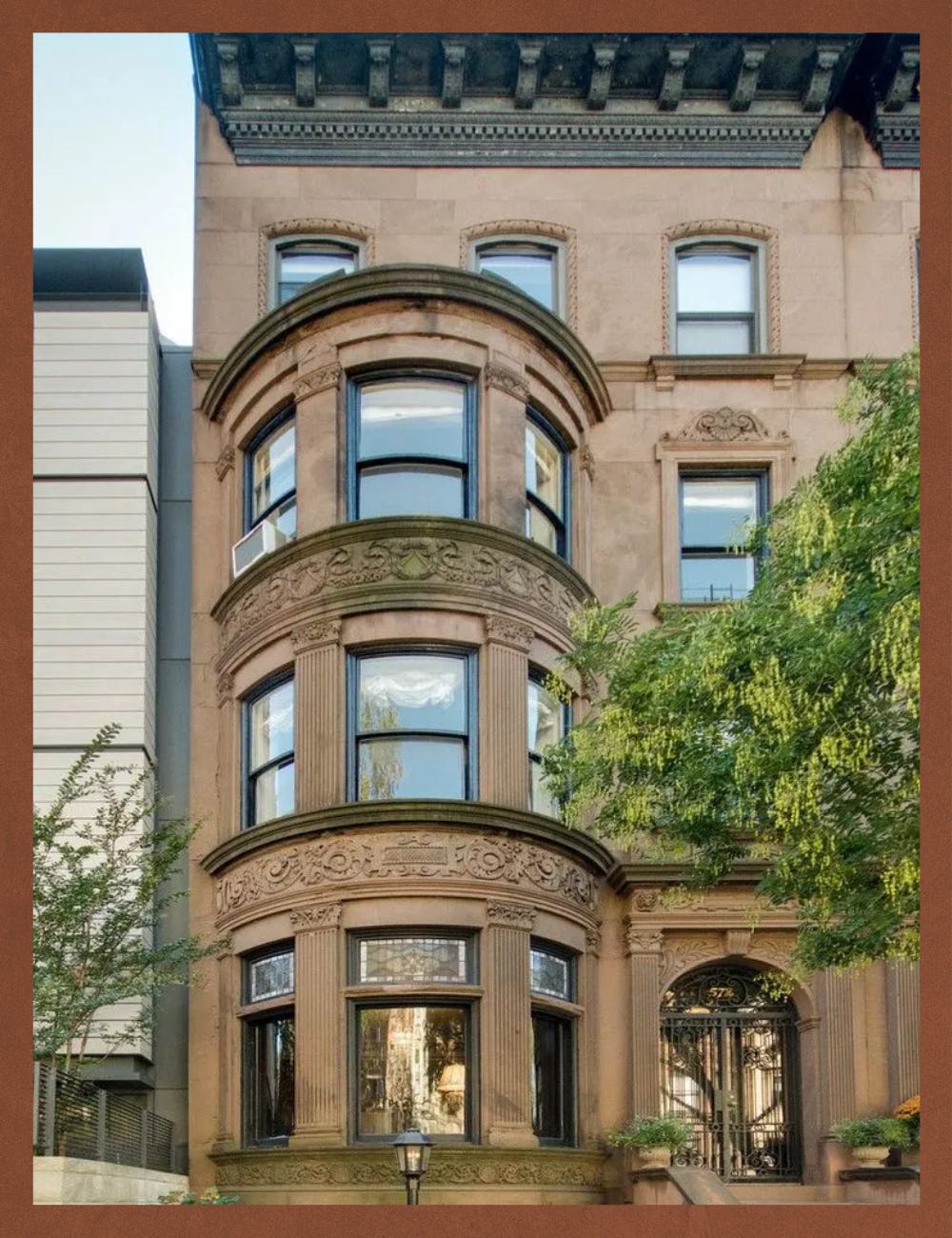
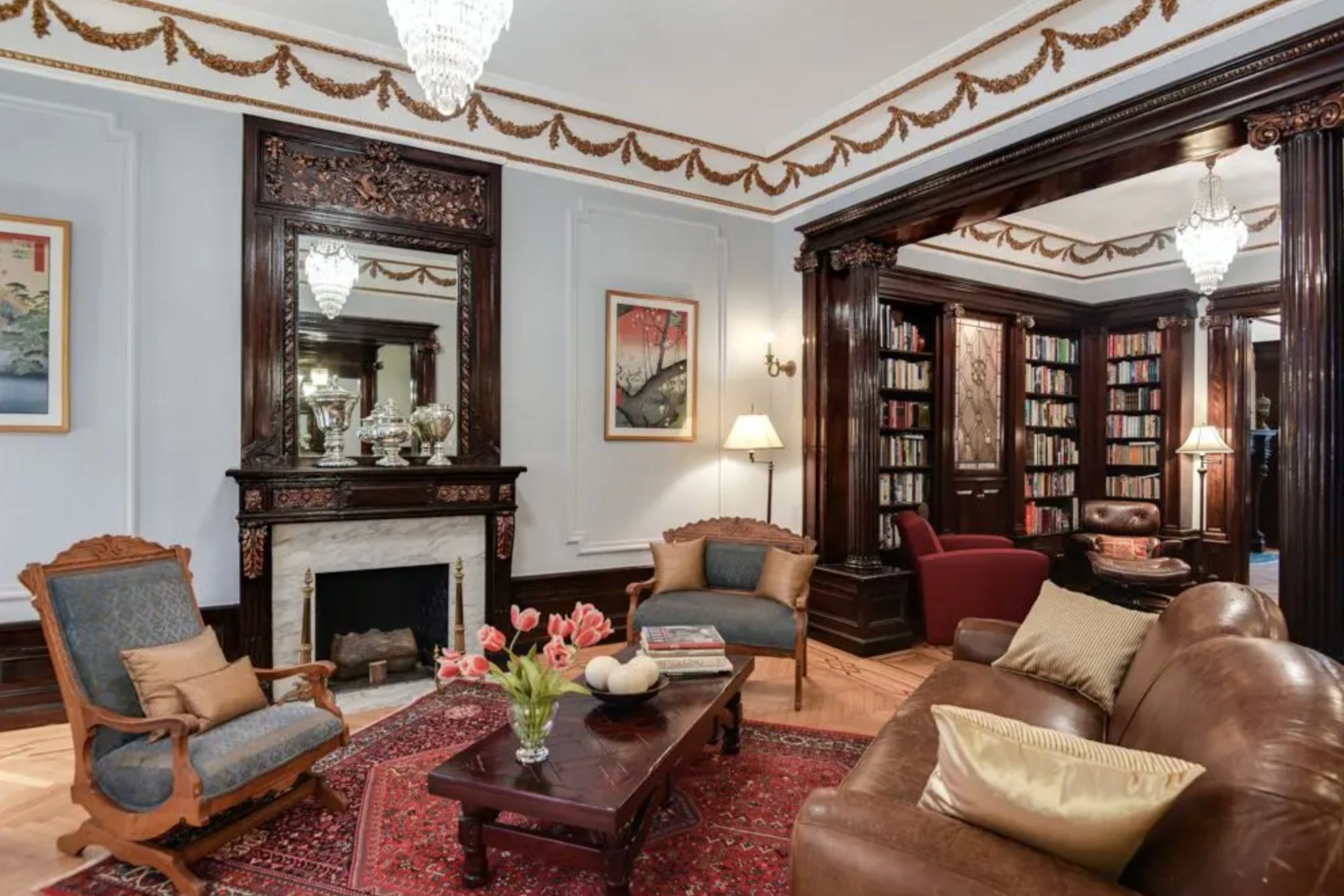
Renaissance Revival Brownstones brought a sense of European elegance to New York City in the late 1800s, taking inspiration from the grand palaces built during the Italian Renaissance. Architects looked to these historic buildings for ideas, creating homes that felt refined, balanced, and impressive. The style is known for its symmetrical façades, classical proportions, and rich decorative details that give each building a formal yet welcoming appearance.
Common features include rusticated stone on the lower level, graceful arched windows, decorative columns and pilasters, triangular or curved pediments above windows and doors, and richly detailed cornices that crown the roofline. While more ornate than earlier rowhouse styles, Renaissance Revival Vrownstones maintain a sense of harmony and elegance, making them some of the most sophisticated and visually striking homes found on New York City's historic streets.
Time Period: 1860–1885
Characteristics: Mansard roofs, dormer windows, ornate detailing, paired brackets
Found mostly in: Brooklyn Heights, Fort Greene, parts of Park Slope
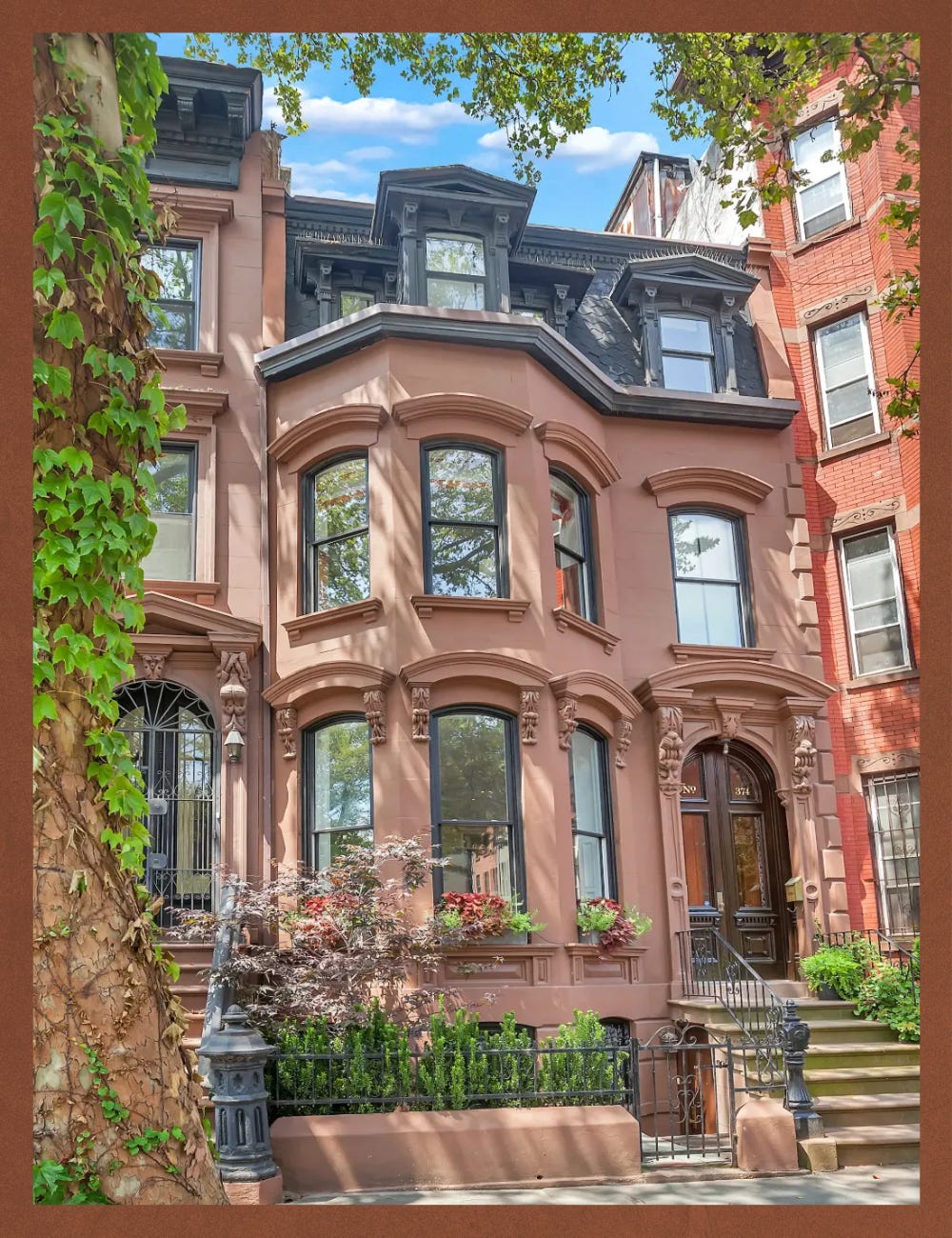
Second Empire Brownstones are some of the easiest rowhouses to recognize because of their signature mansard roofs, the steep, double-sloped roofs with dormer windows that almost look like they add an extra floor to the building. The style originated in France during the reign of Napoleon III, which is why it's called "Second Empire," and it became popular in New York City after the Civil War as the city experienced a building boom.
One of the biggest advantages of the mansard roof was that it created more usable living space without making the house appear much taller. Beyond the roof, these homes are full of elegant Victorian details, including decorative brackets, elaborate cornices, ornate window surrounds, and richly embellished facades that give them a grand and sophisticated look.

Whether your favorite style is the clean lines of a Greek Revival, the bold arches of a Romanesque Revival, or the ornate details of a Queen Anne, each Brownstone offers a glimpse into a different chapter of New York City’s history. Understanding these architectural styles not only makes it easier to appreciate the neighborhoods we love, but also helps guide thoughtful restoration so these homes retain the character that makes them so special.
The next time you’re walking down a tree-lined block, look a little closer. You might discover that what first appeared to be just another Brownstone is actually a remarkable piece of architectural history, with details that have been telling its story for more than a century.

Sending love from our stoop,
Jordan & Barry
No posts
Comments
Nothing yet. Say the first thing.
Sign in to join the conversation.