
TL;DR
Brand values without behavior to back them up are just decoration.
A friend of mine once told me they felt like a duck in a lake: floating calmly on top but swimming like mad underneath the water. That the general public saw them above water, but their close friends knew there was more going on underneath the surface.

Branding is like that too. A common illustration agencies often use for their clients is an iceberg: the top of the iceberg, above water, represents the brand elements consumers see (the visual identity, product design, and logo). The majority of the iceberg, underneath the surface of the water, represents brand elements consumers don’t see — but that work astronomically harder to support the brand.
The brand elements with the power to sink the Titanic or raise a brand are underneath the surface, behind the scenes.
The tip of the iceberg: what consumers see
The visual identity, product design, and brand logo
The Titanic sinking part of the iceberg: what consumers don’t see…but feel
The brand strategy, verbal identity and messaging, positioning, brand values, and mission
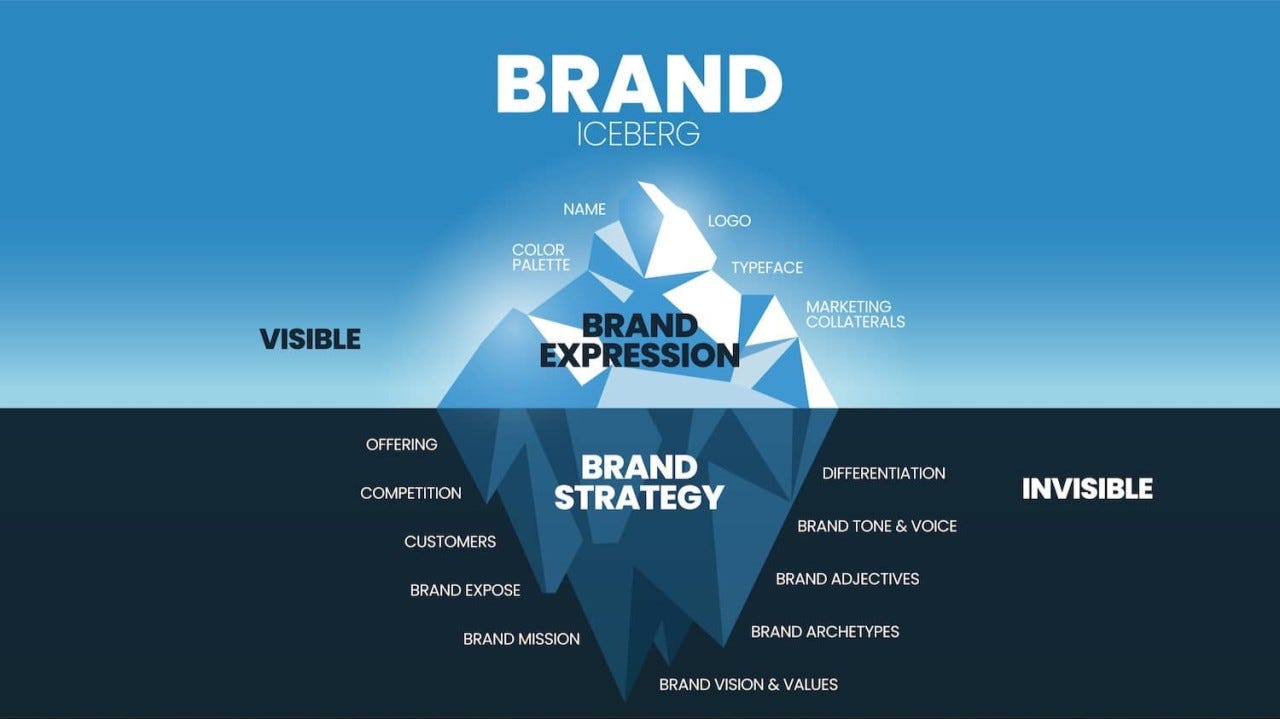
Some brands obsess over the tip of the iceberg first, creating the perfect color palette, product, and logo. Then they backfill what’s underneath the surface: a narrative, audience messaging, brand values, internal playbooks.
For the most part, though, modern brands understand that what’s underneath the hood is what does the heavy lifting and drives a brand’s identity. They invest heavily in what’s underneath, trusting that internal alignment will translate into external impact.
The logic is sound (according to the totally coherent duck, iceberg, and car metaphors above): what’s underneath is what holds presence afloat and moves a brand forward.
But what if what’s beneath the surface still isn’t creating actual value?
Some things drive real outcomes — clearer decisions and more consistent brand experiences and delivery. But some things just sound good in a deck. Brand values, positioning statements, narratives. Much of the painstaking work a brand strategist or brand consultancy does for their clients is never seen and doesn’t make it into the actual brand experience. They live in decks, Notion docs, and internal playbooks that are guides, not actionable frameworks.
There’s still a translation problem. That work isn’t translated into something tangible for the consumer. There are echoes and callbacks, but those hints are often tangential to the original strategy framework. The connection is still loose.
Customers don’t experience your values.
They experience the value you create.
And if what’s under the surface doesn’t translate properly, your true differentiators aren’t being utilized or experienced. Customers don’t know the full extent of your value because they only experience what makes it to the surface.
Internal work doesn’t always equal external value.
Those workshops and rewrites, all the hoops a strategy has to go through, don’t matter to the consumer as much as value delivered does.
The most streamlined brand strategies have brand values that guide decisions and those decisions create real value. But brand values themselves — integrity, innovation, sustainability, community — don’t matter unless they contribute to tangible value.
There’s a translation problem between what a brand says it values and what a customer actually experiences.
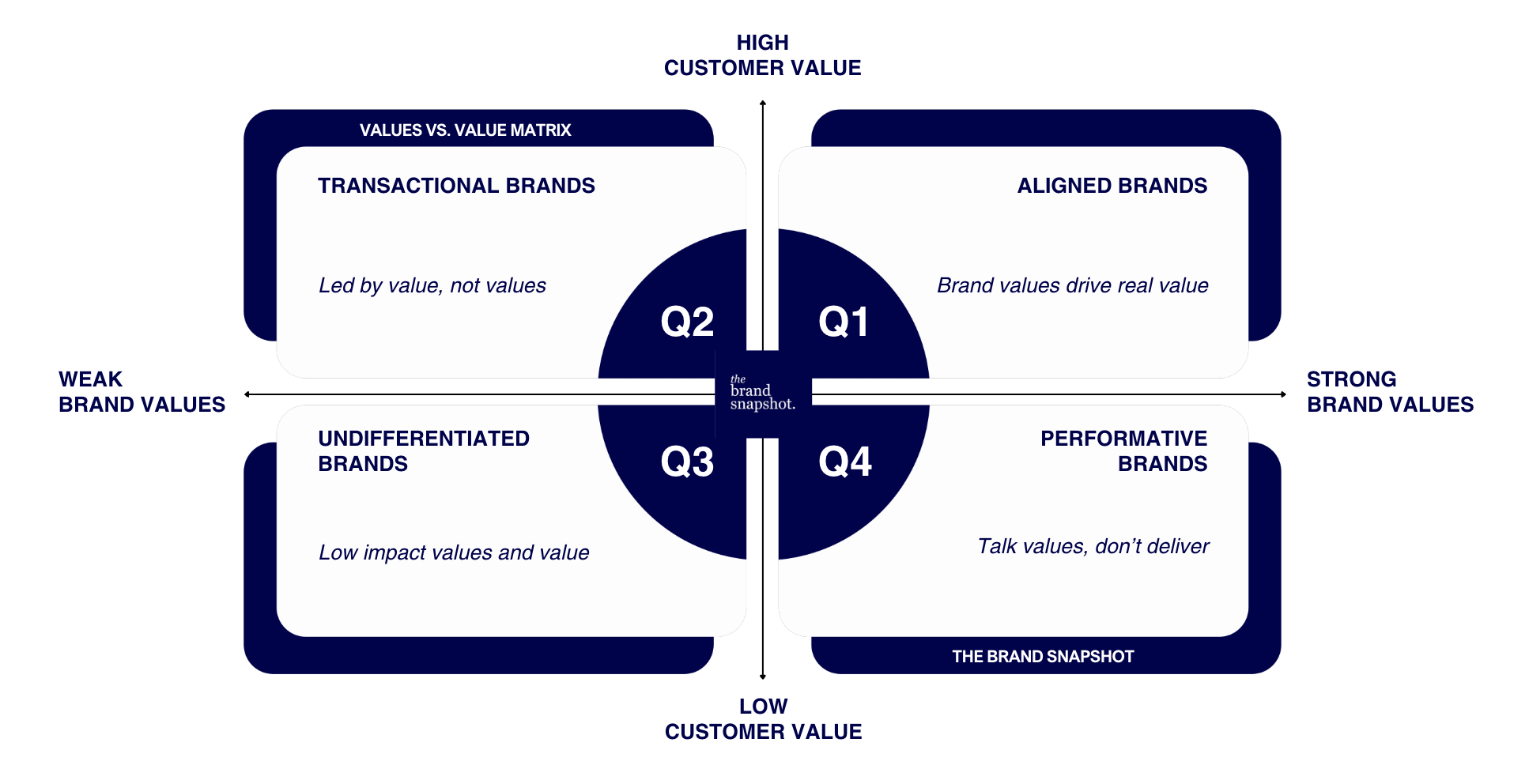
Brands have to follow through on brand values.
“We value sustainability” —> we’ll make the process to be climate neutral easier and faster (Peak Design)
“We value quality” —> we’ll make high quality accessible (Graza)
“We value community” —> we created a community, here’s how you can join (The Mayfair Group)
Value is the sum of decisions customers can feel. Not what you claim or what you write. The sum of what’s under the hood — speed, clarity, quality, accessibility, consistency — and how it’s operationalized.
Not all strategy creates value, even if it’s intended to. Some of it just produces language that sounds extremely strategic, precise, and clear, but is disconnected from how the brand actually operates.
That doesn’t mean brand values don’t matter. It’s that they’re rarely used as decision-making tools. Brand values are outputs of strategy, instead of inputs into how a company operates. They should be a starting point, a foundation, instead of an end goal.
When brands sound differentiated but feel interchangeable, the experience — the only thing customers actually interact with — needs to change.
Instead of asking:
“Do we have strong brand values?”
Ask:
“Will my customer feel this without us saying it?”
If the answer is no, the work isn’t done.
The iceberg isn’t the problem. The idea that what’s underneath the water holds up and sustains the brand is still true — it just needs to carry through to the surface. What’s underneath needs to do real work, not just hold up a misaligned external brand identity.
Brands don’t need better articulated values. They need values that become value — that change decisions and shape how customers actually experience a brand.
A note from us: The Brand Snapshot is just getting started. Leave a comment, message us, follow us on Instagram — and tell us what brands and categories resonate with you most or who you’d like to see in a snapshot next. We’re building a brand rolodex of the best brands you’ve never heard of.
No posts
Comments
Nothing yet. Say the first thing.
Sign in to join the conversation.