
Welcome to edition #12 of our weekly roundup of branding news, thought leadership, and insightful articles on brand strategy.
Each week, we curate and summarize the most relevant stories from the branding industry, so you can stay informed without having to search for them yourself. Enjoy!

PricewaterhouseCoopers rebrands as PwC
PricewaterhouseCoopers rebranded its global network as PwC, introducing a simplified lowercase logo and a refreshed color palette. The strategic shift was designed to create a more consistent brand position across diverse markets and make the visual identity much easier to use digitally.
MNR Constructions rebrands as Traction Studio, signalling new era for custom brand activation builds
MNR Constructions has rebranded as Traction Studio to align its identity with its core specialty of brand activations. The updated brand shifts the company’s positioning from a construction contractor to a creative partner, emphasizing a transparent, highly structured design and build process.
B2B loyalty provider Groupe Aeroplan has rebranded as Aimia to unify its global business operations. The transition establishes a single recognizable brand, aligning its multi-market expertise under the core mission of inspiring loyalty to increase market share and reduce client attrition.
OpenAI wants to be the underdog against Apple. That won’t be easy
This article explores OpenAI’s public relations effort to position itself as a scrappy underdog in its legal battle with Apple. It highlights the strategic difficulties of maintaining an outsider identity when scaling into hardware and competing with established tech giants.
Trying to personify your brand? Consider a puppet
Major brands are increasingly using handmade puppets to personify their messaging. In an increasingly automated, AI-driven digital landscape, the analog charm of tangible mascots helps brands stand out, build organic social media engagement, and create memorable human connections.
Duracell Bunny finds his voice
Duracell is expanding the personality of its iconic bunny mascot by giving the character a voice on social media. By letting the bunny interact directly with consumers, the brand aims to build deeper customer relationships beyond traditional television advertisements.
How KLM and JAL Turn Simple Objects Into Brand Memories
Memorable brand keepsakes work in two ways: they create a special moment through ritual, like KLM’s porcelain house, or become valuable through repeated use, like JAL’s device stand. The key is to design the experience around the desired memory—either a story people retell or an object they keep using—rather than simply copying the item.

Ritson: The AANA needed to die, it’s time to get marketing right
Mark Ritson examines the merger and rebranding of AANA and ADMA into the Marketing Association of Australia. He argues that naming industry bodies after fleeting tactics is a mistake, emphasizing that organizations must align with broad professional disciplines rather than channels.
Why most innovations fail – and how brands can de-risk them
Exploring Landor and Saudia’s collaborative cooling garment, this piece details why innovation fails without differentiation. Solving a customer problem is not enough to secure market share; brands must ensure their innovations are uniquely tied to their core positioning.
How Cole Haan stays relevant after almost 100 years in business
Facing highly value-conscious consumers, legacy footwear brand Cole Haan is shifting its focus toward everyday utility and lifestyle expansion. The brand maintains relevance by integrating comfort-driven performance features into classic dress shoe designs to serve changing daily routines.
Argos is getting a makeover - but can it attract new shoppers?
This piece examines how British high street retailer Argos is navigating stagnant sales. It discusses the brand challenge of balancing customer nostalgia for its classic print catalog with the need to modernize its digital experience to compete with online giants.
Kraft Heinz pours nearly $100M more into marketing to drive turnaround
Kraft Heinz is investing heavily in marketing as part of its turnaround strategy. By focusing on fewer, high-impact media partnerships rather than fragmented tactics, the consumer packaged goods company has successfully returned its core brands to consumption growth.
Hyundai Card launches ‘Alphabet Card’ as its own independent brand universe
Hyundai Card has launched an independent brand universe called the Alphabet Card. It uses highly specialized sub-brands to cater to distinct customer lifestyles, proving that a strong sub-brand can expand a company’s market reach while reinforcing its master identity.
Q&A: Herdy creators on global expansion plans
The founders of lifestyle brand Herdy discuss the challenges of manging global growth. To protect the brand’s visual DNA during international expansion, they emphasize using a strict, consistent core color palette and maintaining tight control over character proportions in licensing partnerships.

They Found the Identity for Calder Gardens
Karlssonwilker’s work for Calder Gardens demonstrates the value of a slow, highly collaborative design process. By steering away from standard commercial templates and exploring dozens of iterative sketches, the studio crafted a unique cultural identity that honors Alexander Calder’s artistic spirit.
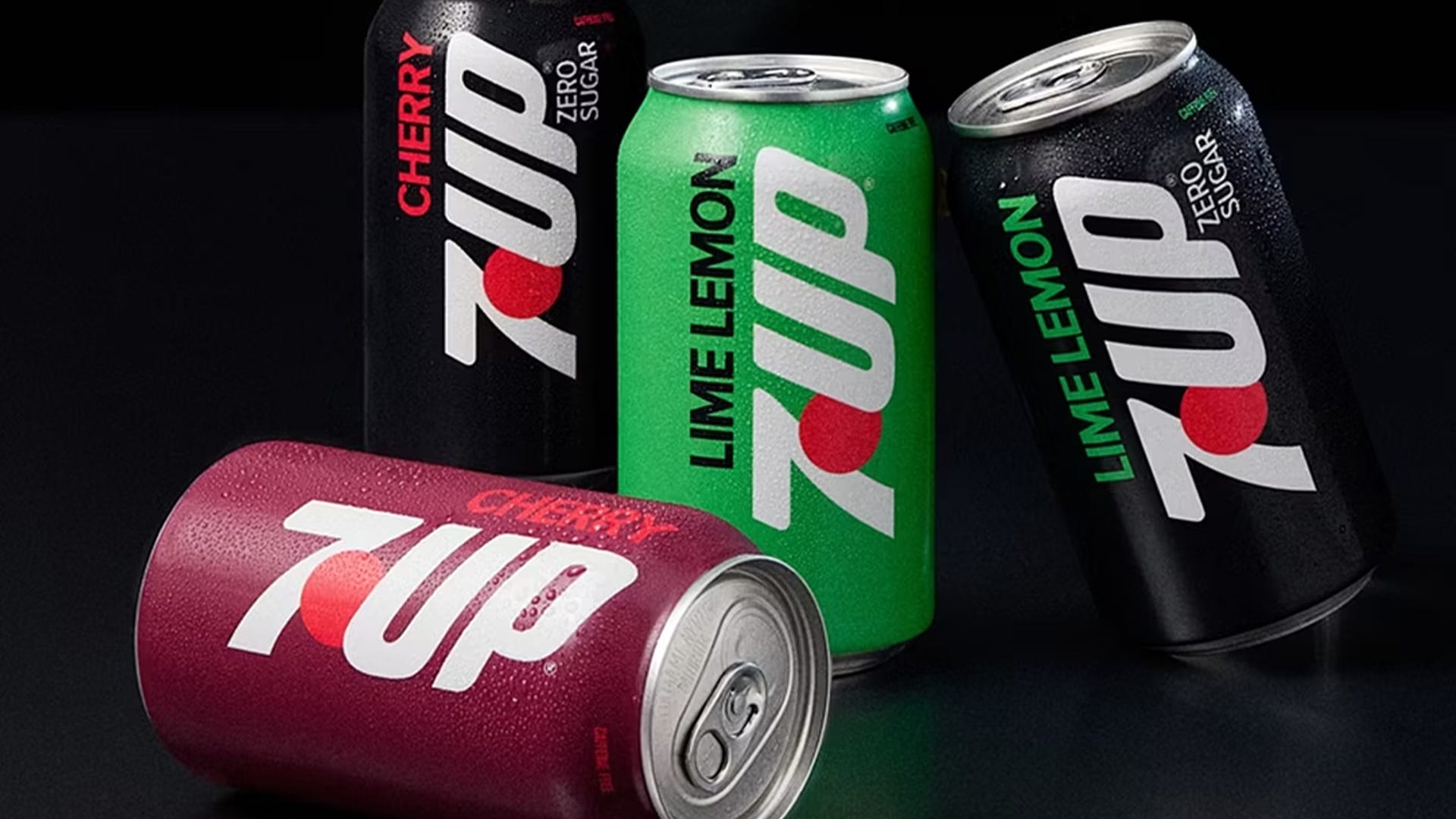
The new 7UP rebrand is bound to be contentious
7UP’s latest rebrand features a retro visual identity that shifts the brand’s focus from lemon to lime. By framing the product as lime lemon, the brand uses bold visual design to differentiate itself and attract a new generation of younger consumers.
Tesco has rebranded its low-cost tier to Everyday Value, replacing its clinical visual design with softer colors. By upgrading ingredients and emphasizing British sourcing, the retailer successfully modernized its own-label offering to shift negative consumer perceptions of budget lines.
Berlin studio Stan Hema rebranded Stadtmuseum Berlin into the Berlin Museum. Instead of a static logo, the new, flexible identity uses typefaces sourced from local landmarks and street signs, making the visual system feel as authentic and gritty as the city itself.
Koto rebrands the Norton Museum of Art around where art meets life
Koto’s rebrand of the Norton Museum of Art repositions the Florida institution as an accessible community space. Strategically shifting its competitive set from other museums to local leisure activities, the visual and verbal identity opens doors to new, diverse local audiences.
JDO crafts gallery-inspired identity for Liu Yue Xian’s rare ingredients series
Design agency JDO developed a premium identity for Chinese condiments brand Liu Yue Xian’s rare ingredients series. Using gallery-inspired backdrops, custom shield motifs, and harvest-year vintage codes, the packaging transforms opening the product into a luxurious, ritualistic discovery experience.
BBH USA Rewrites Jif’s Logo For New Snacking Occasions
Jif is modernizing its visual identity by rewriting its classic packaging stripes into rotating usage prompts like DIP and MIX. This strategic approach transforms product packaging into a media channel, inspiring consumers to use the product beyond traditional peanut butter sandwiches.

Why brands are embracing the mockumentary
Audiences are increasingly tuning out traditional ads, leading brands to adopt mockumentary formats. Faux documentaries allow brands to build believable, entertaining, and humorous fictional worlds where products appear naturally, making the campaign feel like a discovered reality rather than forced persuasion.
Creative Dive: How La Vie Gave Fans a Reason to Welcome Hydration Breaks
Mineral water brand La Vie worked with Ogilvy Vietnam to launch an innovative sports campaign. By turning boring, ad-heavy football hydration breaks into creative and entertaining segments, the brand successfully bypassed customer ad fatigue to build positive brand affinity.

Insights can’t exist in a vacuum, this creative strategy head says
Reddit’s global head of creative strategy argues that prioritizing immediate execution over long-term strategy damages brands. She urges marketers to ignore standard industry best practices that do not serve their unique goals, focusing instead on cohesive strategic direction.

‘A marketer’s dream’: Unilever’s Ryu Yokoi on intelligence as a real driver of brand growth
Leadership from Unilever and Kantar discuss how brands drive long-term growth with AI. They argue that speed alone is insufficient; the most resilient brands use automated intelligence to build deep cultural relevance, maintain consistency across touchpoints, and unlock meaningful differentiation.
AI could make brand partnerships move at the beat of culture
This article introduces the concept of a brand passport, an AI system trained on brand-specific intelligence. By automating creative reviews, regulatory compliance, and style guidelines, brand passports can eliminate execution bottlenecks in multi-brand collaborations and speed up time-to-market.
Even Amidst AI, Brand Fundamentals Are More Indispensable Than Ever
This piece outlines why brand positioning and brand architecture are more crucial than ever as AI agents mediate the customer journey. It argues that strong brand fundamentals serve as an operating system, making it easier for AI platforms to correctly identify and recommend brands.
Communication design graduates compiled interviews with 30 creative leaders for the book Are we cooked?!. The collected insights reveal an industry-wide hunger for shared perspectives on AI, showing how agencies are grappling with the technology’s impact on business models and creative craft.

Apparel brands such as Levi’s and Uniqlo are offering in-store repairs and handstitching workshops. By helping Gen Z consumers mend their worn garments, these companies are building circular skills while trying to capture a sustainable, Patagonia-style brand halo that builds long-term consumer goodwill.
How Gucci parent Kering cut emissions by one-third
Luxury giant Kering has reduced its absolute greenhouse gas emissions by one-third using its Environmental Profit and Loss accounting system. The brand achieves long-term decarbonization by prioritizing regenerative agriculture and using central purchasing systems to source low-impact materials.

Meet the design studio that’s paid in wine, meals and travel rather than money
Lithuanian agency andstudio launched a unique business development initiative, trading complete rebrands for a week-long stay and meals at family-owned wineries. This residency model builds deep trust and immersive understanding, bypasses traditional slow pitch processes, and solves a real business problem.
‘We’re not here to beg for a seat’: how Victoria Montgomery & Tamira Hamden built Women in Brand
This profile details the rapid growth of Women in Brand, a global community for female strategists, designers, and marketers. The network challenges systemic industry inequities by giving women a dedicated space to combat imposter syndrome, share perspectives, and build professional networks.
Thanks for reading until the end! We’d love to read your thoughts and feedback in the comments of this Substack newsletter.
Your Team at The Branding Journal www.thebrandingjournal.com
No posts
Comments
Nothing yet. Say the first thing.
Sign in to join the conversation.