
Last week, I stayed at the wonderland home of Alan Becker & Mara Greenberg, two of my favorite people in the world. Their house, a nondescript duplex across the bay from San Francisco in suburban North Berkeley, California, is a fountain of creativity, and I try to visit as often as I can.
The long list of spectacular productions that have been birthed there includes a three-story tornado made of actual fire, accompanying a life-size replica of Dorothy’s house from the Wizard of Oz; an autonomous robot that used a torch to spell out messages on full 4’x8’ sheets of plywood; and the ten-foot tall tardigrade1 made from welded steel and perforated sheet metal that’s currently under construction for exhibit at this year’s Burning Man.
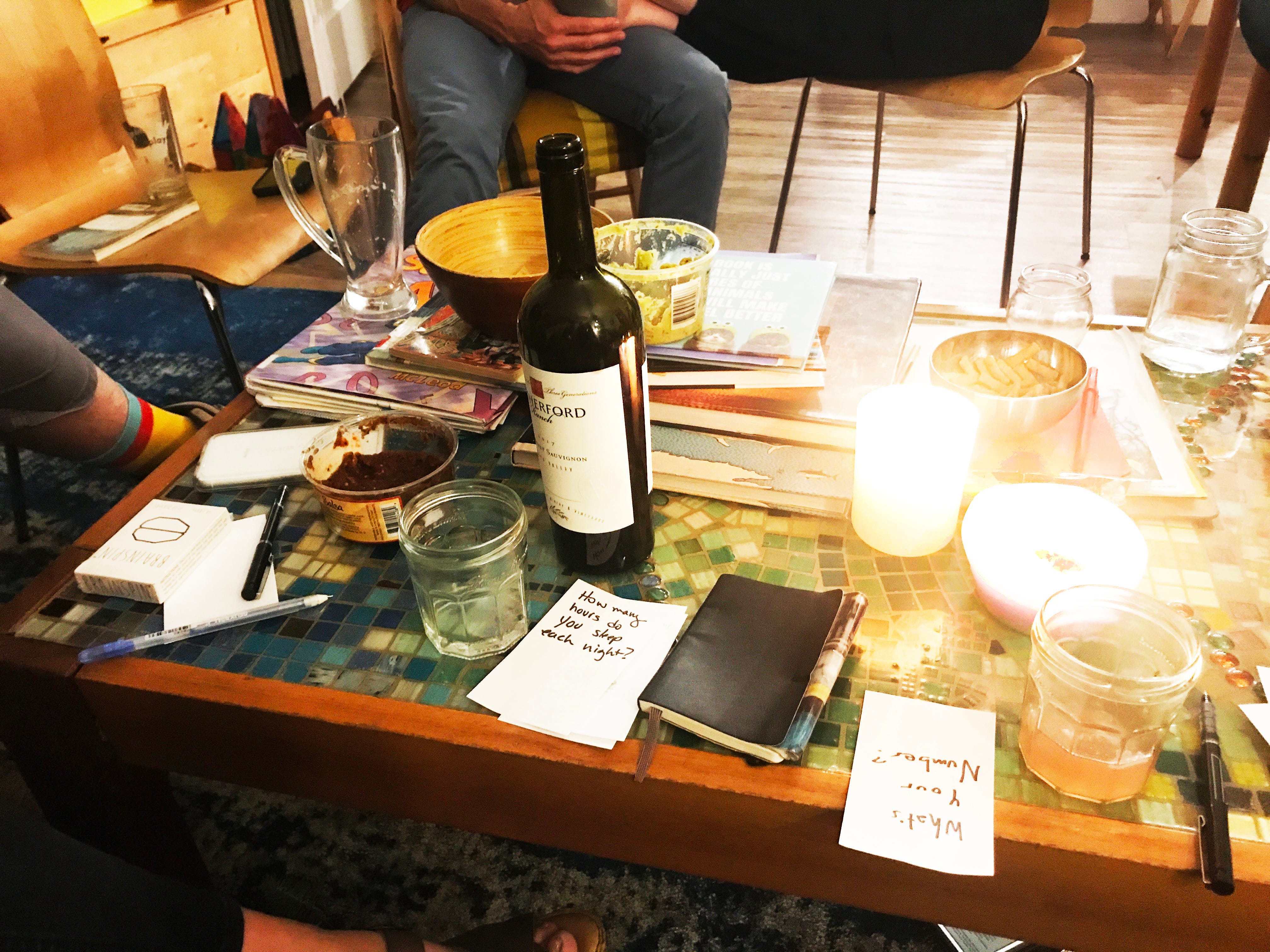
Oh, and Do I Even Know You?!2, the very first game from Abralind-Becker, LLC.
The most prolific makers I know are the ones who make makering easily accessible for themselves.
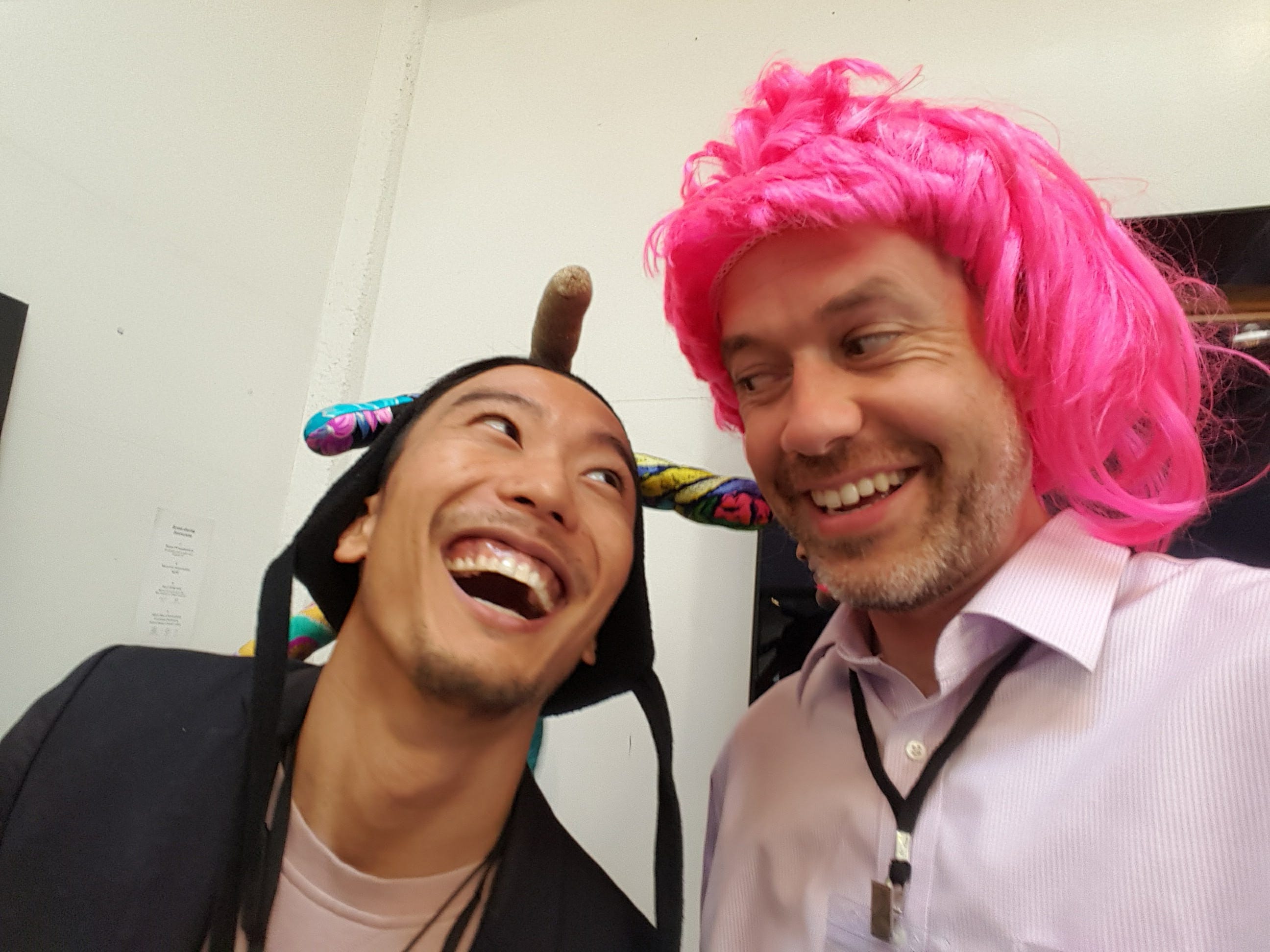
In 2017, I spent some time at the Palo Alto offices of the legendary design firm IDEO while working on a healthcare innovation project. Brendan Boyle, who founded their Play Lab and led it for 20+ years, showed us around his toy design workshop before our day’s first session. Prototyping supplies abounded. Lumps of clay. Buckets of LEGO. Baskets of wigs. There were Arduino stations. Foam modeling supplies. Carts stocked with colored paper, tape, and scissors.
This same “makerspaceness” is what makes Alan’s & Mara’s house so epic. Three mayo jars of markers, blades, and small hand tools hold court at the end of the kitchen counter. The nearby cabinet doors conceal cardstock, tape, sticker paper, spraypaint, and a printer. There’s a closet in the hallway with bins of bolts, pliers, sandpaper, and work gloves. If the patio outside the kitchen door isn’t actively hosting a sculpture in progress, it’s beckoning one with its tarps and stained tiling. Downstairs, a bevy of power tools stand at the ready in the garage.
Alan has access to 3D printers at his robotics lab, so he’s more likely to contribute hard plastic component ideas. Mara maintains a collection of propane fittings alongside of her welding supplies, so she’s inclined to act on fire-related ideas when they come to her. Myself, I fashion lots of initial prototypes out of taped-together index cards cut with an X-Acto and marked with a black pen, because I carry these supplies with me at all times.
Our ideation is shaped by the variety of tools we keep handy.
This month during my visit, inspiration struck when Mara & I drove past the vast Oakland Seaport on Interstate 880. So many cool industrial megamachines at work! I ogled them lasciviously from the passenger window.
Naturally, when we arrived back home, a coil of #8 wire3 was conveniently within arm’s reach of the kitchen table. Ten minutes later, Alan & I were testing out a working prototype for a game about container ships.
How do you set the conditions for your own innovation? I welcome any tips on creating creative spaces in the comments below.
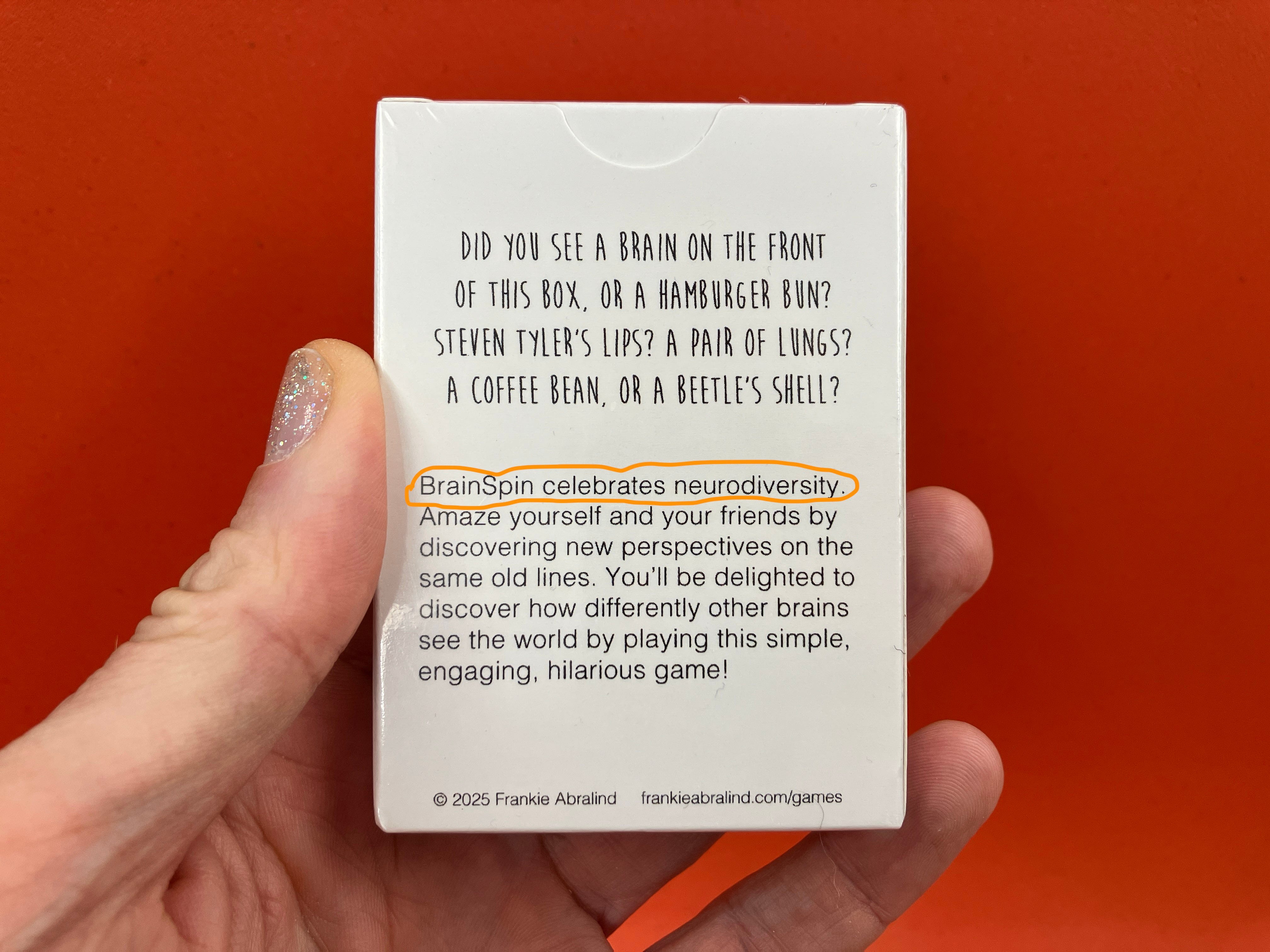
P.S. Today, April 2nd, is World Autism Acceptance Day, first designated by the United Nations in 2008. Looking for a way to celebrate? Consider 1) texting an Autistic friend to wish them a Happy Autism Day!; 2) watching an Autism-themed movie such as Temple Grandin (feat. Claire Danes) or The Blues Brothers (Dan Akroyd is Autistic, and his character Elwood Blues is a real treat), or the amazing TV show Young Sheldon (a Big Bang Theory spinoff); 3) inviting some friends to play BrainSpin. ;)
Tardigrades are perhaps the world’s most resilient animals. They can survive at extreme hot & cold temperatures, bounce back after 30 years with exactly zero water, and are the only creatures ever documented to survive unprotected in outer space. For truly awe-inspiring videos of tardigrades in action, I highly recommend James Weiss’s microvideography. His jam_and_germs Instagram account is genius.
The original name for DIEKY was What’s Your Number?. We changed it to Common Denominator for a while, but people kept mistaking it for a math game. Playtester Jenny Hegland’s exclamatory responses to her boyfriend’s answers as we played it one evening inspired the new name, which we loved and took to market for our first 500-copy batch. DIEKY was eventually licensed by Big Potato, who renamed it Dumb Questions to Ask Your Friends.
I learned about “Number 8 mentality” in Invercargill, New Zealand, at Motorcycle Mecca’s incredible Burt Munro exhibit. Number 8 wire is the kiwi equivalent of duct tape, synonymous with resourcefulness and a can-do approach to problem solving.
No posts
Comments
Nothing yet. Say the first thing.
Sign in to join the conversation.