

The game industry is still young. Compared with film, literature, or music, it hasn’t lived long enough to get used to seeing its icons leave. So when someone we admire steps away, no matter how or the reason behind it, the impact hits harder.
Moments like these force us to stop, look back, and realize that something we took for granted is suddenly gone. And with that absence comes an uncomfortable but necessary question: what now?
Katsuhiro Harada announcing he will leave Bandai Namco and the game industry altogether at the end of 2025 is exactly that kind of moment.
For nearly 31 years, Harada was better known as “the Tekken guy,” but his legacy extends beyond that. He was the gravitational center of one of the most influential fighting game franchises ever made, yet we can’t forget that he was also a genre ambassador, and one of the rare creatives who understood that games don’t exist in isolation. They live in arcades, in tournaments, in living rooms, and in the loud, chaotic energy of the communities that surround them.
Now that he’s stepping away, we’re watching the curtain fall on a stage that shaped generations of players around the world.
But the best part of endings is that they teach us how to honor what came before. And as a passionate fan of both Tekken and Namco, I believe this is the perfect time to reflect on the legacy that Harada has created and the lessons the industry has absorbed from him, often without even realizing it.

When I studied game design, one of the first things I learned was that the industry thrives on versatility. You can be an accountant, a writer, a software engineer, or an HR specialist and still bring something essential to a game’s creation. But even with that in mind, if you had to guess the academic background of one of the most influential fighting-game creators of all time, you’d probably put your money on programming or animation.
Well… not Harada. He studied psychology at Waseda University. In hindsight, of course he did.
Long before he directed Tekken, Harada worked in the trenches of Japanese arcades organizing tournaments, watching players under pressure, and paying attention to the subtle emotional triggers that decide whether someone keeps playing or walks away frustrated. By doing that, he didn’t just observe players. He studied them.
He learned to read the room, the rhythm, the hesitation before a button press… in essence, the silent language of competitive play. He understood the psychology of risk, reward, rivalry, and pride because he watched it unfold in real time the micro-tilt after a narrow loss, the proud smile after someone landed their first real juggle, the adrenaline spike when a newcomer took down the “local boss,” and the unspoken respect between two rivals who didn’t even know each other’s names.
This early experience gave Tekken something most fighters lacked at the time: an unusually precise sense of player behavior, tension, and emotional payoff. These are the human moments Tekken eventually captured and digitized. Without that psychological backbone, the series wouldn’t have survived — much less dominated — a genre as volatile as fighting games.
Before Harada ever sat in the director’s chair, he had already mastered something many designers never learn: great mechanics aren’t built exclusively on code. They’re built on human behavior. And that insight shaped everything that he came to work after.
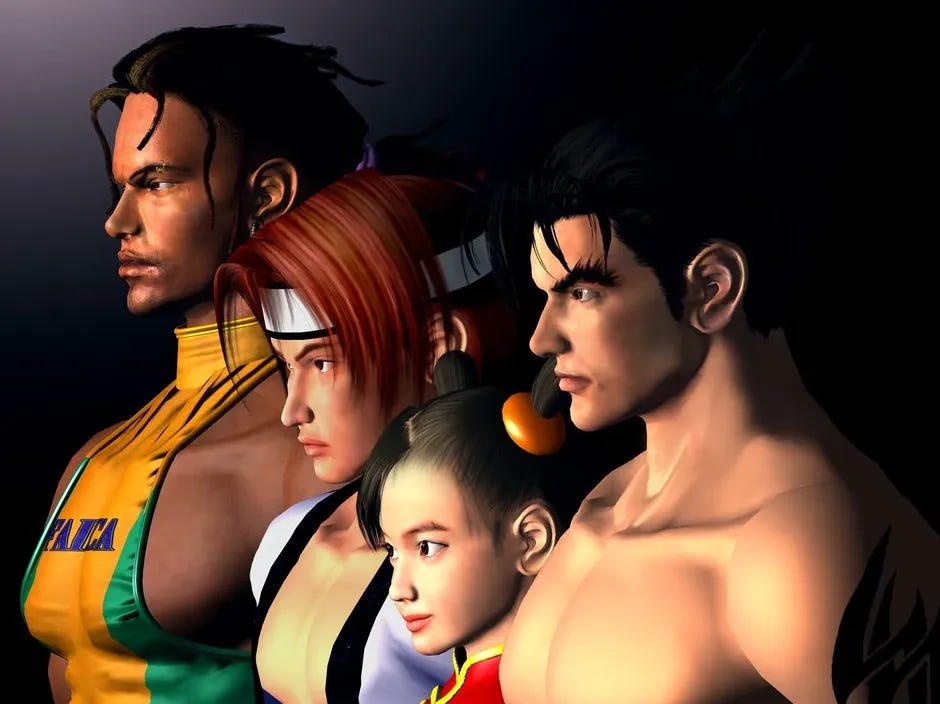
By the time Tekken 3 hit Japanese arcades in 1997, Harada was already influencing the series since the first two entries. However this was the game where his fingerprints became unmistakable.
At a time when every studio was still trying to conquer the new 3D fighting frontier, Tekken 3 arrived with a loud statement that it wasn’t just another contender. It was the fighting game, the one that would jumped from arcades straight into the cultural bloodstream by becoming one of the most selling games in the PSX. Fast, expressive, stylish, and technical yet readable, it made the genre feel modern, dangerous, and alive in a way nothing else did. For many of us who grew up in the 90s or early 2000s, Tekken 3 was the source of after-school rivalries, the cause of bruised thumbs, the origin of heated debates over who could spam Hwoarang’s kicks more elegantly, the birthplace of a lifelong loyalty to our mains, and the first time we learned that frame data could be a superpower.
Harada didn’t just refine a formula entering its adolescence. He redefined what a 3D fighter could be, and he did it by building worlds, not just systems. People often forget how much he cared about story, lore, and character identity. Tekken’s narrative is gloriously bizarre: where else you'll find devil genes, corporate empires, family vendettas, cyborg ninjas, pandas, and boxing kangaroos coexisting in the same story? It should be a disaster, but it works because Harada anchored the chaos with emotional through lines. He was one of the first fighting game designers that understood that players don’t just pick characters. They pick identities.
And when Tekken began to conquer the world, that fundamental truth became even more evident.
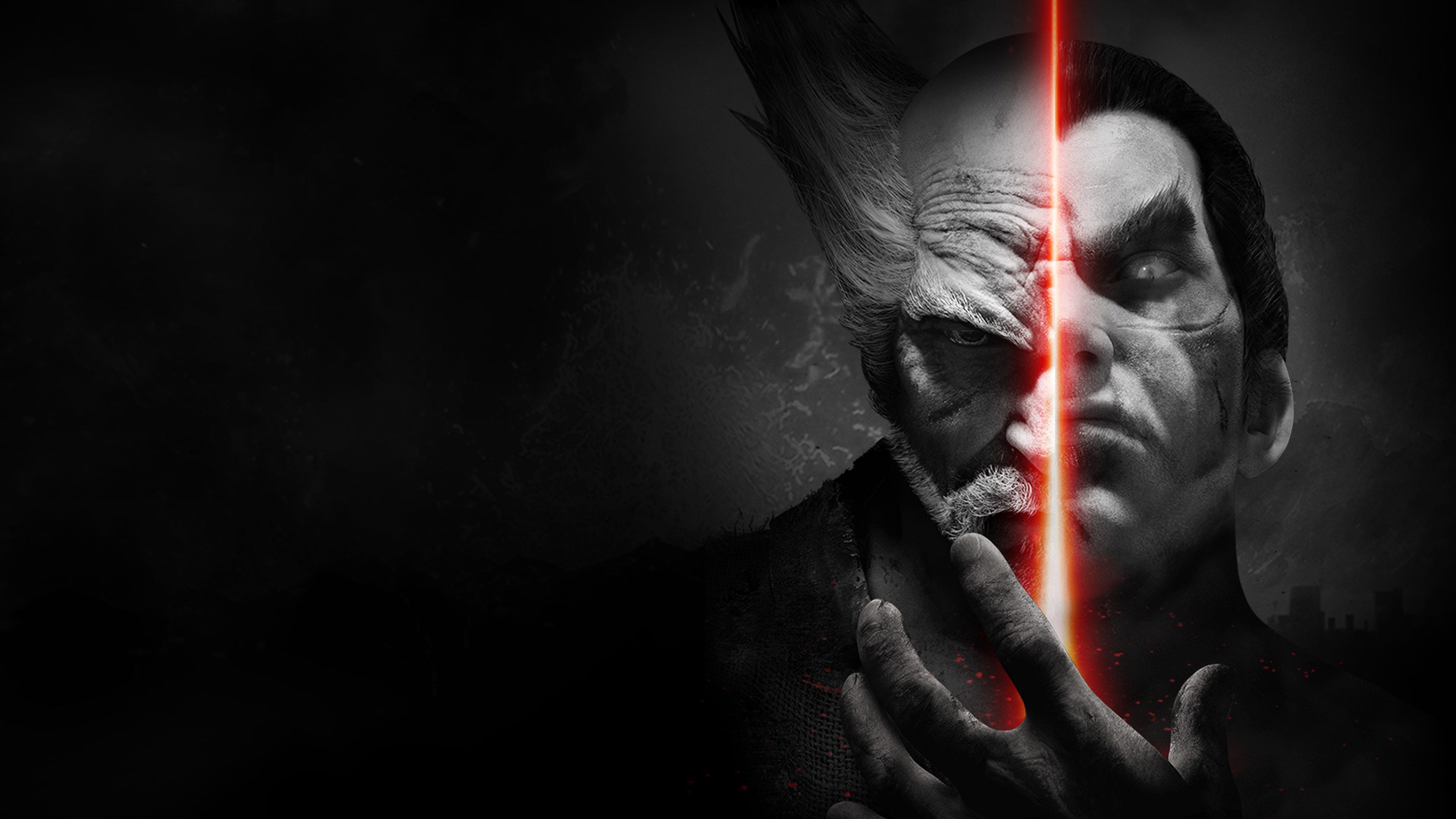
Harada didn’t shy away from experimentation or cultural diversity. Under his leadership, Tekken evolved into a global, multicultural, loud, expressive cast of characters, all grounded in fighting styles, histories, and personalities that felt alive.
Mechanically, Tekken set the gold standard for 3D fighters. By helping to consolidate a strong foundation, it allowed Tekken to be one of the first major Japanese franchises to achieve massive traction worldwide. However what really made the difference was the fact that Harada helped legitimize the fighting-game scene as culture, not niche. He treated tournaments as events worth celebrating by talking to esports organizers, content creators, streamers, and casual fans with equal respect.
By doing this, he bridged the gap between Japan’s traditional studio culture and the Western FGC’s chaotic, meme-driven personality. And when Tekken 7 exploded in popularity years after launch thanks to tournaments, streams, and a thriving online scene, Harada already consolidate himself as the face of that renaissance. He was a man who built a legacy people could participate in an active way.
However, he didn’t confine his contributions to writing history through Tekken. He also played a crucial role in ensuring that significant aspects of Namco’s history did not fade away.
![Análise] SoulCalibur VI: Vale a Pena?](https://substackcdn.com/image/fetch/$s_!rU6D!,f_auto,q_auto:good,fl_progressive:steep/https%3A%2F%2Fsubstack-post-media.s3.amazonaws.com%2Fpublic%2Fimages%2F8fe9e353-20bf-4f93-a051-7f9a777bd465_1920x1080.jpeg "Análise] SoulCalibur VI: Vale a Pena?")
Gamers who follow the game industry for a long time know that certain individuals inside big studios become key advocates, guardians who keep beloved franchises alive. Hideo Kojima and Metal Gear are one example.
Harada was another, in more ways most players expect. It’s common to associate him exclusively with Tekken, but his influence stretched far beyond. For example:
he championed Soul Calibur VI, helping Motohiro Okubo get the project greenlit,
he supported the development of Namco-related games like Shadow Labyrinth,
and he provided high-level oversight on cross-studio projects like the Super Smash Bros. series, which benefited from significant Tekken-team input.
This proves that Harada wasn’t “just” a director. He was a studio statesman, someone who understood the business, the technology, and the responsibility of nurturing younger developers. And yet, he never stopped steering Tekken’s identity. If the franchise continues strong after his departure, it’s because he architected it for survival.
Few creators manage to build something that outlasts them. I believe that Harada did.
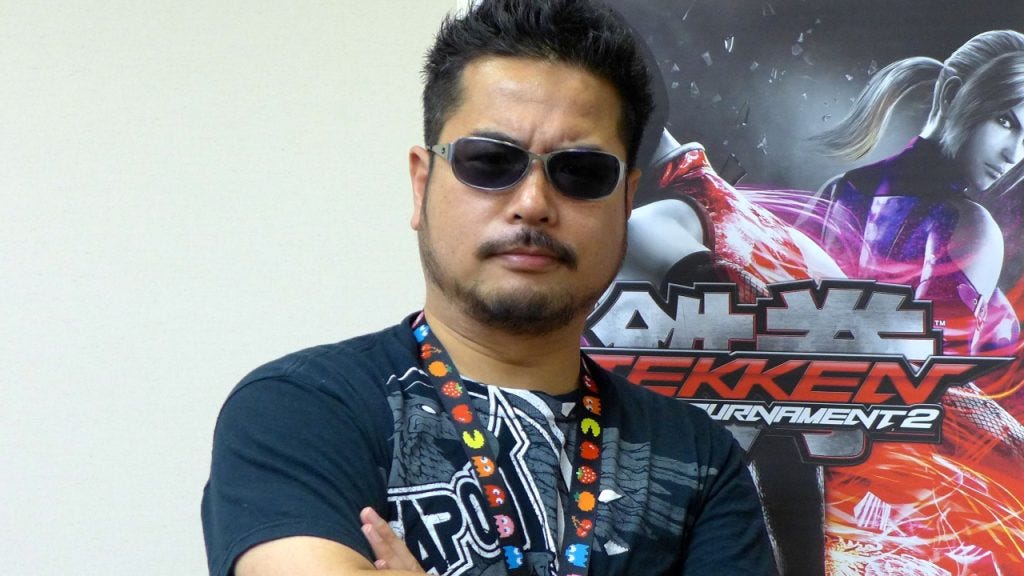
In my earlier article discussing Satoru Iwata, I pointed out the lack of leading figures in the industry who openly share insights about the development process in a transparent and genuine manner. Like many Nintendo fans, I long for initiatives such as the Iwata Asks interviews, which provided an empathetic perspective on development from someone in a high position.
Harada also exemplified this approach, but in a far more “gut-punching” manner. He was the ideal representation of empathetic leadership in action by being a present figure not in the choreographed, PR-approved way corporate structures prefer, but in the raw, unfiltered way communities actually thrive on.
He showed up at tournaments, posted blunt (and often hilarious) comments online, debunked rumors directly, teased players without crossing lines, and talked openly about production challenges and constraints. He broke the fourth wall between developers and fans long before that became common. Sometimes, he even weaponized transparency by using honesty to defuse unrealistic expectations, and humor to cool down community outrage.
Harada wasn’t afraid to say things like “this is not feasible,” “this is not how game development works,” or “stop asking me for that character.” It sounded rude, but it worked in his favor. Not because he gave fans everything they wanted, but because he always treated them like adults.
And the community loved him for it.
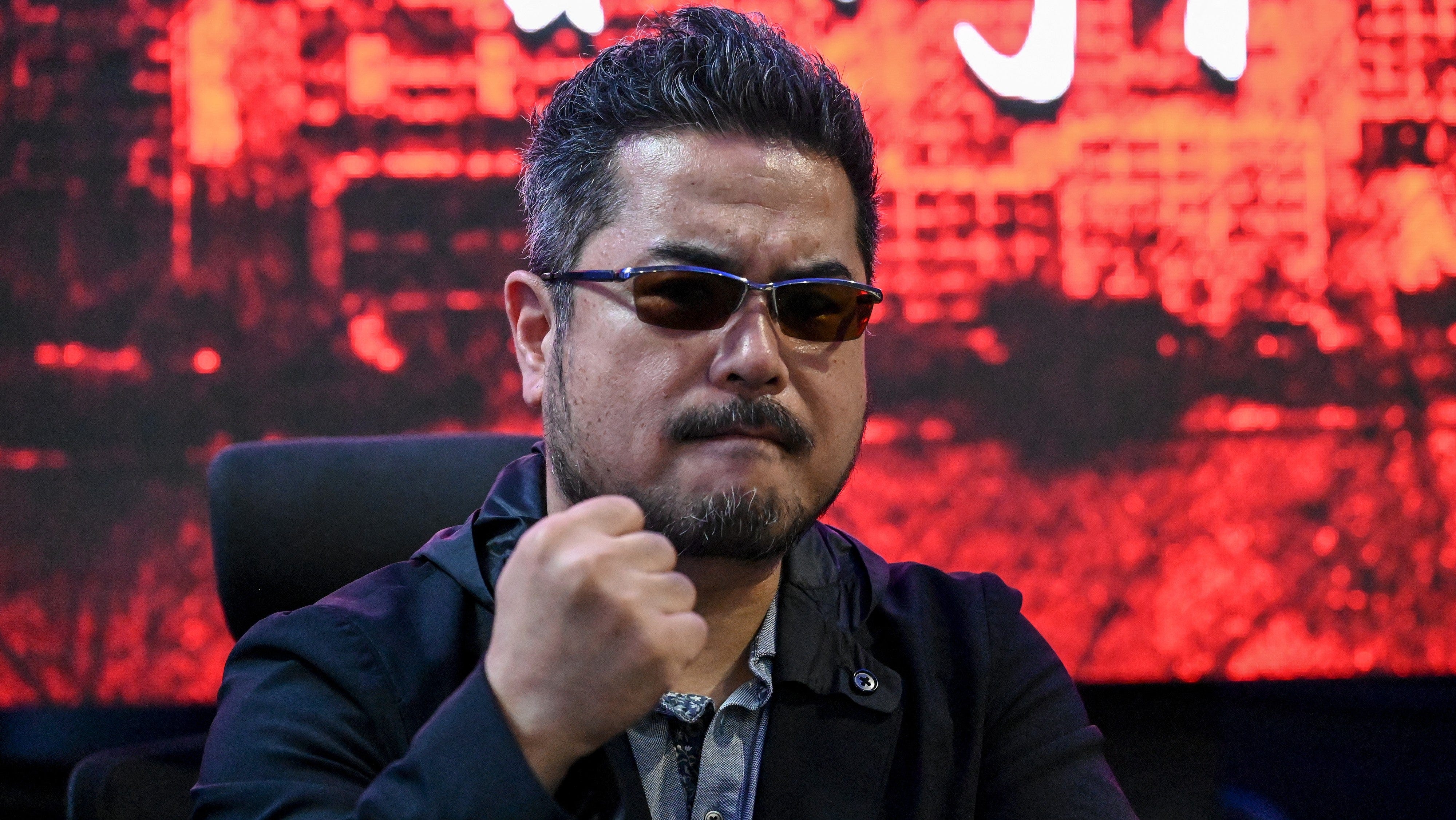
On the surface, Harada choosing to leave at Tekken’s 30-year mark feels poetic, but there’s more beneath it. In his message to fans, Harada mentioned the loss of close colleagues (the recent passing of Tomonobu Itagaki was a particularly huge blow), a desire to evaluate his own life, and the sense that this is the “most fitting moment to close a chapter.” You can feel the decades of pressure and responsibility behind those words.
He also shared something revealing: Harada had already been transferring many responsibilities (creative direction, narrative oversight, worldbuilding) to the younger team over the last 4–5 years. That’s the act of someone who cares deeply enough to plan for a future they will no longer control. It’s stewardship in its purest form.
His departure is a farewell, yes, but also a statement that the next era of Tekken must belong to the people who grew up with it, not the ones who built it. When a main figure departs from a franchise, fans frequently express concern about the series’ future, but the reality is that Harada has been preparing Tekken to thrive independently for years.
Here’s what he leaves behind:
A foundation of design that still feels modern: Tekken is structurally timeless. Its movement system, character philosophy, and risk-reward mechanics still hold up against modern standards. Future games may modernize, but they won’t break the core pillars Harada established.
A community that knows its worth: Harada empowered players to care loudly, passionately, and sometimes chaotically for the series. More than any other franchise, Tekken fans are not passive consumers, but co-architects of its identity. And that culture only exists because Harada fostered it.
A studio prepared for succession: This may be his most underrated achievement, but still a valuable one. Despite some stumbles like Tekken 8’s disastrous Season 2, he trained and empowered the next generation to move out without him. Many franchises crumble when the visionary leaves, but thanks to his percipience and future vision, Tekken have higher chances to survive.
A template for how creators can engage with communities: Developers everywhere learned from Harada that you need to be visible, be honest, be human, be funny when necessary, and don’t hide behind corporate language when speaking to fans. In an age of distrust toward studios, Harada demonstrated that transparency can be armor, and authenticity can be strategy.
Harada’s departure marks the end of an era, but not the end of his impact. His career is a reminder of three essential pillars of game development: craft, community, and conversation. These reinforce the fact that the best creators are the ones who sit next to you, watch you play, laugh at your losses, cheer for your wins, and casually ask: “So… why did you choose that character?”
That’s why I believe Harada didn’t just helped to build the Tekken franchise to be the juggernaut it is today. Above all else, he humanized it. He turned a fighting game into a global ritual, a shared emotional space and a cultural artifact passed from one generation to the next.
Wherever he goes next — DJ sets, mentorship, or something no one expects — his mark on the industry is permanent.
Rounds end. Fights come to a close. Legends don’t.
Thanks for everything, Harada-san.
Thanks for reading The Boss Level! This post is public so feel free to share it.
Comments
Nothing yet. Say the first thing.
Sign in to join the conversation.