
The severe outbreak of Ebola in the Democratic Republic of Congo this year is the result of what the World Health Organisation have labelled the Bundibugyo Virus. Bundibugyo literally means the ‘place of the Hippos’. The so-called virus originated in western Uganda, and was first identified in 2007. It has a relatively low rate of fatality at around 30%. The Bundibugyo ebolavirus is just one of a list of supposed strains of Ebola causing viruses. Other labelled strains are the Zaire, Sudan, Tai Forest, Reston and Bombali ebolaviruses. The Zaire version is apparently the most common strain with a fatality rate of up to 90% without intervention. This strain is said to have caused the large outbreak in West Africa from 2014-2016. The Sudan version has been identified in multiple outbreaks in Uganda and South Sudan, with a fatality rate of up to 50%. The Tai Forest ebolavirus was originally known as the Cote d’Ivoire ebolavirus. According to the CDC only one non human case was documented in 1994. The Reston ebolavirus only affects pigs and non-human primates. It does not cause illness in humans. The Bombali ebolavirus was isolated from bats in Sierra Leon. Research has concluded that there is no proof that the virus can spread to humans.
The very first outbreak in 1976 was identified in the country that is now called the Democratic Republic of Congo. ‘The Virus Hunters’ published in 1996 by Joseph B. McCormick takes the reader through the dramatic efforts of the Centre of Disease Control to establish what the new devastating haemorrhagic disease was, who was patient Zero and how the virus supposedly jumped from primates to humans. The book talks about how barrier nursing was essential in containing the virus. It conjured up images of researchers and medical staff navigating the scene of the outbreak in sealed suits with integrated hood and visor, similar to those we see in photographs of operatives dealing with highly radioactive or highly toxic materials. Interestingly I saw a man dressed in exactly the same sort of suit coming out of an ambulance with a patient at Pilgrim Hospital, Boston, UK at the beginning of the Covid outbreak. As I had not yet taken my deep dive in to the origins and nature of Covid I didn’t think much of it. But after Dominic Cummings posted in Substack that he spent a lot of time during lockdown studying the Manhattan Project and other radiation related projects, it occurred to me that the suit was probably significant.
We have seen these suits worn during Chemical, Biological, Radiological, Nuclear or Explosive (CBRNE) incident exercises, practising procedure in case of a radiological, biological and chemical material release event here in the UK. It is surprising that nobody so far has made the connection between these exercises, ‘viruses’, radiation and chemical poisoning. The drills are led by Counter Terrorism Policing and the Ministry of Defense, and include testing joint interoperability between the different services taking part, initial operation response, and decontamination protocols.
If we are going to make headway in to establishing exactly what causes Ebola - leaving aside the strange parasite looking formation that characterises a positive Ebola culture (usually after many rounds of amplification using the PCR method) - we need to look firstly at exactly what happens in the body when a person presents with hemorrhagic fever. What are the clinical markers of Ebolavirus and how do they compare to those caused by radiation and chemicals?
Recently, suggestion has been made that exposure to arsenic in mines has led to the Ebola outbreak in the Democratic Republic of Congo (DRC). Below is a map of the key mining areas in DRC. The extraction and purification of gold and silver is well known to release arsenic which is present in the form of arsenopyrite. Gases are released in to the air and arsenic in to streams and other water sources in the vicinity of the mines. The mining and extraction of gold and silver requires large amounts of water, meaning that mines are situated adjacent to natural water sources. The areas most heavily affected by arsenic and other heavy metals are in this eastern region of the DRC.
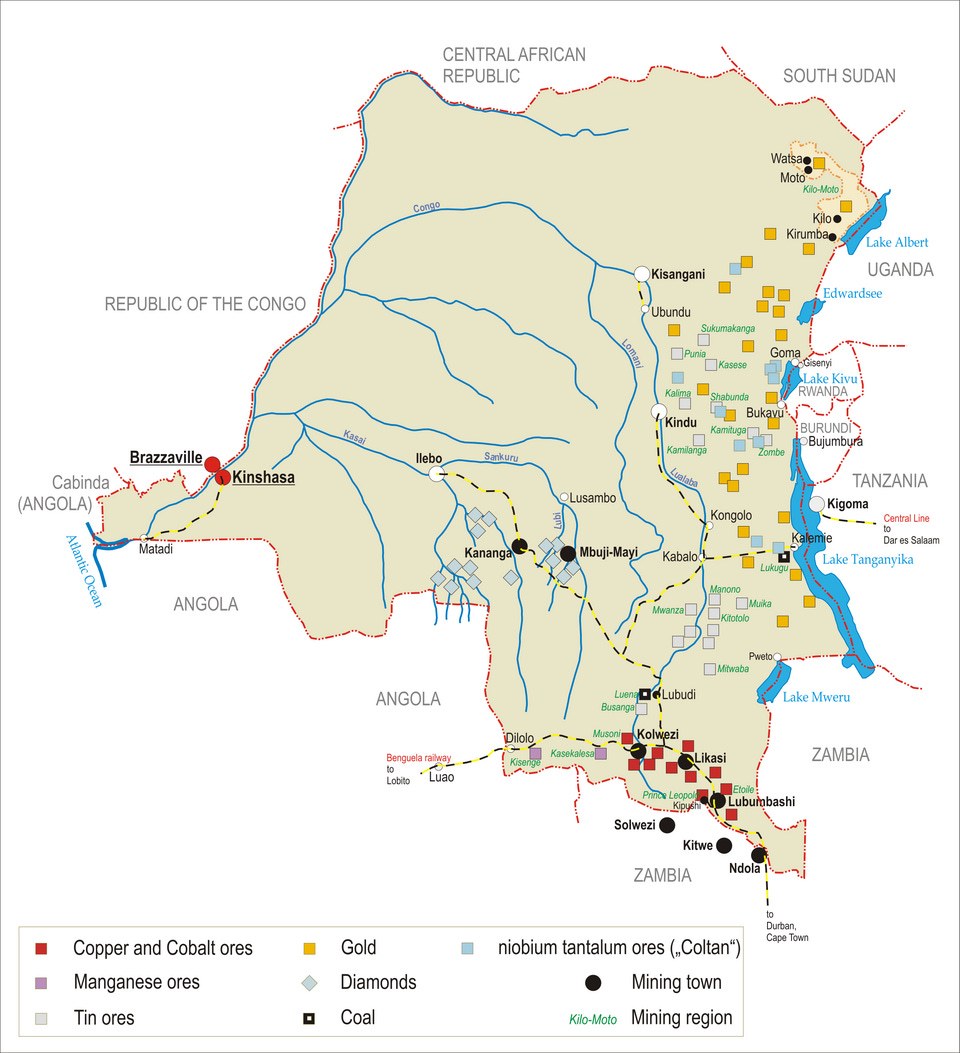
The most recent outbreak of Ebola is situated in the north eastern part of DRC bordering Uganda. There is also an outbreak in and around the Ugandan capital Kampala at some distance from the border with DRC. It is important to note that there are no gold mines in Kampala, though some of the regions around the capital have received gold exploration licenses. The main body of Ebola victims in DRC are centred around the towns of Bunia, Rwampara, Nizi, Bambu and Mongbwalu. There are 11 gold mining centres in this area. Mongbwalu in the Ituri region was the epicentre of the beginning of the outbreak and Mongbwalu is a mining town. According to people on the ground the outbreak began in January 2026, five months before Ebola was declared by the World Health Organisation.
Comments
Nothing yet. Say the first thing.
Sign in to join the conversation.