
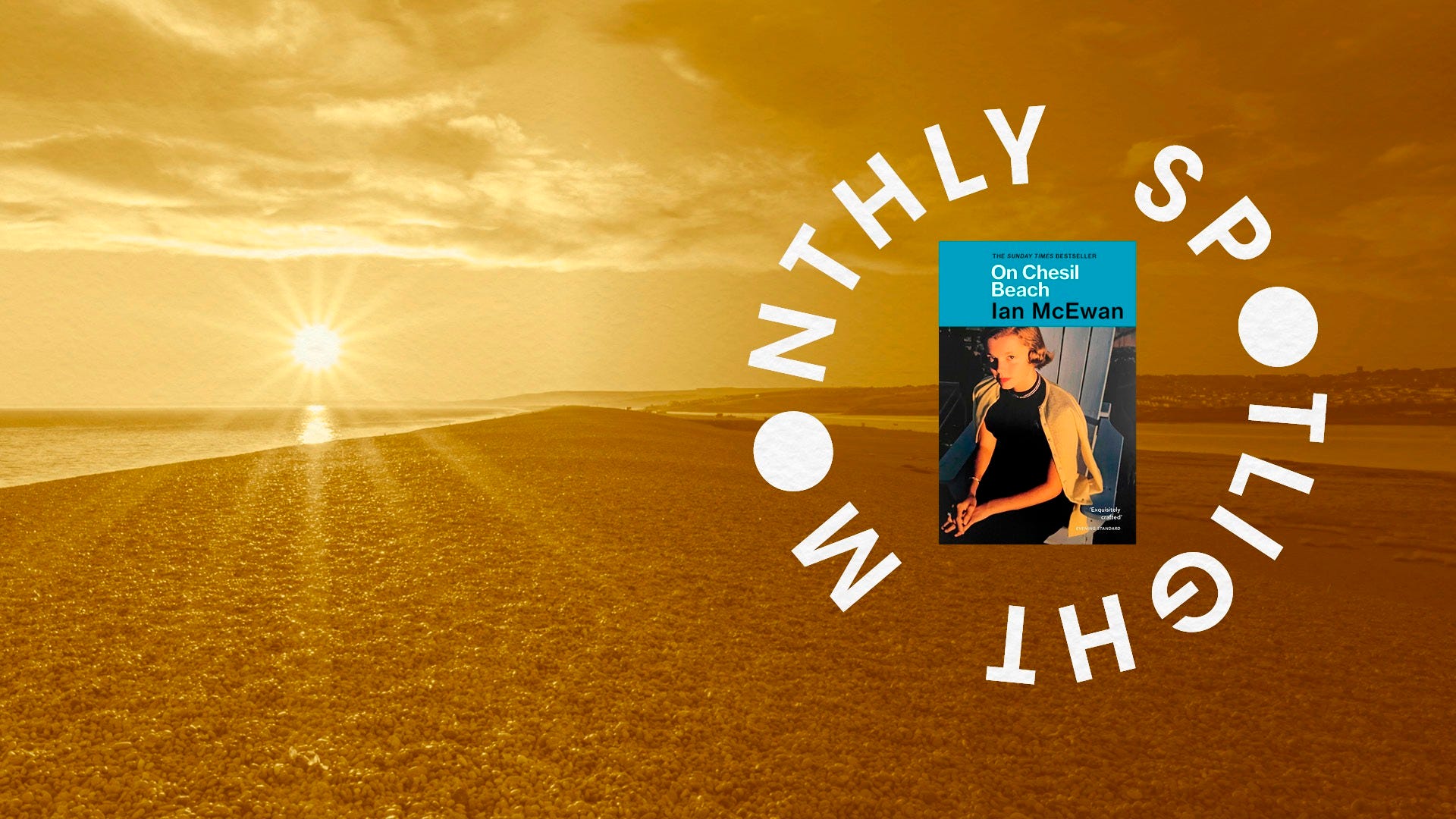
Few writers have shaped contemporary British fiction quite like Ian McEwan. Since publishing his first collection of stories in the 1970s, he has built an extraordinary body of work, from unsettling psychological dramas to sweeping historical novels and sharp explorations of morality and human relationships. He is one of only a handful of writers to have been shortlisted for the Booker Prize six times, and in 1998, he won with his novel Amsterdam. Several of his novels have also been adapted for film, including On Chesil Beach, which was his fifth and most recently shortlisted book, in 2007.
Set in the summer of 1962, the novel follows Florence and Edward as they celebrate their wedding at a hotel on the Dorset coast. Yet as they dine, the expectation of consummating their marriage becomes increasingly overwhelming. Unbeknown to them both, the choices they make that evening will echo throughout the rest of their lives. Written with exquisite precision, On Chesil Beach is a portrait of how a single misunderstanding can alter the course of a lifetime.
The novel’s inclusion on the Booker Prize shortlist was not without controversy, though: due to its short length, at under 40,000 words, some observers argued it was a novella rather than a novel, and that this should have disqualified it. But the judging panel was undeterred. ‘It is a short, taut novel and we are content that it qualifies for the prize,’ said Howard Davies, Chair of judges that year, calling it ‘not at all slight in emotional depth,’ despite its diminutive size.
Our August Monthly Spotlight also includes a ‘where to start’ guide to the author, an in-depth reading guide, an extract from the opening chapter, and the chance to win one of five copies of the novel, along with a brand-new limited-edition Booker Prizes tote bag.
Will you be reading along with us this month? Don’t forget to let us know in the comments below!

Ian McEwan is a star of the Booker Prize – only Salman Rushdie has had more nominations. His position now is that of a statesman of contemporary English literature – and is very different from the reputation he acquired in the 1970s, as an enfant terrible who wrote about sex and violence with relish. But these two aspects of his literary personality are not really so far apart, as our selection of his best books shows.
Since his Booker win with Amsterdam, McEwan’s novels have become more widely read than ever. The only downside to this is that many readers of his recent novels may not realise what darkly glittering gems there are among McEwan’s earlier work.

‘They were young, educated, and both virgins on this, their wedding night, and they lived in a time when a conversation about sexual difficulties was plainly impossible. But it is never easy. They had just sat down to supper in a tiny sitting room on the first floor of a Georgian inn. In the next room, visible through the open door, was a four-poster bed, rather narrow, whose bedcover was pure white and stretched startlingly smooth, as though by no human hand. Edward did not mention that he had never stayed in a hotel before, whereas Florence, after many trips as a child with her father, was an old hand. Superficially, they were in fine spirits.’
Set in the borderlands of English history immediately before the liberation of the Swinging Sixties, Ian McEwan’s short novel reveals how a life can be irrevocably altered by a moment’s twist of fate.
Whether you’re discovering On Chesil Beach for the first time or returning to it, here is our comprehensive guide, featuring insights from critics, our judges and the book’s author, as well as discussion points for book clubs and suggestions for further reading.
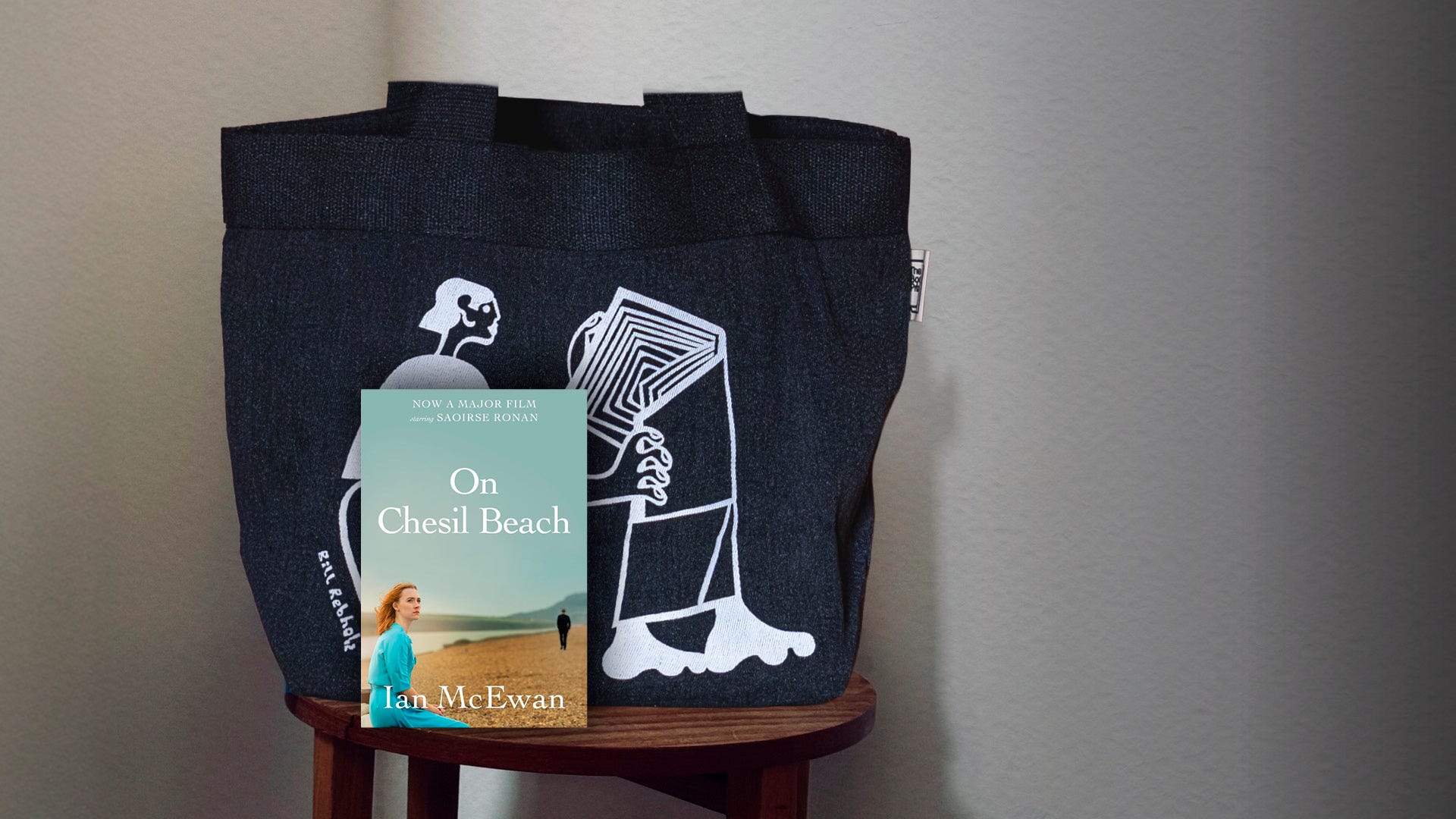
We’re offering you the chance to win a copy of the book and a limited-edition Booker Prizes tote bag. The new totes feature illustrations by Bill Rebholz and are not available to buy.
To be in with a chance of winning, simply enter your details on the Booker Prizes website by 12:00 BST on Friday, 28 August 2026. This competition is open to readers anywhere in the world.
Are you a fan of Ian McEwan’s work? Let us know if you’ll be reading along with us at Booker HQ this month, in the comments below!
Comments
Nothing yet. Say the first thing.
Sign in to join the conversation.