
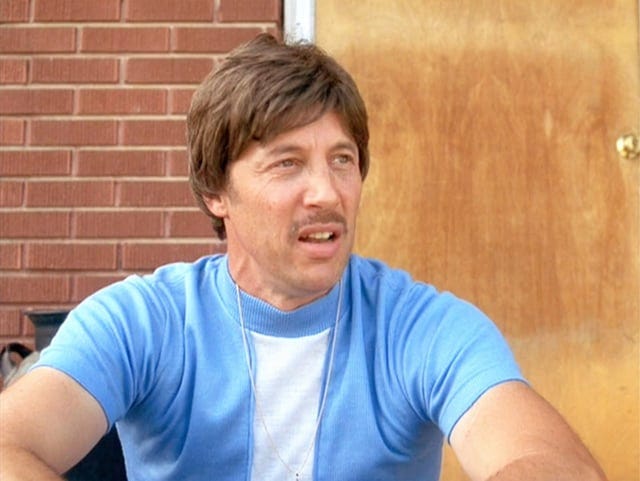
For too long, National has been hanging on to the legacy of John Key like Uncle Rico hanging on to 1982, sitting in his van endlessly talking about how he could throw a pigskin over those mountains if Coach had just put him in the fourth quarter.
I mean, to an extent, it is understandable. Key won three elections, retired undefeated, and remains the most naturally gifted politician National has produced in decades. Christopher Luxon plainly admires him. They are friends. Luxon seems to seek his advice frequently and has never disguised the fact that Key’s leadership is the model he aspires to.
But Luxon cannot campaign as John Key. That’s not an attack on the Prime Minister, by the way. John Key could not campaign as John Key in 2026. The circumstances which made Key successful have gone.
John Key at 30 per cent in the polls (on a good day) and dependent on both Winston Peters and David Seymour would not be the John Key we all have nostalgia for. He would be just another constrained MMP prime minister trying to project stability while managing “support” parties which benefit from publicly disagreeing with him.
Key’s method was to soften National’s edges, reassure voters, and avoid arguments that did not need to be had (with the exception of the flag debacle). He also inherited a political settlement which most New Zealanders regarded as tolerable, and in which populism was something that happened in other countries.
And it all worked because he had the numbers. National won 44.9 per cent in 2008, 47.3 per cent in 2011, and 47 per cent in 2014. ACT, United Future, and the Māori Party helped him assemble majorities, but they were never in a position to truly influence the essentials of his government.
It is easy to be gracious and relaxed in that environment.
National is now polling around 29 or 30 per cent. ACT is somewhere between seven and nine. New Zealand First sits between seven and twelve. Even The Opportunity Party has outgrown Khandallah dinner parties and has now cleared the threshold in successive polls.
In large part, that reflects the shrinking of that part of the body politic which is content with the country’s direction and wants it administered without undue fuss. The market for reassurance that sensible people remain in charge is smaller. More and more, they want to know whose side the government is on.
And even if that were not the case, Luxon is not Key. He does not possess Key’s easy humour or his instinctive feel for an audience. Pretending otherwise only draws attention to the difference. Luxon’s authentic case is that he came into politics as an executive, inherited a shambles, and made decisions which were unpopular but necessary.
He believes in management, targets, discipline, and delivery. Good. Campaign on those things unapologetically.
And rather than looking at Key in 2011, try to take a bit more inspiration from Paul Keating in 1993.
If you can believe it, Keating entered that election in a (somehow) worse position than Luxon occupies now. Keating challenged the much-loved Bob Hawke in June 1991, only to be beaten by 66 votes to 44 and consigned to the backbench, having given up the Treasury in the process. Six months later he tried again and scraped home by 56 votes to 51.
In 1993, Hawke loyalists regarded him as a usurper. The factions were at war, and the union movement was divided. Plenty of Labor MPs believed Keating had inherited the leadership just in time to lead them into opposition as it entered its eleventh year in office.
Aside from all the internal division and turmoil, Australia was emerging from a severe recession. And, by the way, as Treasurer, Paul Keating had notoriously called it “the recession that Australia had to have”, which is a worse gaffe than anything Luxon has ever said.
Nearly every informed observer expected the Coalition’s John Hewson to win. But, in the end, Labor won 80 seats out of 147.
Paul Keating really imposed himself on the campaign. He did not pretend to be Bob Hawke or try to recapture his predecessor’s warmth and easy rapport with regular Australians. He was combative, arrogant, articulate, and utterly convinced of his own argument. Those were things he could do well, and so, voters knowing what they were getting, were able to see the upsides.
The other thing is that Keating did not deny that the recession had happened. He did not blame everything on events overseas or promise that the better days were actually here now. He argued that the pain had been necessary, that the reforms had rescued an economy going quietly to seed and that he was the man who had done the work and he wasn’t going to be sorry about it.
That is harder than it sounds, but it works if you do the other thing Keating pulled off, which is to make the election about the alternative.
The Liberals were campaigning on Fightback!, a 650-page program centred on the scary idea of a 15 per cent GST. Paul Keating seized upon it and refused to let go. By election day, Australians were not thinking about whether they liked Paul Keating so much as whether they really wanted John Hewson’s GST.
Comments
Nothing yet. Say the first thing.
Sign in to join the conversation.