

I love books. I love reading them and writing them.
Then comes along AI, and nobody can figure out who is actually writing anymore.
Publishing an ebook on Amazon has been easy to do for years, but now the act of writing the book itself is a breeze, thanks to generative AI.
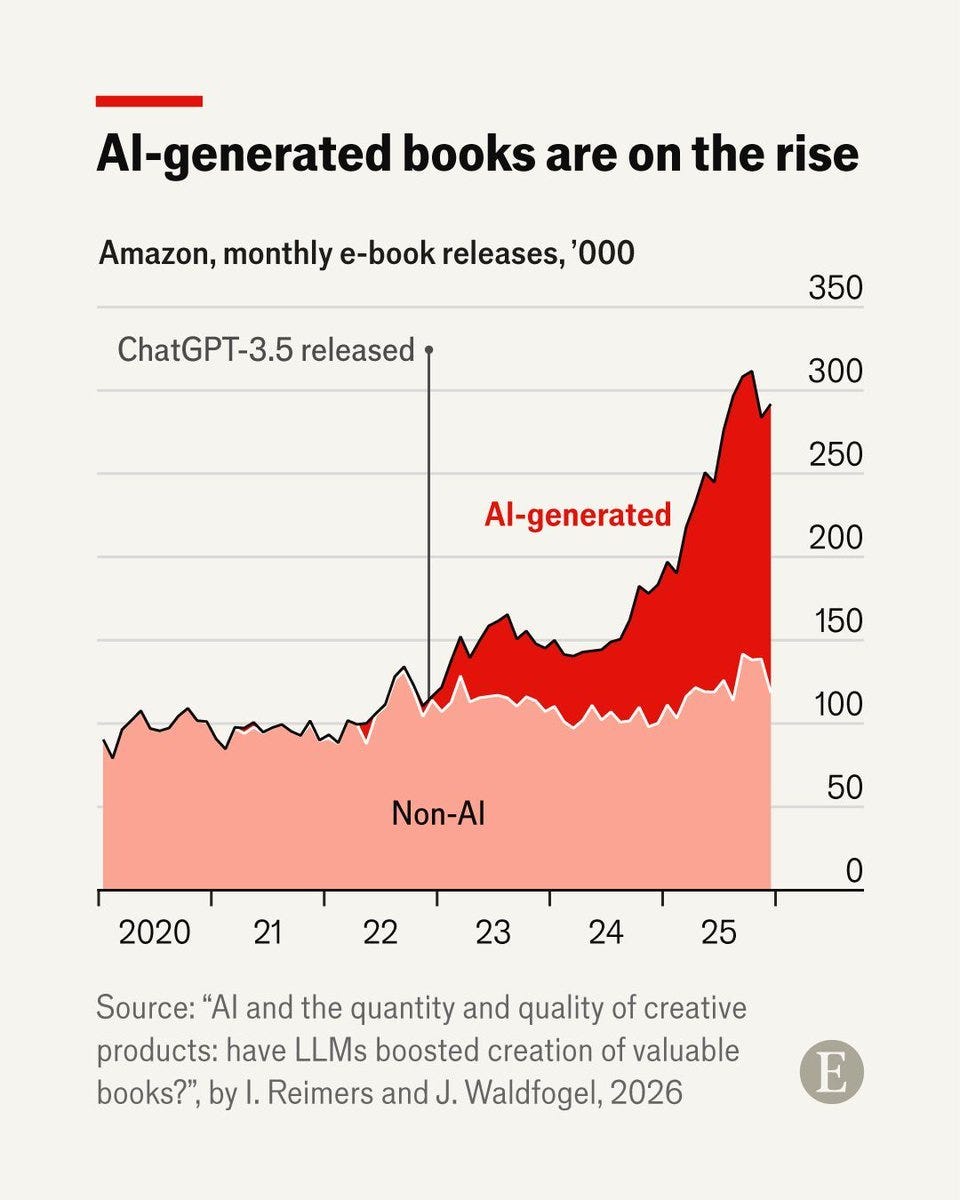
While my second book was published at the cusp of capable AI-assisted long-form writing, my first was published in 2021 and written in 2020. Readers have little doubt that I, Nik Bhatia, wrote Layered Money myself without the use of ChatGPT or Claude.
Therefore, when I publish my third book one day and claim to have written every word without AI, the market of consumers and book readers might tend to believe me. In other words, all I have are my word and my reputation. My career as an author is a relevant backdrop for TBL.
When I started The Bitcoin Layer in 2021, my goal was to reach the reader in between books, but it has grown into something much more. Something I initially did not envision, but came to fruition from a sheer desire to learn and develop more powerful frameworks for understanding global markets.
In short, I wanted to become a better investor myself, and document the journey.
What started as a newsletter has now become an investment research service. I don’t want to simply explain my current opinion on bitcoin, stocks, and rates; our mission, rather, is to help you achieve better returns, identify bull markets, flag risk where it presents itself, and help you rise above the cacophony of today’s financial information onslaught.
Our track record is, to be fair, young. In 2026, actively trading our TBL Liquidity strategy (+28.5%) versus buy-and-hold bitcoin (-27.3%) has generated healthy outperformance, but we want to help you beyond this powerful but possibly narrow sleeve of your portfolios.
In reality, we understand that people own real estate, equities, bitcoin, and other asset classes, and questions such as…
Is there a bubble in AI?
Are higher interest rates a risk to my portfolio?
Should I own gold, bitcoin, or both?
Will the US dollar’s changing role as global reserve currency affect my portfolio?
Is the United States falling to China?
…serve as possibly even higher importance than the almighty “is bitcoin really heading to $1 million, and if so, when?”
In that spirit, today we aim to help both long-time and first-time readers orient themselves to TBL so that you know what it is that we do here.

The largest question that separates us from the average global macro newsletter and pundit. Our answer is categorically yes, despite bitcoin’s many bear markets, the current bear market, and the palpable energy amongst investors this year that AI investing has rendered bitcoin investing useless.
A truth we hold dear is that bitcoin is the only decentralized digital asset in the world, and in human history. Sure, bitcoin went from using 10,000 BTC to essentially buy pizza over “bitcoin reddit” to that same pizza order being valued at $1 billion in a decade and a half, but that spectacular rise shouldn’t take away from the next 15 years of growth that we believe are in store.
We can’t pop open bitcoin’s hood today and explain why the blockchain assures decentralization because that’s more of an older story, and we also don’t want to beat a dead horse on why a counterparty-free asset has historical value. Just consult with Tutankhamun if you need a brief history lesson.
Bear markets bring about that dark moment of: “Should I sell it all? Is it over?”
I am not shy to admit that I had this feeling during 2022 and had it again this year. In fact, I’m still having it.
Having this feeling does not make me a bad bitcoiner or even a non-believer. I think it just makes me human, and a typical investor that is subject to fear and greed just like every other person.
If I can seriously answer the question with, “No, I shouldn’t sell because this asset still offers asymmetric upside,” it means that I am consistently conducting thought exercises instead of sitting back and coasting from a decision made a decade ago.
Bitcoin cycles up and down, and the evolution of the young asset brings enormous waves. It hasn’t died even though the era of “free money” in the form of zero interest rate policy is over…a significant takeaway from the past 3 years of price action.
Today, we are in the belly of the beast of a bear market. Bitcoin down less than 60% this time around feels both like a victory, but at the same time, don’t you dare celebrate, as we are hanging on by a technical thread. For example, if bitcoin can’t hold this $62,000 area, it opens up $49,000 in a very scary way!
Bitcoin is quite possibly the most behavioral asset the world has ever seen, and therefore price action around the margin opens up the distribution of outcomes to include scenarios we can’t fathom.
This creates massive swings, and with it massive opportunities to make money on the upside and down. We want to help you, specifically, in this regard.
Part of that journey for us means steering you away from MSTR, which is down 73% trailing 12 months versus bitcoin down 44%. Instead, we encourage a long/flat bitcoin approach that uses TBL Liquidity to avoid the worst conditions.
Yes. This type of ownership today runs wild with profitability. Companies securing these profits have charters that are locked in, and by charters, I am comparing the tech giants of today to the historical trade companies (East India Company, Mississippi Company) that achieved state-sponsored monopolies by essentially backwards merging into royal charters that gave them a blank check.
There is a challenge to these charters, but it’s your job to play out the game theory. When, might you wonder, do Google, Amazon, and Nvidia lose their favored status with the government and face the threat of declining market share and profits due to tax, regulation, and political backlash? Not only is it possible, but the likelihood is closer to 50/50 than anybody on the capitalist side of the spectrum might want to admit. Even with that range of outcomes, we believe that power today rests with the Huangs and the Bezos’s of the world, not the Trumps and Ocasio-Cortez’s.
Scared of AOC? Fair, but so scared that you shed your S&P 500 exposure for what…US Treasury bills? Gold?
Gold has been a good asset to own once again this decade, but it is highly dependent on China demand, not waning US equity demand.
In the grand scheme of things, this is what we want to be at The Bitcoin Layer. A bitcoin-focused yet realistic research provider that believes in US equity due to property rights, rule of law, and the excellence of the United States. The flaws with today’s USA are endless, and I’ve long been an equal opportunity critic of each side of the political spectrum. That being said, money talks, and so do feet. Capital and human capital still flow to the Land of the Free, and this means that the property rights thesis and entrepreneurial and free-spirit culture still reign on the global macro scale.
I have essentially one bias, and that is to let capital seek great outcomes. That does imply lower taxes, smaller bureaucracy, and state-level control, but I also embrace the 250 years of precedent for federal power and the pursuit of a culturally American economic system relative to any other system that operates throughout the planet. I also believe in a strong social safety net, social services, and government spending to maintain peace, law, and order! Don’t miss out on owning America.
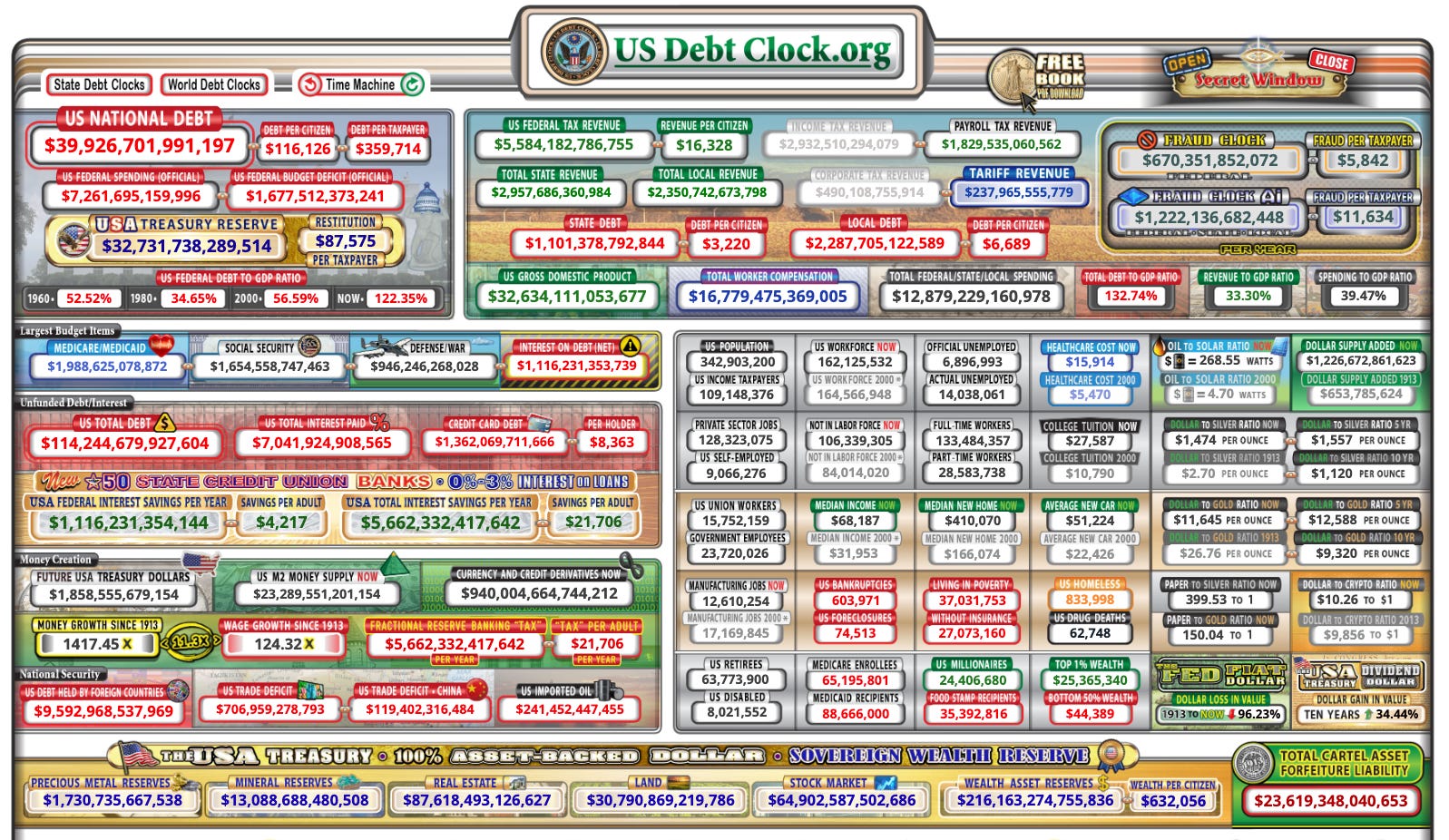
The asset class of US Treasuries underpins the functioning of today’s financial system. It also serves as a benchmark for credit creation, as the risk to lend to the US government is historically low.
There are a few very tough pills to swallow in Treasury land, but it doesn’t have anything to do with the fall of the Roman Empire, per se.
It is very easy to point at Ancient Rome and draw parallels to the United States. Overseas bases, currency dilution, and debt burdens. But does that mean the USA is falling? I strongly argue no; the United States is not in some grand decline.
HOWEVER, the United States fiscal and monetary outlook is perilous when it comes to asset holders. The country is doing well on an economic front, struggles with polarity in domestic politics, but overall is in great shape relative to the rest of the world. Remember that people vote with their pockets and their feet, and the desire to invest in the United States, hire American workers, buy American technology products, and move to the United States for the pursuit of happiness has never been stronger, globally. This is not what the fall of Rome looked like, and to be very candid, I think comparisons to this period might be fun but are not helpful when trying to figure out how to invest. Buying US equities has been the most obvious investment strategy over the post-pandemic era, yet droning on about the debt-to-GDP ratios and sky-high nominal interest outlays hasn’t helped you invest.
That’s why we don’t follow a debt-tracking methodology. Instead, we rely on our understanding of the credit system, its size, and its stability to figure out how to invest.
Essentially, when credit is growing, you find the places where capital is going and most productive. This is, today, your average US tech giant.
When credit is shrinking, sometimes US T-bills are the only place to find safety.
Bitcoin operates at the margin of this credit flow, or Liquidity as we like to describe it. It has a long-term growth path, while cycling up and down based on global Liquidity conditions.
Over-obsessing about the US fiscal picture prevents you from observing the trends in available credit relative to the demand for credit. And this simple balance between borrowers and lenders is where we live, and what we try to deliver to you.
The United States is a giant, and for it to survive, it must continue to tap the bond market. Buyers will be there, even if they are manufactured through a combination of the Federal Reserve, JP Morgan, and US dollar stablecoins. It is the expansion of credit that will accompany such a move, a Liquidity flow that affects real assets, paper assets, and future cash flows in unique and interesting ways.
Higher rates have become a reality, and we as a world are adjusting to it. Every country’s bond yields are on the rise because real growth in the economy is higher, issuance is going up, and the market must adjust to strike a balance between supply and demand.
TBL Liquidity is meant to measure this flow and tell you when things are going well and when they are not.
Our TBL Liquidity Framework Lives Here
We all know how much money is being poured into model development, AI inference, chip manufacturing, power plants, and every component within Jensen Huang’s five-layer cake of the AI revolution.
Trillions of dollars are being borrowed for this expansion, and we are certain that this boom will end in a bubble that blows many valuations way out of proportion. Amazon went down 90% during the dot-com bust, while that move is now laughable for anybody capable of holding for 2 additional decades.
If AI credit confidence continues, credit spreads won’t widen. It is only when they widen that we can see damage being done to investors. While spreads have moved higher and insurance against Nvidia bonds becomes more expensive, we have to put overall credit spreads in context of financial crises.
To say the least, credit risk is historically muted. This is possibly the most important chart in the world because it can tell you when risk has gotten out of hand.
This chart also explains why Treasury yields and other government bond yields around the world continue to rise. Corporates are able to borrow whatever they want, making the US Treasury face competition for funding unlike any time in its history. It is not surprising at all to see Treasury yields rise when tech giants are issuing trillions; the credit is too attractive at any yield above that of sovereign nations.
Corporates have mostly had debt ratios that are underlevered, making this move to issue an obvious one. And here is what you have to understand about the game theory when it comes to the AI revolution and credit creation. If any single company refuses to hit the bond market and not borrow, it is guaranteed to lose to its competitor that is borrowing for capex. Guaranteed.
This means that all these tech giants must borrow or die.
This also means that one day they will cross the line of borrowing too much, and I know for certain that credit spreads will be the metric to watch on that front.
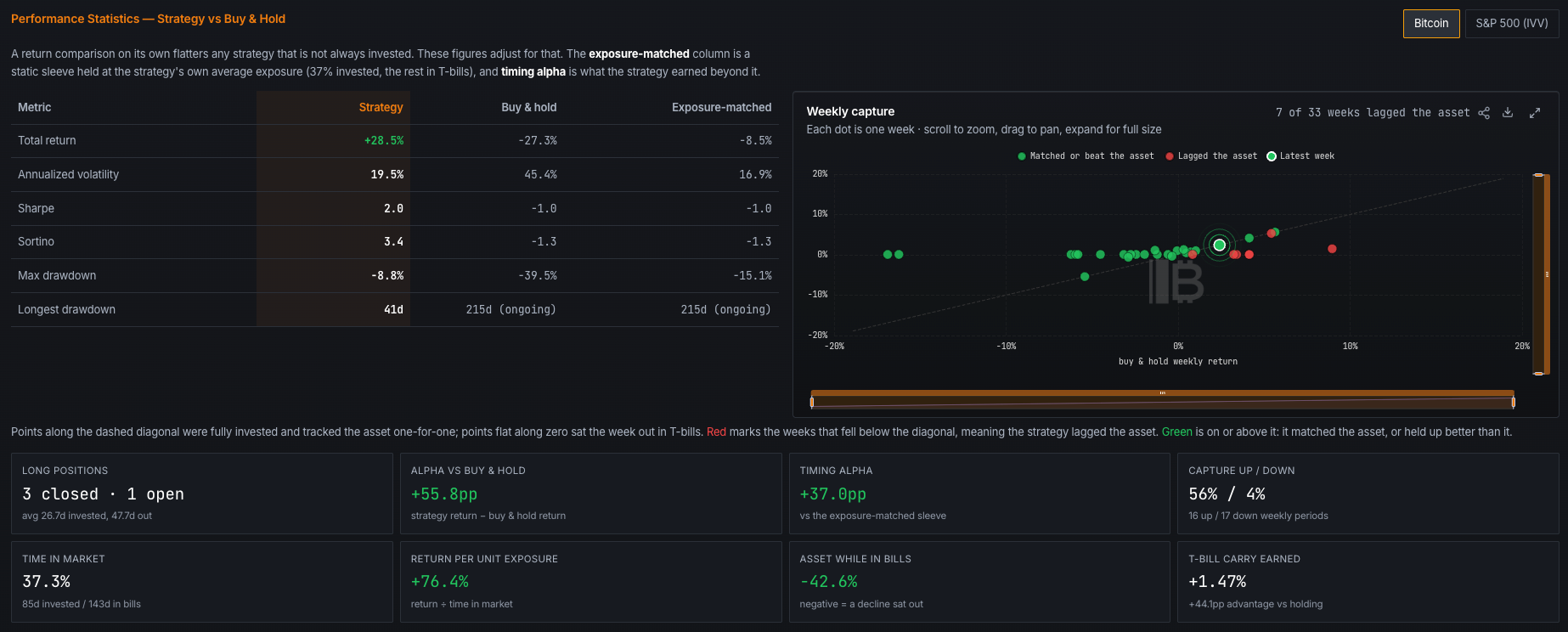
TBL Liquidity Indicator is our bread and butter in terms of your portfolio. Oscillating between BUY and SELL based on changes in Liquidity (from how we measure it), this simple-to-read indicator has been a source of signal and outperformance in 2026. As a TBL Pro, you’ll get the information at the same time we do, courtesy of our incredible data terminal TBL Pulse. As of earlier this month, TBL Liquidity Indicator is back in the BUY zone, and we are eager to see how long this current Green Dot will last.
This is a setup for understanding what we do at TBL and what our goals are. Simply, our goal is to help your portfolio without selling you an investment product or a narrative. Own bitcoin, yes, but don’t just treat it as 100% bitcoin, long only. Actively managing a bitcoin-centric portfolio around credit cycles and behavioral swings can genuinely help you achieve more robust portfolio returns.
Disclaimer
The TBL Model Portfolio, TBL Liquidity Indicator, and all TBL research outputs reflect Nik Bhatia and team’s analytical positioning for the macro and bitcoin environment. They are published for educational purposes only and are not investment advice, not a solicitation to buy or sell securities, and not a recommendation tailored to any individual’s portfolio. The Bitcoin Layer is not a registered investment advisor and does not manage client money. Please consult a professional financial advisor and conduct independent due diligence before making investment decisions.
Comments
Nothing yet. Say the first thing.
Sign in to join the conversation.