
While they matter less than product-market-fit, unit economics, or go-to-market strategy, a start-up’s name and brand identity remain very important assets. Especially if you believe they might influence - directly or indirectly - its ability to raise funding. So as we wait for the H1 numbers, we thought we’d do something a bit lighter and have a look at our database in search for the optimal way to name your future African unicorn…
The first letter. Since 2019, the most “successful” first letter in terms of funding raised is M (as in MNT-Halan, M-Kopa, Moove or Moniepoint*). The M-starters have claimed almost 1 in 6 dollars raised on the continent ($3.2b) during the period. As a reminder, there are 26 letters in the alphabet ;). The runner-up is S (as in Spiro, Swvl or Sun King) with 1 in 8 dollars, followed by T, C, O, and A. In terms of number of ventures raising, it’s S, A and C that make the top 3, with M coming fourth. If you want to avoid underperforming first letters, we’d recommend staying away from X or Q as those only attracted less than 1 in $1,500 and $700 raised respectively.
The length. Once you have a first letter, how many do you add? Well, 69% of the funding that has been raised on the continent over the period went to start-ups with a name between 4 and 8 characters, from Opay to Andela to TymeBank. Any shorter than that and you fall off the radar as less than 1% of funding has gone to ventures with a name 3 letters or less. Beyond 8 characters, it is pretty much a bell curve though 11-letter names performed abnormally well, driven by Interswitch, Flutterwave or Chipper Cash in particular.
The letters inside. And then to fill in the rest, you’ll need 2 core ingredients:
Vowels. A is a must, as it appears in the name of start-ups who attracted two thirds of the money since 2019. Then come E (47%), O (43%) and I (41%). U is far less represented (22%), and so is Y (19%). And yes, I’m team Y-is-a-vowel.
Consonants. There is more choice there of course, but you’d be inspired to pick at least an N (42%), and some of those: T (39%), L (37%), R (34%) or M (33%). And you can probably pass on Z, X, J and Q (all less than 4%).
The other stuff. If you feel quirky and want to throw in a number or a special character, I would stick with an hyphen as in MNT-Halan or a dot as in d.light, that show up in the names of start-ups responsible for 9% and 4% of the funding raised respectively. Numbers won’t get you very far though (unless you’re Planet42 maybe).
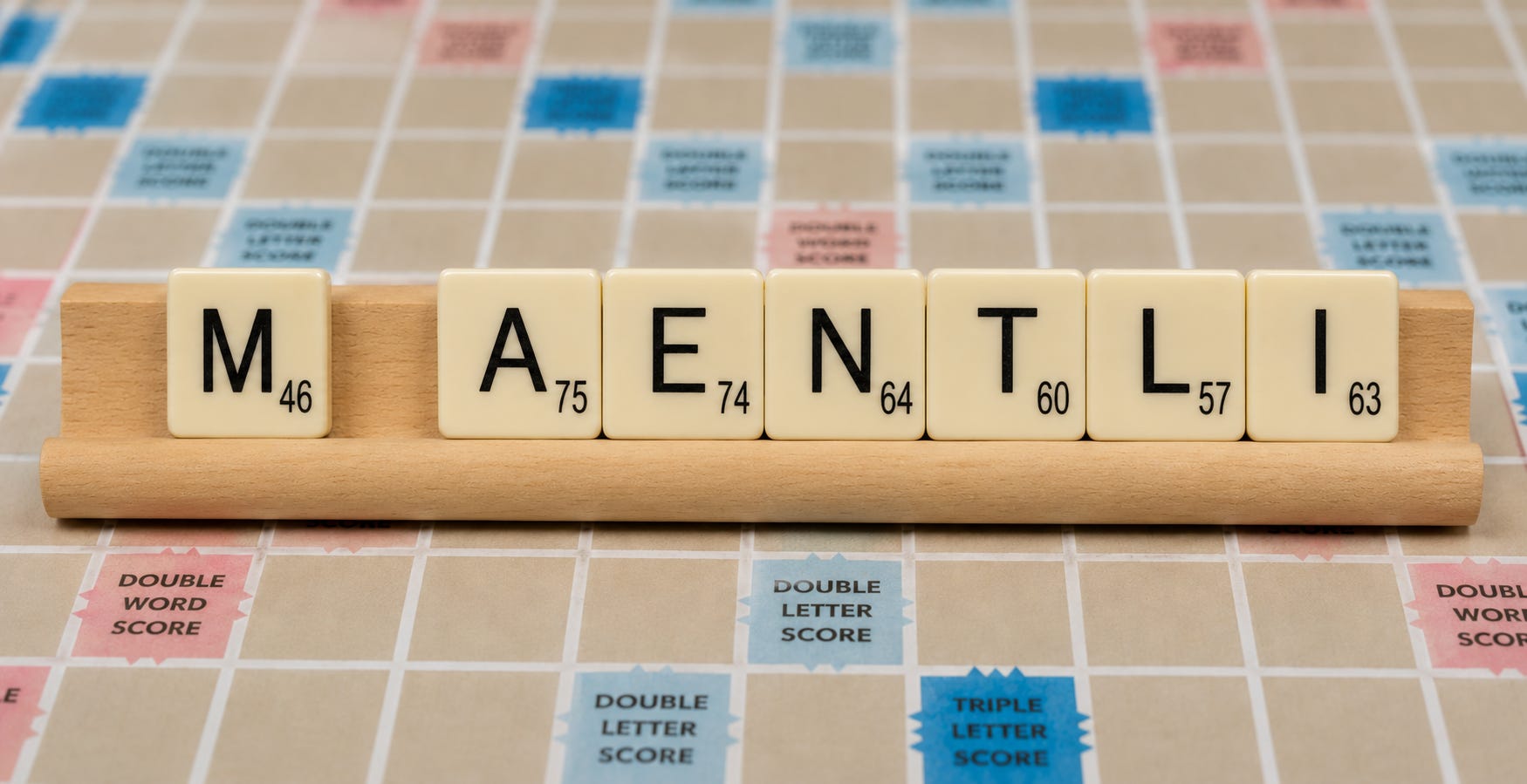
Now if we throw all of this in our Scrabble tiles bag and try and combine the elements above (i.e. start with an M + pick 3 each of the most represented vowels and consonants + limit ourselves to 8 letters max), my money is on either melt.ai or mental.ai. They tick all our boxes, and steal the game with a snazzy “.ai” ending. That’s it. I’ve done the hard part. Now up to you to define what the business does, and to build it. Except the domain names seem to be taken, so someone might already be on it…
*But remember, while a later-stage rebranding exercise can be expensive and tricky, a name change is always in the cards, and if your business is successful, the market - and the money - will follow you, whether you’re a TeamApt or a Moniepoint ;)
As always, the underlying data is pulled from our Africa: The Big Deal database which includes 4,200+ deals since 2019 worth over $20 billion, and and additional 220+ exits. If you want to stress-test your own “naming theory”, or do more serious analysis (by sector, geography, founding year or number of founders for instance), the extensive raw data allows you to do just that. And if you use this link, you even get a discount. A bientôt, Max
Comments
Nothing yet. Say the first thing.
Sign in to join the conversation.