
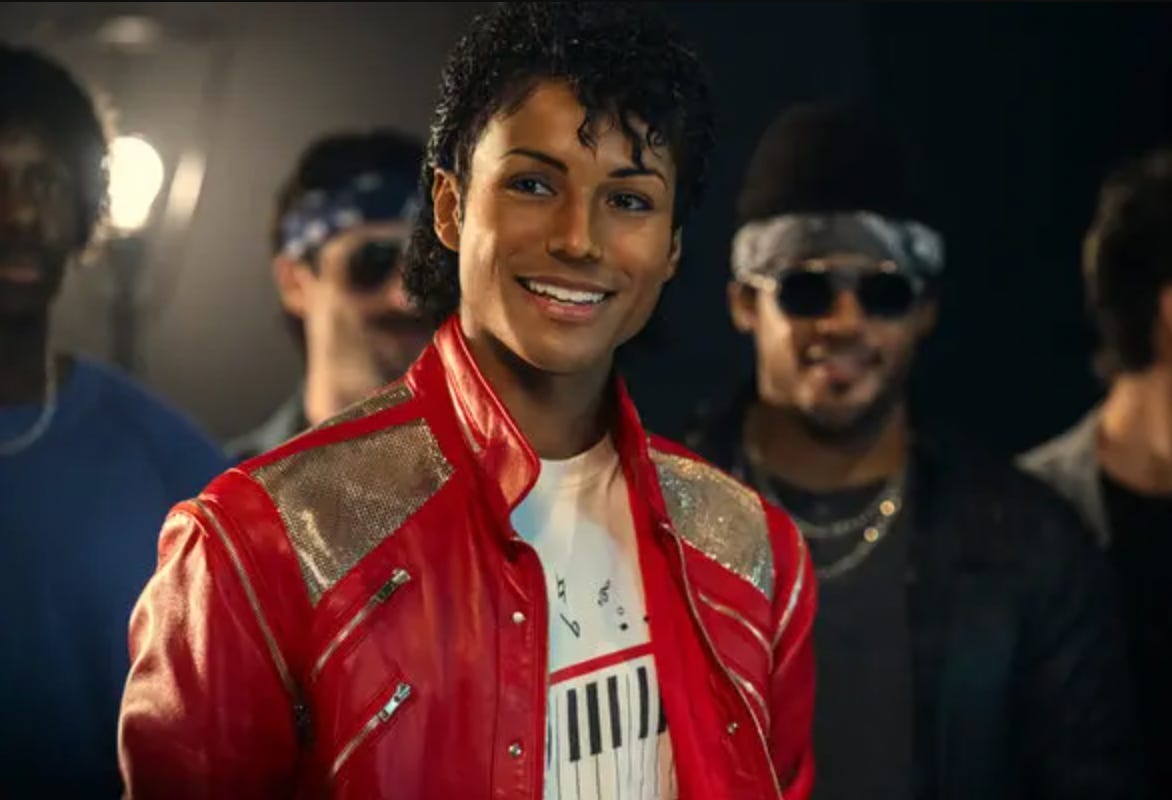
A Personal Anecdote: In early 2020, during the final planning stages of our wedding, my wife and I met with the DJ to discuss which musicians and songs we wanted played during the ceremony, cocktail hour, and reception.
Our DJ had compiled a list of questions that he covered with all his clients, one of which went something like, “Am I allowed to play Michael Jackson?” The rationale behind the inclusion of this question was obvious to everyone: Michael Jackson had been repeatedly accused of manipulating, drugging, and sexually abusing multiple underage boys in the years leading to his death, in 2009, and certain couples would justifiably take serious offense to hearing his music on their wedding day.
My wife and I were not one of these couples. In a moment that cemented our union as much as our vows, rings, or marriage certificate, we told the DJ, “You will be fired if you don’t play Michael Jackson.” (Our Must Play was “P.Y.T.”) You are welcome to keep this anecdote in mind as you read the following review of Antoine Fuqua’s Michael.
In “Michael Jackson Cast a Spell. Leaving Neverland Breaks It,” his essay whose publication coincided with the release of the bombshell 2021 documentary about Michael Jackson’s accusers, Wesley Morris writes about coming of age in a cultural landscape reigned over by the King of Pop. Midway through the piece, Morris describes the omnipresent pervasiveness of Jackson’s image and influence during the 1980s, specifically the musician’s consciousness-shaping effects on Morris as a young gay black man, a super-fan whose subjective idolization would evolve into the more mature, informed, and objective perspective of the professional critic. The paragraph below, about Morris’s boyhood infatuation with Thriller, is quoted in its entirety:
NOBODY BOUGHT MORE Michael Jackson vinyl LPs than [my family] did of “Thriller.” The euphoria for anything associated with that album was cross-racial and intergenerational. Upon visiting anybody’s house, I’d ask if they had a copy. If the answer was “no,” I’d turn into a 1980s sitcom kid and say something like, “What is your problem?” (I would have been 7, 8 or 9.) If the answer was “yes,” I’d ask to play it, and while it was on, I’d lie on the floor and take long drags on the album’s inside photo: Jackson, in a white suit, lying on his side, one leg bent, looking at us. On the knee of his bent leg is a tiger — a tiger cub. I stared with deep longing. He was so pretty, with his absurd curls and isosceles triangle of a nose and creamy brown face. I’m calling it a photo when, really, it was a centerfold. But what did I want from that picture? What did I want from Jackson? Friendship? A handshake? A souvenir? A hug?
The key to this passage’s power is tucked within that brief parenthetical a few sentences in, the aside explaining how Morris would have been “7, 8, or 9” during this memorable interaction with the dust jacket of Thriller. Morris’s word choices, without laying it on too thick, cement the paragraph as a description of his prepubescent sexual awakening. He begins the passage as an “80s sitcom kid,” and ends it as an emergent adult consciousness, someone for whom Jackson has sparked those first initial thoughts of sexual desire and romantic fantasy. By the time Morris has compared the photo of Jackson to a “centerfold,” the complex, very human irony underlying his writing gets laid bare: When he was the same peak-molestability age as Jackson’s supposed victims, Morris was pining and longing for Michael Jackson, the man who was (until recently) the world’s most notorious likely pedophile.
Only a handful of the scenes in Michael, Antoine Fuqua’s music biopic about Jackson’s rise to global superstardom, offer more than a passing glance at these types of nuances and contradictions. Nor does the film put forth a sustained effort to interrogate how the relationship between Jackson and his fandom, mutually obsessive and self-warping, was every bit as singular and fascinating as the songs he wrote and performed. Arguably, that textual richness fails to coalesce because of the widely reported on third-act reshoots, which, due to stipulations in one of Jackson’s old legal settlements, cut every mention of the child abuse allegations out of film completely.
Many of the reviews of Michael have zeroed in on the glaring absence of his court trials from the proceedings, with certain critics weaponizing the fact of the reshoots to conceal the insubstantial shoddiness of their interpretations and analysis. In his review for Salon, Coleman Spilde describes Michael as a “self-evident, self-sustaining, self-indulgent piece of PR.” Eileen Jones, writing for Jacobin, claims that “Michael is even lower than the average successful biopic — more cynically dishonest, more rote in its formulaic box-checking.” Spencer Kornhaber in The Atlantic: “…the movie gives up and turns to total sanctification.” Walter Chaw: “Failing the honesty test, Michael fails the ‘portrait of the artist’ test as well.” “Dumb as it is,” Abby Olsese writes, “this film relies on the belief that the audience is even dumber.”
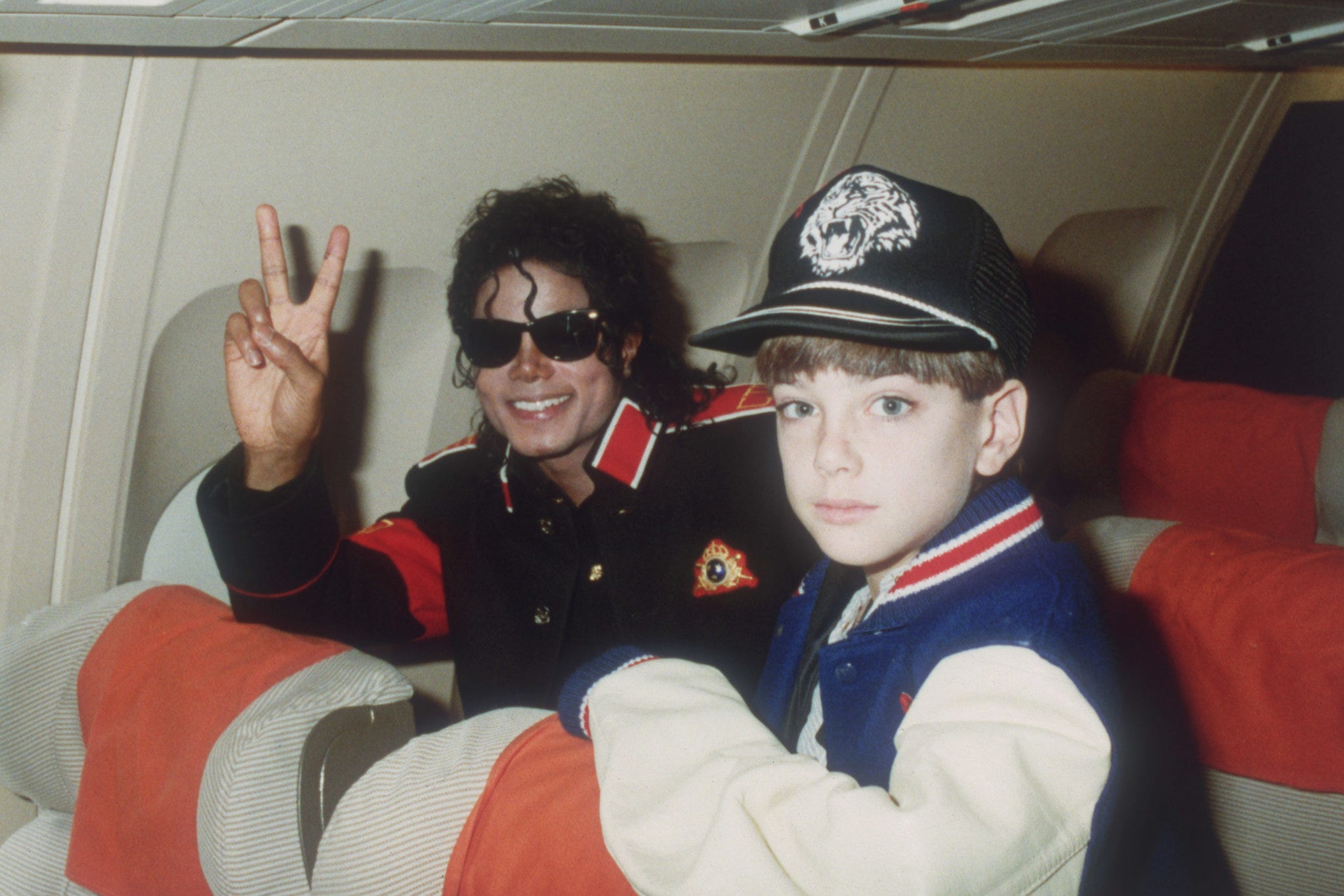
With all due respect to these fine critics, doesn’t their shared line of critique, the presumption that viewers are incapable of bringing outside context with them into their showing of Michael, kinda assume that audiences are stupid? Can the omission of Jackson’s court cases from the film proper not function as an animating absence, a boiling-under-the-surface subtext whose imperfect concealment mirrors how Jackson’s outwardly sexual and heteronormative music and videos often doubled as admissions of his inner turmoil, repression, and tortuous guilt? In 2026, does anybody explicitly need to be told or reminded that Michael Jackson almost definitely was a pedophile as, on-screen, he visits sick boys in the hospital and reduces others to tears at his sold-out concerts? Is it not a little dumb to assume people are that dumb?
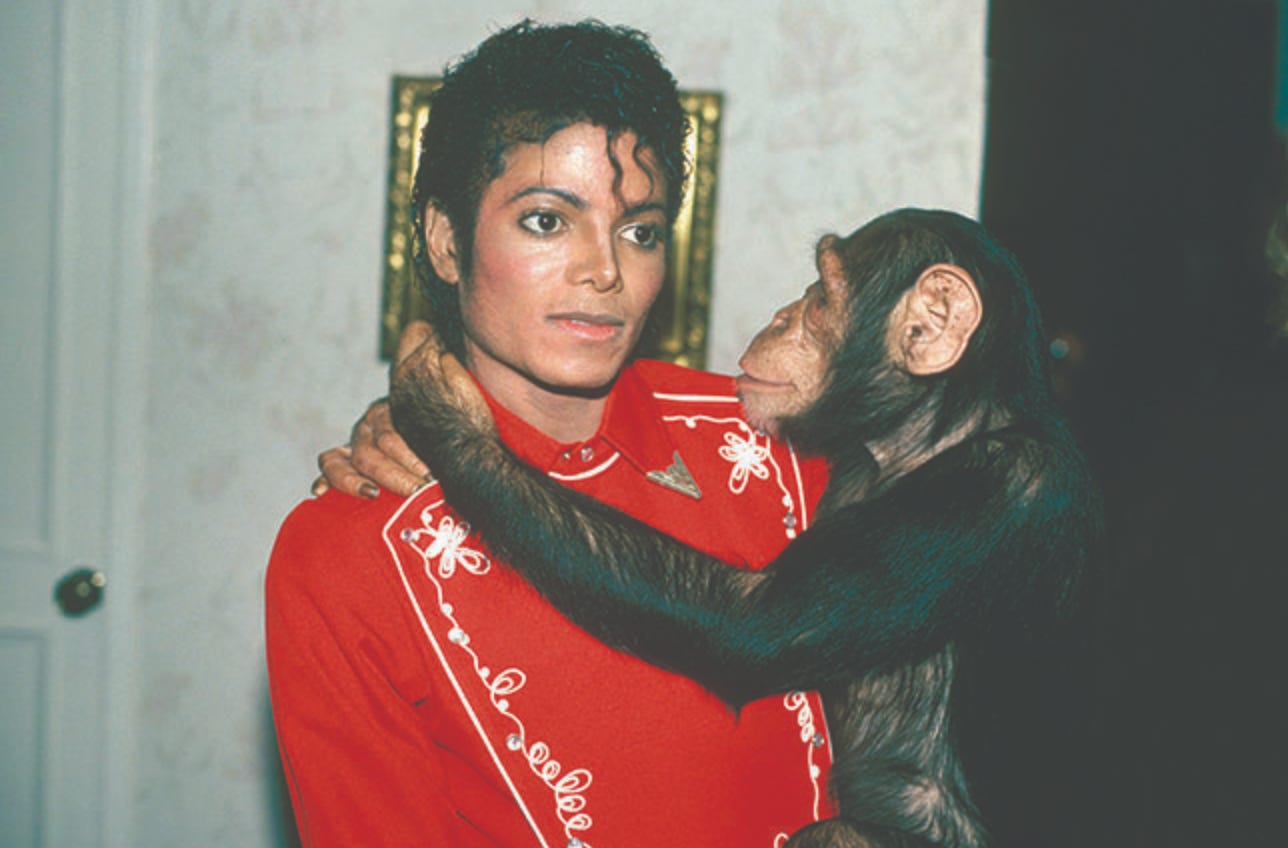
The assertion that Michael is a brazen cash-in PR narrative reset, a work of cynical hagiography micro-managed by his greedy surviving family members, also feels at odds with a lot of the movie’s actual content. As played by Jackson’s real-life nephew, Jafar, Michael is depicted off-stage as either profoundly weird or deeply annoying, the one isolated loner amongst a houseful of super-close siblings. If anything, the film operates as a platform for the Jacksons to sweetly troll Michael as only brothers and sisters can. Michael’s best friend is a pet rat—until he adopts a pet chimpanzee. He improvises hooks for Thriller while walking his llama around Encino at night, and turns down invitations to go out clubbing with his brothers to stay in and watch black-and-white movies with their mother. As it turns out, even the most whitewashed, focus-grouped, cherry-picked, legal-teamed treatment of Michael Jackson’s story will still be about Michael Jackson, the visionary and the monster.
If video game adaptations and music biopics are to this current decade what superhero blockbusters were to the last one, then Michael presents two simultaneous origin stories, one for an era-defining popstar, the other for an unrepentant pedophile. And that’s as it should be, since that dichotomous tension, that fusion of irresistible attraction and visceral repulsion, was the truth of Jackson as a person and an artist. Like every stranger-than-fiction beat of his biography, like the ecstatic exuberance of his singing and the depressing sideshow of his plastic surgery, Michael captures how a central facet of Jackson’s genius was how he could sublimate the pain and self-disgust and loneliness of his private life to inspire joy and connection (and cognitive dissonance) on the largest conceivable stage.
What the discourse that surrounds “separating the art from the artist” tends to ignore is that there are levels of aesthetic engagement that are solely accessible when you accept that a beloved artist is just another human being, victim and abuser, citizen and criminal. In truth, honestly appreciating and loving Michael Jackson and his music might now depend on acknowledging that, behind closed doors, he was committing the most heinous inhuman acts conceivable to children who worshiped and trusted him. Mustering the intellectual and emotional maturity required to hold these contrasting pictures of Jackson in the mind is difficult—and necessary. So, would you want “P.Y.T” played at your wedding, or are you a good person? And what pleasures and revelations have you denied yourself by engaging with art and life on those reductive binary terms?
By virtue of its constraints, Michael has no choice but to let the subtext of Jackson’s dark side speak. Though it was financed and produced by his family, the individuals most incentivized to delete the allegations against Michael Jackson from the collective memory, the reshot third act concludes with two overlong back-to-back musical performances that highlight his flawed character in terms so clear that even a professional film critic can understand them. The first song is “HUMAN NATURE.” The next one is “BAD.” The lyrics to the chorus of that concluding song may not read like timeless tragic poetry, but they feel like it when they’re sung by a man who couldn’t like or change what he saw in the mirror, a roundly accused pedophile who evaded criminal punishment just long enough to ingest a lethal overdose of painkillers:
You know I'm bad, I'm bad (Bad, bad)
You know it, ah (Really, really bad)
You know I'm bad, I'm bad, shamone (Bad, bad)
You know (Really, really bad)
Comments
Nothing yet. Say the first thing.
Sign in to join the conversation.