
a Trendency and B|E Brief feature
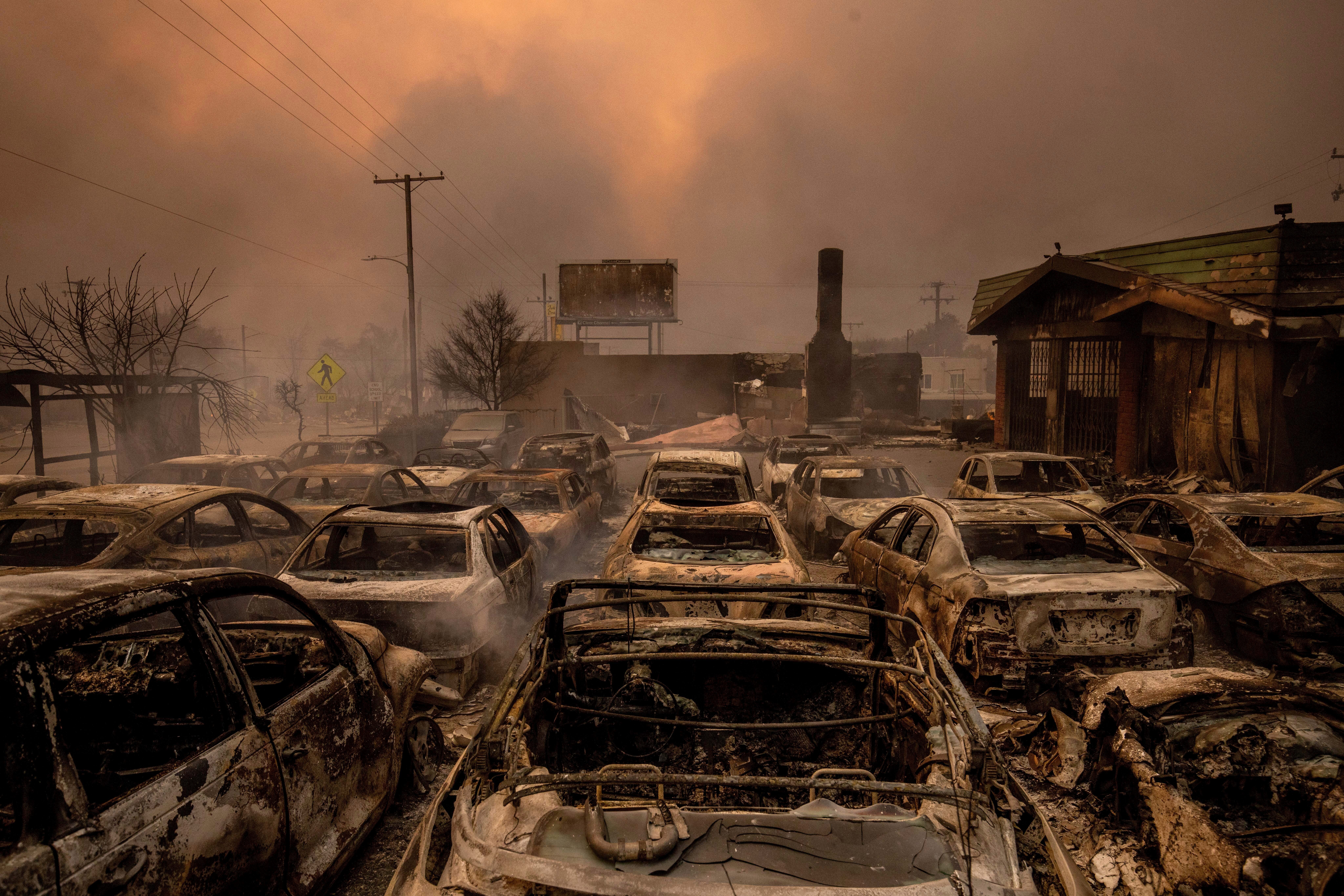
Every time a hurricane, wildfire, or flood makes headlines, there's a familiar debate that follows: how much of this is climate change, and how much is just stuff that happens? This can also include disastrous heat waves, which end up causing the loss of life and major impacts on infrastructure: High heat events trigger wildfires, affecting infrastructure such as housing, roadways, runways, causing the buckling of railways, power outages and threats to populations. Following the last record-breaking year, "the contiguous United States sizzled to its hottest month ever last month, according to the National Oceanic and Atmospheric Administration,” reports the Associated Press. “July averaged 76.89 degrees Fahrenheit (24.94 degrees Celsius) across the Lower 48 states, eclipsing the Dust Bowl’s July 1936 by an eighth of a degree. Records go back to 1895.”
Trendency put it to our national panel and let people split 100 points between the two. The overall answer: Basically a coin flip, 49-49. What's more interesting is where that split holds steady, and where it completely falls apart. Age and race turn out to barely matter here. Party affiliation, on the other hand, tells the story you'd expect.
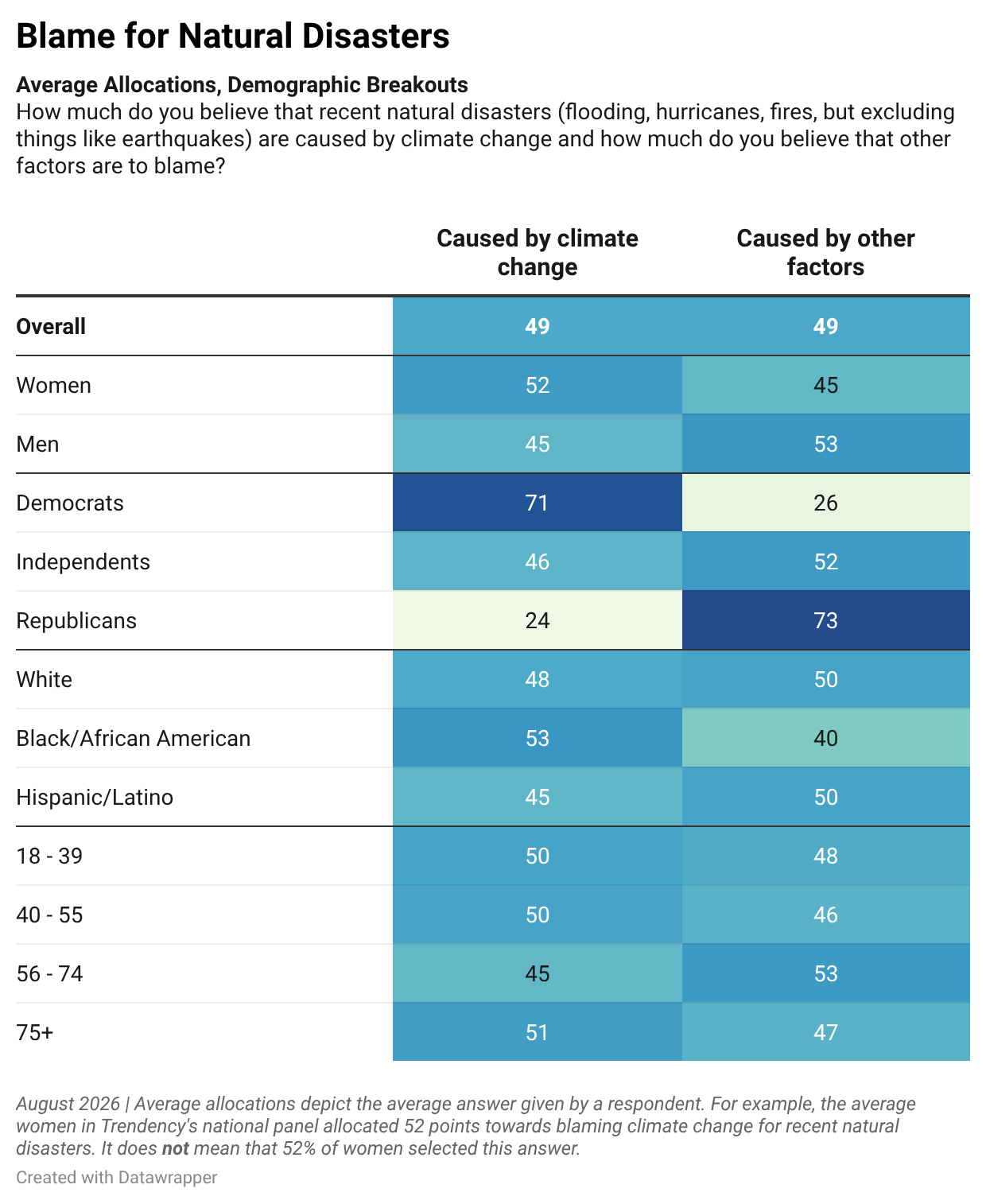
Age and race barely move the needle. Every age bracket and racial group lands within a few points of the 49-49 overall split, whether you're 18 or 75+, Black, White, or Latino/Hispanic, suggesting this belief has little to do with demographic experience.
Party affiliation is the story, and it's about as predictable as it gets. Democrats allocate an average of 71 points on climate change while Republicans put just 24, a 47-point gap that dwarfs every other split in the data. Not exactly a shocker.
Gender shows a modest but real gap. Women lean slightly more toward blaming climate change (52) than men (45); a 7-point difference, but nowhere near the partisan chasm.
Data centers are, in some ways, similar to climate crisis features in that they also create environmental impacts, according to experts. The power generating centers sustaining the rapid evolution of AI present an array of problematic footprints: Huge electricity consumption, excessive utilization of fresh water, air pollution, heavy heat emission, electronic waste, and the fear of environmental consequences on neighboring communities.
It’s viewed as an environmental threat, which typically prompts major splits across the political spectrum. Yet, interestingly, there’s some consensus along certain categories on this particular issue that you don’t find on climate crisis, according to a recent YouGov survey …
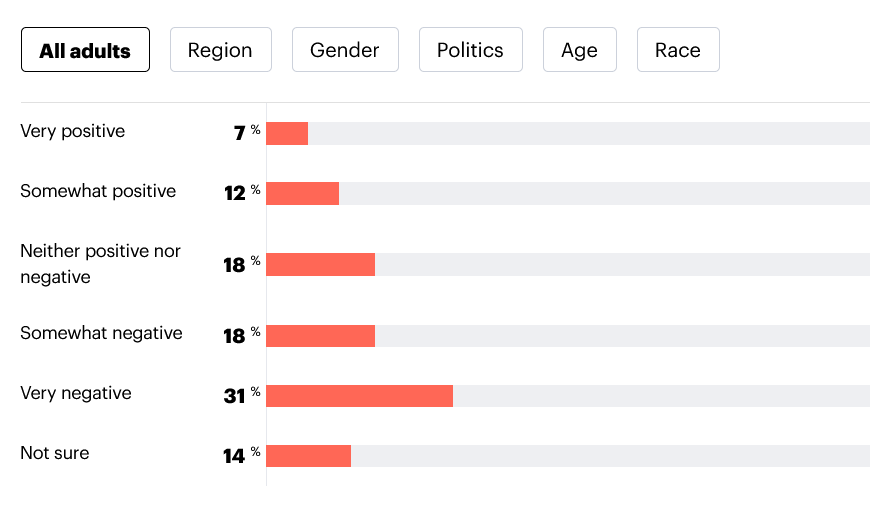
Overall, more adults find data centers more negative than positive …
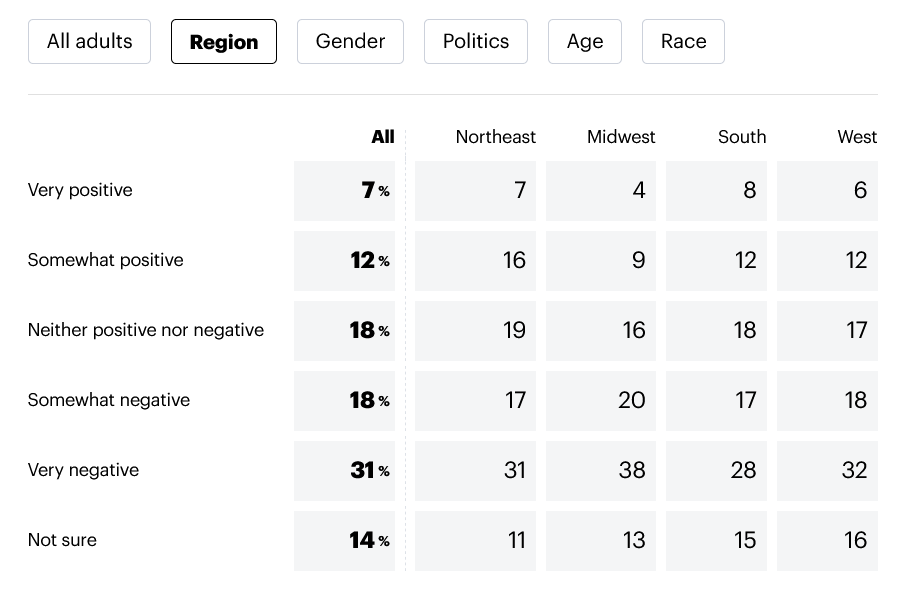
There are also pluralities against data centers by region …
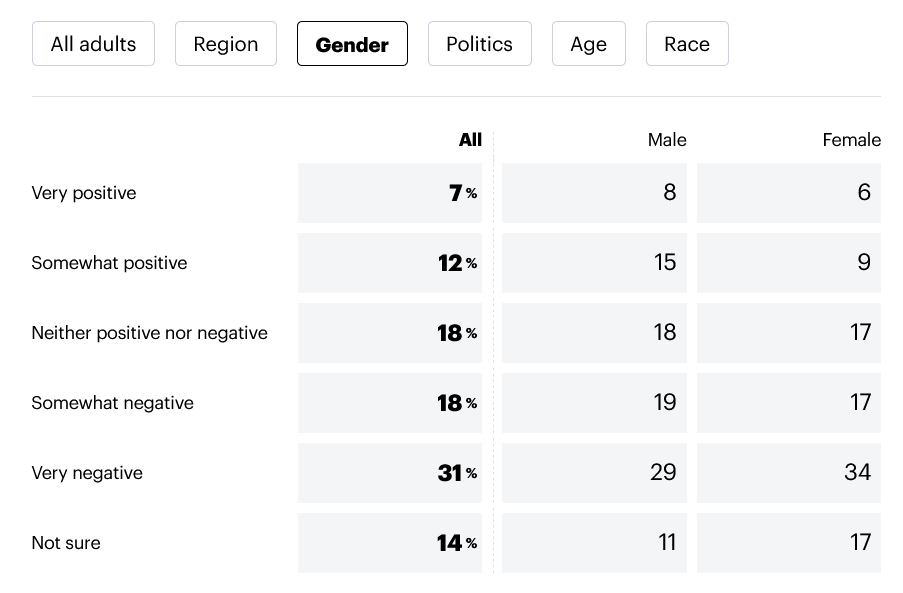
More women than men are against data centers, but there is still a plurality of either group responding negatively …
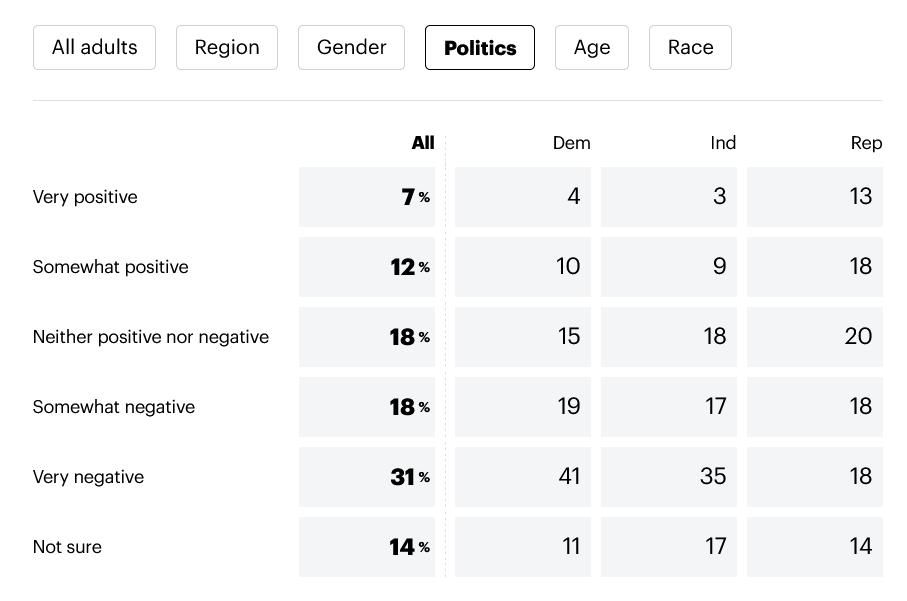
When examining the response by party, there is - surprisingly - a slight majority of Republicans against data centers than for them. That’s the first we’ve seen Republicans developing a plurality of concern for an environmental issue …
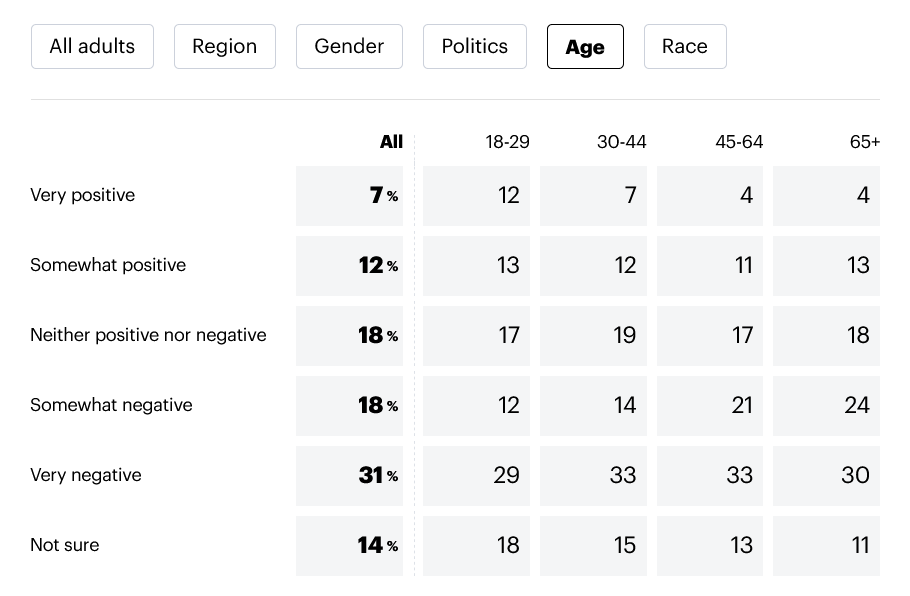
As adults get older, they become much more resistant to data centers. The age bracket less resistant is 18-29, which is peculiar given young people’s anxiety over AI’s future economic impacts …
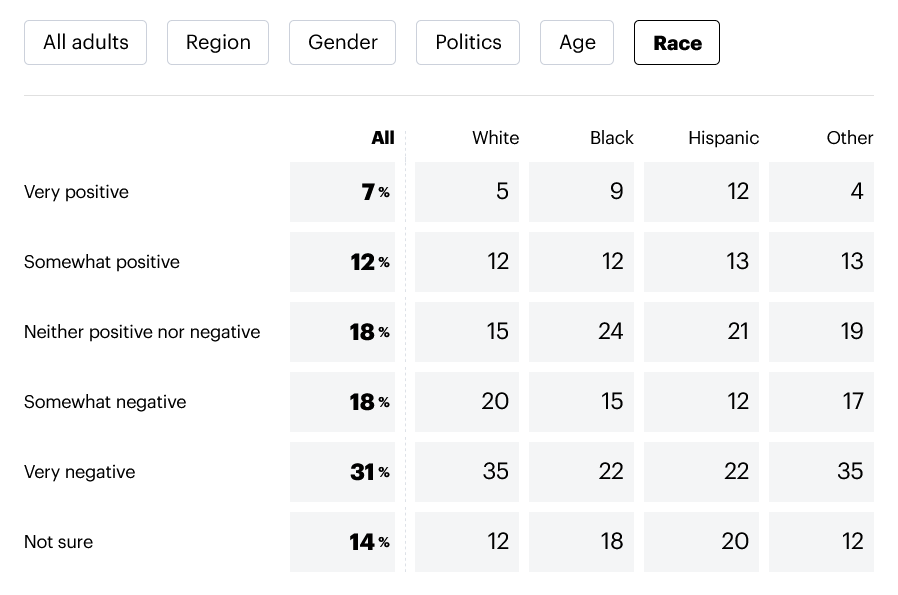
By race, the results are interesting. A majority of whites are against data centers compared to fewer Black and Hispanic respondents. What accounts for that? News coverage increasingly reports growing African American resistance against data centers due to cost and environmental impact concerns. Yet, the polling above shows a different story. It could be that big tech companies building data centers are promising jobs and economic growth for Black communities in exchange for support. In addition, tech companies are hiring from Hispanic communities for the construction labor needed to build data centers.
Overall, there’s less consensus on climate crisis than on the overwhelming perception of data centers’, presumably, negative impacts. This is the case when data centers, reportedly, contribute to climate crisis through heat emissions, a draw on power grids (as those grids are strained by residential electricity use during heat waves) and heavy use of water. The data center debate, usually viewed through environmental NIMBY-ism, just hits differently than climate crisis for a variety. It’s worth further exploration.

Comments
Nothing yet. Say the first thing.
Sign in to join the conversation.