
Since 2010, The Bengal Stripe has mostly existed as words and moodboard images. Thousands of them, in fact.
Essays about tailoring, denim, history, military clothing, shoes, sweaters, and all the strange little corners of menswear that seem insignificant until you realize they shape how we get dressed every morning.
I’ve always hoped the publication would eventually become something more than that. Not a clothing brand in the traditional sense, but an outlet for thoughtfully made objects—pieces that reflect the same values I write about every month. Things with stories. Things worth keeping.
Today is the first step toward that.
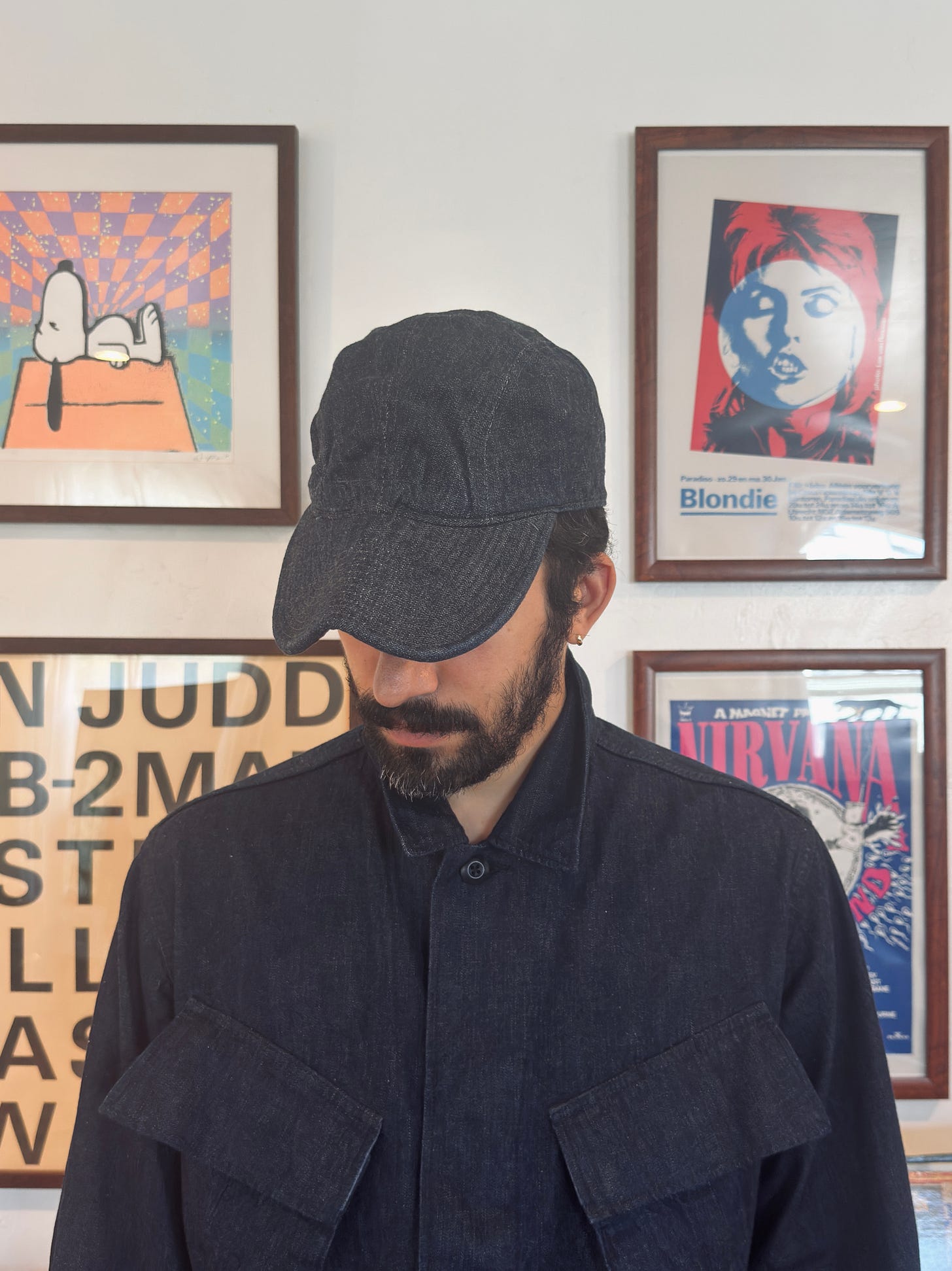
I’m incredibly excited to introduce the second*-ever collaboration from The Bengal Stripe: the Denim Hell Cat, made with my friend John Tesoriero of Papa Nui Cap Co.
*Technically, the first was a tiger’s eye beaded bracelet I made with my friend Amardeep back in 2011, but I digress;
If you’ve spent much time around serious vintage collectors, military clothing enthusiasts, or reproduction makers, there’s a good chance you’ve already encountered John’s work—even if you didn’t know his name. He’s one of those rare people whose influence far outweighs his profile.
Long before military reproduction became fashionable, John was painstakingly studying original garments, photographing obscure construction details, tracking down wartime manufacturing techniques, and rebuilding forgotten pieces with an almost archaeological level of care. His work has never been about nostalgia for nostalgia’s sake. It’s about understanding why something existed in the first place, and recreating it honestly. That mindset is something I’ve admired for years.
Over the past few years, John and I found ourselves talking about history and references. What began as conversations about British colonial uniforms somehow drifted into discussions about U.S. Navy workwear, Japanese textiles, vintage denim, obscure military contracts, and, naturally, his hats.
Eventually one of us said the obvious: “We should make one together.” The Denim Hell Cat is the result.
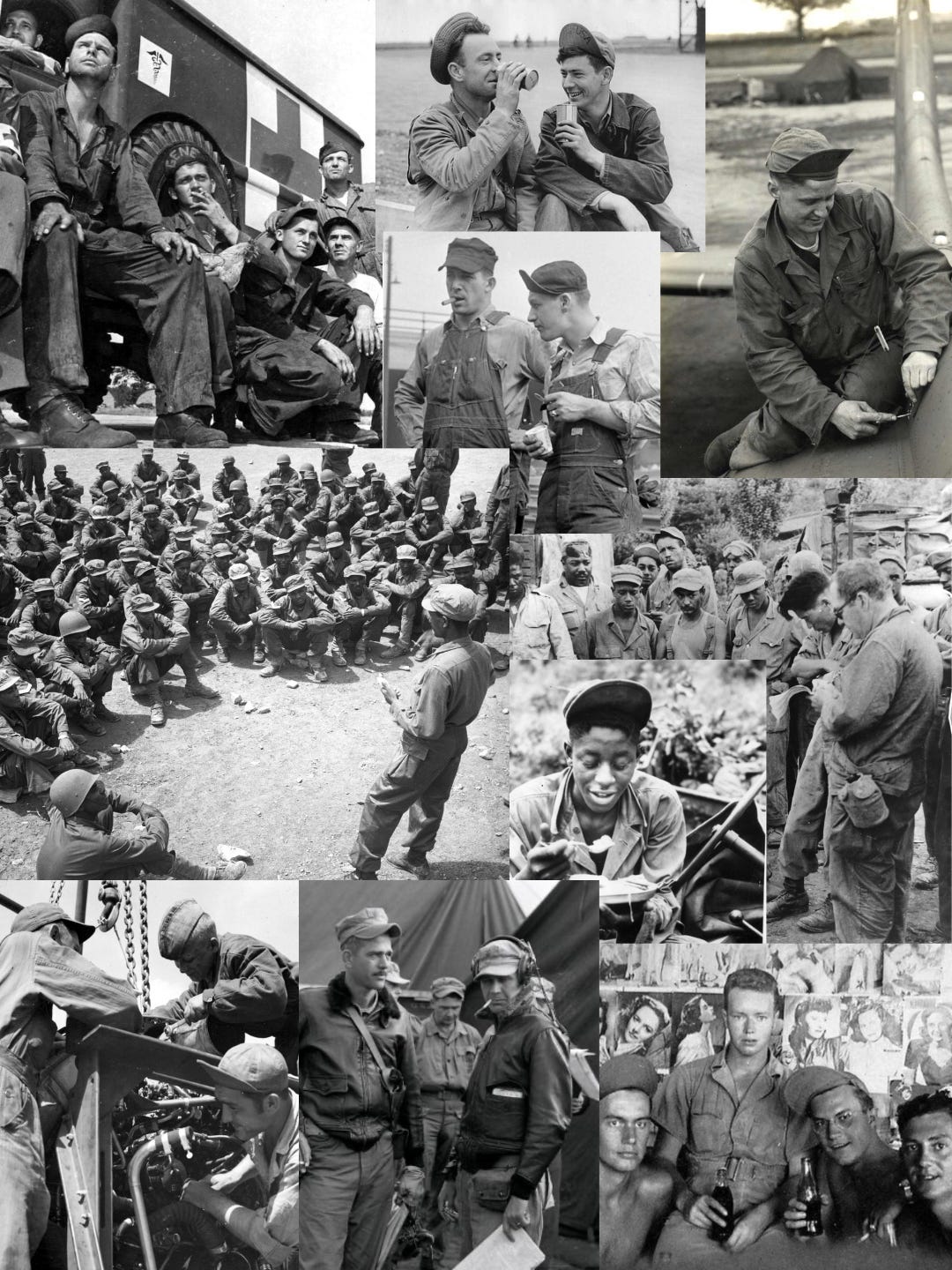
Rather than inventing something entirely new, we started with one of Papa Nui’s signature patterns. The Hell Cat takes its cues from late-war U.S. Navy caps developed for sailors operating in the North Pacific, where the longer brim wasn’t a stylistic flourish but a practical solution. Endless hours beneath the reflected glare of the ocean demanded more protection than earlier naval caps provided. Good military design often looks inevitable in hindsight, and this is one of those examples.
The part I was most excited about was choosing the fabric. Anyone who has read this newsletter for a while knows I have an unhealthy fascination with denim that actually ages well. I didn’t want something that looked vintage on day one. I wanted something that would become beautiful because someone had lived in it. Storytelling is my jam, and nothing tells a better story than a well-worn garment.
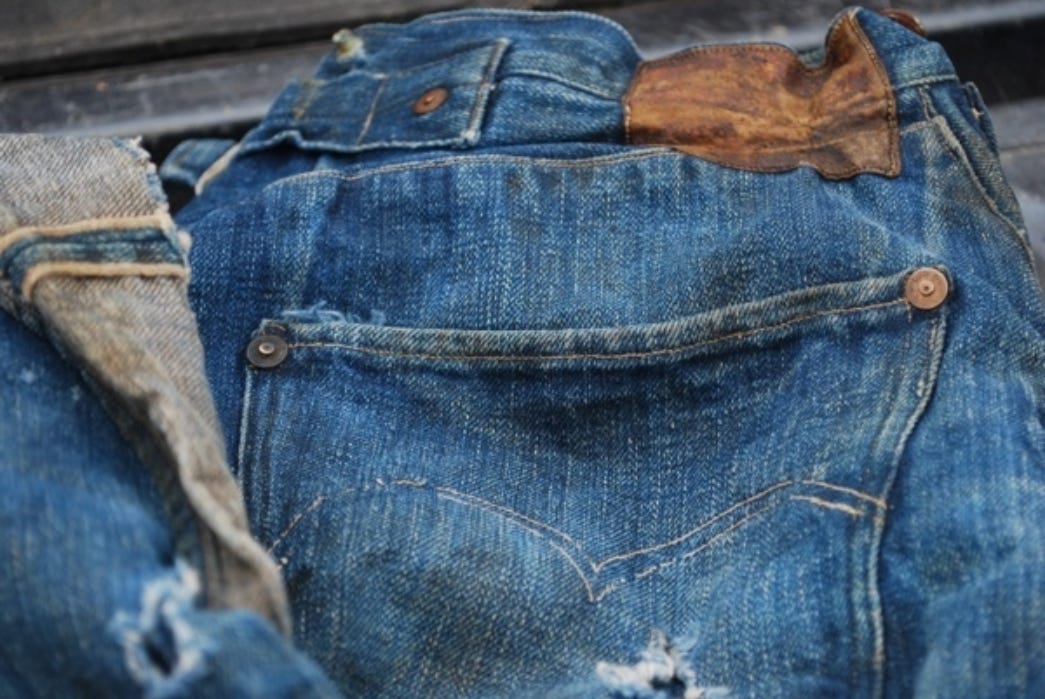
We eventually landed on an extraordinary Japanese reproduction of an 1860s Amoskeag denim, recreated from an original salesman’s swatch book. It’s deeply saturated with indigo, remarkably textured, and already has the sort of irregular character that modern denim mills have spent fortunes trying to imitate. It not only has pedigree, but provenance—a real history.
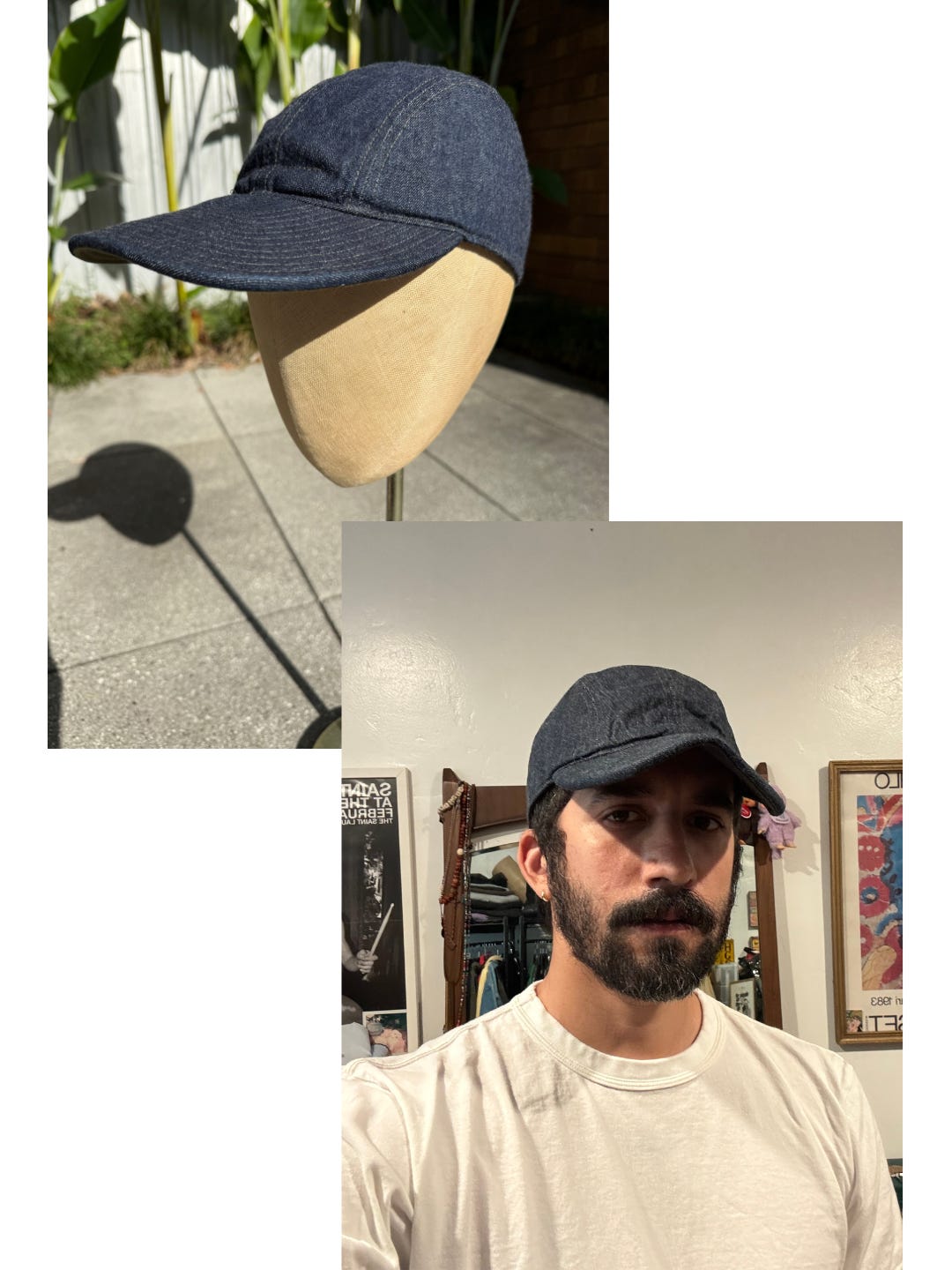
The best part is that it won’t stay this color for long. If you wear it gardening, hiking, traveling, fishing, walking the dog, throwing it into the back seat of your car, or simply grabbing coffee every morning, it’ll slowly become your cap instead of mine (which is what I’m hoping for).
Like everything Papa Nui produces, it’s made in Japan with exceptional attention to detail, from the selvedge sweatband to the duck canvas visor lining. It’s built to be worn hard rather than admired from a shelf. Which has always been the point of all this. For me, this collaboration represents something bigger than a single cap.
It’s the first physical object from The Bengal Stripe, and hopefully the first of many. I’d love to bring together my writing and love for well-made products naturally, and make this a place where the things we discuss every week occasionally become tangible.
I’m incredibly grateful to John for trusting me with his work and for bringing this project to life with the care it deserved. If you happen to grab one, I hope it becomes the cap you instinctively reach for every time you head out the door.
And if, years from now, it’s faded to a soft blue and carrying the marks of your own adventures, we’ll have done our job.
Made in Japan
Japanese reproduction 1860s Amoskeag indigo denim
Papa Nui Hell Cat pattern
Selvedge sweatband
Grey tonal stitching
Grey cotton under visor
Army duck canvas visor lining
Three sizes: Medium (57–58 cm), Large (59–60 cm), X-Large (61–62 cm)
Ships internationally from Australia
Thank you, as always, for reading—and for making projects like this possible.
— Nico
Comments
Nothing yet. Say the first thing.
Sign in to join the conversation.