
By Ari Paul
Donald Trump’s on-again-off-again war against Iran is unpopular with the American public, according to various polls.
While liberal interventionists broke partisan lines to back the Republican administration in the Iraq War, this conflict’s supporters come almost entirely from Trump’s camp.
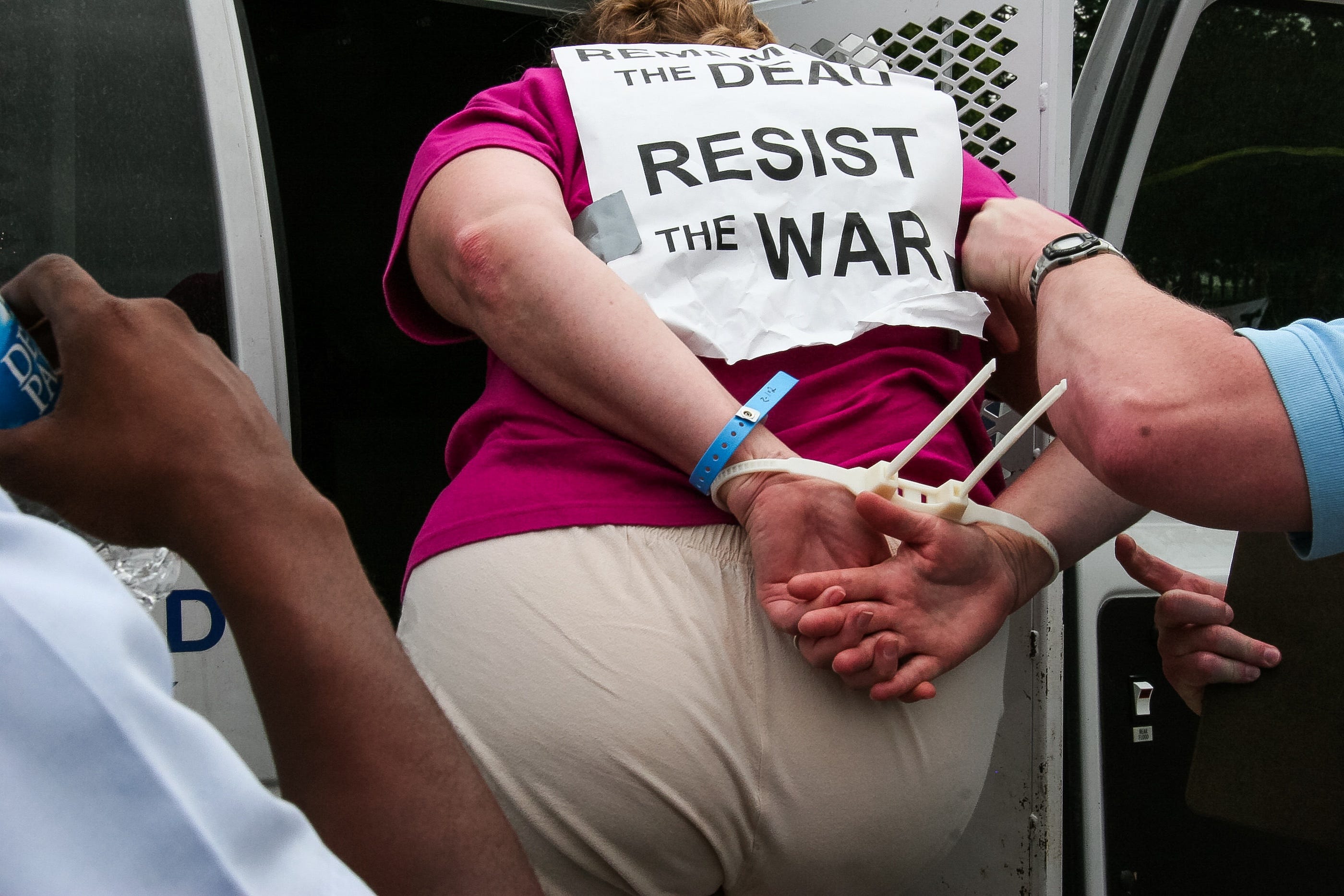
This might spell doom for the Republicans in the midterm elections this fall, but has us all wondering why there is no real antiwar movement.
Reflect on how protestors worldwide reacted two decades ago when US President George W. Bush, along with British Prime Minister Tony Blair, falsely claimed Saddam Hussein possessed “weapons of mass destruction” as justification for invading Iraq.
History.com recalls: On February 15, 2003, millions of people across over 600 cities worldwide [took] to the streets to protest the impending invasion of Iraq. In New York City, approximately 200,000 people gathered in the 25-degree weather to march to the United Nations building, where less than two weeks prior, Secretary of State Colin Powell falsely claimed that Iraq had weapons of mass destruction. In Europe, crowds were even larger: Some three million are said to have demonstrated in Rome and 750,000 in London.
Such a mobilisation, on a single day, eclipsed the movement against the American war in Vietnam, which rocked the nation throughout the 1960s and 1970s.
Joe Volk at the Friends Committee on National Legislation recalled the “Moratorium and Mobilization to end the U.S. War in Vietnam in 1969,” which saw “up to 250,000 nonviolent peace activists to Washington, D.C.” which was “At that time…the largest peace demonstration in our country’s history.”
Yet there has been no mobilisation on this scale against the American-Israeli war against Iran.
Yes, there have been marches and demonstrations. But not with the numbers or sustained energy of these past movements.
One obvious reason is that the US is simply bombing Iran from afar.
As horrible as that is for Iranians and the world economy, Trump hasn’t sent waves of troops to face hell inside the country.
A few American casualties occasionally make headlines, but without large-scale funerals or graphic images of injured veterans, the public remains unaffected.
Compare that with the Vietnam War, when the draft fuelled antiwar protests.
Although Iraq was a volunteer effort, the opposition argued that the neocon war machine exploited working-class people and minority communities as just cannon fodder.
Perhaps more depressing is that both of these antiwar movements didn’t win, leaving people disenchanted.
The radical mobilisations of the 1960s and 1970s accomplished quite a lot when it comes to racial and gender politics and fomenting counter-cultural change.
What they didn’t do was end the war in Vietnam.
In Iraq, these mobilisations not only failed to stop the march to war but also had minimal impact on politics. Bush was re-elected in 2004 with even higher support than in his initial election.
Campus clampdowns on organising in response to the demonstrations against the genocide in Gaza have left colleges, the most fertile ground for antiwar activity, relatively quiet.
The Trump Administration has all but announced a domestic war on left-wing organising.
The reality of the war on Iran is still as grizzly as the details of the Iraqi and Vietnamese conflicts.
“By repeating earlier warnings that the US would deliberately bomb civilian infrastructure in Iran and effectively bring the country to its knees, President Donald Trump has again drawn criticism that he was threatening to commit war crimes,” Bloomberg reported.
Reflecting on an American airstrike on an Iranian elementary school killing more than 120 children, Amnesty International USA’s National Director for Government Relations and Advocacy, Amanda Klasing said in June:
It’s been four months since the deadliest U.S. airstrike against civilians in recent memory, yet we are no closer to getting answers from U.S. authorities about why this happened and who was responsible. What is taking so long? The public and the victims’ families must have transparency and accountability, and families must get truth, justice and reparations.
This should be enough to provoke widespread outrage.
The important lesson for the left is that organised opposition can succeed on issues like labour rights, environmental protection, and healthcare. However, the left has yet to figure out how to overcome empire and dismantle the American war machine.
Although many leftists are concerned about the war and the White House’s continued support for Israel’s actions in Gaza and Lebanon, these are not the primary reasons for protests.
Instead, Democratic Socialists of America candidates are gaining support by emphasising affordability: taxing the wealthy to finance services for the majority.
These objectives seem more realistic and attainable. The concepts should be easy to link together.
Americans are constantly seeing food and fuel prices soar. Home ownership is out of reach for the lower and middle classes. For the 99 per cent, the economy is so bad that young people aren’t dating.
All the while, oil companies are seeing soaring profits and the stock market is great. The war economy works well for the 1 per cent.
Perhaps this seems like exhaustion. Americans have realised they cannot win a fight against the Pentagon and defence contractors, so they prioritise settling scores domestically.
This situation may worsen as the Iran conflict persists, especially if the US invades. It would be painful to read the names of young soldiers who died due to Trump’s ego and poor decisions.
Sounds familiar, doesn’t it? Iran could very well turn out to be another Vietnam. If only there were similar pushback.
Photograph courtesy of Matthew Bradley. Published under a Creative Commons license.
Comments
Nothing yet. Say the first thing.
Sign in to join the conversation.