
By John Foster
Why do societies that remain wealthy, educated, and formally democratic struggle to produce citizens who believe in democracy?
Increasingly, identities grounded in resentment and domination are proving more compelling than those grounded in pluralism and constitutional government. But the reasons for this trend are complicated.
Explanations that rely exclusively on economics or culture are unsatisfactory.
Material insecurity matters, but deprivation alone cannot explain why one alienated young man joins a labour union, another retreats into conspiracy forums, another embraces white nationalism, and another boards a plane for Syria. Nor does immigration explain why native-born extremists so often resemble their Islamist counterparts in style, symbolism, and political psychology.
The work of Jürgen Habermas, who passed away in March, can help make sense of this crucial problem. When he published Legitimation Crisis in 1973, the liberal democracies of the Atlantic world were entering an era of sustained political turbulence, spearheaded by pressure from the left.
Student movements challenged universities as engines of bourgeois conformity. Anti-colonial struggles undermined the moral authority of the Western powers. Feminism, environmentalism, and the New Left questioned inherited assumptions about work, family, and political authority.
In West Germany, the Ausserparlamentarische Opposition denounced a parliamentary order that seemed incapable of confronting either the legacy of National Socialism or the contradictions of advanced capitalism.
More ominously, extreme groups such as the Red Army Faction, Socialist Patients’ Collective, Red Brigades and, in the United States, Weathermen reached the conclusion that liberal democracy could no longer be transformed through democratic means and undertook guerrilla warfare. Even where violence remained peripheral, the intellectual atmosphere was saturated with the conviction that capitalist democracy had entered a profound crisis of legitimacy.
Advanced capitalism, he argued, had become increasingly dependent upon the administrative capacities of the modern state.
Governments no longer merely protected markets; they stabilised and regulated them. Unfortunately, in taking on this task they inherited expectations that could never be fully satisfied. Economic crises became political crises, and political crises became crises of legitimacy. Liberal democracy would survive only so long as citizens continued to regard its institutions as worthy of obedience and capable of expressing a common political will.
Half a century later, Habermas appears to have been right about the crisis and wrong about where it was headed.
Institutions of liberal democracy have indeed lost much of their authority. Trust in governments, legislatures, parties, universities, and the press has eroded throughout much of the West. Public discourse has fragmented into mutually unintelligible realities, inspiring polarising movements that promise to sweep away bureaucracies, constitutional restraints, and established elites alike.
But the primary beneficiaries of this shift have not been the revolutionary socialist movements that dominated attention in the early 1970s. Instead, it’s the far right that has taken advantage.
Donald Trump transformed the Republican Party into a vehicle for charismatic personal rule. A bewildering assortment of accelerationists, white nationalists, conspiracists, and internet misogynists have flourished within the vacuum left behind by democratic legitimacy. In the Middle East, jihadist movements have likewise offered political identities rooted not in citizenship but in purification, hierarchy, and sacred violence.
In other words, the crisis Habermas identified has not disappeared. It has changed sides. This inversion is among the defining political facts of our age.
For generations, liberal critics imagined democracy collapsing beneath the weight of demands for greater equality, greater participation, and more ambitious forms of social justice. Instead, the gravest threats now arrive wrapped in the language of national rebirth, masculine restoration, civilisational struggle, and strong leadership.
The more revealing question is not why the far right attracts followers, but why liberal democratic societies seem progressively less capable of generating identities powerful enough to compete with it. Answering it requires us to extend Habermas’s work in ways he did not anticipate.
Habermas famously distinguished between the administrative system of markets and bureaucracies and the Lebenswelt (“lifeworld”) in which everyday communication helps citizens acquire language, norms, and shared understandings. He feared that the instrumental logic of markets and administrative power would colonise this communicative space, reducing citizens to consumers, clients, and objects of management.
From the vantage point of 2026, this warning looks less like a historical curiosity than an unfinished diagnosis.
Habermas’s mistake was not that he underestimated the resilience of capitalism, but that he failed to comprehend the role political identity would play in its reinvention.
Colonised lifeworlds do not remain empty. They become available. When democratic societies cease producing meaningful forms of civic belonging, other institutions rush to fill the void.
For several generations, liberal democracies quietly assumed that political identity would take care of itself. Constitutional procedures would secure legitimacy, markets would generate prosperity, and individual rights would protect diversity. Citizens, grateful for these achievements, would naturally develop loyalties toward the institutions that made them possible.
This was an extraordinary act of historical optimism, one which the far right did not share.
Long before it wins elections, the far right builds identities. It offers stories through which isolated individuals can reinterpret private frustrations as public missions. It transforms loneliness into brotherhood, humiliation into grievance, and grievance into destiny. It supplies rituals, symbols, enemies, myths of rebirth, and above all the intoxicating conviction that fate had selected one’s own community for a redemptive struggle against corruption and decay.
That is why the appeal of the far right cannot be measured simply by unemployment statistics or immigration levels. Rather, it draws people in by answering questions that liberal democracies increasingly hesitate to ask: Who are we? What do we owe one another? What larger project gives meaning to our common life?
By dismissing these questions as embarrassingly illiberal—or ascribing them to markets, lifestyles, and private choice—the democratic centre surrendered the terrain upon which its most determined adversaries now flourish.
The crisis of liberal democracy is therefore not merely a crisis of legitimacy. It is a crisis of civic imagination. Democracies remain capable of administering societies. They have become progressively less capable of inspiring them.
That’s where movements of the far right come in. They don’t simply recruit supporters; they manufacture selves.
Contemporary analysis of radicalisation tends to focus on the way economic marginalisation, immigration, multiculturalism, or religious fanaticism impact individuals that pre-exist them. But the evidence suggests the reverse. These pressures don’t just bear on finished political subjects. They play a crucial role in shaping them.
Every conspiracy movement functions simultaneously as a community. Every extremist network offers initiation, shared vocabularies, insider knowledge, moral certainty, and an emotionally satisfying distinction between the saved and the damned. Personal failure becomes evidence of membership within an enlightened minority persecuted by corrupt elites.
The individual who yesterday possessed only private grievances awakens today as a soldier in an imagined civilisational struggle.
The institutions that increasingly shape political character today are not principally parliaments, schools, parties, unions, libraries, or civic associations. They are markets for attention: algorithmic platforms, commercial media ecosystems, self-appointed prophets of grievance, entrepreneurs of resentment, and digital communities whose incentives reward outrage more reliably than solidarity and certainty more reliably than deliberation.
The contemporary left understandably concentrates its attention on redistribution, public investment, labour rights, healthcare, housing, and climate policy. All are indispensable. But democracy will not emerge spontaneously once material conditions improve.
Human beings are not merely consumers whose political preferences mechanically reflect economic circumstances. They seek recognition, belonging, dignity, purpose, and a sense that their lives participate in something larger than themselves.
The far right has grasped this with alarming clarity. Its success doesn’t derive from its policies, which are frequently incoherent, or in its propaganda, which is often transparently absurd. What it most excels at is the construction of identity.
Isolated individuals become members of a chosen community, private frustrations become public missions, and personal anxieties become evidence of participation in an epochal struggle between purity and corruption, order and chaos, nation and enemy.
The democratic response to this process cannot stop at exposing the falsehoods spread by the far right. It also must tell better stories.
This is where a republican socialism begins to distinguish itself from both technocratic liberalism and nostalgic social democracy. Its ambition is not merely to distribute resources more fairly, important though that remains, nor to recover an imagined golden age of national solidarity. Rather, it seeks to reconstruct the institutions through which citizens learn to experience freedom, not as private escape from others but as participation with them in a common political enterprise.
That brings us back to Habermas. Half a century ago he warned that liberal capitalism faced a crisis of legitimacy. He was right. What neither he nor most of his contemporaries anticipated was that the deepest crisis would concern not the legitimacy of institutions alone but the disappearance of the democratic citizen upon whom those institutions depended.
Too many political analysts have been asking the wrong question.
The most important problem is not why liberal democracy is losing public confidence, but what has prevented it from producing citizens capable of committing fully to its preservation. And the solution will not be found by policing social media more aggressively, in ever more ingenious economic management, or in lectures about constitutional norms delivered by increasingly distrusted elites.
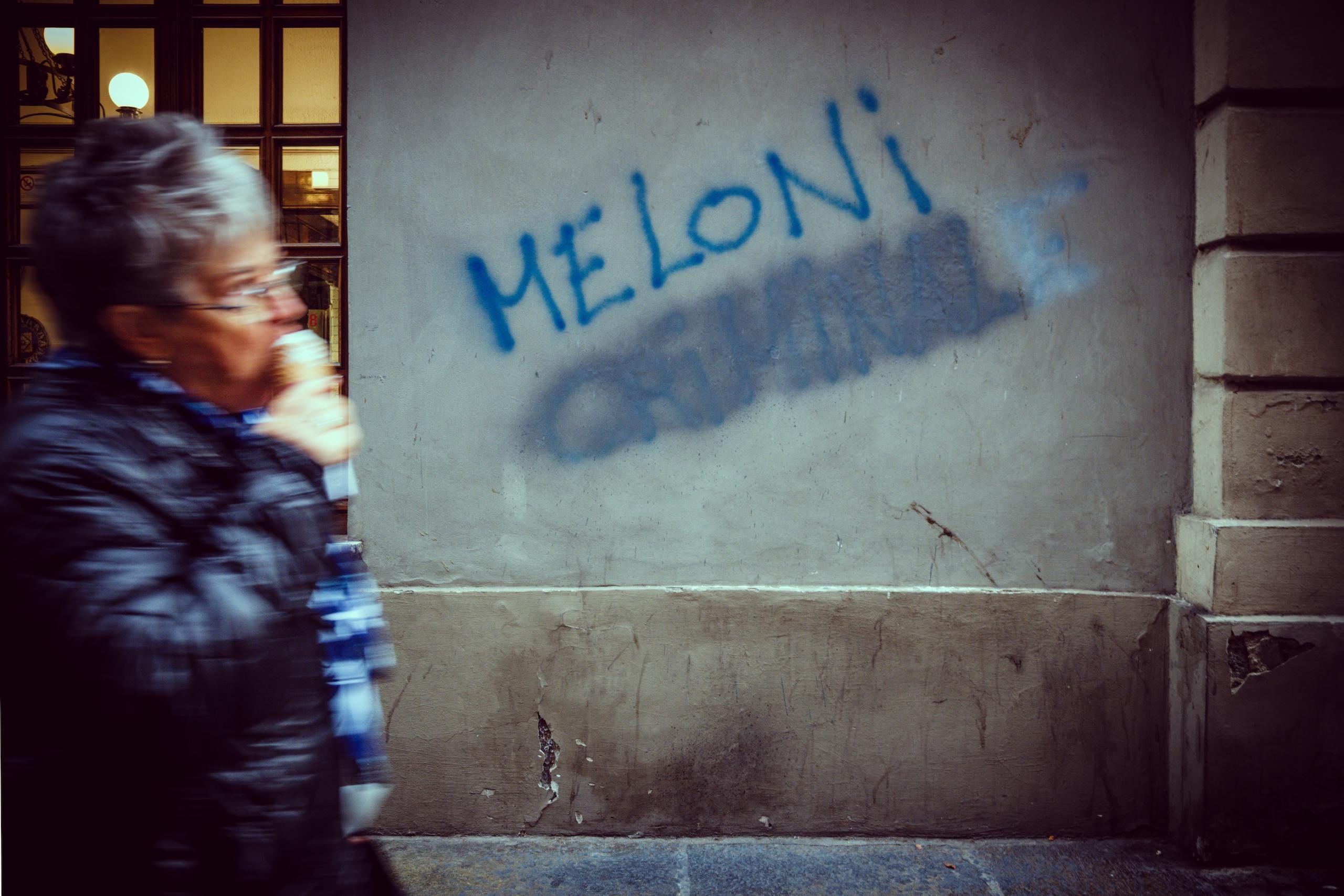
Photograph courtesy of Joel Schalit. All rights reserved.
Comments
Nothing yet. Say the first thing.
Sign in to join the conversation.