
The Swedish author and music journalist Thomas Anderberg was dying. During his final months he was writing a book, which was later edited by friends, as he never managed to finish it. The work became rather sprawling despite their help, but within it there were truly moving passages.
In Det mesta händer aldrig (Most Things Never Happen) we follow the thoughts of a terminally ill man who, alone in his attic apartment on Södermalm in Stockholm, looks back on his life, which he likens to a tree. He finds himself near the end of a thin twig, and for a moment is able to visualise all the other paths, via the trunk, the branches and the smaller offshoots before him, even though they are, of course, invisible. Only one path remained on the tree that at first held countless possible lives.
The metaphor may seem simple, but I have carried it with me ever since reading Anderberg’s book.
Do we choose things? Or do we unchoose others?
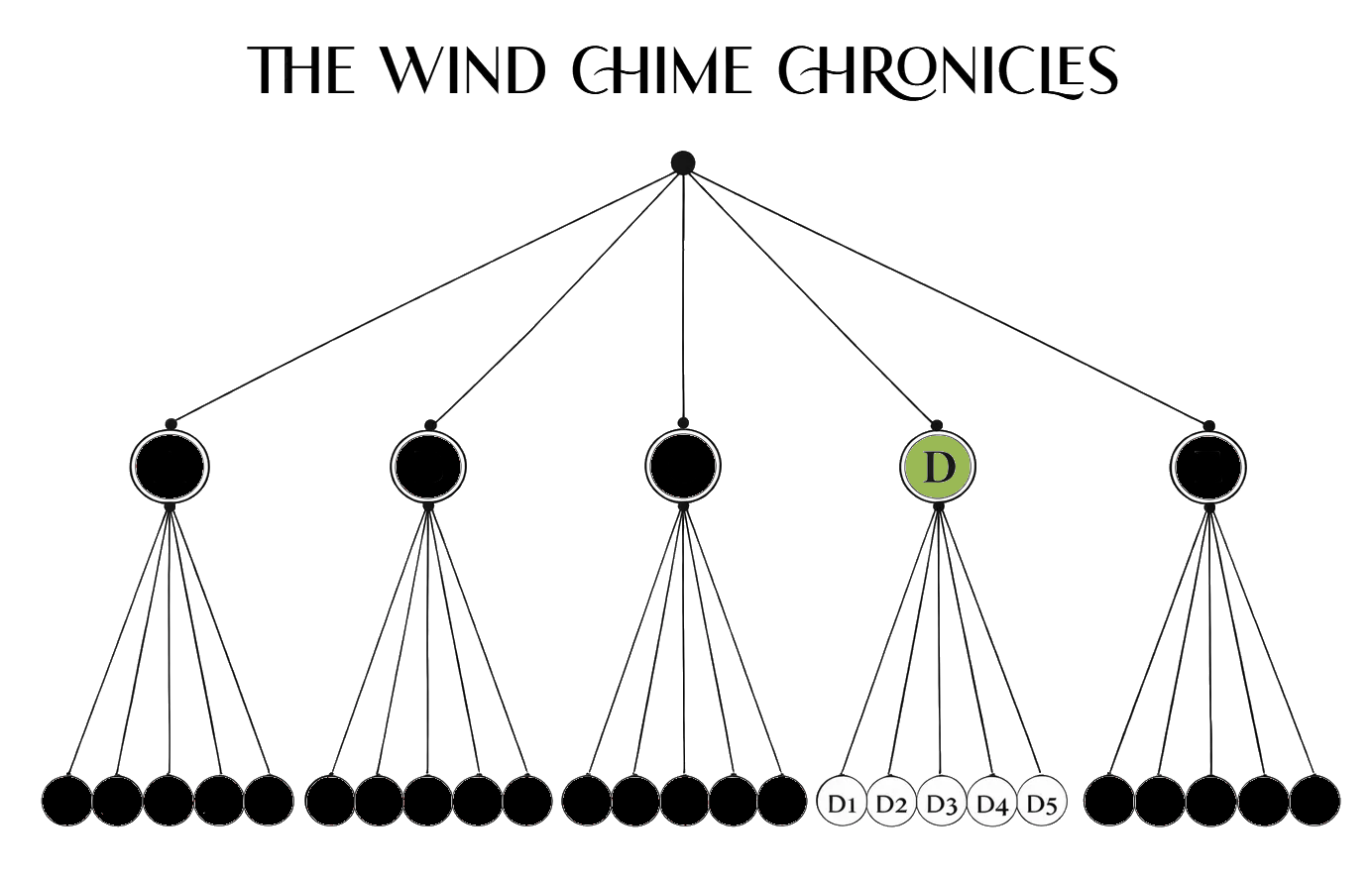
What we are doing here is something similar, in a violently simplified version. In this narrative experiment you have voted on your future. Nineteen per cent of those who read the first part wanted us to take the stairs. Fourteen per cent wanted to go to the neighbouring building. And three per cent each wanted to choose the elevator, or simply leave and perhaps go home. None of this will unfortunately happen. Instead, we will follow the decision of the sixty-two per cent who wanted to follow the music.
20 out of 25 possible futures erased. Because most things never happen.
Welcome away ꩜
Jörgen Löwenfeldt
If you missed the first part you can read it here:
As a paid subscriber you get access to all long-form writing including full novels. It costs $5 a month, or $2.50 a month if you pay for a full year. Substack does not allow prices below that.

presents

D. You follow the music
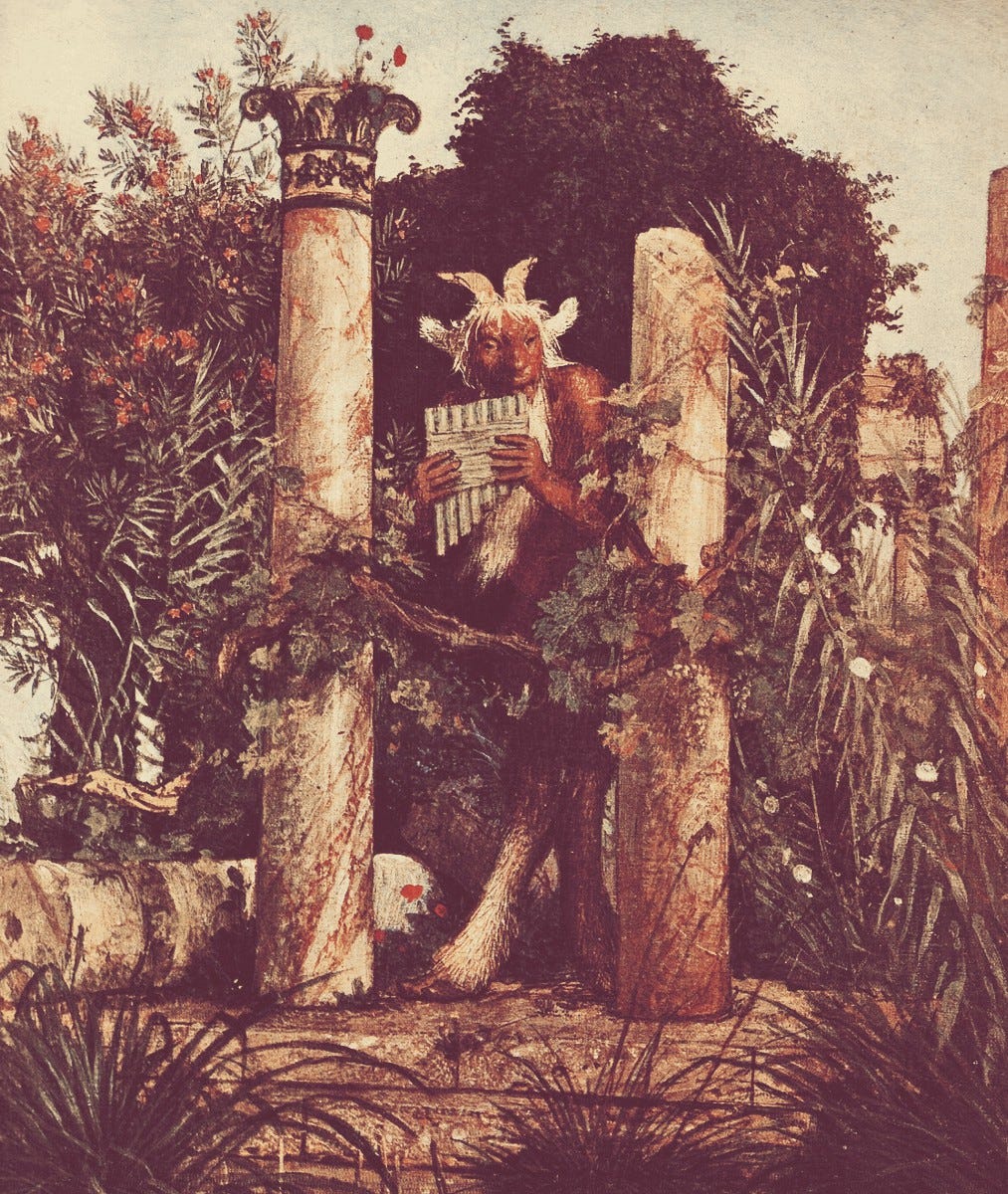
The harmonica. Like the children enchanted by the piper, you feel an urge to follow the music, and just like them you are led out into deep water. Yet you are not detached from logic: the instrument is probably played by a culturally minded person who would willingly and kindly guide you to the publisher’s office. Not a bad thought, you think, but you mostly follow the feeling, climb the stairs with excitement and do not even notice the colossal trilobite fossil on the fourteenth step.
On this floor the ceiling is painted with frescoes as if you were in Florence. A door stands ajar, from which a particularly flowing jazz phrase comes. You suspect it is the opening of Autumn Leaves, but you are not entirely sure, you probably need to listen a bit more, closer to the source.
When you have stepped over the threshold the music stops, as the harmonica has been placed on the hall table. The woman who just produced the sound waves locks up behind you with a padlock and a heavy chain. She turns the key and places it between her breasts, where it seems to stick.
“I do not want any break-ins,” she explains, then adds, winking with one eye, whose lid is heavily painted in an emerald shade: “Or breakouts.”
There is something baroque about her, as if her entire being were doubly ironic. Before you have time to introduce yourself or even shake hands, or for that matter flee, she tells you that she has come to practise the harmonica day in and day out since her retirement. Music became the love she had lived almost an entire lifetime without ever encountering, but only almost. A bit like how nirvana has been described by those with a talent for such things.
“Yes, you are really very good. Anyone can hear that,” you say a little too loudly, spelling it out, as if you assume she wears a hearing aid. She does not.
“Did I ask for your opinion?”
She notes that you have noticed the sweet smell of marijuana in the air, since you make a small grimace, one that for most people would have been too subtle to detect.
“It is from the neighbour, you know. He keeps smoking all day. Dangerous fellow, really, at least when he gets his psychoses. He has even killed a few, paperboys and such, but we are no snitches in this building.”
She speaks like a dealer from the seventies, but looks as if she were on her way to a ball, though one that got stuck on the way and suffered some painful mishap, though it is unclear exactly what. You glance at the padlock and say:
“That protects you from him?”
She laughs at you for a while, at how naïve and frankly rather stupid you are. That you do not understand this yourself suggests a rather severe imbecility, she seems to think.
“No no, he keeps away from me. A kind of balance of terror, you could say.”
You try to change the subject, because it is becoming uncomfortable, and besides you are in a hurry. Your meeting starts in fifteen minutes. If you are late you will be late to life itself, and everyone knows what happens to those who think they will get more chances.
“I am going to the publisher, you see, and I am a bit pressed for time. Do you know on which floor it is? The instructions were a bit unclear.”
She smiles maternally, but not warmly.
“You are in the wrong building, lad. But do not be upset about that. Such things can happen to the best of us, and believe me, it is not the first time I have lured in an arrogant debutant with a ridiculous story about a bought-out project manager at a taxi firm. Who would have thought that harmonica studies could have such an effect on the sweethearts?”
Unexpected. You are breathing a little faster now.
“How do you know all this?”
“I do not like your tone. In any case, I think I got ahead of events slightly. But you need not worry about missing anything with that woman. She often does that when she finds someone she thinks is cute and pretty. Takes almost anyone and hands them the card. But she did email you, of course. Perhaps she saw your picture somewhere. In any case, you are her type.”
“How do you know all this?”
“Takes one to know one, as they say. You could say we have an arrangement where I get the crumbs. I do not complain. It is like in nature. And who am I to defy God?”
It is as if she has prepared an answer to that question, which you take to be rhetorical. You stand for a moment in an awkward and growing silence, until you understand what is expected of you and say:
“No, of course. One cannot do that. God is God.”
“And his ways are inscrutable.”
She leads you into the living room, where the smell is replaced by the lemon-sweet scent from a dozen green plants with splayed, finger-like leaves. They stand in terracotta pots on every available surface, except the one by the window where she has placed a typewriter. Many piles of what look like a manuscript lie neatly arranged across the parquet floor. She sees what you see and says:
“You are not the only one who has such ideas. You understand, lad. I found a box when I was clearing out the attic, and in it an epilogue my father had written, but I never found the book itself, so now I am trying to write it from the epilogue. It goes both well and not so well. Like the bus journey between Kulu and Istanbul in 1965: ten hours without a toilet break1. I did not even know he had been to Turkey and I do not plan to go there either, so I have got a bit stuck there.”
You are of course aware that the French author Xavier de Maistre wrote Voyage autour de ma chambre (A Journey Around My Room) after being placed under house arrest for forty-two days following a duel. The book became an ironic inversion of the adventure novel, where the bed, the armchair and the paintings served as destinations and places for contemplation. With this he established a tradition of the adventure as an inner movement.
“For some, imagination is enough,” you say in conclusion, to lighten the mood, to get on good terms with the old woman and perhaps persuade her to open the door without you having to become violent and tear open her bra for the key. She seems more eccentric than dangerous, after all.
She does not seem to have listened to anything you have said.
“You stay here while I go and make some coffee,” she says, sweeping her hand across the room. “And for heaven’s sake, do not read any of that. Father would have been so upset, you see. He always held everything back until the final full stop. The dead cannot defend themselves, you know.”
She leaves you alone in the room and you suddenly remember your real errand: to become elevated, important, a name for the encyclopaedias. The path there runs via the building with the same number half a stone’s throw away, where the publisher at this very moment is getting ready to receive you. She throws the scribbled Post-it notes into the trash can, fixes her hair in the mirror and notices that a strand has come loose, which she places behind her ear, and turns her gaze to the wall clock. Exactly twelve minutes left. No, wait, eleven minutes and fifty-eight seconds. Most people would already have taken their place in the waiting room by now.
The last part of your story:
·
Apr 1

Many of you know that Fyodor Dostoevsky, George Sand, Jules Verne and others wrote many of their masterpieces for magazines. They had to write in a way that kept readers hooked, often using cliffhangers to make them want to read the next episode. Only later did these stories become novels.
Thank you for reading.
– Jörgen Löwenfeldt ✦ jorgenlowenfeldt.se
This dispatch went out to readers across more than eighty countries. If it resonated with you, consider sharing it with a friend who might feel the same, leaving a comment, or recommending it on your own Substack.
A warm thank you to the sponsors of The Bagatelles. Your belief in my work keeps me going, and as a paid subscriber you have access to all long-form content, including the novel Zenopolis, all chapters of Naïveté Travels, and my work in progress: Bardo Noir.
Do you have any feedback, ideas, or questions? I answer selected questions in dedicated Q&A dispatches: Use this form!
One who knew how to choose:
A Tribute to Ola
·
October 9, 2025

In my youth I had only one idol. The adult world frightened me with its absolute choices and streamlined lives. But then there was my father’s cousin, Ola Hermanson.
✦✧ Looking for the archive? You can find every post here.
In reality, in 2026, there was one stop. Not a waste of time at all, because that bus ride is when this story was written.
Comments
Nothing yet. Say the first thing.
Sign in to join the conversation.