
I’m getting on my soap box again about the latest meme going around social media:
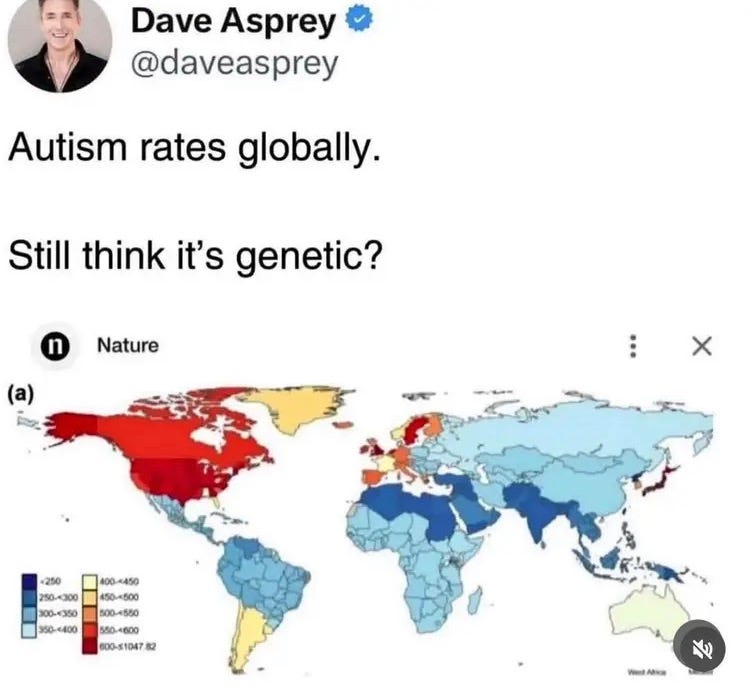
First let me explain why this is invalid. As I’ve already explained in prior posts [here and here], causality for autism is likely multifactorial. Yes, genetics causes it in some circumstances. No, not only does genetics not explain the exponential increase in prevalence, but it is likely also a rare cause. There are probably different causes in different people. That is consistent with multifactorial causality.
Reread that last sentence again. This is not controversial and should not make you angry, no matter what view you have on the causes of autism. This is generally how causality works in complex disorders. Yet, that statement seems to make people really angry.
So let’s turn now to why this matters, and why people need to stop talking around each other on this topic.
If you want to have a national conversation about finding the causes of autism, then you have to acknowledge the facts presented by all sides. Stop disregarding facts because they don’t represent your view.
For example, if you don’t believe your child’s autism was caused by genetics (and you claim you’ve done genetic testing and the answer wasn’t there, which I don’t believe since not all genetic causes have been discovered, but I digress), that doesn’t mean that autism is never caused by genetics. Sorry for the double negatives there, but there are published studies that demonstrate genetic causes for autism. Real data. If you do believe that autism is caused by genetics, you have to acknowledge the reality that there has been an exponential increase in the prevalence of autism over the last 10-20 years. Genes don’t mutate and/or deletions do not occur that quickly in a natural process. Even if you believe every genetic cause is unique and perhaps as-yet undiscovered, the genome does not mutate that quickly. If you don’t believe that Tylenol might have a role, despite numerous peer-reviewed publications, just because you used Tylenol and your child doesn’t have autism, again, you are disregarding how causality works – not everyone with a specific risk factor will have the identical outcome.
Scientists that have seen convincing data regarding genetic and perhaps other environmental causes are not going to listen to people who they perceive as tin foil hat wearing conspiracy theorists if those conspiracy theorists don’t listen to them a little bit. Yes, trust in the medical system and medical research is at an all time low, but that doesn’t mean that all research is bunk. At the same time, scientists need to stop gaslighting parents and others who want honest answers and objective research. As we heard at points during the December ACIP meeting, this goes hand in hand with recognizing vaccine injury. Science only moves forward when we are willing to question preconceived notions and “established science” and evaluate new hypotheses. Remember when Hill proposed his criteria of causality – doctors were still prescribing cigarettes as part of clinical care. Where would we be if he hadn’t questioned the status quo?
No posts
Comments
Nothing yet. Say the first thing.
Sign in to join the conversation.