
For years, traditional publishing has looked down at the self-publishing as less than -flooding Amazon and assumed their gates were too high to be breached. This week, those gates swung wide open.
From Hachette pulling a global release for being 78% machine-code to NetGalley data proving listeners are now in a state of “High Alert,” the honeymoon phase for AI in the book world is hopefully ending.
We are entering the era of the Provenance War. In 2026, “efficiency” is becoming a dirty word. If you aren’t proving your work is human though, you’re increasingly being treated as a scammer. Whether it’s physical “Shelfies” in Germany or the “Shadow AI” infecting the midlist, the message from the market is clear: The ear doesn’t lie.
Inside today’s report: Why “Shadow AI” is the new ghost in the machine, and how the “Silent 70%” can win by being louder—and more human—than ever.

While we are always focused on what Spotify and Audible are up to, a new player has entered the chat in Germany: shelfie.audio. It’s a physical “book card” with an NFC chip that lets you own, display, and even gift a digital audiobook without a subscription. Love the idea of gifting!
The Tangible Pivot: In a market flooded with “AI slop” and ephemeral streaming files, Bastei Lübbe is betting that listeners want something they can actually hold.
Format Agnostic: It bypasses the “double-purchase” trap. Tap the card, and the book is yours.
The Collector’s Edge: 2026 is becoming the year of the “Premium Physical” for audio.
The Spiky Take: If we’re moving toward a “Multi-Format” world, we have to ask: Are we producing content worth putting on a shelf, or just clogging the feed?
Is the “Shelfie” card the gift-market savior we’ve been waiting for, or just another plastic distraction?
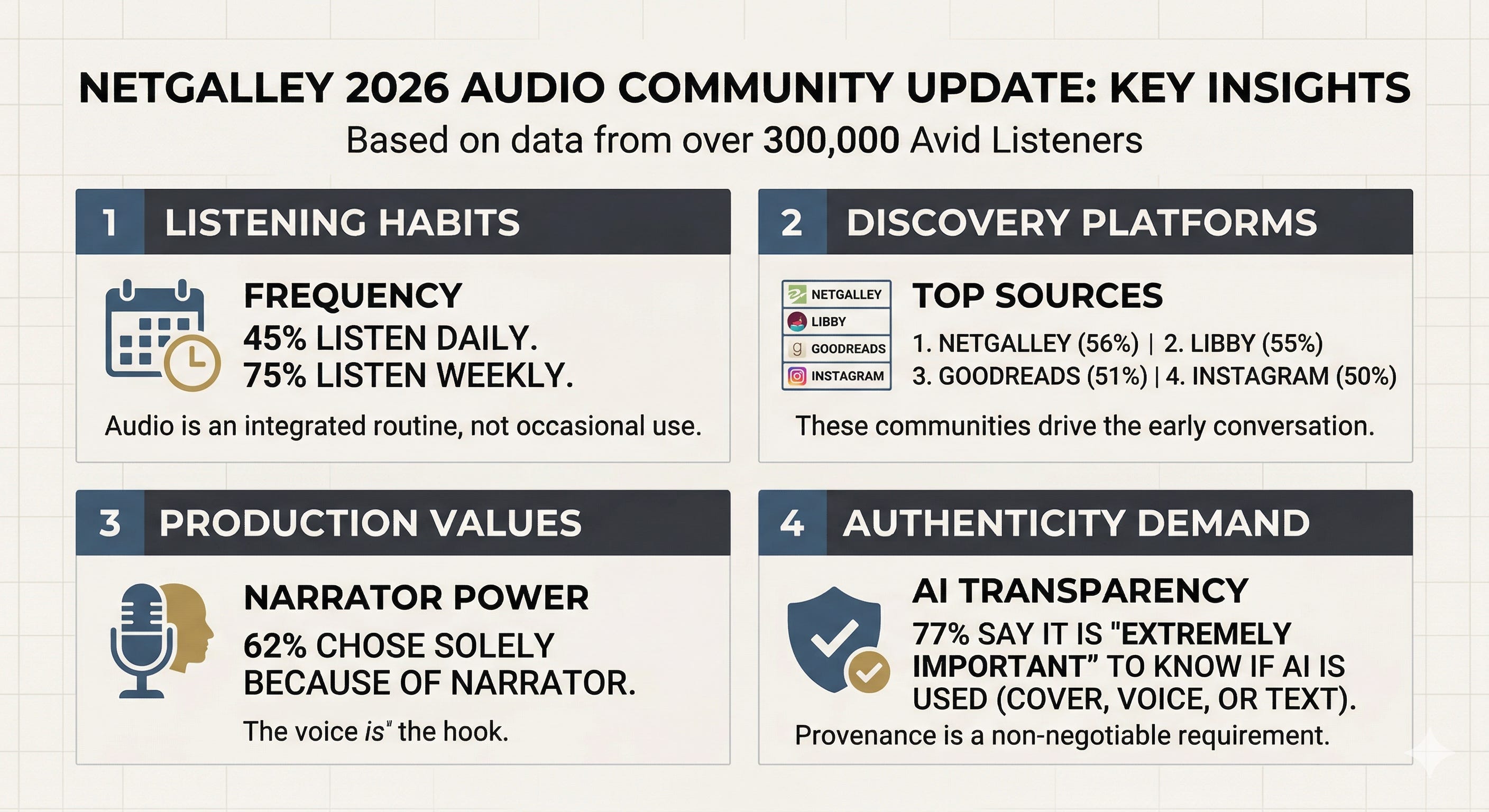
NetGalley just dropped their 2026 Audiobook Community Update, and the numbers are a cold shower for anyone hoping to “quietly” use AI.
The Transparency Mandate: A staggering 77% of listeners say it is “Extremely Important” to know if content (covers, voices, or text) is AI-generated.
The Narrator Power: Narrators remain your strongest marketing asset—62% of listeners have selected a book solely because of the narrator.
The Opportunity Gap: Listeners are hungry. They explicitly told NetGalley they wish there were more audiobooks to choose from, especially in niche genres.
My Take: The “Avid Listener” is on high alert. They want to multitask (80%), but they want to do it with a human guide. If you aren’t being 100% transparent about your production process, you aren’t just risking a review—you’re risking a total brand lockout.
We’re seeing a rise in “Midlist Breaking Through,” but the speed of production is creating a quality gap.
For the uninitiated, the Midlist consists of those reliable, professional titles that aren’t the season’s “lead” blockbusters but aren’t basement-dwellers either. They are the backbone of any publisher’s catalog. In the audio world, these are the books that used to stay “silent” because the math didn’t work for a $5,000 studio budget.
Now, the math with AI works—but the ethics are getting murky.
While traditional human-led production timelines still stretch to 4–6 weeks, the pressure to “efficiency-hack” via AI is reaching a breaking point. Producers are being squeezed to deliver “studio-quality” audio in a week for pennies. The result? Shadow AI. This is where a human narrator or editor uses AI to “clean up” or “patch” a performance without telling the author or publisher.
The Reality Check: The recent NetGalley data mentioned above is the ultimate rebuttal to this “efficiency” trap. While listeners want more titles in niche genres (the midlist sweet spot), they are explicitly demanding humanity.
The “Shadow AI” shortcut might get your midlist title onto Spotify faster, but it’s a direct path to being blacklisted by the very community that drives your sales. In 2026, the midlist isn’t a place to cut corners—it’s the place where human investment creates the most “Backlist Gold.”
I want to hear from the producers and authors in the trenches: Are you seeing “Shadow AI” creep into your production chains? Do you find it’s helpful? Am I over reacting?
This brings us to the biggest disaster of the week.
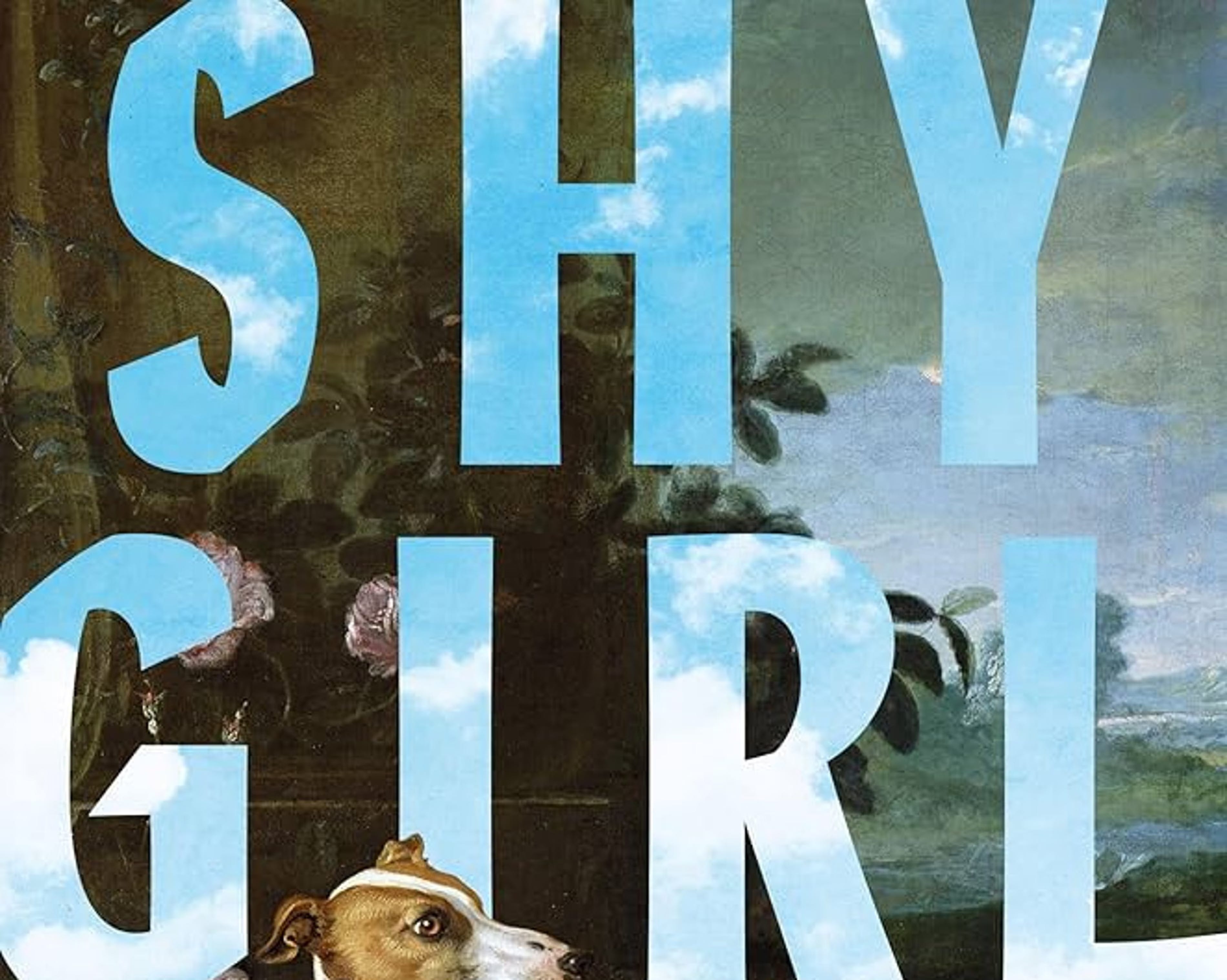
The news that Hachette just pulled “Shy Girl” by Mia Ballard—after AI detection found the text was 78% machine-generated—is yet another wakeup call.
This is the first time a major commercial novel has been spiked post-release due to AI “slop” seeping into traditional publishing. It exposes a terrifying gap in the editorial process, but more importantly, it sets a high-stakes precedent for our corner of the world: Audio.
As an Audiobook producer and industry watcher, my hope is that publishers fight just as hard to keep AI out of the recording booth.
We can’t protect “Human Creativity” on the page while simultaneously replacing the human voice with a synthetic clone.
You can hide AI in 300 pages of text because the human eye “auto-corrects” flat prose. But the human ear? It’s a biological lie detector. We hear the lack of breath. We hear the missing emotional arc.
In the 2026 market, the narrator isn’t just a performer—they are the final human auditor of the work. If you’re putting a book into production, you need a team that isn’t looking for “efficiency” through a chatbot, but for the friction that makes a story real.
Are you ready to make sure your readers can hear the human behind the words? Drop me a line so we can work together!
No posts
Comments
Nothing yet. Say the first thing.
Sign in to join the conversation.