
Tibi and I started our four-week long summer vacation last week with a three-day stint in our favorite city in the world: Venice, Italy. One afternoon, while sitting at our round table-for-two in front of Caffè Florian in Piazza San Marco, we got into a conversation about our favorite squares in the world, which made me start to think about what exactly it is that makes a great square.
Squares don’t feature largely in American cities, for some reason. (I’m sure a historian of urban geography could tell us why). When they do, they are distinctly different than a European square. In the US, they’re either not really squares at all—like New York’s Times Square, for instance, which is just a complicated intersection of avenues—or they are parks—as in New York’s Washington Square or any of the gorgeous squares in Savannah, Georgia, complete with their majestic oaks dripping with Spanish moss.
Squares in European cities are decidedly different. Whether we’re talking about a plaza in Spain or a piazza in Italy, a rynek in Poland or a tér in Hungary, in Europe, the lifeblood of the city flows through its squares. They are the city’s heart and lungs. They are where the residents pass through to be filled with the oxygen of greetings, stories, announcements, and insults before going on their way again. But they are also where people can come to re-energize so they can survive the more unpleasant aspects of daily existence.
What sets these squares apart from their American counterparts? What elements are necessary to make a perfect square?
For one, while it is permissible for a square to have streets and car traffic, the perfect square must be primarily a space for people. Squares are gathering spaces, spaces of encounter. Ideally, there are no cars at all so that the buildings encapsulating the space open out directly into the open square. In this way, the buildings serve as a protective membrane between the square and the chaos of the city outside of it. Too many cars passing through disrupt the liminal nature of the square, which should be at once part of and apart from the city.
Next, the perfect square must have at least one perfect little café or restaurant with outdoor seating that sprawls out into the square itself. Squares are made for outdoor seating. And the successful café in a square is successful because it challenges the boundary of where the café ends and the city begins.
Third, the perfect square is typically designed around at least one beautiful building or architectural feature that provides focus and drama to what could otherwise be an orderless space. Because squares are so full of kinetic energy, they need something more permanent to act as a grounding wire that suffuses that energy and makes it manageable. In Europe, this is often the job of a beautiful church or city hall, but it can just as easily be a market space, a statue, or a fountain.
Finally, the perfect square is rarely, if ever, empty. Without people in the square, it becomes impossible to engage in the most quintessential activity of the square: people-watching. Squares were designed for this purpose, and anyone who goes to a square to be alone is just doing it wrong. The square is only fully itself when there are people within it. Otherwise, it’s just a vacant lot.
Piazza San Marco is, for me, a perfect square, with one minor caveat. Its grandeur and beauty are without parallel. And, given that Venice is a city without cars, it is a place made purely for people. The one problem, of course, is that the only people in Piazza San Marco are tourists. Actual Venetians avoid Piazza San Marco in the same way that actual New Yorkers avoid Times Square. While it once was certainly the heart of Venetian life, the last couple centuries have transformed it into a tourist haven. That said, it’s hard for me to imagine a more magical place, especially at night, when the lines to enter the Basilica di San Marco have dispersed and the lights in the buildings surrounding the square have been illuminated. Small orchestras play cheesy music in the three main caffès that dot the square, and occasionally, an elegant older couple will pass by and just start dancing a waltz together, embraced by the elegance of the piazza. It’s touristy and it’s ridiculously expensive and it’s kitsch, but it’s also pure magic, and no one can convince me otherwise.
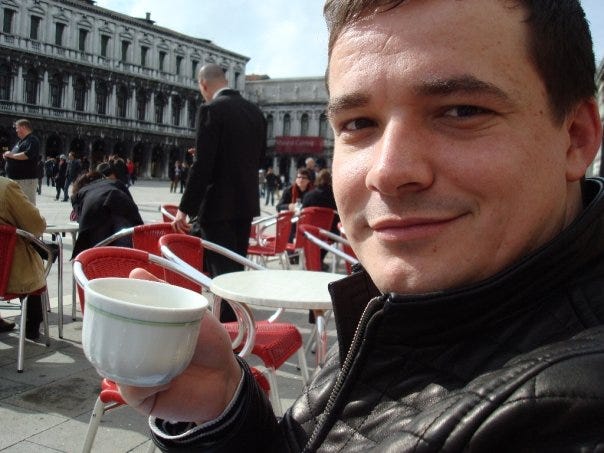
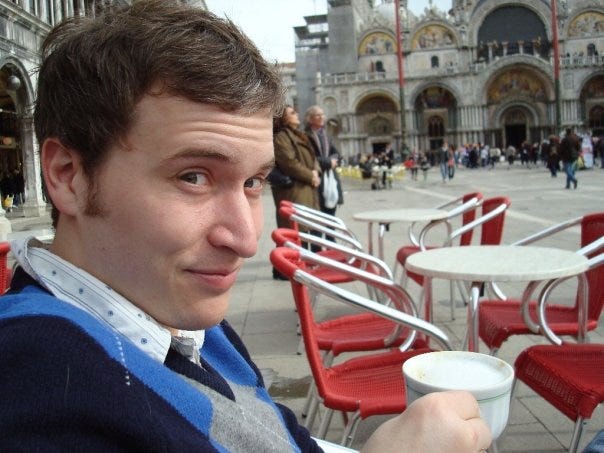
During my first trip to Venice by myself back in 2008, I came to Piazza San Marco on my first evening. I sat at a table at Caffè Florian and ordered the cheapest thing I could find, which was a glass of port that cost 7 euros. That, plus the 5 euro charge just to sit at the table and listen to the music, was an extravagance I could barely afford, but I made it worth it by nursing that single glass of port for about three hours as I listened to the orchestra and watched the world pass before my eyes as it crossed through the Piazza. I loved it so much that I went back the next night. I couldn’t afford to sit down again, so I just stood at the edge of the tables and watched.
There are so many other examples, however, that better represent the capacity of the square to be the true heart of a city, not just for visitors, but for those who live there. Below are my five other favorite squares in the world—the perfect places to pass a morning, afternoon, or evening. And each meets all of the criteria for a truly perfect square.
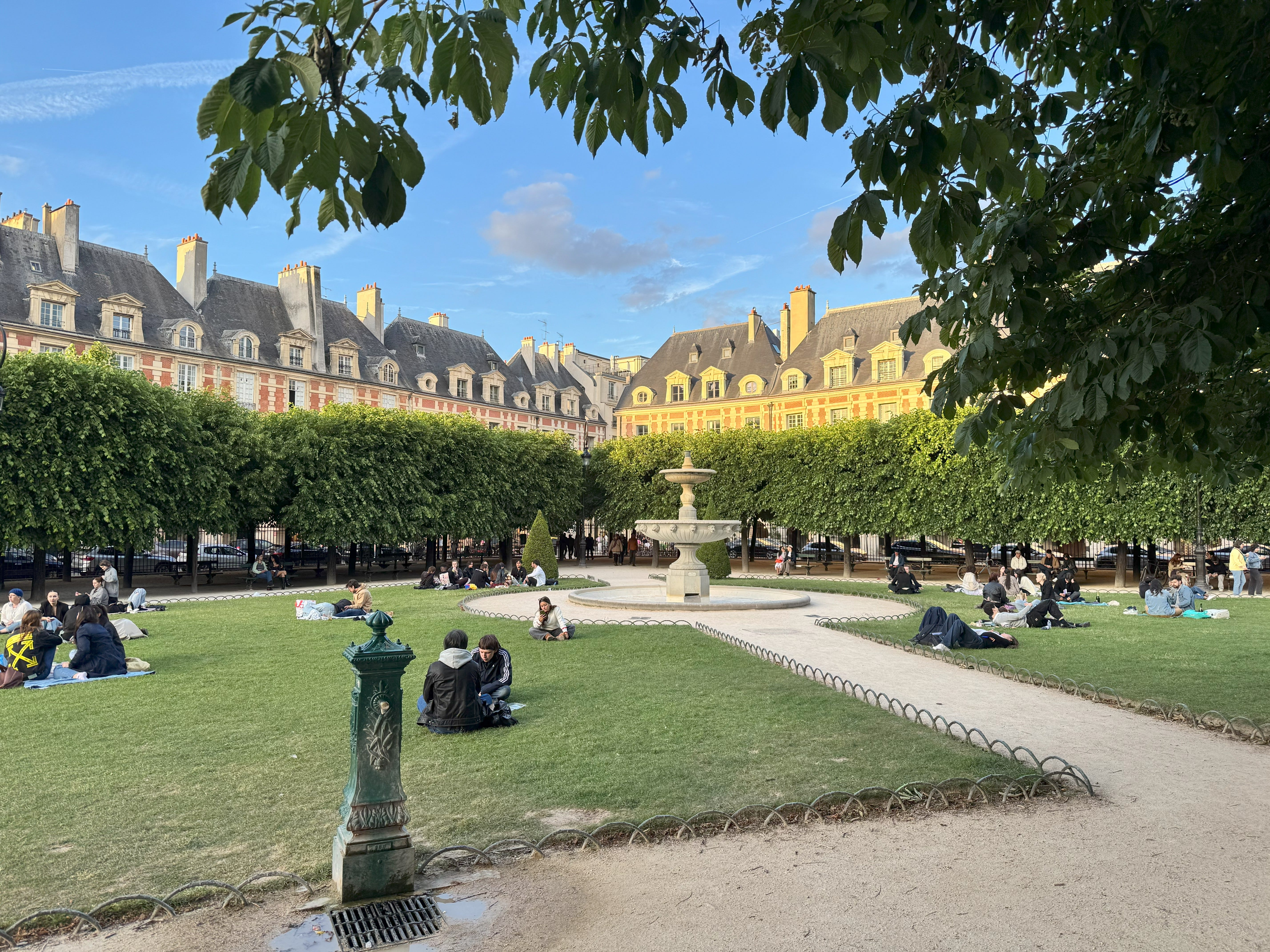
The Place des Vosges is the oldest square in Paris and one of the oldest squares in Europe. And in my opinion, it’s one of the world’s most beautiful. True to its name, it is a real geometric square, and everything around and within it is perfectly symmetrical. Surrounding the square are a series of handsome, red brick apartments, including the former home of Victor Hugo. Each apartment features a gorgeous colonnade at the ground level that forms a connected portico that encircles the entire square. Underneath this portico are a whole series of cafés and restaurants with covered, outdoor seating. The center of the square is a gated park that is, like the buildings around it, completely symmetrical. In the park’s center stands a statue of King Louis XIII, and four fountains stand at each of the four corners of the park. A series of trimmed trees and topiaries connect the fountains. While there may not be a single architectural element that predominates in Place des Vosges, in this case, it’s the rigidly planned nature of the space that grounds it all. The Place des Vosges is at once orderly and peaceful, reassuring and freeing. It is both deeply Parisian and also a respite from the chaos of the city. In other words, a perfect square—in this case, literally.
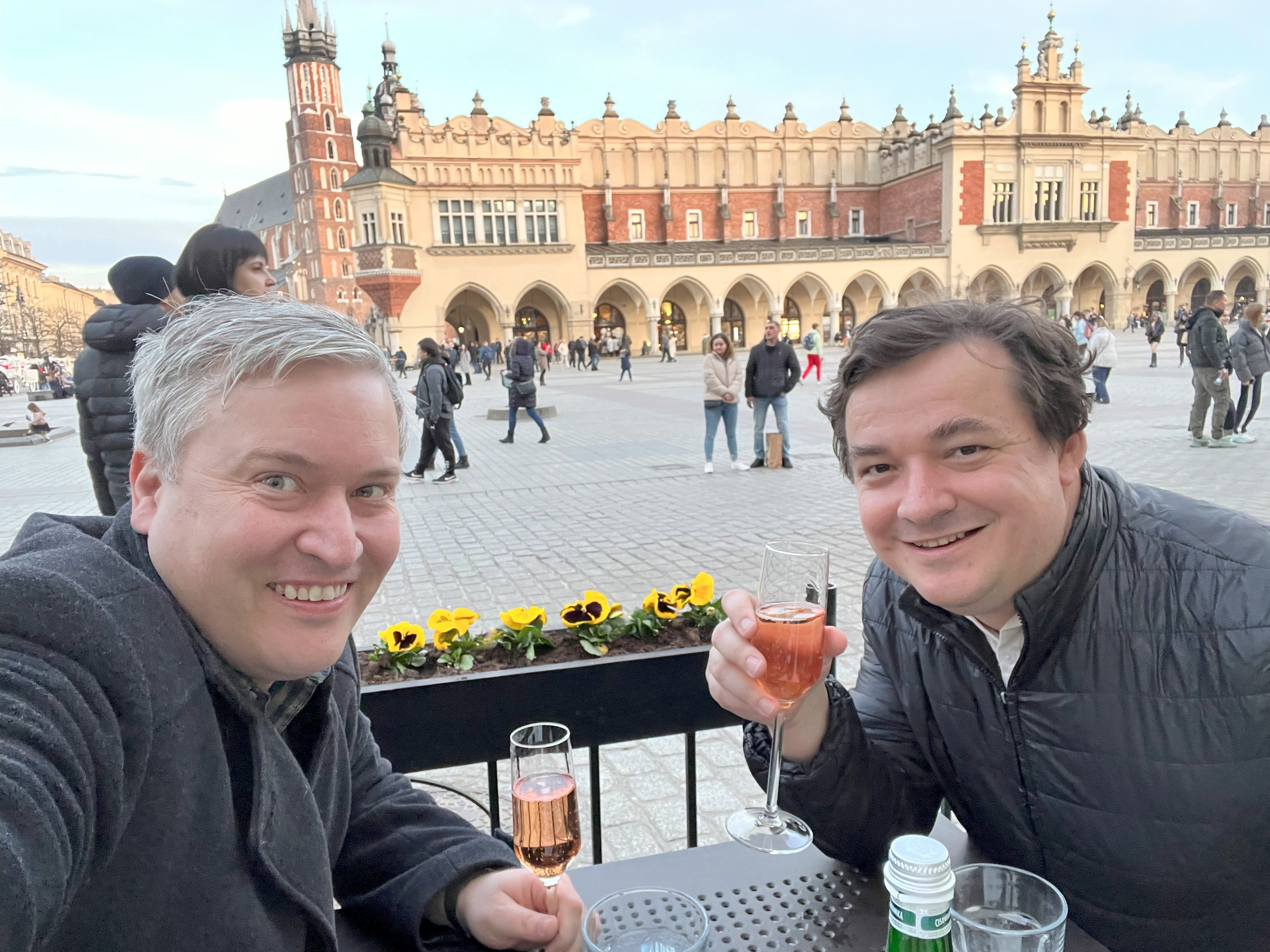
Because of work, I end up visiting Auschwitz way more than any sane person would want. About once a year, I spend a week in Oświęcim, the town where the camps were built, for a training of government officials from around the world. It’s not exactly a dream location, but I do always look forward to the end of the week, when we move from Oświęcim to Krakow for the final day of the seminar. Krakow is one of the world’s most beautiful cities, in my opinion, and it is home to one of the most spectacular squares, the Rynek Główny. The Rynek is HUGE! For a long time, I was told it was the largest medieval square in Europe, but I looked it up, and it seems like the one in Prague is bigger. Still, I absolutely love the Rynek.
In addition to the beautiful buildings that line the square, planted dead in the center is the Cloth Hall, a stunner of a medieval marketplace that today houses an array of gift stands where tourists can ogle tchotchkes to their hearts’ content. Krakow’s cathedral towers over one corner of the square, and every hour on the hour a trumpeter opens up the window at the top of the steeple and plays a tune three times, to each of the other corners of the Rynek. It’s not a complete tune, however. It always cuts off early at the same note, given that this practice memorializes a trumpeter from the early medieval period who was shot by an arrow when playing a song to warn the citizens of Krakow of a forthcoming invasion. For me, there’s nothing better for recovering from a week in Auschwitz than having a prosecco in one of the Rynek’s cafés and watching the crowds and horse-drawn carriages pass me by.
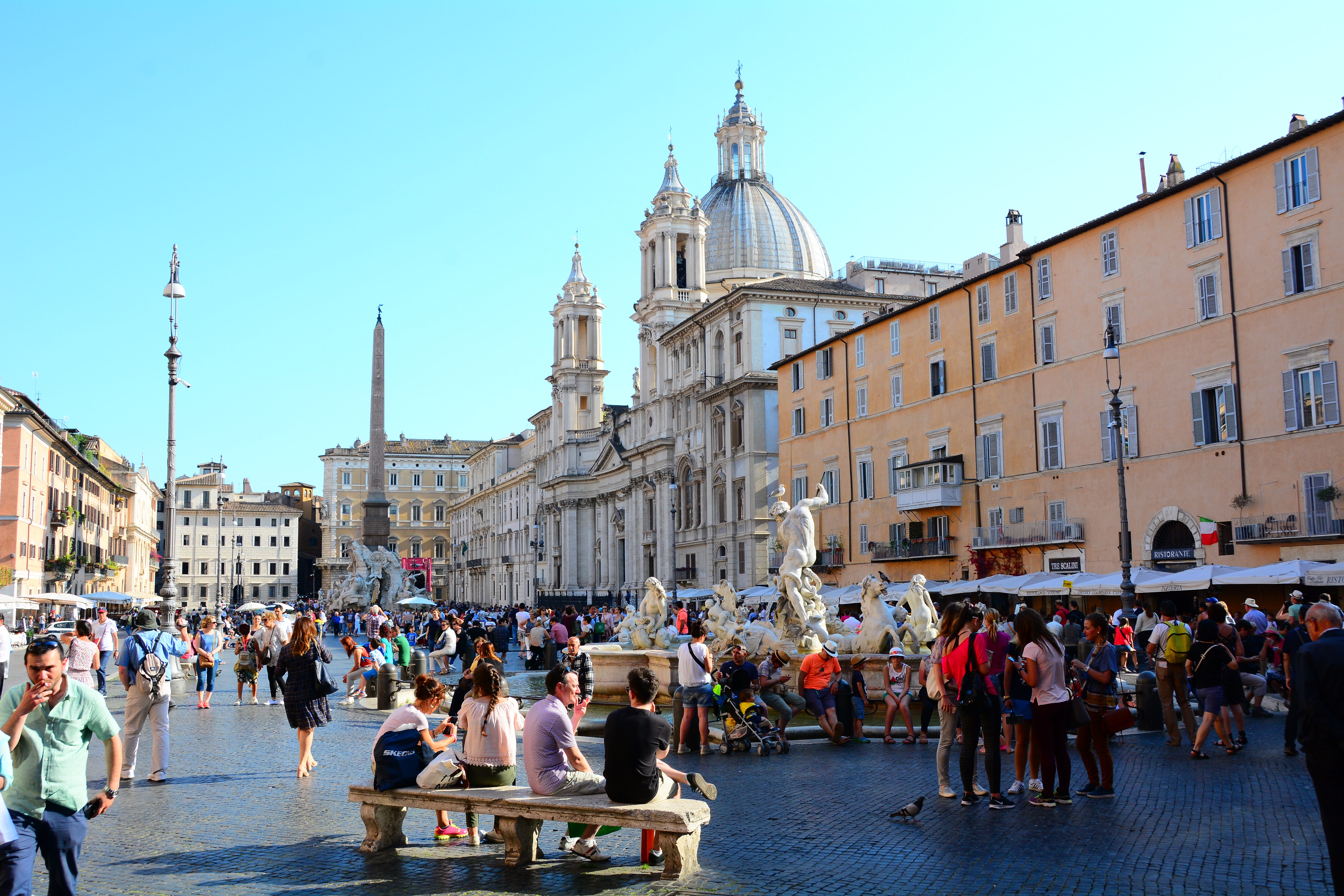
Rome has several amazing squares, but my favorite, by far, is Piazza Navona. It was built over the ruins of an old chariot racing track and, for this reason, is not a square at all, but an elongated oval. While always full of tourists, Piazza Navona is equally a space for Romans, so it is truly a place of convergence. An array of cafés, gelaterias, and restaurants line the square, each with outdoor seating that provide perfect views for watching the crowds pass by. But my favorite thing about the Piazza is the gorgeous Bernini fountain at its center, which provides sense and reason to the chaos around it. La Fontana dei Quattro Fiumi, or the Fountain of the Four Rivers, is a baroque masterpiece featuring four larger-than-life figures representing the four great rivers of the world, at least according to Bernini: the Rio de la Plata, the Ganges, the Nile, and the Danube. (I guess Bernini didn’t know about the Amazon or the Mississippi.) In addition, the fountain is adorned with water horses, sea serpents, mythical dolphins, and a dragon. A tall obelisk towers over it all with a lovely little dove perched at the obelisk’s point. I love this fountain so much, especially at night, when it is lit from underneath the water. An eternally glorious square for the Eternal City.
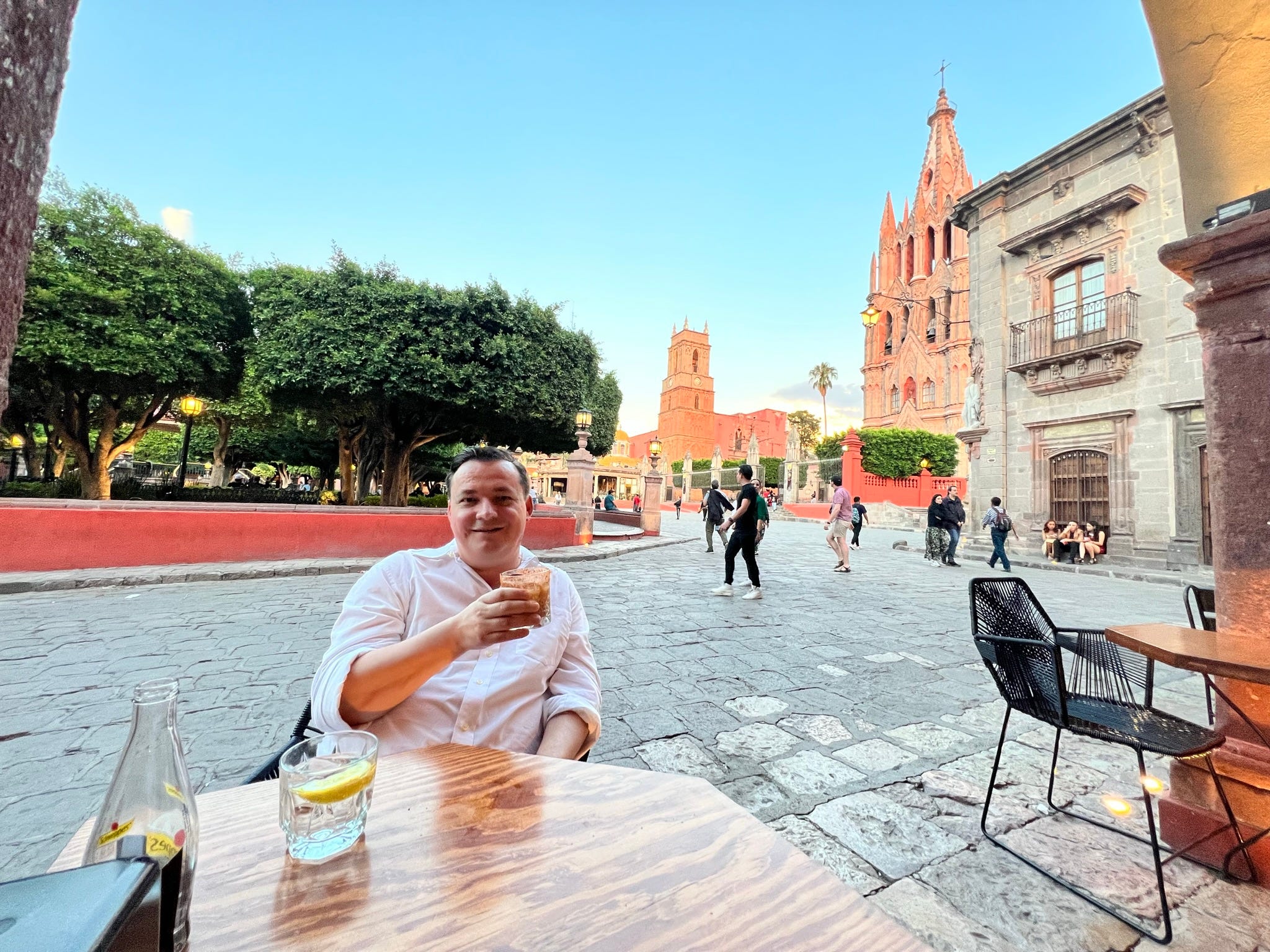
While Europe has perfected the square, there are, it must be said, some amazing squares outside of Europe, as well, and my favorite by far is El Jardín in San Miguel de Allende, Mexico. True to its name, El Jardin is part square, part garden. At the top part of the square stands the city’s fairytale-pink cathedral, designed by an Indigenous architect who had, in fact, no architectural training. He had, however, seen some images of the cathedral in Cologne, Germany, and drew his vision for San Miguel’s cathedral based on that church. To the sides of the square stand two buildings with colonnades that line the central garden, and under these colonnades sit some wonderful little restaurants, including El Rincón de Don Tomás (FEAST Score: 52 – Must Go), which is, for us, the perfect place to have breakfast in San Miguel, as it provides some pretty wonderful dishes with eggs and salsa and an even better view of the cathedral. The center of the square is a park, full of greenery, with beautifully trimmed hedges and trees, plenty of benches, and a picturesque gazebo in the center. In the evenings, competing bands of mariachis wander through the square, offering songs in exchange for some pesos. Tibi and I have sometimes passed hours just sitting and listening to the mariachis and looking at the beautiful views El Jardín has to offer.
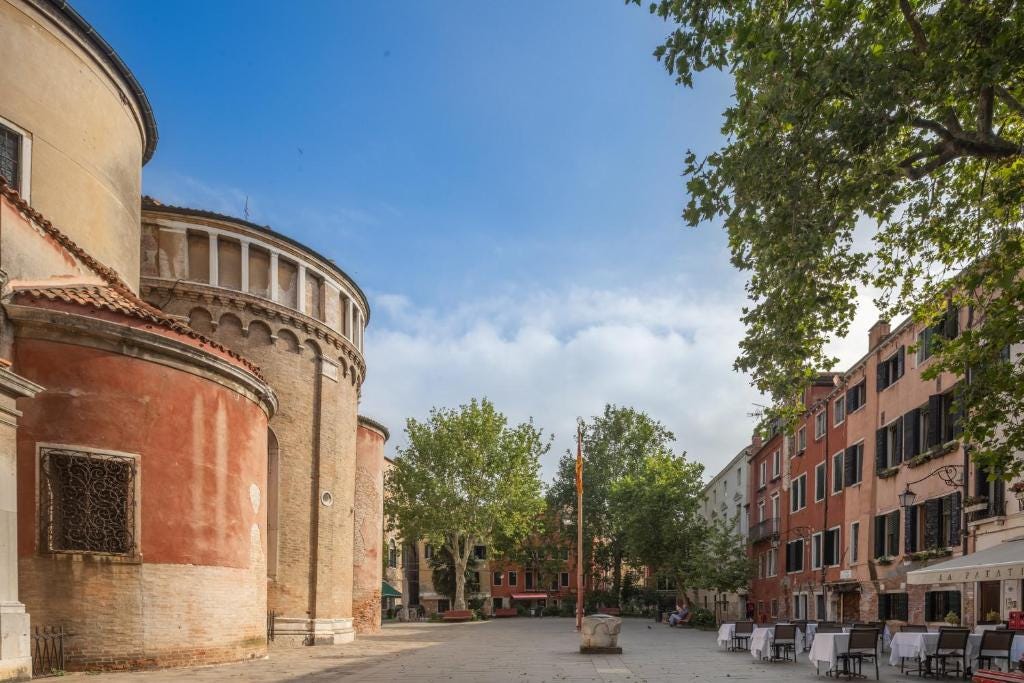
This final square, while not a famous one, by any means, is likely my favorite in the world. It is also in Venice, but in the laidback neighborhood of Santa Croce, far from the tourist hoards of San Marco and Rialto. With the exception of Piazza San Marco, every other square in Venice is not called a piazza, but a campo, which literally means “field.” Centuries ago, these were literally the grounds on which the early Venetians grazed their cattle. Today, however, all the campi have been paved with beautiful Istrian stone. Campo San Giacomo dell’Orio is an odd-shaped square, with nooks and crannies the extend all around the titular Byzantine church after which the square gets its name. There are some perfectly fine restaurants, bars, and cafés throughout the square, but the true glory of this square is that it is a window into local life in Venice. In the late afternoons, kids play soccer here, kicking the ball between two doors of a centuries-old palazzo that serve as goal posts. Old Venetians sit on benches and gossip about the day. Mothers do their shopping in the corner grocery store. Gondolieri get into fights with each other in the canal at the corner. Sitting in this square is like watching a cinema verité depiction of what it means to live in Venice. Tibi’s and my biggest dream is to one day buy the apartment in the square’s corner with the beautiful, grapevine-covered terrace. Until we can, we satisfy ourselves each trip with a few well-spent hours sipping a bottle of prosecco and watching life pass us by at one of the Campo’s little cafés.
Comments
Nothing yet. Say the first thing.
Sign in to join the conversation.