
My first week in Paris has been exhilirating. My greatest fear that we would relive our previous housing experience in Paris by walking into the apartment we booked to find a hovel completely distinct from the AirBNB photos was, thankfully, not realized. The apartment is clean, well equipped, and nicely designed, including a massive and beautiful painting of a forestscape that dominates the living room. We’ve got a terrace that, despite its less-than-spectacular view, will still certainly play host to more than a couple sessions of wining down (that’s “wine” + “winding down,” in case it wasn’t clear). And the kitchen is super nice—fully equipped with all we’ll need to cook a nice meal or two.


The apartment is located in the 7th arrondisement. (“Arrondisement” is the name for the 20 neighborhoods that spiral out from the center of Paris like a snail’s shell.) According to ChatGPT, the 7th is “known for its classic Parisian charm, wide boulevards, and stunning architecture,” though it is “not the trendiest or most ‘hip’ arrondisement.” But I’ll take charm over hip-ness any day!
Tibi would be joining me on Tuesday, so I had a few days at the beginning to get to know the neighborhood on my own and get things prepared for his arrival. After checking in, I headed out to fight the jet lag and explore my new stomping grounds. Steps away, I wandered into a fruit and vegetable shop that puts even the nicest markets in the US to shame. Every tomato was perfectly round and red. Each leek, unblemished and free of dirt. You couldn’t find a yellowed leaf among the bunches of parsley had you spent hours trying. It felt like a movie set for a Nancy Meyers’ film rather than a real shop. I took the opportunity to buy a few things—some perfect pears, Greek yogurt, and a tomato or two. The shopkeeper was so kind that he saw me off with a free bottle of fresh-squeezed orange juice that he pressed on the spot for me, I suppose as a welcome to the neighborhood. What a fantastic sign of good things to come.
For lunch, I wandered back to the Marché du Saint Germain and perused the shops around the market until noon, when L’Avant Compoir du Marché, a restaurant I mentioned in last week’s post, opened. The waiter behind the bar introduced me to a glass of a fresh, bright Minervois, which I drank alongside some ham croquettes, pork belly, and a little lard sandwich, all the while looking out of the window in front of me at the Parisians and tourists strolling idly by, enjoying a relaxing Saturday in this divine place.
And that evening, after a nap, I walked and walked around the city’s Left Bank, eventually wending my way through Île de-la-Cité, past the newly restored Notre Dame, and over the bridge to Île Saint-Louis. I sipped a Chablis at the bar at the Saint Regis as I awaited a table, then recreated the sublime meal from last November—the one that made me cast aside the horrors of the awful apartment we had been scammed into renting. Perfect escargot followed by the Platonic ideal of duck confit: I was in heaven. And that celestial feeling has more or less stuck over the entirety of this last week.
After a long night’s sleep, I spent Sunday being a total flâneur, meandering my way through the streets of the Left Bank. I sat for lunch at a small bistro with sidewalk seating. One thing Paris does better than absolutely any other city in the world is sidewalk dining. They’ve just figured it out. It’s difficult to come by a single block or intersection without some quaint-looking café or bistro that spills out from its charming indoor space onto the sidewalk. Every single one of these bistros features the same wood and rattan chairs, though each has its own design and color scheme. The chairs are arranged around tiny, round tables that are barely big enough for two plates of food. Rather than placing the chairs on opposite ends of the table, facing each other, however, Parisian sidewalk cafés inevitably place the two chairs next to each other, on the same side of the table, facing out to the sidewalk and street. The result is that you sit next to your dining companion (if you have one), and you are joined by another dinner guest: Paris itself. The city and its passersby become a central element of the conversation. There’s no pretense, nor should there be, that you’re not watching, considering, judging, or falling in love with every person who passes by. This is especially nice when you’re dining alone, because it means you’re not actually dining alone at all. Throughout your meal, you’re joined every few seconds by a new stranger who becomes momentarily a part of your world. It’s just beautiful.
Another amazing thing about Paris is that it is basically impossible to have a bad meal. Even a mediocre meal in Paris is better than a great meal in some cities. The quaint café where I happened to stop on that Sunday for lunch was called Bar de la Croix Rouge. Perhaps distracted by the joys of watching all my fellow diners passing me by, I thought I ordered a toast with cheese, basil, and fresh tomatoes, but I accidentally ordered instead a toast with tuna salad. While I love a tuna steak, I generally dislike tuna salad or tuna from a can. It’s a texture thing. But I took a bite of the dish they brought me, and it was absolutely fantastic. I ate it in its entirety, without a moment of disappointment. Even the food I would never order elsewhere is a joy to eat in Paris, it turns out.
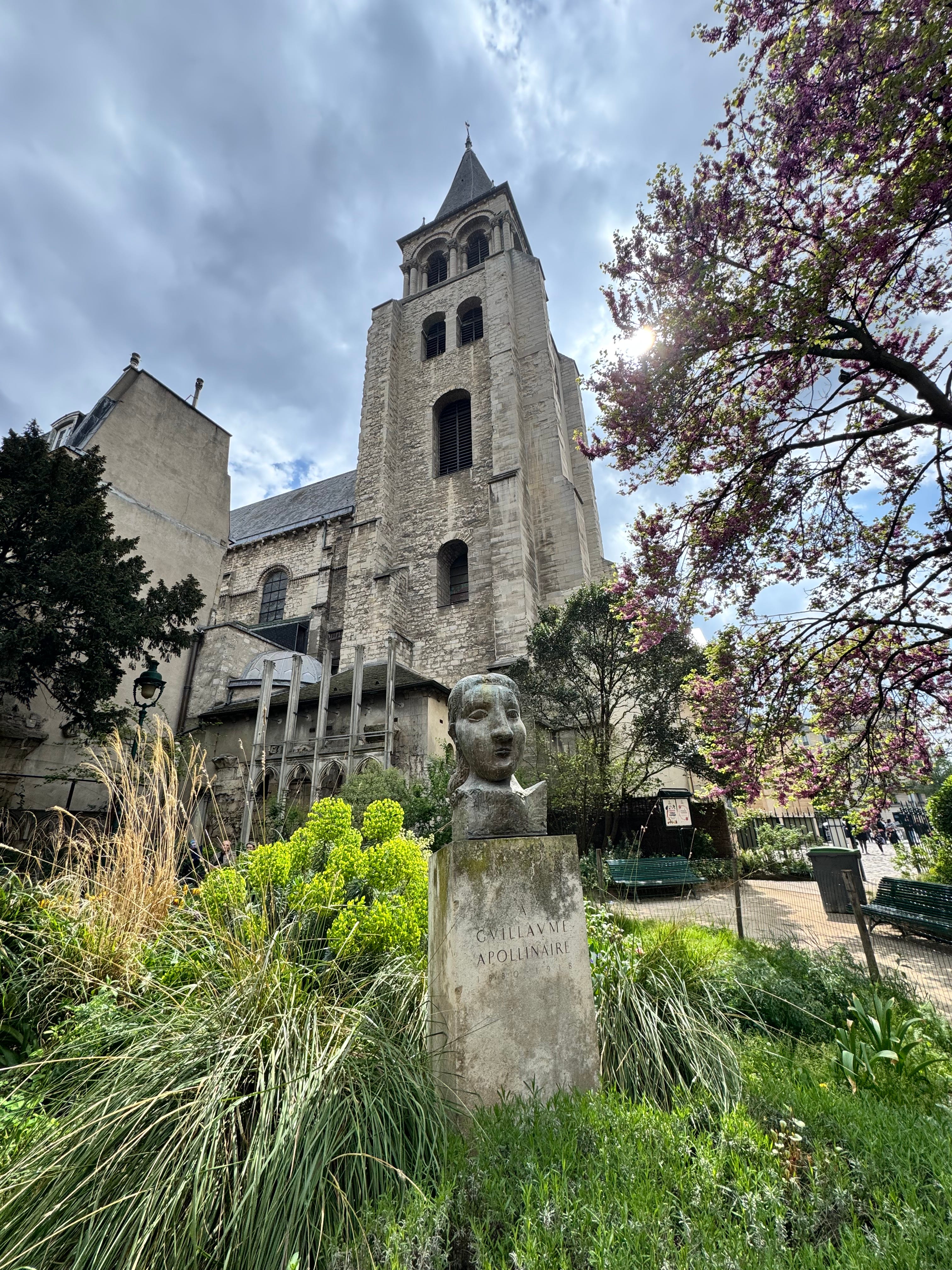
Following lunch, I continued to wander around the neighborhood, coming upon the Church of Saint-Germain-des-Prés, which I’ve always loved. Saint-Germain-des-Prés feels from a different time than most of the other hundreds of churches in Paris. And, in fact, it is, as it’s the oldest in the city, I believe. Rather than ornate and overblown, it is simple on the outside. Medieval. You can picture it plopped in the middle of a field somewhere, the peasants toiling the farmland around it and friars with that stereotypical haircut—bald on top, long hair circling the sides—passing through its doors. I’d never been inside before, but the doors were open this time, so I walked in and was immediately astounded by the vibrant interior. Contrary to the plainness of the light-gray stone outside, the church’s inside is awash with color and pattern. The parts of the wall not painted with religious scenes are covered with a strange, conflicting mix of designs. No column or archway has been left bare. My eyes didn’t know where to rest; there was just so much to see. How thrilling it must have been those hundreds of years ago to come into the church and be surrounded by this scene. In an age before Netflix, the church’s walls would have certainly served the purpose, especially when you couldn’t understand a word of the Latin homily the priest was delivering.
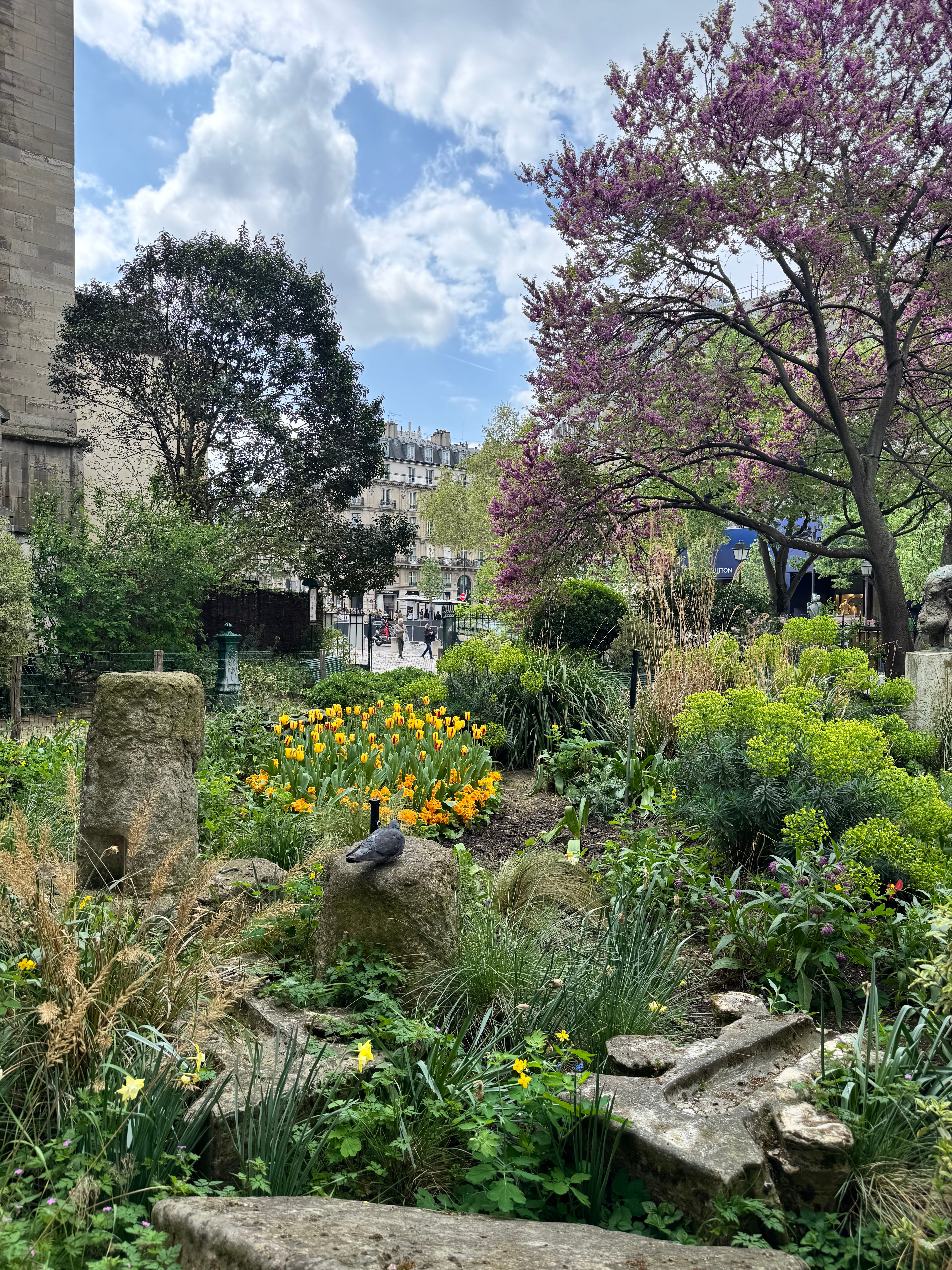
The streets surrounding the church were full of quaint shops and cafés. In one courtyard, I passed a small shop that looked like something that belonged on Diagon Alley in a Harry Potter film. Above the shop window and doorway was a black sign, handpainted in ornate gold letters with the words: Compagnie Française des Poivres et des Epices (French Company of Peppers and Spices). Inside, the walls were lined with shelves that made it look more like an old apothecary than a cooking shop. These shelves were stocked with little tin canisters of various sizes containing all kinds of spices. An array of spices and peppercorns were displayed throughout the shop, each covered with a clear glass dome, which you could lift in order to get a whiff. I couldn’t help but go in and buy some red pepper flakes to use on a dish I was cooking for dinner that evening.
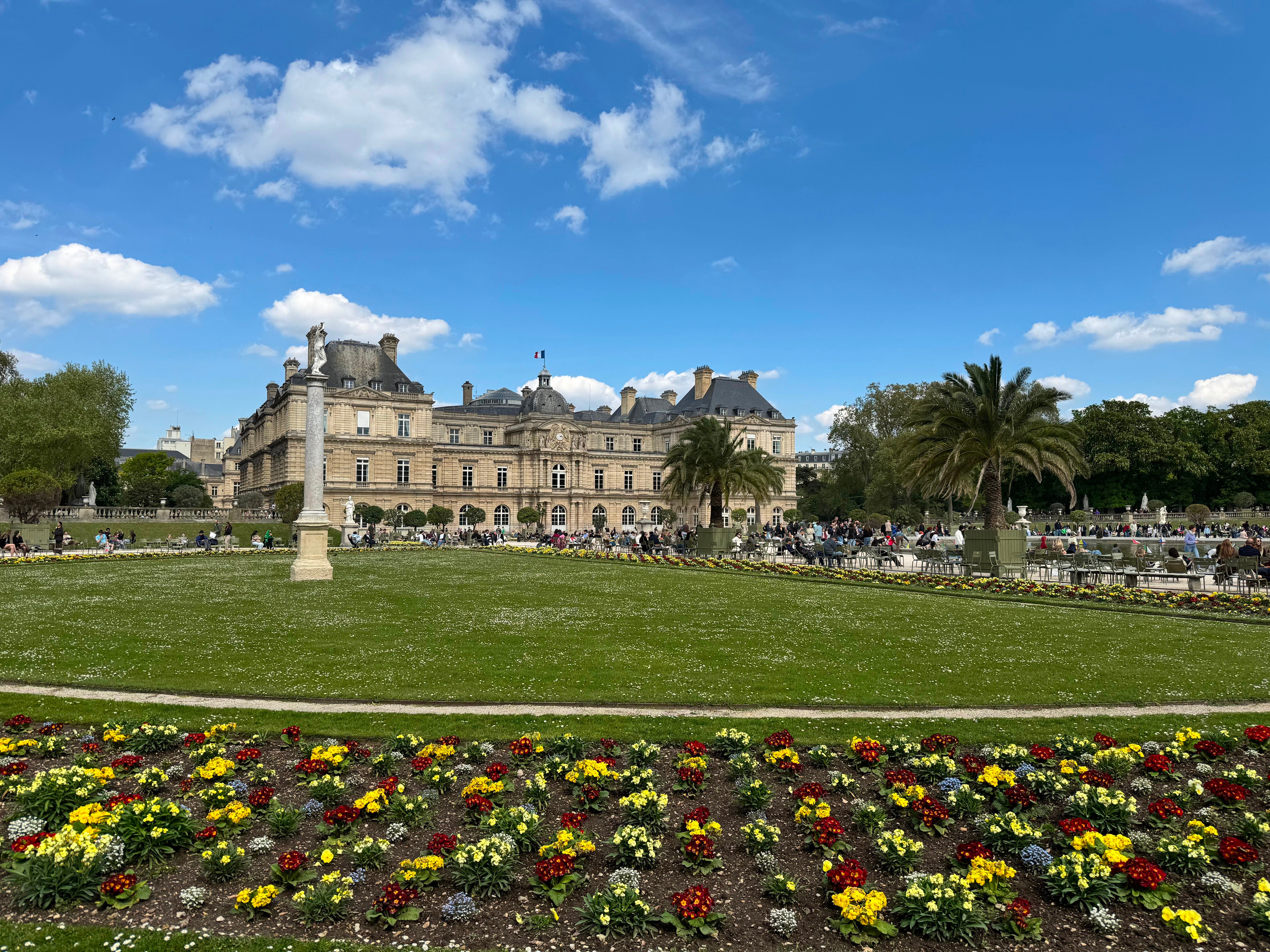
I gradually found my way to the Luxembourg Gardens and strolled around the beautiful grounds, discovering that, tucked away in a back corner, there is an apiary, full of twenty or so beehive boxes, the bees buzzing happily in and out. Where does the honey go? There’s no shop that I can see. Do they sell it somewhere? Or just distribute it among the park’s gardeners? There’s a sign offering free classes every week—both theoretical and practical—so that Parisians can learn the science and art of beekeeping. I wish my French were better so I could join.
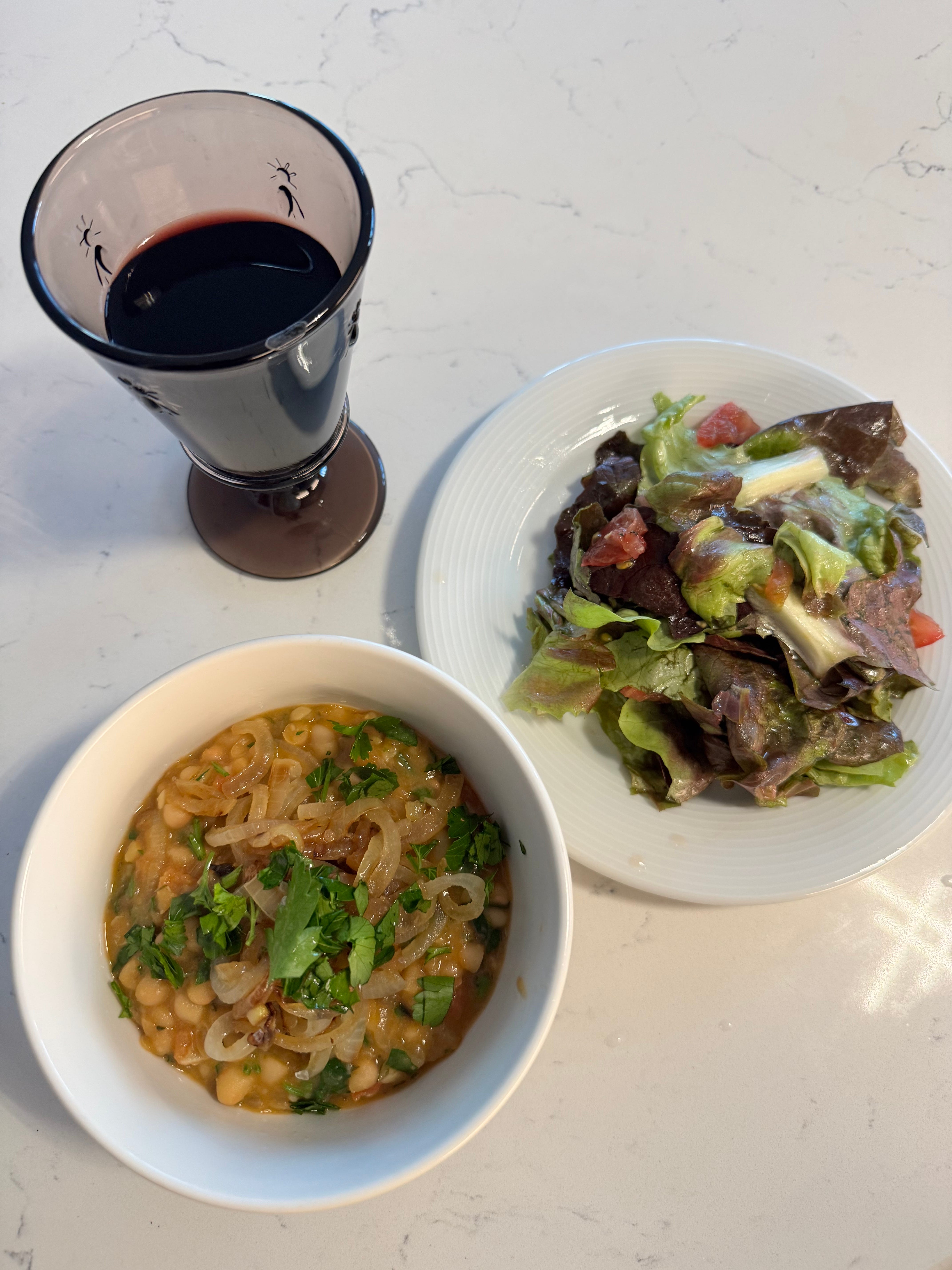
That night, I put on some music and cooked a dish of rosemary white beans with frizzled onions and tomato that I found in the New York Times cooking app. I sipped a gorgeous Bordeaux I had bought earlier in the day as I sliced the milk-white onions and plump tomatoes from the vegetable stand next door. I sprinkled in the red pepper flakes I’d bought at the apothecary earlier in the day. I threw together a salad, as well. Just lettuce with some of those tomatoes, a nice olive oil, and some cabernet vinegar I found in the cabinet at the AirBNB. The meal didn’t take too long to make—just half an hour or so. But when I sat down and took my first bite, I felt that same flood of joy I’d felt earlier in the day at the sidewalk café. A wave of flavor from just simple, fresh ingredients. And a nice red, both to wash it down and bring out a new set of tastes.
I didn’t visit one museum that day. I didn’t climb the Eiffel Tower or see the Mona Lisa. I just walked around this spectacularly beautiful city. And that’s basically been my entire first week in Paris. According to my Fitbit, I’ve taken 130,018 steps over my first week here, or about 59.4 miles (95.6 km). My feet are aching, to say the least. But my heart is so very full.
Reading the news over the past few months has been exasperating. There’s been such a constant onslaught of destruction. Lives are being decimated on a daily basis. My career and that of many others working in higher education or as civil servants is under threat. I’ve spent the last couple weeks trying to find an escape route for one of our students who has already overcome the most horrifying situations—losing both of his parents in a civil war, growing up in a refugee camp. Despite all this loss, he decided to work for a better world. He started his own organization to help his community, and he’s getting a graduate degree in my program so he can do that job better. And now he’s being targeted by the U.S. government, simply because of his country of origin. It’s hard not to be completely obliterated by things like this.
But I’ve also been thinking a lot about the importance of joy and happiness in these moments—not as escapism or so one can ignore these terrible things. But so that we have the energy to fight, and so we remember what it is we’re fighting for. Life is so tenuous, and the fragility of it all seems so apparent to me, now more than ever. Given the joy I’ve been feeling this week and comparing it with the anxiety and despair that has characterized a lot of my time these months before coming to Paris, I’m learning again that happiness is, in so many ways, a choice, and one that I need to make for myself intentionally and much more often—if for no other reason than to have the energy to do the work of building a world where that same happiness can be felt more universally.
Comments
Nothing yet. Say the first thing.
Sign in to join the conversation.