
The US-Iran conflict is heating up again. President Trump says the ceasefire is “over”; Iran says the Strait of Hormuz is closed, Trump says it isn’t but has just launched attacks on Qeshm Island and Bandar Abbas, which won’t help reassure the shipping industry. As the war heated up again last week, markets responded cautiously — the assumption remains that Trump won’t re-escalate until after the mid-terms. Over the weekend, the situation has deteriorated so expect markets to begin the week with higher oil prices and bond yields, weaker equities and a strong dollar.
If we are heading back to full-scale war such as we saw in March — not my expectation — I would expect the rise in oil prices to be larger. Oil reserves are lower than they were in March so there’s less ability to replace Gulf oil with releases from reserves.
While oil prices had reversed most of their war-time increase by the end of June, inflation data show core inflation rates are not yet responding to lower fuel prices as headline inflation is. So the supply-shock dilemma for central banks remains: downside risks to growth but upside risks to inflation. I discuss below how the Reserve Bank of New Zealand and Bank Negara Malaysia last week responded to that challenge.
Then, I’ll review trade data from the US and some Asian economies to get the most up-to-date perspective on the AI investment boom that has been so important not only to US and Asian economic growth but also to equity markets. TLDR: we’re past the peak on growth.
I’ll review the latest inflation data received last week and then finish up as usual with a brief market summary to conclude this week’s Talking Points and get you ready for the week ahead.
Let’s dive in.
Talks between the US and Iranian government are continuing even while the ceasefire has broken down and their respective leaders exchange threats against each other. The Strait of Hormuz may or may not be closed. Oil markets have taken notice but the response so far has been rather muted. Spot Brent rose about 10% last week; futures a little less than that. Brent had by last Friday almost completely reversed its war-time rise, so this past week’s increase puts December futures about 10% higher than they were on the eve of the war.
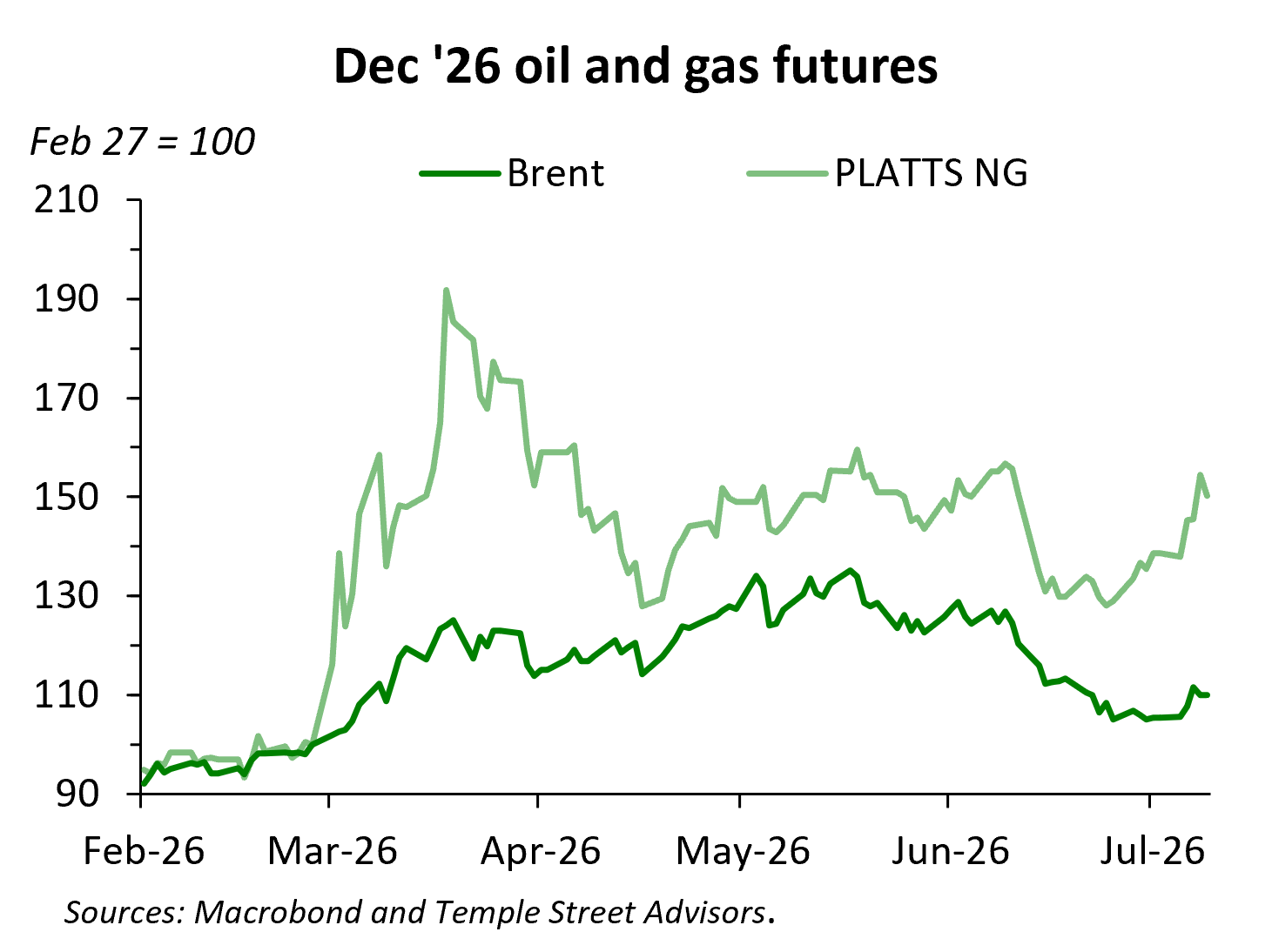
But natural gas prices have risen much more than crude oil prices recently. Prices in Asia and Europe have risen about 20% from their June lows and are now up almost 60% from their immediate pre-war levels. Prices in Australia and the US are about 16% below their pre-war levels, but with liquification plants already operating near capacity both countries cannot simply step in an replace the missing Middle Eastern gas.
So while consumers in most economies are still seeing lower gasoline prices — although prices in the Philippines, Thailand and New Zealand still have some way to go to price in the decline in crude oil prices over the past few weeks — power generators and industries relying on natural gas as feedstock still face very elevated costs. And these have probably not fully been passed on to consumers. The same is likely true of airfares. Jet fuel prices are coming down as oil prices decline, but consumers aren’t yet seeing much relief in airfares.
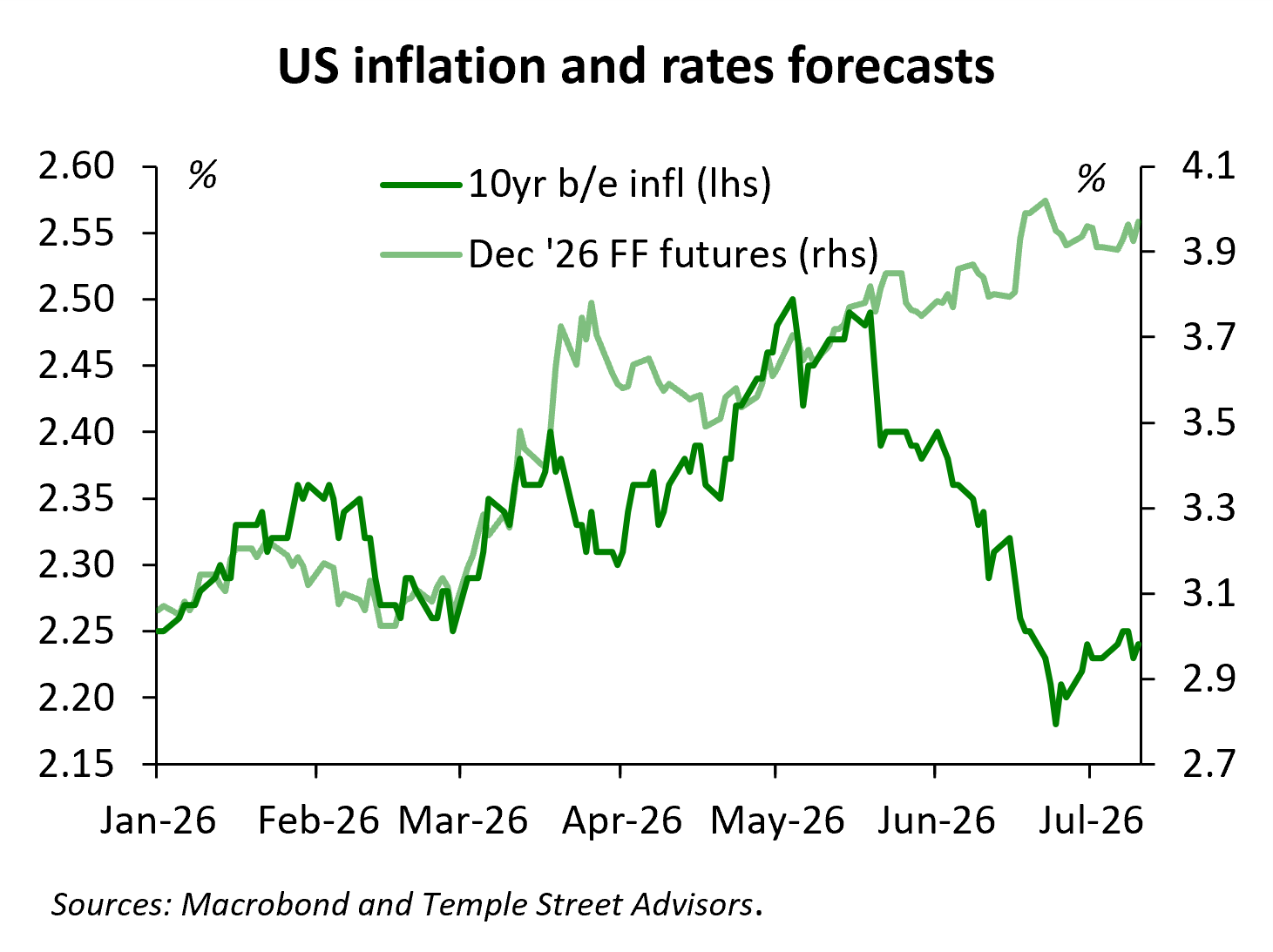
Last week, I described this chart, plotting US inflation expectations against the December Fed funds futures, as the most important one for financial markets today. The backup in oil prices last week has pushed US inflation expectations up very slightly. The 10yr breakeven inflation rate rose one basis point (5yr b/e rose 4bps) and the December 2026 Fed Funds futures rate rose 6bps. Futures now have the Fed funds rate rising 35bps by year-end but with no change in 2027. The 10yr breakeven inflation rate has fallen about 25bps since early May, and previously this would probably have led to about a 55bps decline in the futures rate. But instead, Fed funds futures have risen about 20bps. That roughly 75bps differential reflects, I think, the market’s assessment of how much more hawkish Warsh is compared to Powell. As I’ve noted before, I have my doubts about that.
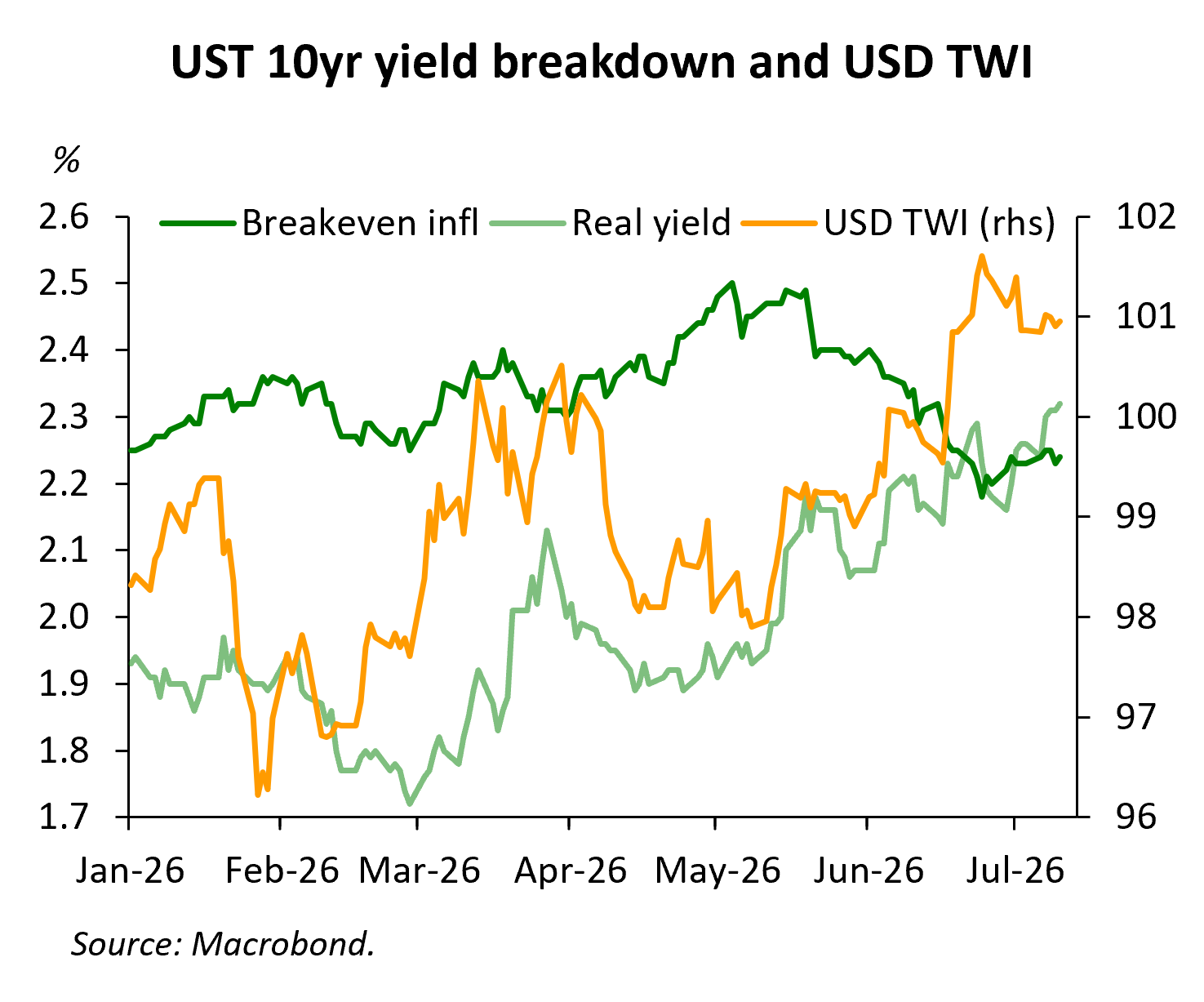
The US ten-year bond yield rose 7bps last week while the yield on inflation-protected bonds rose 6bps (hence the 1bp increase in breakeven inflation). I’ve flagged before that rising real yields in the US since the Iran war began have been associated with a stronger dollar and the ICE’s trade-weighted dollar (mirroring Bloomberg’s DXY) rose very slightly last week. Rising real yields have also been associated with a falling gold price, and gold declined another 2% last week.
As expected, the Reserve Bank of New Zealand last week raised its cash rate by 25bps to 2.50%. Their previous change had been a rate cut in November last year. In their May policy statement, the Monetary Policy Committee had raised their inflation forecast — expecting headline inflation to rise to 4.2% in Q2 then 4.3% in Q3 before falling back into the target range by mid- next year — and had forecast three rate hikes by March next year and a fourth by Q3 of 2028. So a rate hike last week was not a surprise.
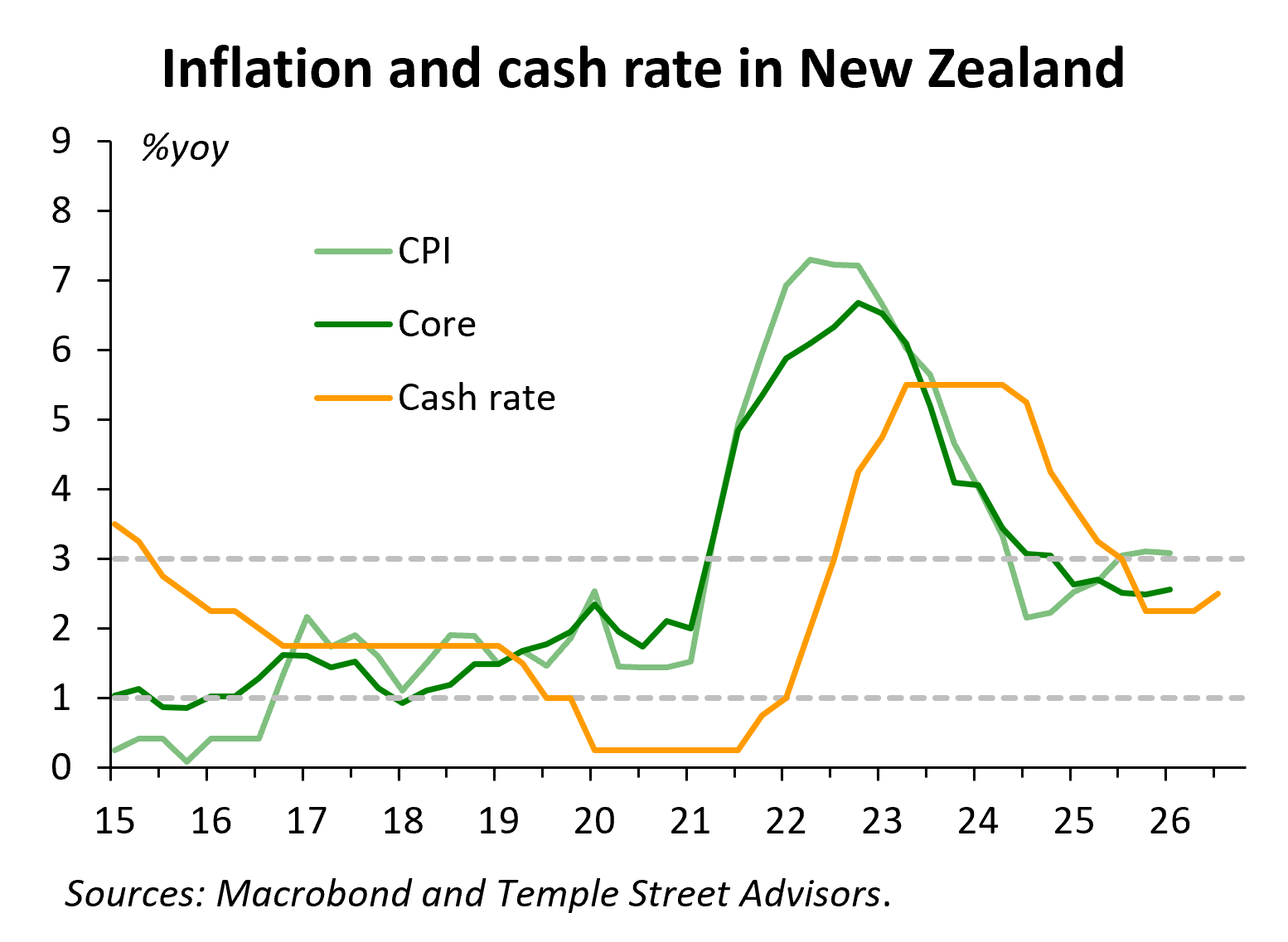
But as I’d expected, last week’s statement expressed a little less concern about inflation in the near-term because of the decline in crude oil prices since May. Inflation in Q2 is now expected to have been 3.9% and is forecast to fall to 3.3% in Q3 — 1ppt lower than the May forecast.
As for the interest rate outlook, inflation risks are still probably weighted to the upside — while most MPC members see risks as “balanced” two of the six see risks still biased to the upside. And last week’s rate hike was described as only a first step in reducing the degree of monetary stimulus, to prevent an “unwarranted” easing of financial conditions. But whereas in May the Committee saw rates rising by 75bps over the following three quarters and then perhaps a long pause before a final hike, I think perhaps the pause may come earlier next year. So a rate hike in Q4 this year remains, I think, very likely. But I can see the possibility that the Committee pauses in Q1 next year and hikes in Q2. So a slightly slower pace of rate increase, perhaps.
In Malaysia, again as expected, Bank Negara kept its policy rate unchanged at 2.75% where it has been since July last year. In its statement, the Monetary Policy Committee noted that the economy has been resilient in part due to surprisingly strong exports and that while there has been “some initial pass-through of higher global cost pressures” headline inflation averaging 1.7% through May was broadly in line with expectations. That headline rate had risen to 2.0%yoy in May from 1.4% in February even though most consumers were insulated from the direct impact of the oil shock by government fuel subsidies. Fuel price inflation in the CPI peaked at 6.1% in April and had eased to 5.3% in May.
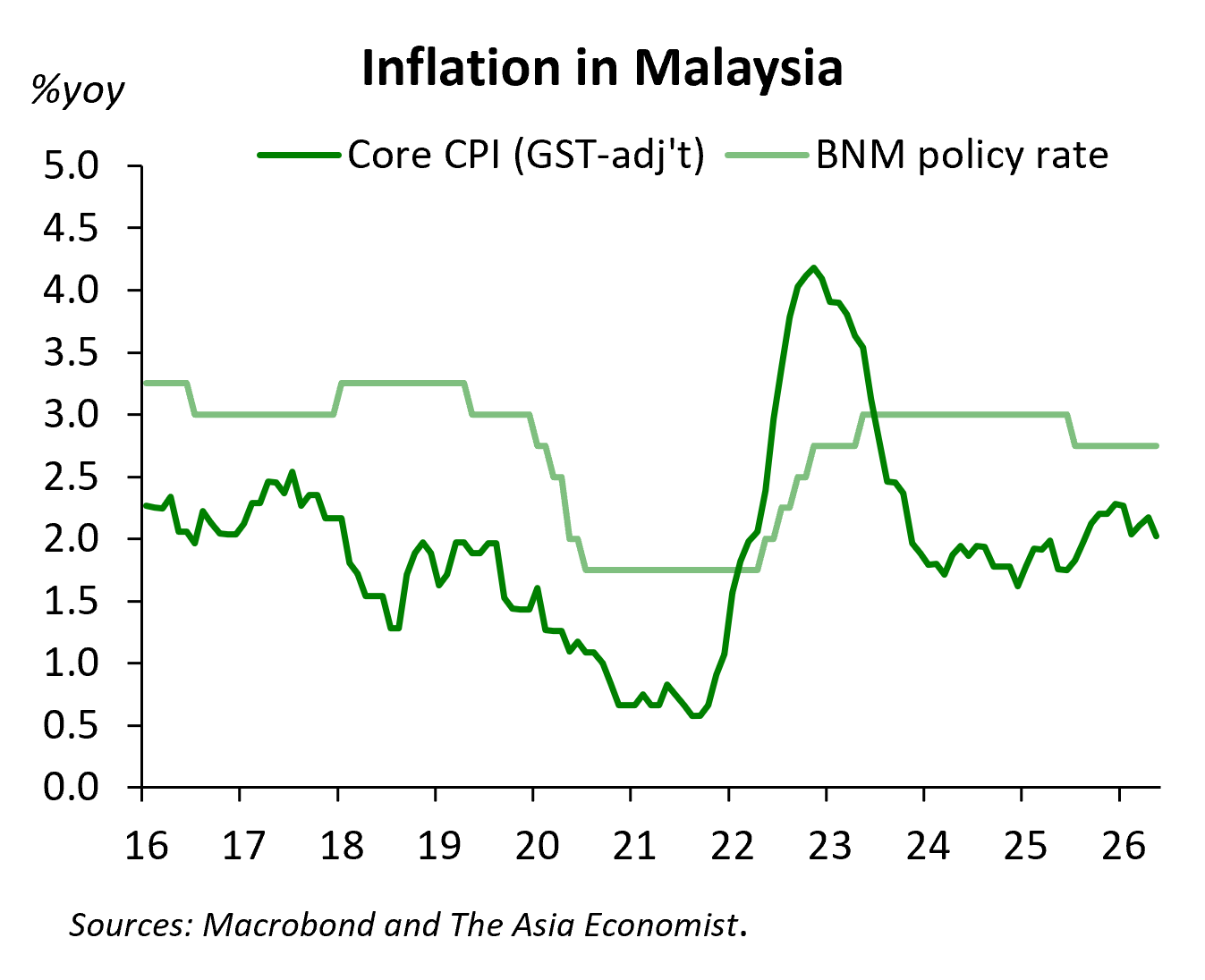
Core inflation slowed in May to 2.0% from 2.2% in April. The core inflation rate was also 2.0% in February but had been 2.3% in December and January. There’s no explicit inflation target in Malaysia, but I would imagine the central bank is very comfortable with headline and core inflation of 2.0%. While the economy didn’t grow in Q1, the central bank sees growth this year of 4% - 5% (it was 5.4%yoy in Q1) and describes the current level of interest rates as “appropriate”.
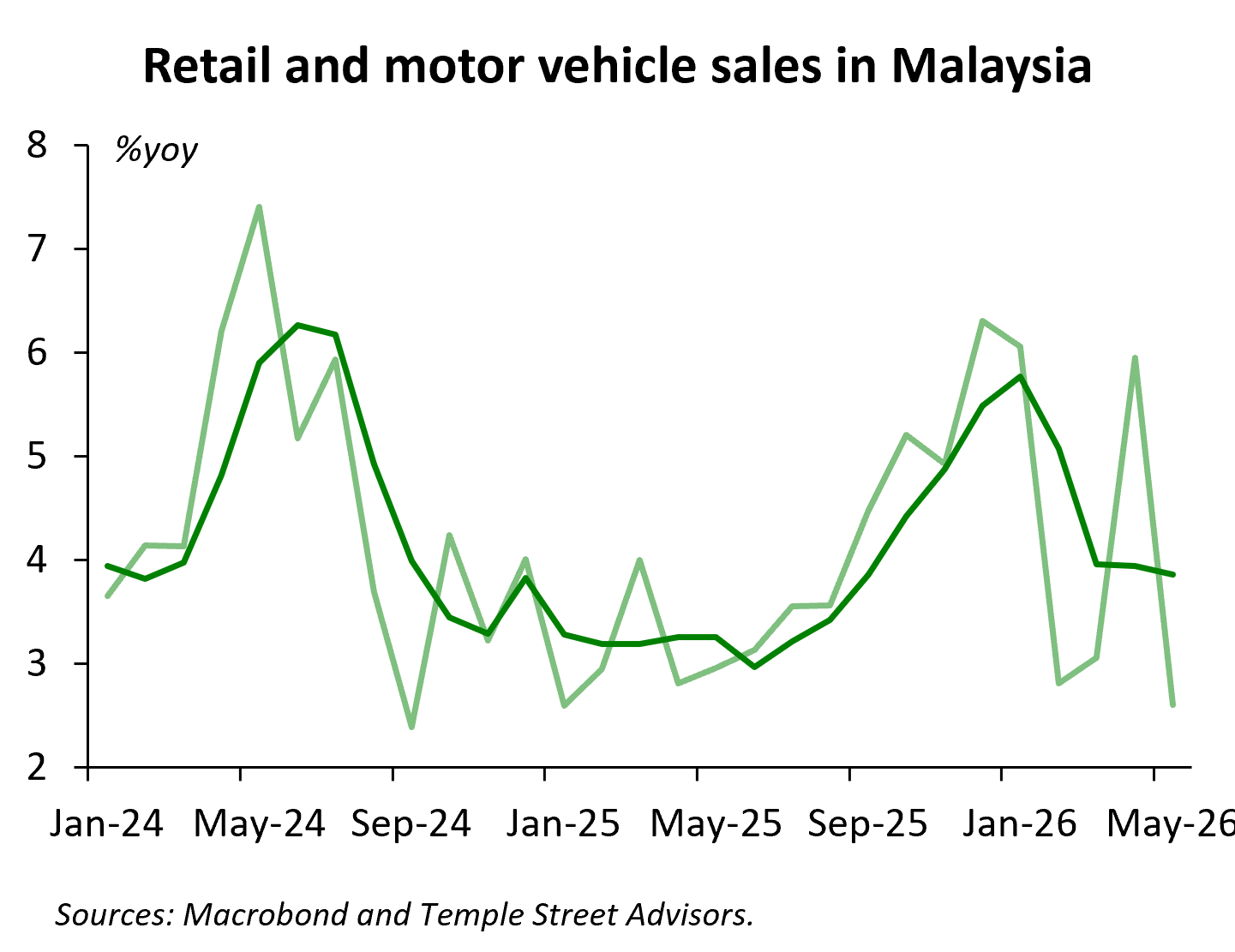
Last week’s report on retail and wholesale trade showed retail sales and motor vehicle sales volumes combined strengthening a little to about 4.3%yoy in April/May from 4.0% in Q1 but below the recent cyclical peak in Q4 of 5.5%.
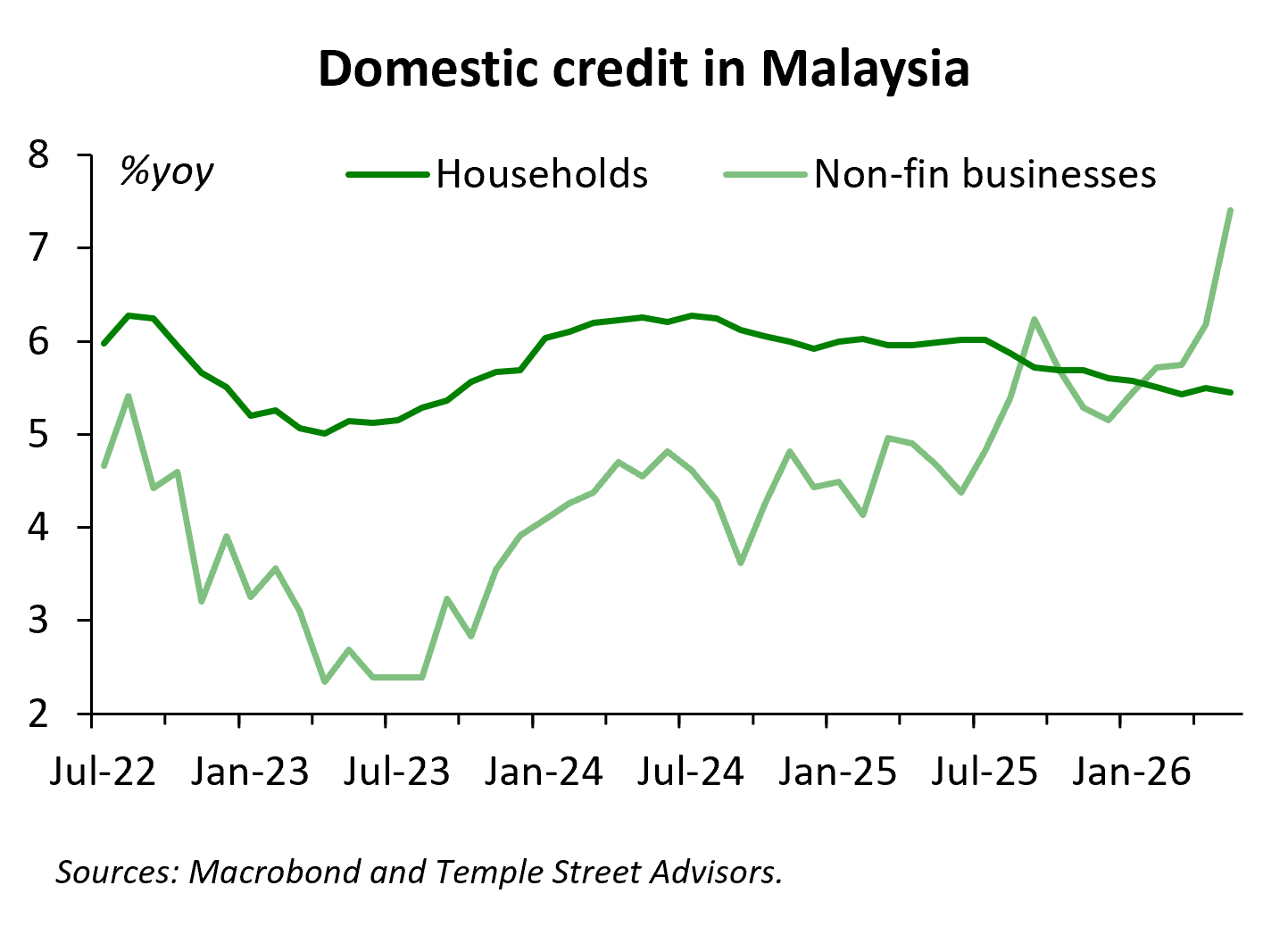
I would note, though, that while the growth and inflation data don’t currently suggest a change in monetary policy is warranted, the credit data do offer one rationale for tightening policy — perhaps via macroprudential regulations rather than a rate hike. Bank credit to the corporate sector has picked up strongly this year.
We got some important trade data last week. Firstly, from the US, where exports and imports both rose about 15%yoy in May and the trade deficit rose to USD106bn from USD82bn in April. But I am especially interested in US imports of computers and related parts, having made the case many weeks back for using this as a monthly indicator of the subsequently released quarterly GDP figures on investments in imformation technology hardware. About a quarter of US investment spending in this category is on imported equipment.
(For the full text, please subscribe to The Asia Economist.)
Comments
Nothing yet. Say the first thing.
Sign in to join the conversation.