
Treasury Secretary Bessent’s announcement of a doubling of long-term bond buybacks dominated the news last week, and I’ll comment on that at some length below. Spoiler alert: with bonds as with FX, government intervention without fundamental reform doesn’t achieve anything except reveal your pain points. By prioritizing lower bond yields over a strong dollar, Bessent will get more inflation for probably very little interest rate relief. The US is still a long way away from yield-curve-control, but took a step closer last week. I’ll also review Japan’s experience with yield-curve control.
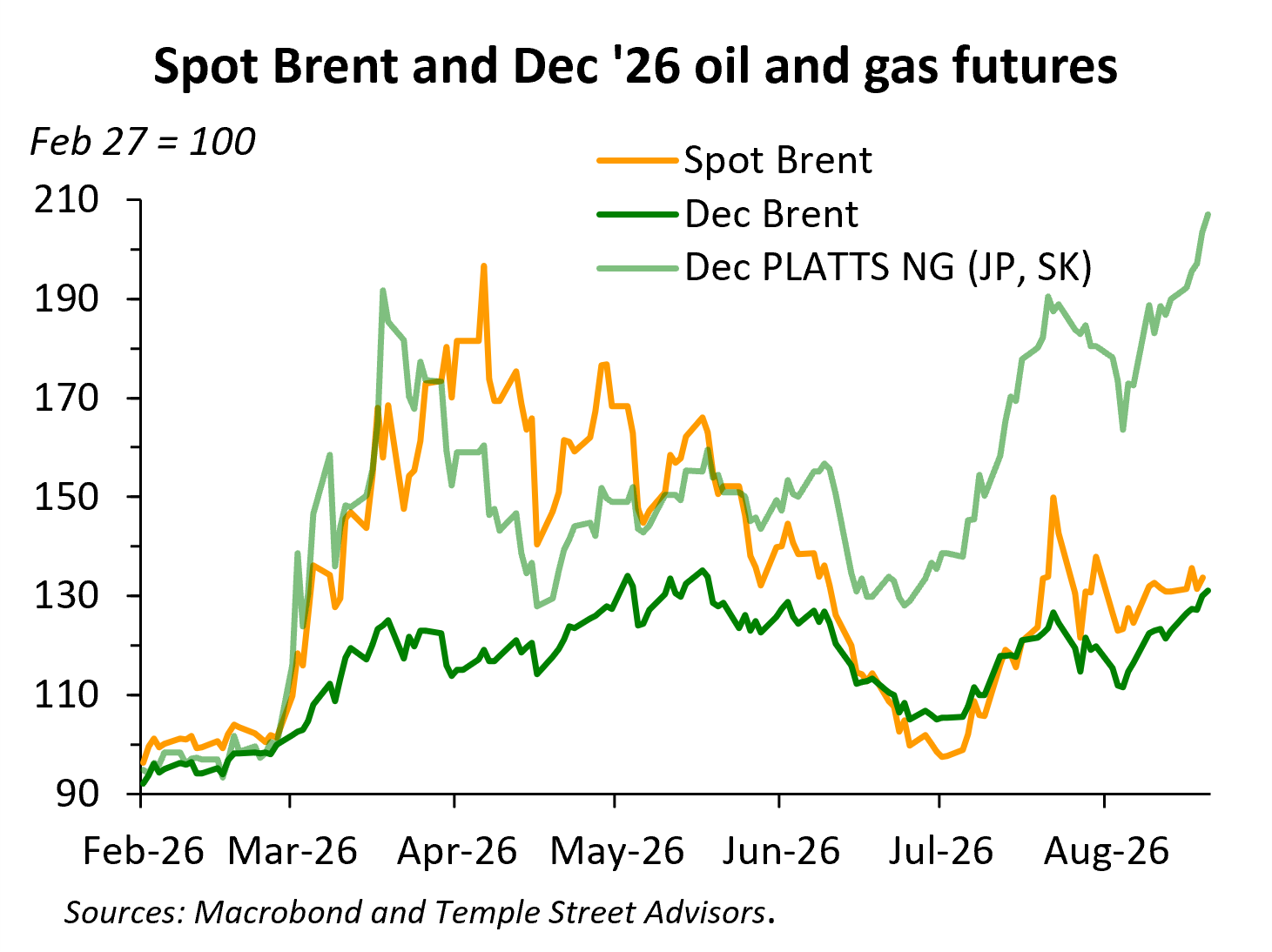
But last week was notable for two other reasons. First, with the expiry of the 60-day US-Iran ceasefire and renewed threats from Trump against Iran (and Oman), December oil futures rose to their highest level in three months — just 3% below the wartime high. Natural gas futures extended their rise — now more than double their pre-war level. Cracks spreads have tripled since the war began, so diesel and gasoline prices are rising again after consumers got some relief from falling oil prices in June.
Second, on Friday afternoon the trade talks between Canada and the US ended without agreement. A deal had been reported to be very close — the original Wednesday deadline was extended to Friday to give negotiators more time to work out the details — but three issues seem to have been insurmountable. First, the Canadian side had expected that the agreement to lower the US tariff on “autos” would include heavy trucks, not just cars and light trucks. But Secretary Lutnick didn’t agree.
Second, the Canadian government objected to US conditions that impinged on its ability to negotiate with third countries in two respects. First, the agreement apparently would have required Canada to apply tariffs on some goods — probably autos and other goods covered by the sectoral tariffs — that were aligned with US tariffs. This “fortress North America” approach might have made sense if the US had granted imports from Canada much lower tariffs than imports from other countries, but that wasn’t the case. Moreover, a standard part of all of Trump’s deals since Liberation Day has been a requirement that the US approve any trade agreements the other country reaches with third countries — i.e., China. That was unacceptable to Canada and seems to have come up late in the talks.
In short, faced with a permanently less open US market — which is what the US negotiators insisted is the reality — the deal that was offered would also have limited Canada’s ability to try to reach trade liberalizing agreements with other countries to offset the partial loss of access to the US. For a small open economy, that would have been a very damaging concession. I pointed this out last year in the context of the trade deals reached between Trump and most Asian economies. Perhaps they just hope Trump doesn’t notice if they try to trade more with China?
Third, PM Carney said that certain provisions in the agreement would have harmed Canada’s protections for cultural industries, especially French language products. Apparently, Washington had sought concessions on French-language rules for appliances and instruction manuals, as well as legislation promoting the visibility of French-language cultural content. This was described as a last-minute addition to the deal, which was unacceptable.
In response to the breakdown in talks, Canada now faces a 50% tariff on about 7% of its exports to the US. That brings the effective tariff rate up to about 7% — Canadian energy and potash exports are still exempt as is the embedded US value of Canadian auto exports and most CUSMA-eligible goods have been exempt until now. But Canada has threatened dollar-for-dollar retalliation, and Greer has promised retalliation on Canada’s retalliation in a repeat of last summer’s US-China escalation.
So tariffs between the two countries will likely continue to rise until one side relents. For now, a large majority of Canadians support the supposedly tough line that Carney is taking. That is not true of the US, where most people disagree with Trump’s trade policy, especially in border states that trade heavily with Canada.
The nuclear option for Canada would be an export tax on energy, which accounts for about one-third of exports to the US. This was raised obliquely last month — PM Carney rejected the idea of an export tax that, up to then, hadn’t seriously been considered. He mentioned the importance of energy on Friday evening as well, as an example of how much the US benefits from trade with Canada (as a reminder, the US runs a surplus in goods and services trade with Canada). Trump being Trump, if Canada were to in any way restrict energy exports to the US he probably would threaten to invade. Part of the draft deal, though, was an agreement to re-start a pipeline project that Biden had canceled. I wonder whether Carney will agree to let that go ahead now.
The Asia Economist is a reader-supported publication. To support my work (data are expensive!), please upgrade to a paid subscription. I offer a 75% discount for students.
For the second time in less than three weeks, Secretary Bessent has been reminded of the impotence of government intervention when it isn’t backed up by policy changes. First, the intervention in support of the Japanese government’s July 30-31 second attempt in three months to try to break the hold of ‘speculators’ in the foreign exchange market. The yen strengthened by about 5.5% between Thursday morning in New York on July 30 when the intervention began and Monday morning in Tokyo when traders there had a chance to react to the second day of intervention (which included Bessent’s contribution) on Friday. By Monday afternoon, though, the yen was depreciating again. The same pattern had been seen in April and May when the Japanese authorities intervened three times. As soon as the third intervention on May 4 cleared, the yen began depreciating again.
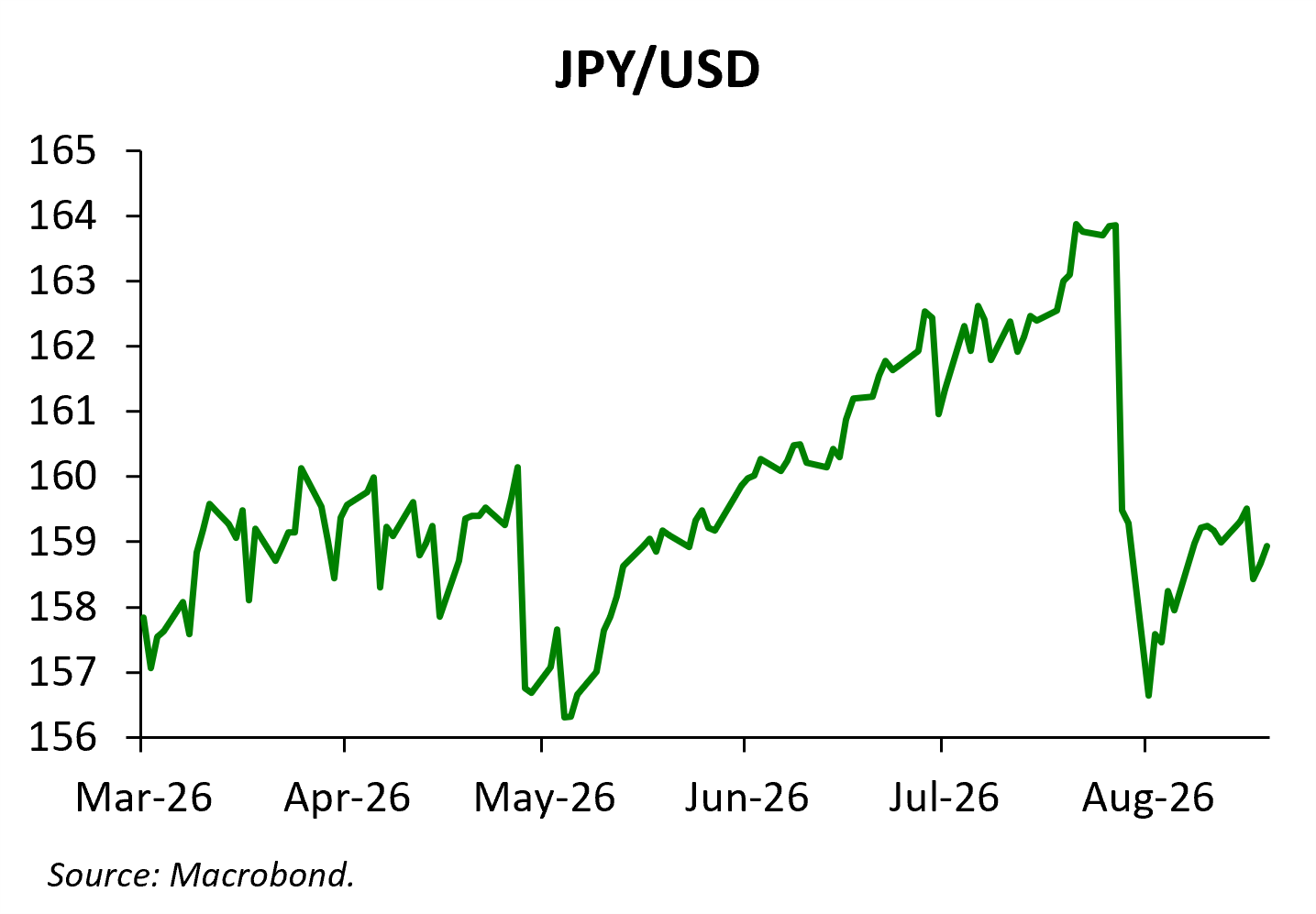
Again, at the extreme right side of this chart, you can see how the currency responded to Bessent’s buy-back announcement last Wednesday. The yen rose almost half a percent against the dollar — in line with most other major currencies — as US real yields fell but then the following day resumed its depreciation.
So too, the bond market response to Bessent’s announcement that the size of bond buybacks would be doubled to USD5bn per operation from September 9 to November 4. The thirty-year yield fell 9bps immediately — the 10yr yield fell 6bps — but by the afternoon in Asia trading the following day yields were rising again. By the end of the week, both yields were higher than they had been when the increased buyback was announced.
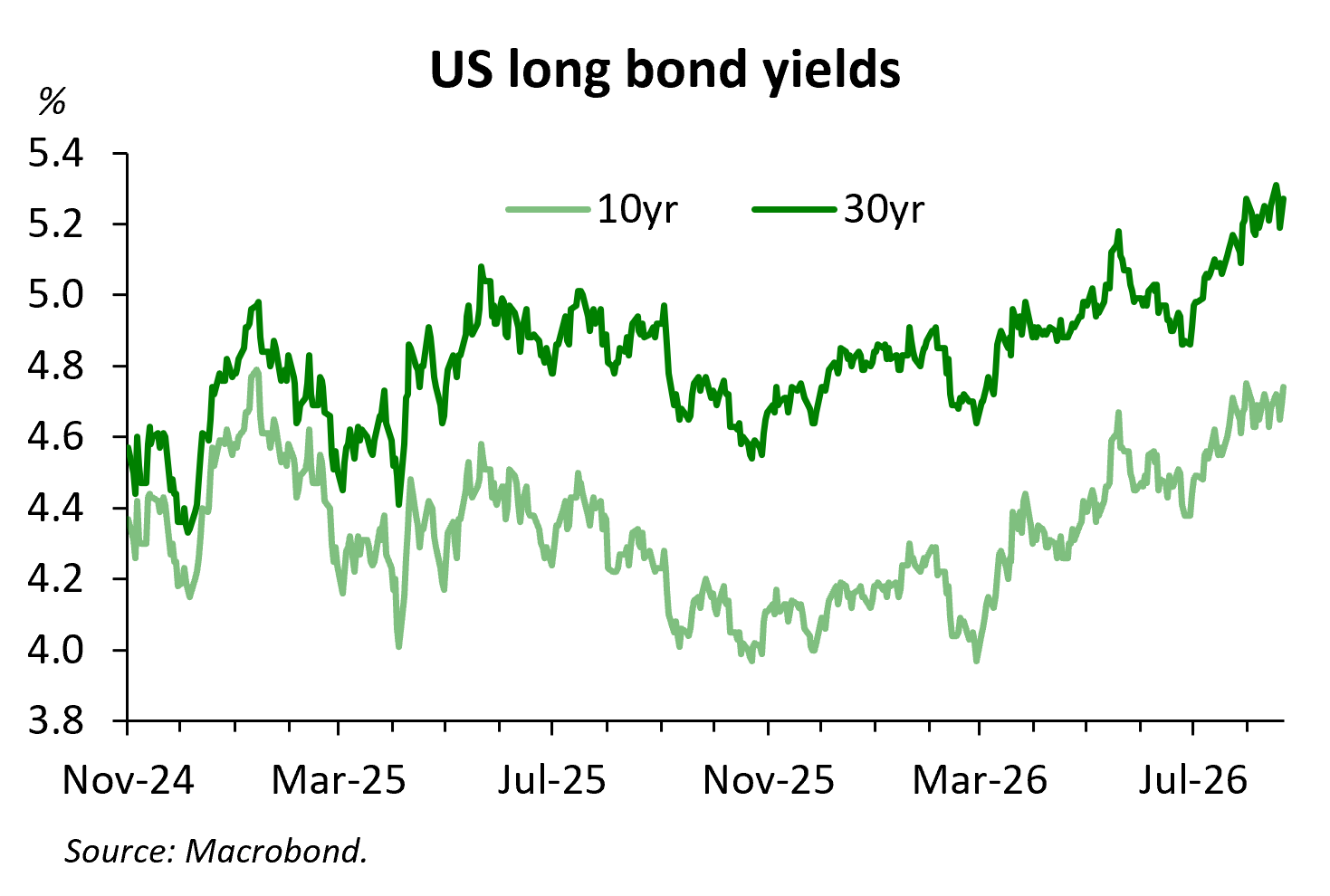
Bessent has often said that his and the Trump administration’s economic policies should be judged by how the ten-year bond yield behaves. Remember that after the “Liberation Day” tariff announcement triggered a selloff in US bonds, Bessent was reported to have prevailed upon Trump to pull most of them back. With the 10yr yield last week approaching the highest level since Trump’s re-election and the 30yr yield at a 19-year high, reports suggest it was Trump who told Bessent to do something to bring yields down.
Channeling so many emerging market ministers of finance, Bessent claimed that prevailing yields did not reflect the true fundamentals of the economy and that the was in possession of “asymmetric information” — I think he just meant non-public information — that had it been available to the market would have prevented the run-up in yields. When pressed to explain, he simply responded that yields were being pushed higher by temporary factors, such as rising oil prices due to the war in Iran and increased corporate bond issuance that was pulling capital out of government bonds, neither of which is news to the market.
When bond yields bounced back up Bessent said that the size of buybacks could be higher than the USD4bn announced. He then got to the crux of the matter, saying that the administration was going to announce important fiscal consolidation measures soon and that the size of the deficit has probably peaked.
So finally, the Treasury Secretary conceded the real issue: even with real GDP growth above 2% and a labour market essentially at full employment, the fiscal deficit is above 7% of GDP and rising. The challenge, though, is that 85% of federal expenditures go to Health and Human Services (i.e., Medicare and Medicaid); Social Security, Defense and Veterans Affairs. If the administration is serious about fiscal consolidation, they’ll have to look at raising revenues. But Republicans have for decades strenuously resisted efforts to increase taxes.
Bessent and Trump obviously have a preference for lower long-term bond yields. Trump sees Fed easing as an important means of getting bond yields down. Bessent is prepared to consider cutting the deficit but faces an uphill battle. But increasing buybacks, or expanding the FIMA so that future yen-buying intervention doesn’t impact the US bond market are not yield curve control. Yield curve control, practiced by the Bank of Japan from September 2016 to March 2024 or by the Reserve Bank of Australia from March 2020 to November 2021, is the explicit targeting of a bond yield by the central bank. It means giving up control over the supply of money in order to fix the bond yield.
The Treasury Secretary can’t do yield curve control; he needs the Fed to. But this is exactly the opposite of Warsh’s plans for the Fed. Warsh is avoiding making any statement that would appear to offer any guidance on the future direction of policy or even how the Fed might react to different scenarios for growth and inflation because he wants the bond market to “play the ball, not the referee”. He wants the Fed to glean information from the bond market about how investors see the outlook for the economy as in input into the Fed’s interest rate decisions. But Bessent’s buyback announcement and the yen intervention are deliberately distorting markets, obscuring the signals Warsh wants to rely on. If Bessent/Trump want the Fed to target a bond yield then Warsh’s vision for the Fed — less transparent, less interventionist, a smaller balance sheet — will be completely upended.
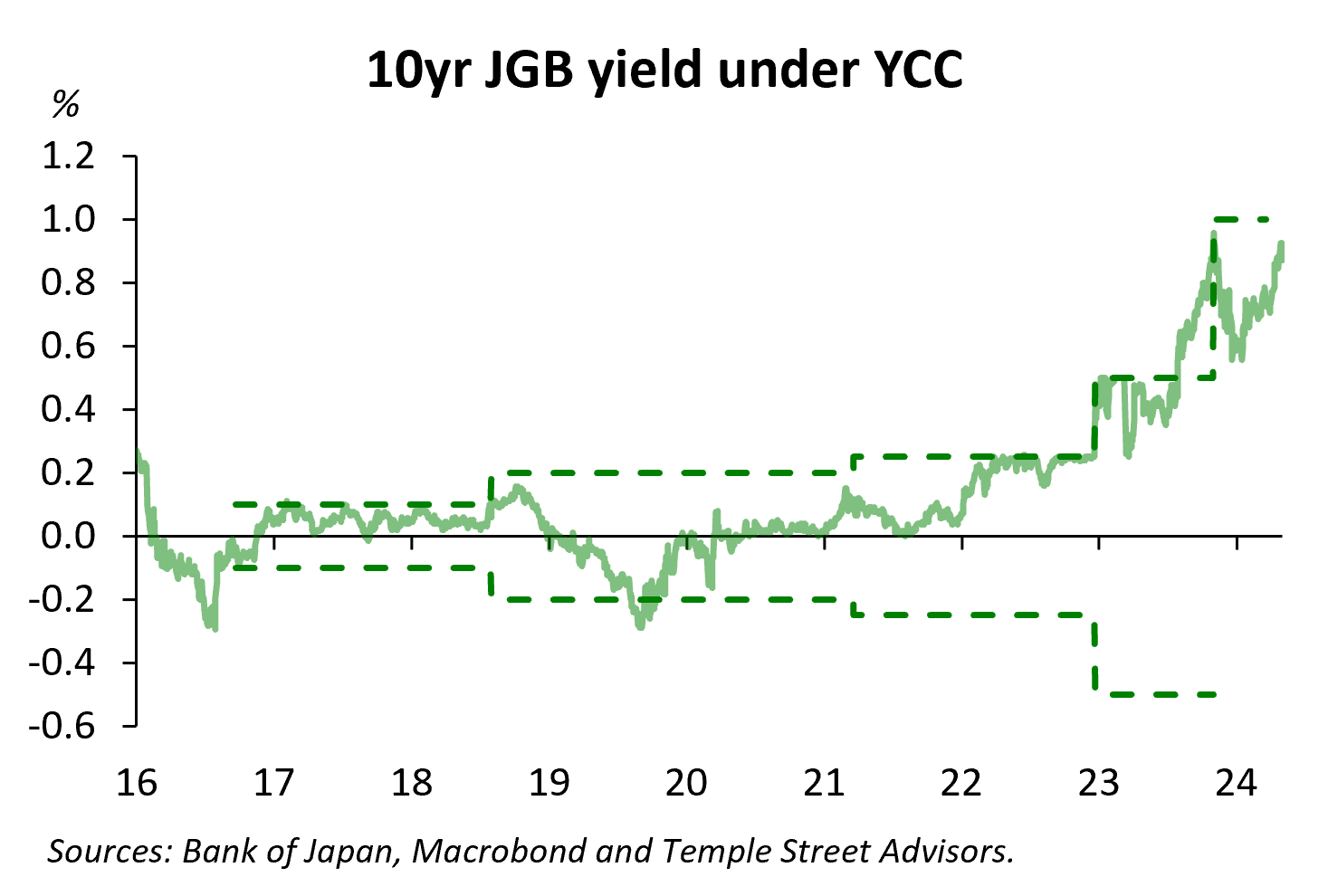
The BoJ adopted YCC in September 2016 by announcing a target for the ten-year bond yield of 0% plus or minus 0.1%. They were worried that an increase in inflation expectations would push yields higher, dampening growth before inflation could sustainably reach the 2% target. In 2018, the width of the target range was estimated to have been raised to plus-or-minus 0.2% and then it was clarified (or raised) at +- 0.25% in 2021 and raised to +/- 0.5% in December 2022. In July 2023, the target range was described as a “reference” and the yield was allowed to rise above 0.5%. The reference ceiling was raised to 1% in October 2023 and no floor was mentioned.
……
Comments
Nothing yet. Say the first thing.
Sign in to join the conversation.