
The coordinated intervention in support of the yen on July 30-31 dominated market discussion last week. The yen opened in Tokyo trading sharply higher as investors reacted to the intervention in New York on Friday. But almost immediately the currency resumed its depreciation, reversing that move by Tuesday afternoon and trading slightly weaker still by Friday morning. So within a week, a quarter of the intervention effect had already been reversed. So what does that mean for the yen going forward? I’ll discuss that below.
On the growth front, we got mixed signals. The manufacturing PMI reports released last week showed strengthening activity in most economies. Only in China, India, Japan and Taiwan was the headline PMI down in July; but except in China even in these economies the level of the index is still very high and the Chinese reading was just above the supposed growth threshold of 50. Fewer economies provide services PMIs but these were higher in Australia and lower, but still high, in China, India and Japan.
A key part of the growth picture is the semiconductor trade story — electronics more generally. Taiwan reported much slower growth in its electronics exports in July. Total export volumes from Taiwan had slowed to 16%yoy in June, less than half the Q1 average. We don’t yet have the July figure. By region, growth in sales to the US continue to slow rapidly in July — sales have broadly plateau’d in USD value. Exports to China and other countries continue to strengthen, but not enough to prevent total export values from slowing.
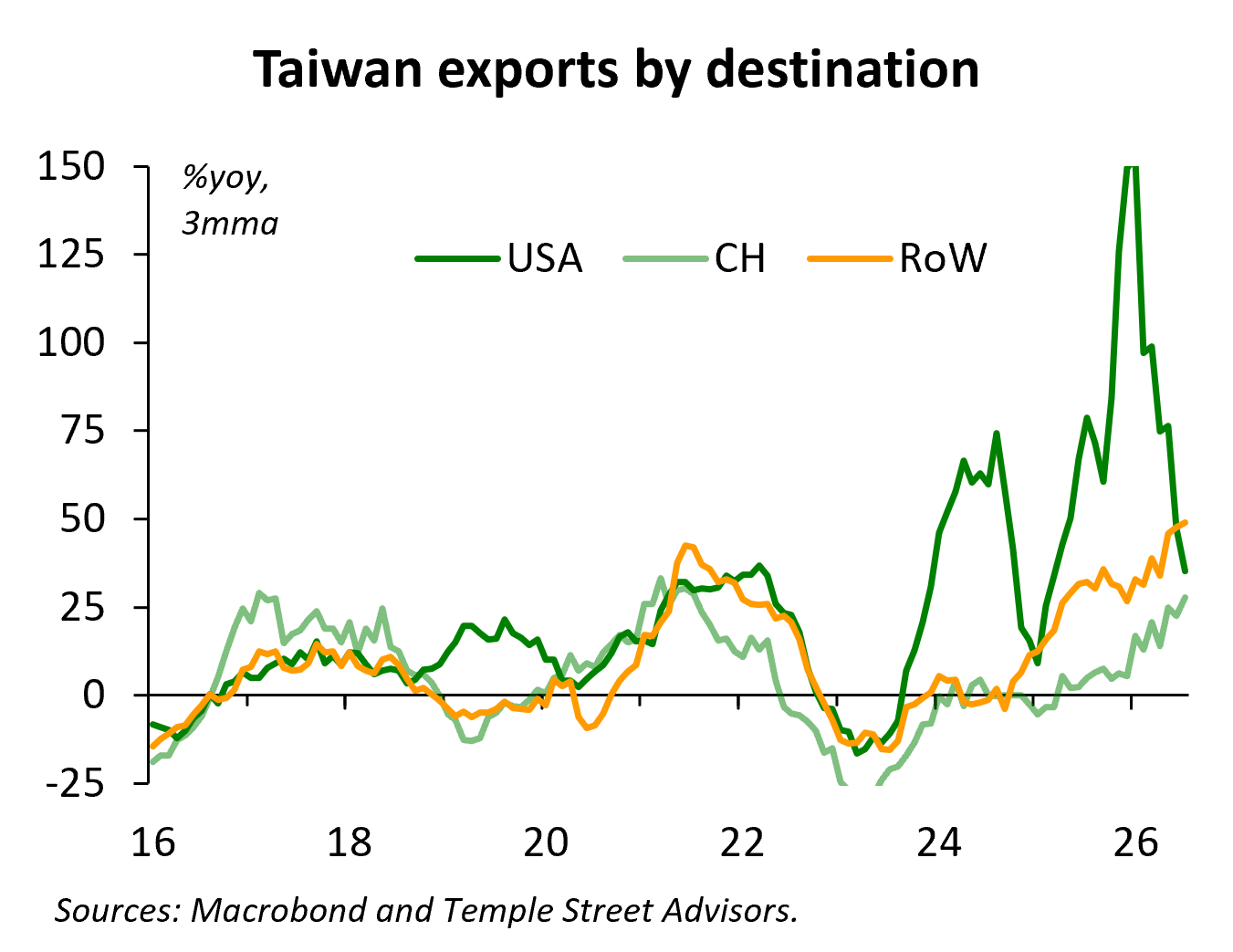
South Korea had earlier also reported slower growth in semiconductor exports. The headline figure is still an extraordinary 176%yoy growth rate, but most of that reflects price increases. Sales volumes were up 28% in June and if I assume prices were stable in July (we’ll get an update this coming weak) volume growth would have slowed to about 21% in July.
The rise in sales to China reflects that country’s catching up to the US lead on AI, but has so far not been enough to prevent total electronics export growth from South Korea and Taiwan from slowing. So, as with the PMI data, the picture that emerges is one of slowing — but still relatively strong — growth. But that does mean, as I’ve emphasized for a few months, that the growth impulse from AI in APAC is weakening.
Inflation data released last week showed slowing inflation across most APAC economies as the Iran war’s effect on oil prices weakened in June. Oil prices rose again in early July but have fallen recently. The July data available so far suggests a slight rise in inflation last month. So central banks got a temporary reprieve on inflation in June but it seems inflation likely picked up again in July.
Except in China.
China reported July inflation on Saturday. Both the headline (0.5% from 1.0%) and core (0.9% from 1.0%) rates declined. The headline figure was driven by falling food prices (down 1.5%yoy vs -1.6% in June) and fuel prices. Gasoline prices in China were about unchanged in YoY terms in July after having been up 21%yoy in May. But prices were raised 7.1% on August 1 so this effect will reverse at least somewhat in July.
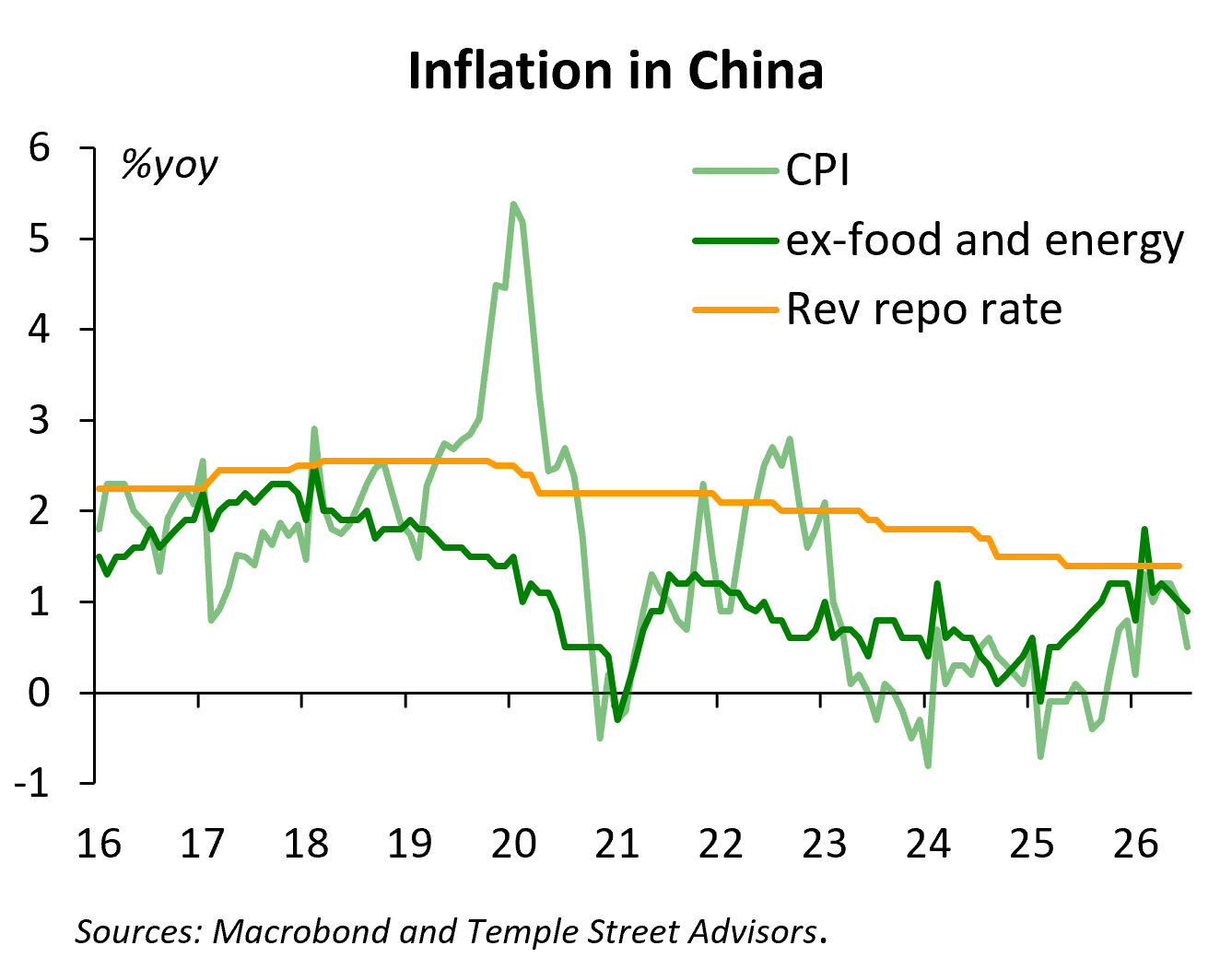
The core CPI, though, suggests that the weakening of consumption growth in recent months is beginning to depress prices. Clothing and footwear prices, for example, have been rising only 1.4%yoy in the last three months, down from 1.9% in Jan/Feb. Prices for consumer durables are also about unchanged YoY in July after having risen 6% in Jan/Feb. This likely includes the effect of falling gold prices. Producer prices for durables are now rising for the first time in about three years, albeit only 0.4%yoy, so this may restrain the decline in the CPI.
China is perhaps the only economy in APAC where the implications for policy of the trend in data are clear: there should be a bias to easing as growth and inflation both slow. The supply shock from the war is being offset by weaker demand. I still think a rate cut of 0.1% or perhaps 0.2% is likely this year — policy rates have been unchanged since May last year — but the message from the government has been consistent. Slowing inflation — especially because of falling food prices — is a good thing and weaker growth will turn around as new technologies take over from old growth engines.
That latter statement is still an aspiration rather than fact. Surging domestic sales and exports of EVs, for example, have not prevented total automobile production from slowing this year. But the State Council is patient.
Elsewhere, inflation rates dipped a little in July but will likely rise again in August as higher oil prices in July feed through to consumers.
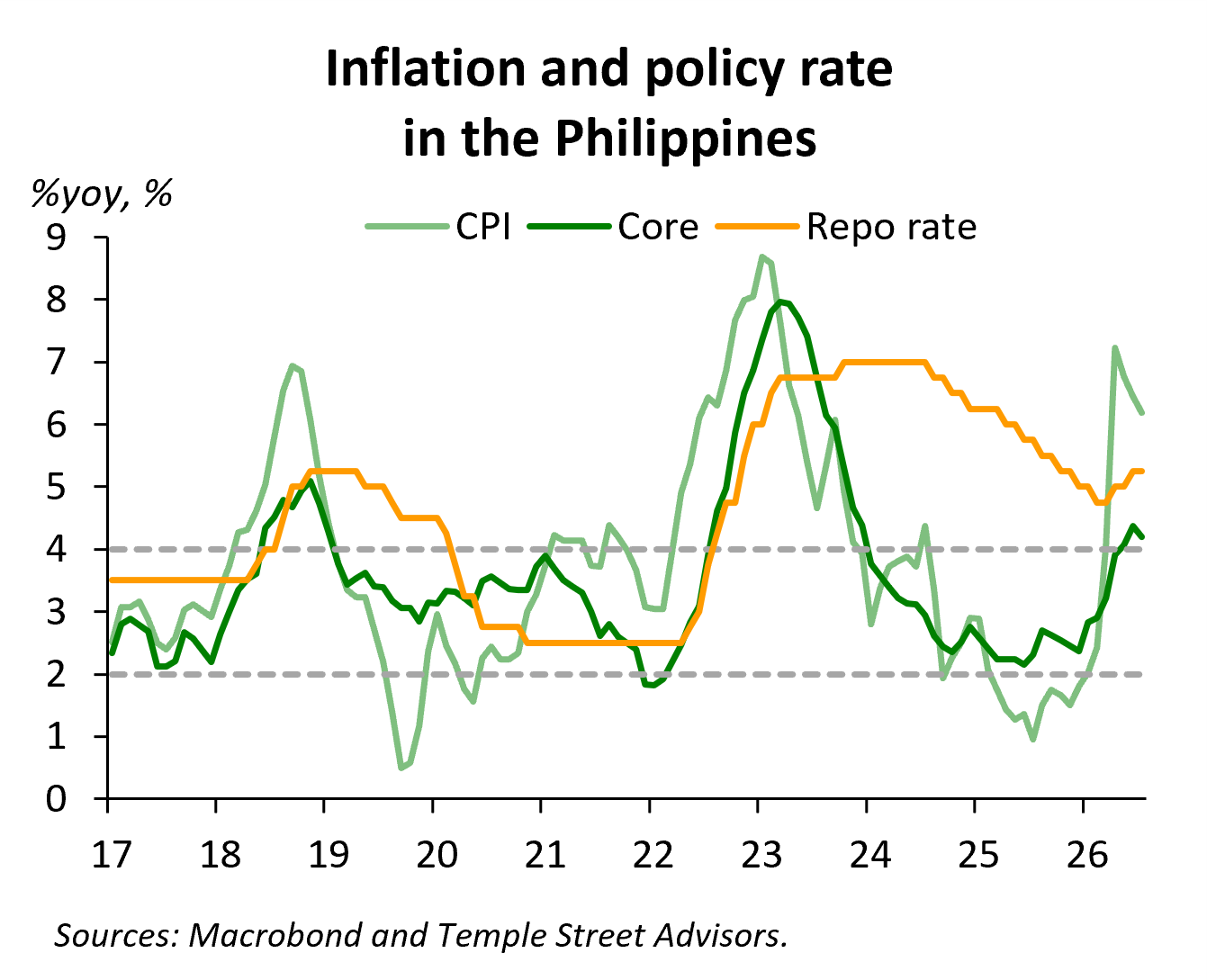
The Philippines reported a second consecutive decline in headline inflation in July and the first decline in core inflation since November. But inflation remains very high, including food price inflation above 5% (rice prices were up 17%, the highest in more than two years) and a core rate that is still above the top of the inflation target range. As crude oil prices backed up in July, fuel price inflation has rebounded in August — just about doubling from July rates. So while the central bank will likely welcome the dip in inflation last month, I doubt it changes their view that policy rates need to continue to rise.
In Indonesia, headline inflation eased in July but core inflation was unchanged at 2.8%, slightly above the mid-point of the target range. The decline in inflation last month was mostly due to lower food price inflation — petrol prices, which are still mostly frozen at pre-war levels in Indonesia — rose slightly faster (5.4%) in July and prices for transportation services, including goods delivery, also rose faster as unsubsidized diesel prices fed through to service charges.
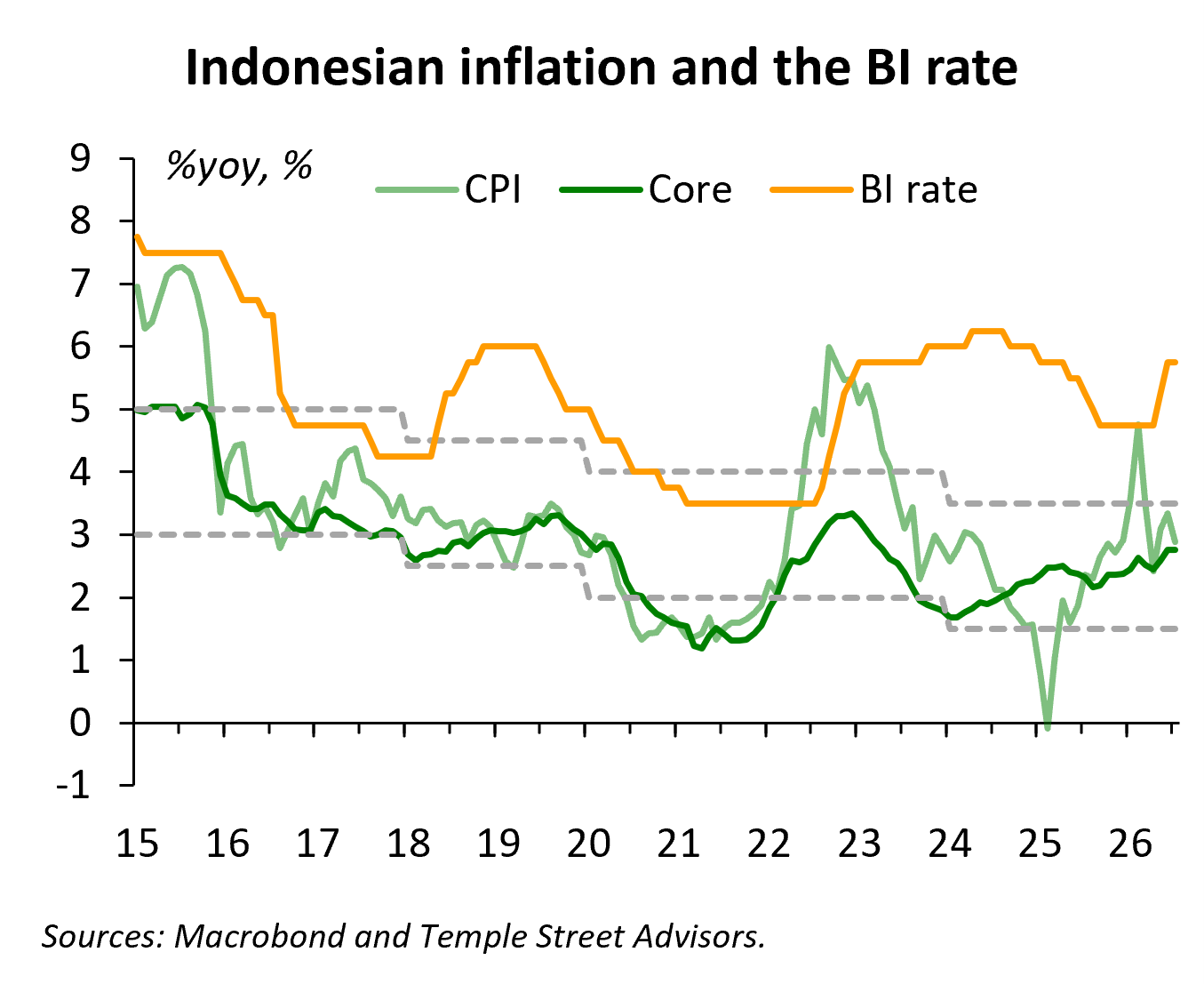
There has been no word from the President about the replacement for Governor Warjiyo. The pull-back of headline inflation and the stability in the IDR in recent days has perhaps taken a bit of pressure off the central bank. They can perhaps afford to wait to see if the rate hikes have been enough to stop inflation rising even more. But the bias is still surely to the upside on rates.
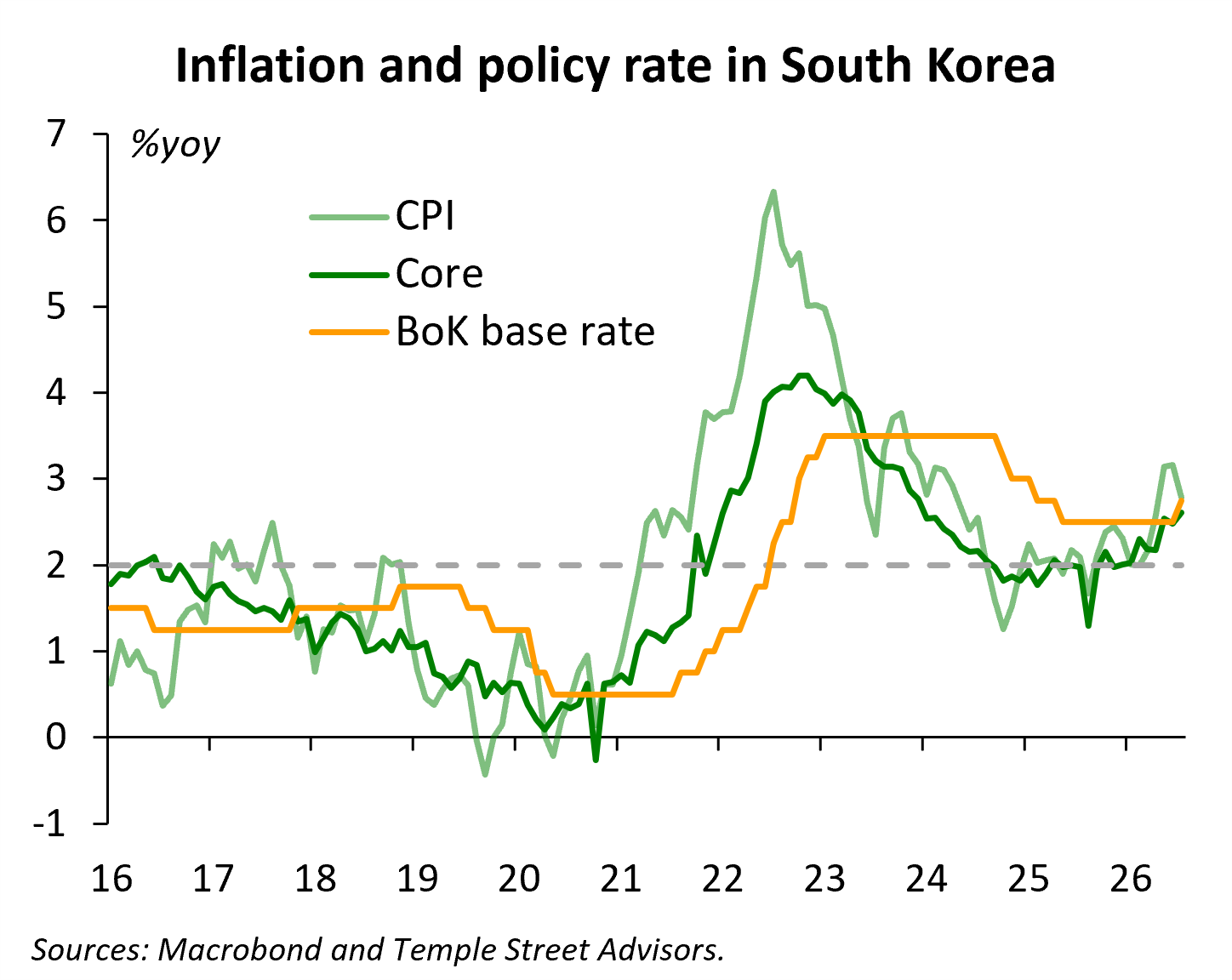
Also in South Korea. Headline inflation dipped in July but remains well above the 2% target. Core inflation rose, though, and is also well above target at 2.6%, the highest since December 2023. Credit growth is still accelerating and weekly property prices have risen at a faster pace in August than in July after appearing to be stabilizing. So the lower headline inflation rate is unlikely to change the policy bias here.
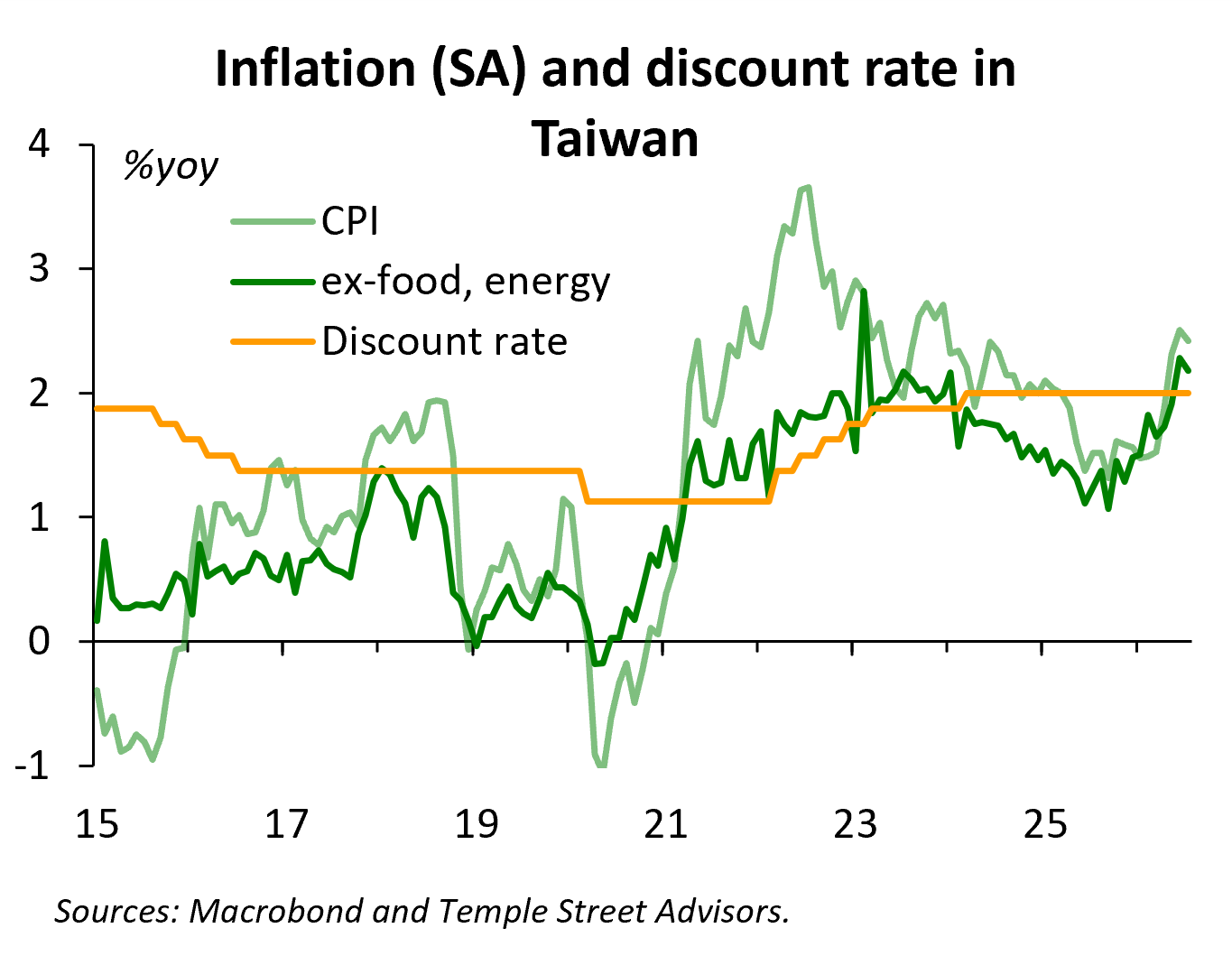
In Taiwan, both headline and core inflation were slightly lower in July but still very high by Taiwan’s standards. Given how strong growth was earlier this year I had expected a rate hike by now. But with growth now slowing I wonder if the central bank won’t try to ride out this inflation spike.
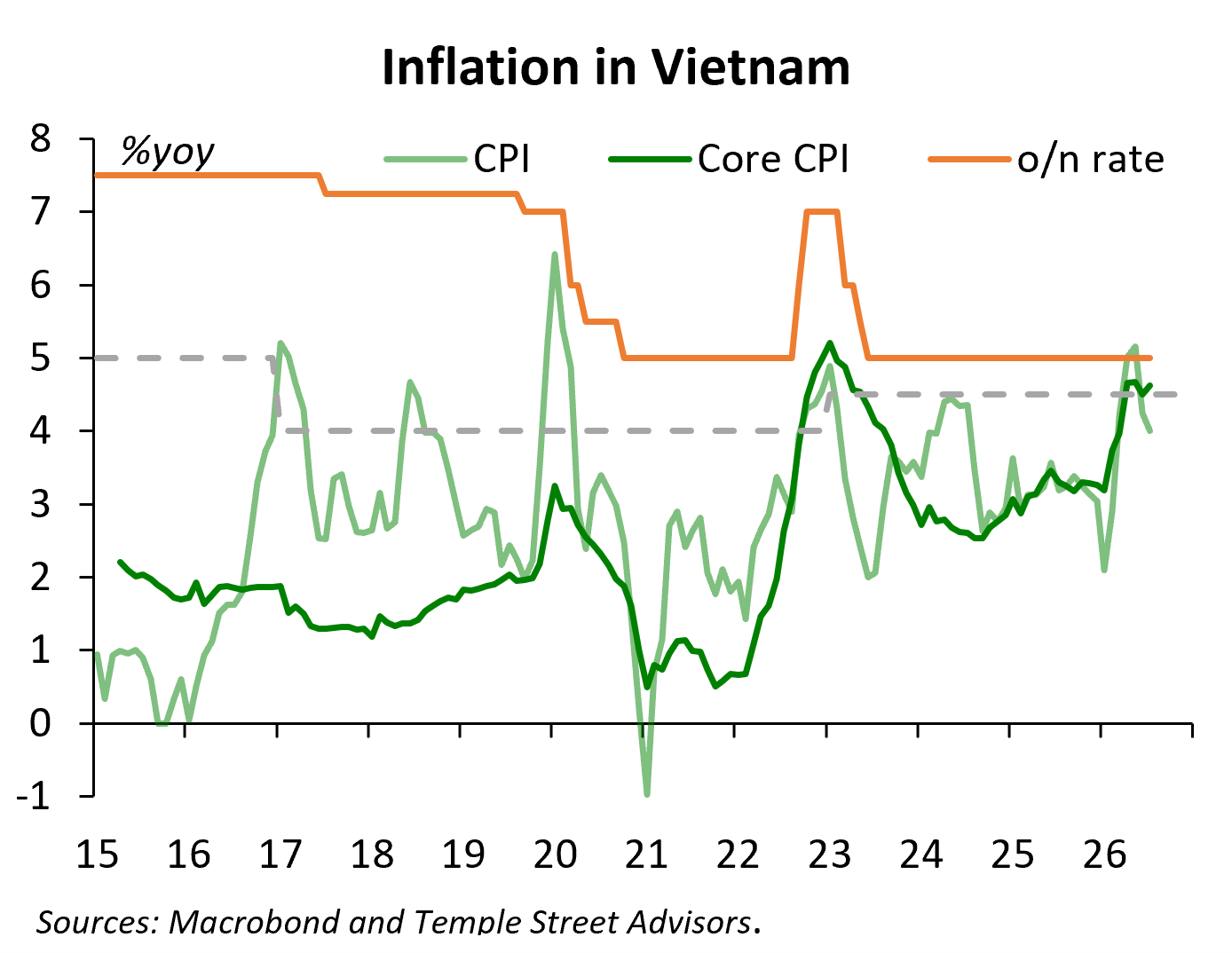
In Vietnam too, I had expected a rate hike to be triggered by core inflation rising above the inflation target. There too, strong growth in the economy, I thought, would have supported at least a mild tightening of policy. But as in Taiwan, policymakers seem more tolerant of high inflation than I had expected. The bias towards higher rates remains, but a hike seems less likely unless inflation rises again. Which it might, depending on events in the Middle East.
In Japan, as I’ve pointed out frequently, both headline and core inflation are falling — “underlying” inflation is below target but the BoJ says it is rising. Hence, they retain a tightening bias — and the market is increasingly convinced rates will go up soon — despite core and trimmed mean CPI rates of inflation that are falling.
Which takes me to the yen intervention, and what it means for policy.
The BoJ reported a JPY13.8tn decline in liquidity over the two days at the end of July, suggesting a total of USD85bn of yen-buying operations. The size of the US intervention was unreported although if we’re to take Secretary Bessent’s “to do” list seriously, it was in the range of USD5bn - 10bn but in euro sales for yen. That intervention bought a 5.3% appreciation in the yen after a surge at the market open in Tokyo on Monday. But as I had warned, the currency soon resumed its depreciating trend. Just before the release of the payrolls report on Friday, the yen had lost 1.9% since the Monday high.
For the Japanese authorities, this was the largest ever intervention, which isn’t surprising. Rising FX market turnover over time means the same quantum of yen-buying operations will have less of an effect so the authorities have to increase the size of intervention to have the desired impact. The May intervention, by comparison was only JPY11.7tn (about USD76bn).
For Secretary Bessent, the amount spent by the Exchange Stabilization Fund was modest. Although at end-June the ESF held only USD4.5bn of non-SDR foreign exchange assets, so presumably some reallocation within the fund was needed prior to the sale of euros. But this was his Trichet Moment: he promised to do “whatever it takes” to assist the Japanese authorities in their defense of the yen. But here’s where the market commentary was most focused and I think often misleading. What exactly has Bessent done?
…
Comments
Nothing yet. Say the first thing.
Sign in to join the conversation.