
Most of the headlines tonight say the same thing: stocks rose on cool inflation data. Technically true. Also the least interesting thing that happened today.
Here’s what actually happened: the market split itself in half, and almost nobody’s talking about it.
July CPI came in soft - headline up just 0.1% month-over-month, 3.4% year-over-year, core at 2.5%. That’s the print everyone was bracing for after last week’s weak jobs report, and it landed exactly where the “Fed’s going to cut” crowd wanted it to. Cue the rally.
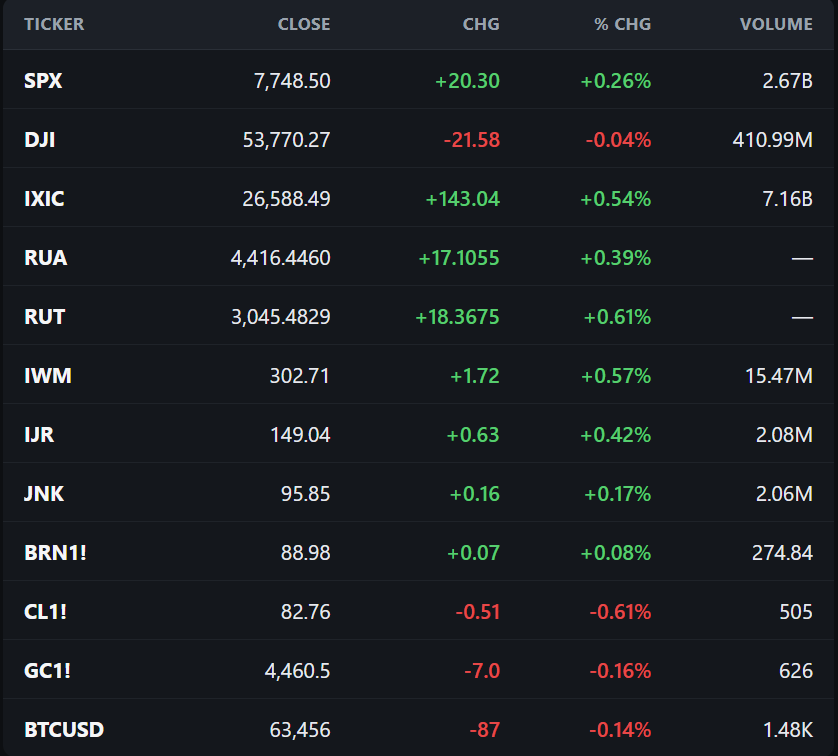
Except the Dow closed red. Down 21 points, nothing dramatic, but red is red. Meanwhile the S&P added 0.26%, the Nasdaq ripped 0.54%, and the Russell 2000 - small caps, the stuff nobody brags about at dinner parties - led the entire tape at +0.61%. IWM and IJR, the small-cap ETFs, both outran the S&P by a wide margin too.
That’s not “the market went up.” That’s a rotation. And rotations tell you more than levels sometimes.
Price Behavior lesson #1: when the index lags the ETFs beneath it, read the crowd, not the ticker. A handful of mega-caps - Microsoft, IBM, McDonald’s among them - dragged the Dow into the red while everything smaller and more rate-sensitive caught a bid. Big, defensive, “safe” names sat this one out. Small caps, which get crushed hardest when rates stay high and get the biggest relief when they don’t, ran the show. That’s a market voting with real conviction that borrowing costs are about to get easier - not a market broadly celebrating a good CPI print.
Cool inflation data is supposed to be unambiguously bullish. It wasn’t, not everywhere. Three things didn’t behave the way the “risk-on” headline promised, and each one is worth more than the closing bell wrap-ups you already read.
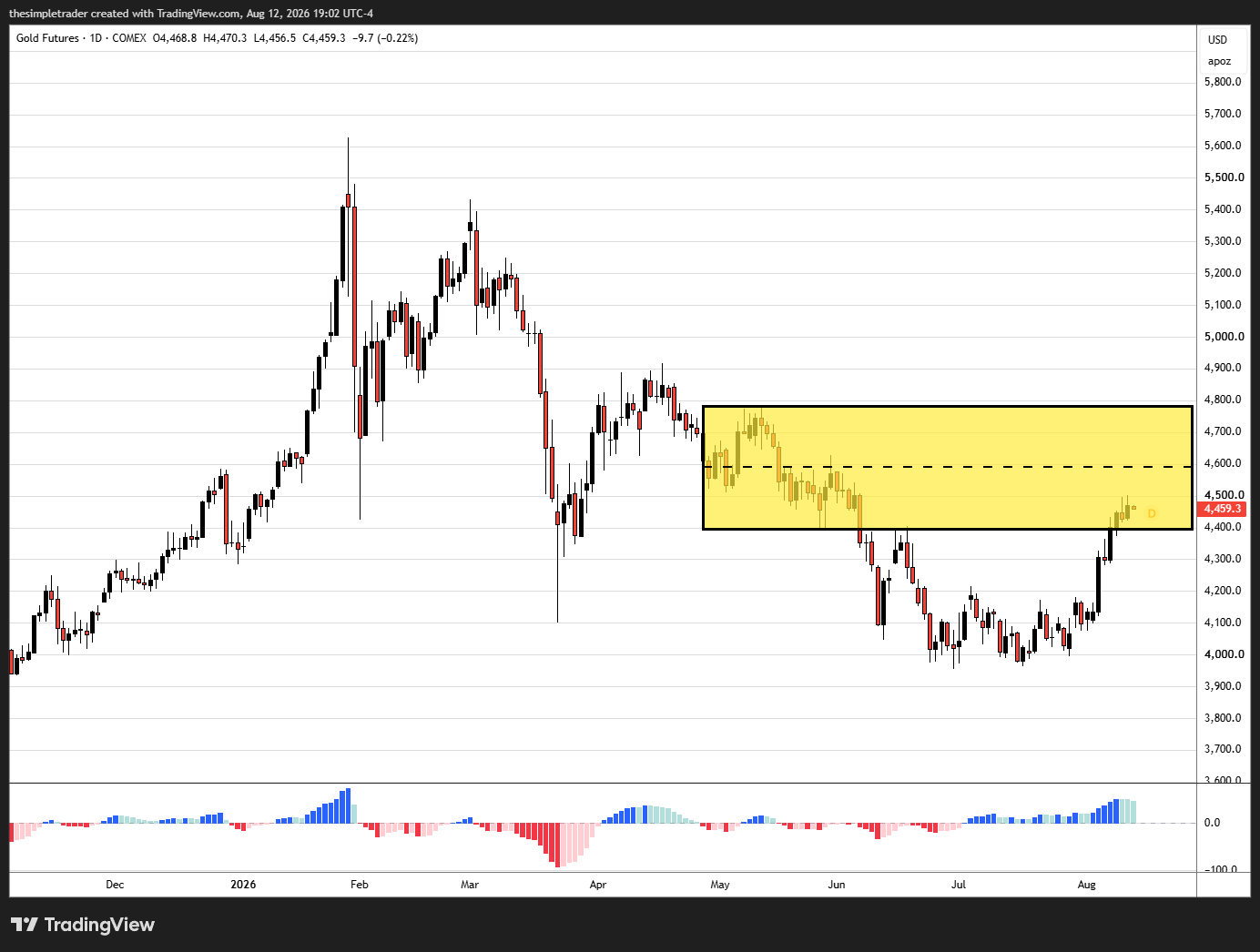
Gold sold off on a dovish inflation print. GC1! dropped 0.16% on a day when softer CPI should have been gold’s best friend - lower rates ahead usually means gold catches a bid, since it doesn’t yield anything and looks more attractive when cash does too. Instead it faded. That tells you the bond market didn’t fully buy the “rate cuts are coming” story either - the 10-year stayed elevated near 4.7% into the print, and gold trades off real yield expectations, not headlines. The equity market partied. The rates market shrugged.
GC1! - Price is struggling against near-term resistance.
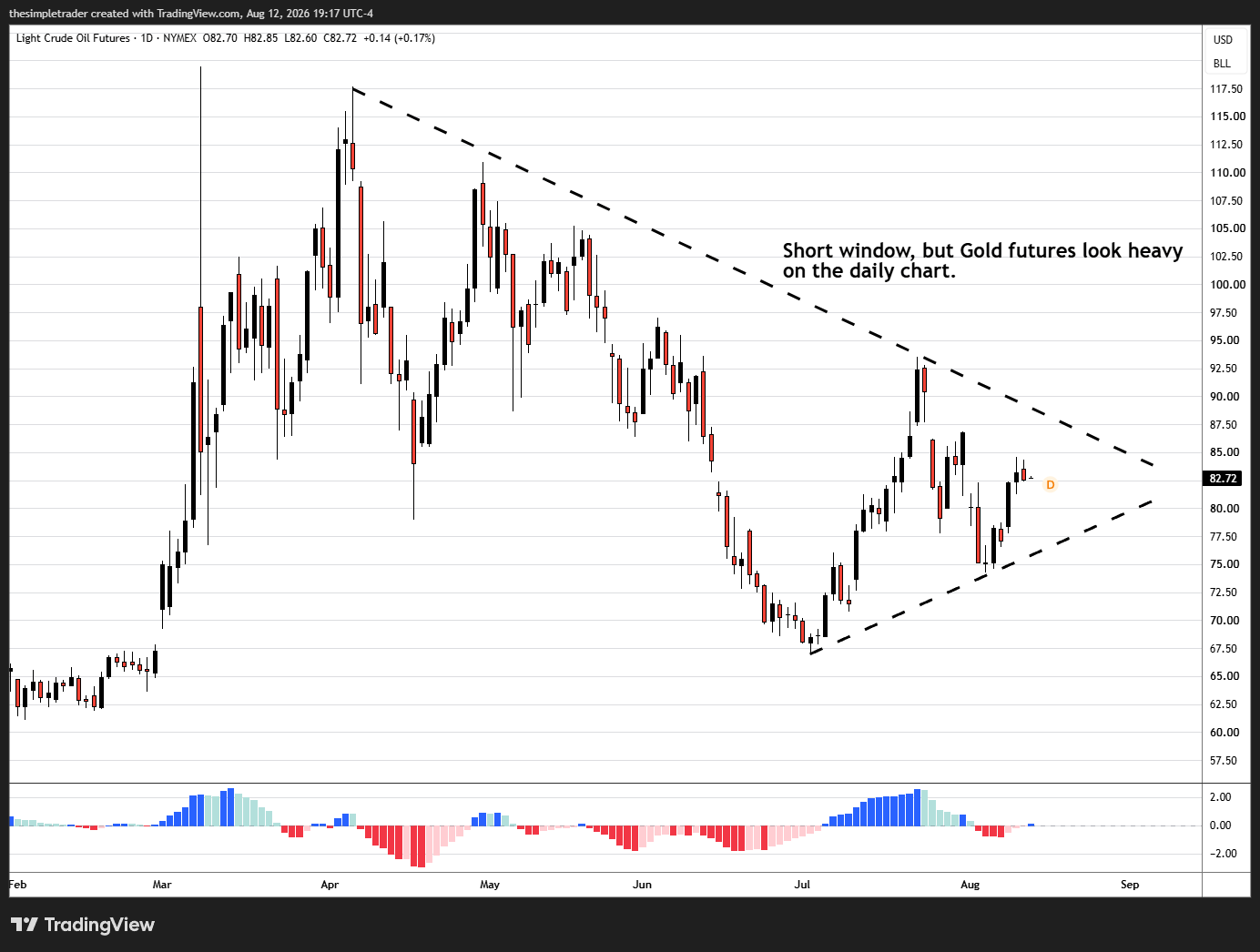
Brent and WTI split…again. Brent (BRN1!) ticked up 0.08%. WTI (CL1!) dropped 0.61%. Same commodity, different contract, different story - and when the two benchmarks stop moving together, it’s usually a signal that the move isn’t about global demand, it’s about something contract-specific: positioning, delivery mechanics, or a regional risk premium that’s pricing unevenly. With US-Iran tension still simmering in the background this week, that’s exactly the kind of divergence that shows up when geopolitical risk gets priced asymmetrically across benchmarks. Don’t treat “oil” as one trade right now. It really isn’t.
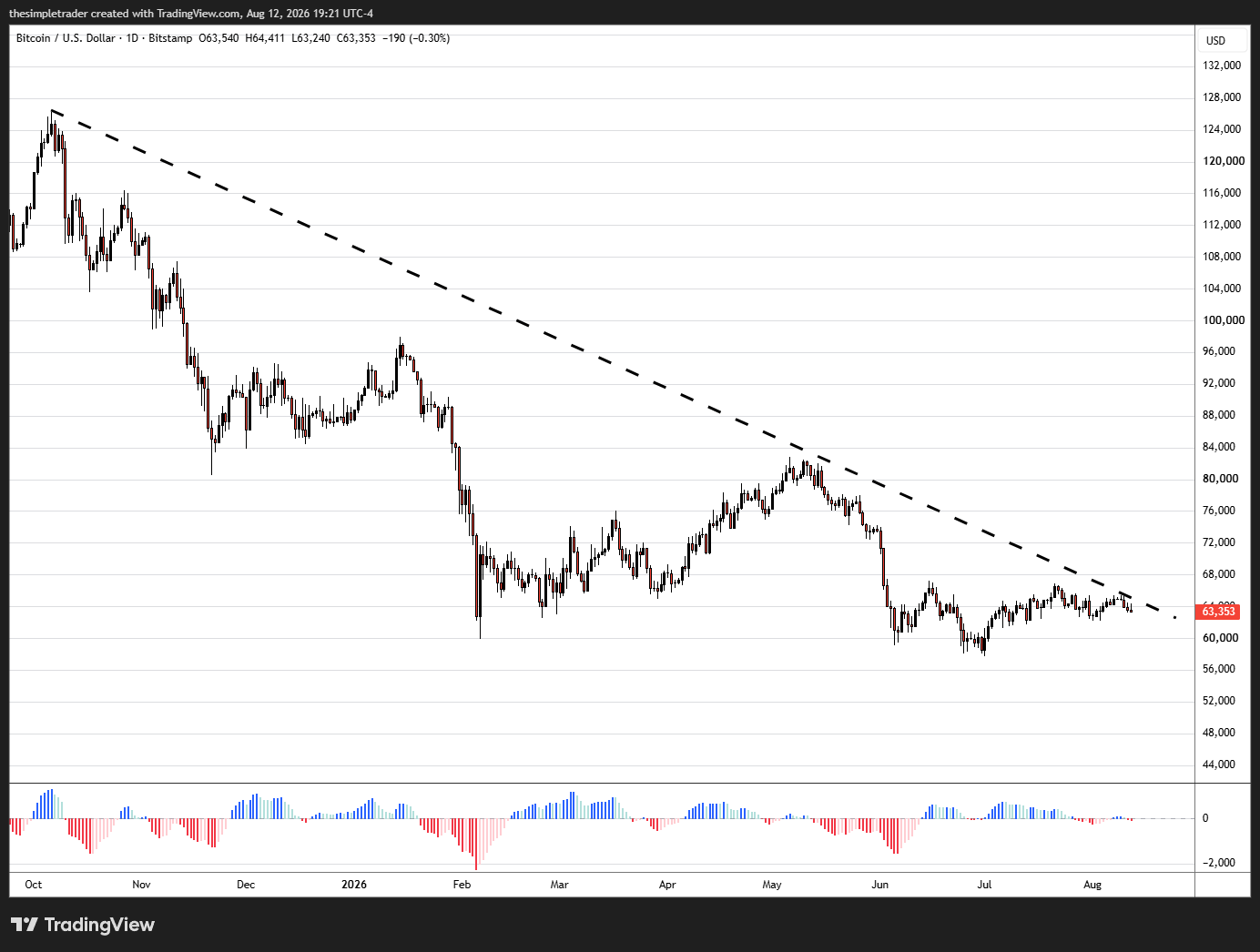
Bitcoin didn’t show up to the risk-on party. Equities rallied, junk bonds (JNK) ticked higher confirming credit risk appetite was intact, and BTC still slid 0.14%. On a day when every other risk asset in this table caught a bid, crypto sitting it out is a tell. Either crypto is trading its own internal supply/demand mechanics right now — options expiries are on the calendar this week — or it’s quietly telling you the “risk-on” everyone’s celebrating is thinner than the index closes suggest.
BTCUSD - Bitcoin continues drifting lower. That said, I wouldn’t be in the business of getting short here.
Here’s the piece of context that should be doing more work in tonight’s conversation than it is: the Fed’s July meeting ended in a 9-3 vote, with three officials dissenting in the same direction - hawkish - for the first time since September 2016.
Read that again. The market rallied today on a data print that supports the case for cuts. But the committee that actually sets the rate just showed its widest, most unified internal disagreement in nearly a decade. The crowd is trading tomorrow’s Fed decision like it’s already made. The Fed itself is telling you it isn’t.
You don’t need to have an opinion on the Fed to trade this well… or anything else really. You need to notice that the parts of the market most levered to “rates are coming down” - small caps, junk bonds - ran hardest today, while the parts that hedge against being wrong - gold, and arguably bitcoin - didn’t participate. That’s not indecision. That’s the market pricing a specific, fragile outcome and daring tomorrow’s data to confirm it.
Your job isn’t to predict whether PPI cooperates. It’s to notice which of your positions are riding today’s rotation on borrowed conviction, and to have a plan for both directions before the number prints - not after your P&L tells you which way you should have been thinking. The outcome tomorrow morning is out of your hands. The plan for either outcome isn’t.
Tomorrow’s the follow-through test. July PPI drops at 8:30 AM ET - one day after CPI, and this pairing matters more than usual this month. PPI feeds into the Fed’s preferred inflation gauge down the line, and after a soft CPI already did the heavy lifting today, PPI either confirms the disinflation story or reminds everyone that one data point isn’t a trend.
Two-sided setup, no predictions:
If PPI comes in soft too - expect today’s rotation to extend, not reverse. Small caps and junk bonds have the most room to keep running since they’re the most rate-sensitive parts of the tape, and gold’s reluctance today could flip if the bond market finally leans into the “cuts are coming” camp.
If PPI runs hot - the divergence we highlighted above becomes the liability. Small caps and junk bonds were today’s biggest beneficiaries of the rate-cut narrative, which means they’re also first in line to give it back. Gold and bitcoin, which didn’t chase today’s move, are the assets with the least distance to fall if sentiment snaps the other way.
The market told you today that it believes the Fed’s next move is a cut. Tomorrow, the Fed’s own data gets to vote.
TML,
E
No posts
Comments
Nothing yet. Say the first thing.
Sign in to join the conversation.