
When Christie’s closed its marquee week in New York this May, having taken $1,453,504,726 across the sales, the figure was around the trade press before the room had properly emptied, and it was reported everywhere as evidence that the market had finally turned. What travelled with it, in almost none of the coverage I have been able to find, was any account of where the material had actually come from, which is a curious omission given that the answer was printed in the front of the catalogues.
Most of it came from two estates. The private collection of S.I. Newhouse, who died in 2017, accounted for $630.8 million across sixteen lots, while three works consigned from the estate of Agnes Gund, the former president of the Museum of Modern Art who died last September at eighty-seven, brought a further $150.8 million between them. Together that is something close to fifty-four percent of the entire week supplied by two people who were not alive to decide on the timing, and the figure takes no account of the estates of Marilyn Arison, Lorinda de Roulet Payson and Marian Goodman, all of whom also appeared in the same sales.
London ran on the same fuel, and rather more openly. On the evening of 24 June, Sotheby’s sold twenty-five works belonging to Joe Lewis for £296.3 million against a total for the night of £393.4 million, which is to say that three quarters of the strongest London evening in a generation arrived from one man who was liquidating in the aftermath of a securities fraud conviction rather than because he had studied the market and judged the moment right.
None of this makes the recovery imaginary. It makes it a different sort of thing from the one being described, and the distinction matters a great deal if you are trying to work out what the next eighteen months look like. A market that grows because more people want to own things behaves in one way over time, compounding as new buyers arrive and stay; a market that grows because more material is being pushed out of private hands by death, tax and legal pressure behaves in quite another, and eventually exhausts its own supply. The first half of 2026 was overwhelmingly the second kind, and almost nobody said so.
What follows is ten sales from January to June, ordered so that the four which produced the story everyone told come first, and the six which complicate it come after.
$181.2 million. Christie’s New York, 18 May.

Estimated in the region of $100 million, the painting attracted sixty bids over roughly ten minutes with five bidders in serious contention, and finished at nearly three times the $61 million that had stood as Pollock’s record since 2021.
This is what genuine competition looks like, and it is the only lot in the half where nobody could reasonably argue otherwise. It is worth attending to the condition attached to it, though, because Christie’s described the work as the largest Pollock drip painting remaining in private hands, which meant that none of the five people bidding had a comparable object against which to weigh it. Competition of this intensity now survives only where comparison is impossible, and it has been thinning steadily everywhere else.
Record. Christie’s New York, 18 May.
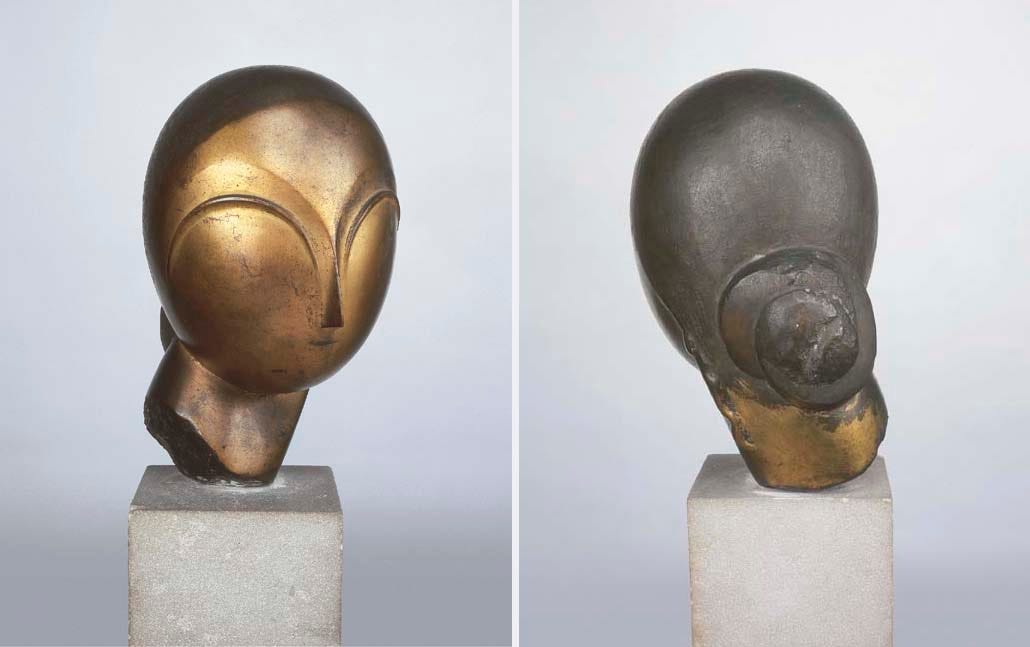
The same room, the same hour, and an entirely different sort of transaction. Bidding opened at $82 million, already comfortably above the $71.2 million that had been the artist’s record since 2018, and the sculpture was knocked down after something in the order of half a dozen bids, which is to say that the record was established by the figure the auctioneer chose to start at rather than by anything the room did afterwards.
Both results went out under the same word. Only one of them was a price discovered in public, and the difference between them is the difference between a market and a mechanism.
$98.39 million. Christie’s New York, 18 May.

Guaranteed in advance, hammered at $85 million against an unpublished estimate of $80 million with three bidders involved, it broke a record that had stood unchallenged since 2012.
Gund had bought the painting directly from Rothko in 1967, during a studio visit, on the artist’s own recommendation after she had gone in looking for something lighter and been talked out of it. It hung in her apartment for fifty-nine years and left exactly once, for a single month, on loan to Cleveland in 1972. Fourteen years, then, to move a Rothko record, and when it finally moved it required a canvas with no auction history, almost no exhibition history and a provenance that could not be assembled by anyone at any price. Set that beside the Brâncuși and the shape of the top of this market becomes difficult to avoid: singularity is now more or less the only quality being paid for, and everything short of it is being quietly repriced.
£3.7 million hammer. Sotheby’s London, 4 March.
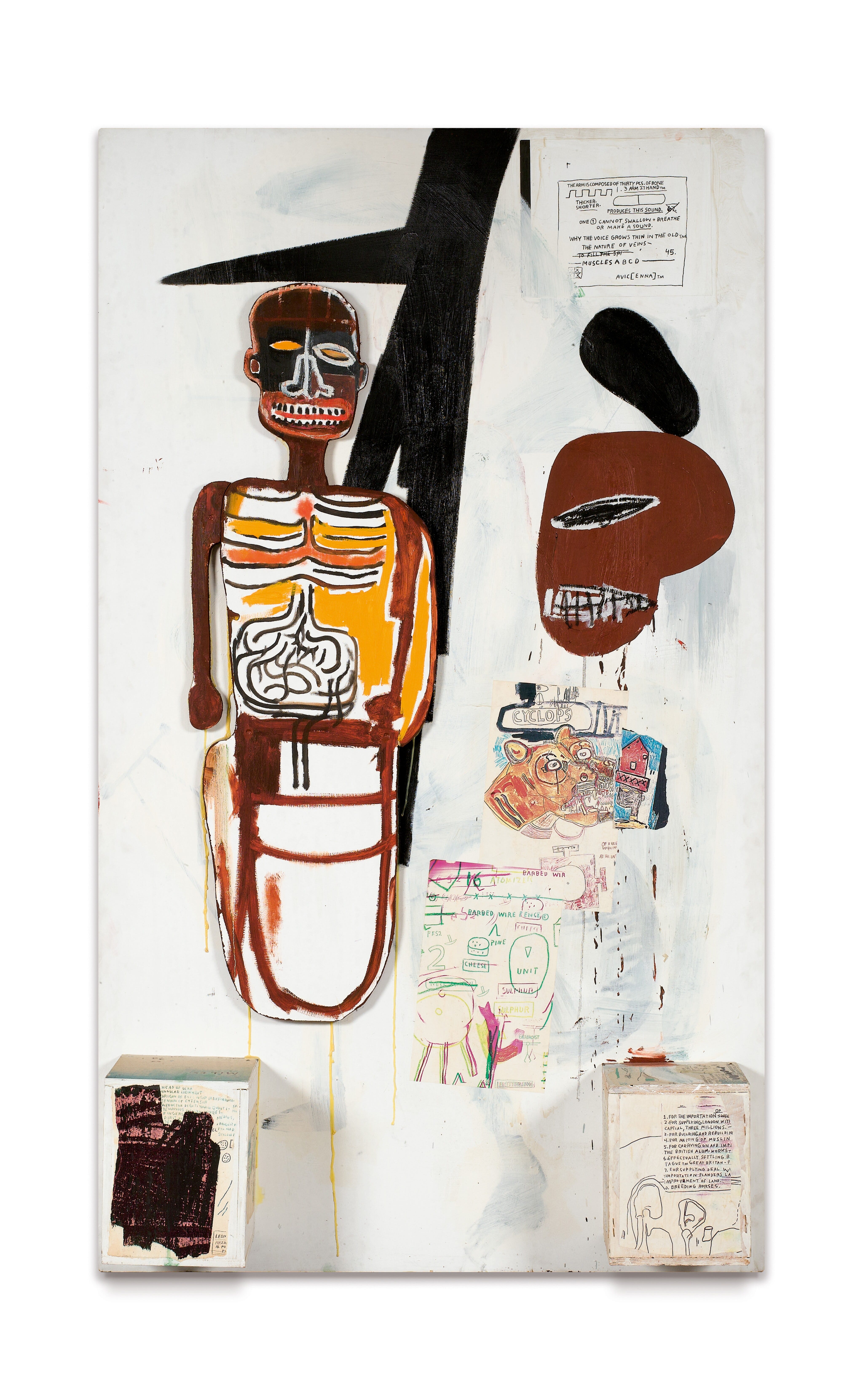
The evening was a white glove sale in the full sense, with all fifty-four lots finding buyers, £130.6 million taken, and the auctioneer handed his gloves at the rostrum to the customary applause. Inside that success, the most recognisable name in the room hammered at £4.4 million against an £8 million estimate, was re-opened later in the evening, and hammered a second time at £3.7 million.
A sale can be a complete success on paper and still contain a failure that conspicuous, which is roughly the condition of the market as a whole at the moment, and the wire copy that night led with the gloves.
Thanks for reading! Feel free to share this post!
The remaining six sales, the contested-share method, and what the consignment pipeline looks like going into the autumn are for TAB Intelligence Desk members.
Comments
Nothing yet. Say the first thing.
Sign in to join the conversation.