

It rarely begins as something dramatic.
A thought that lingers in prayer longer than expected. Something read in Scripture that once felt clear but now does not settle in the same way. Words from a friend that echo after the conversation has ended. Or a moment of suffering that quietly reshapes how old answers are heard.
Most Christians do not feel the arrival of doubt. They recognize it only in hindsight, when the question is already present, and something quieter has begun to gather around it; not the question itself, but the meaning they fear it carries.
If I were stronger in faith, would I even think this way?
That quiet suspicion often carries more weight than the doubt itself.
So the question is pushed aside. Life continues, church continues, familiar words are spoken, but something has shifted beneath the surface.
As a result, doubts are often swept under the rug rather than explored. We learn to smile, to repeat the right answers, and to bury the thoughts we fear might expose some spiritual deficiency. However, hidden things have a way of growing in the dark.
Questions left unattended rarely disappear. More often, they deepen. Assumptions take root. Fears become convictions. What might have been addressed in the light slowly festers in silence.
Conversely, Scripture tells a different story. The questions that arise are not even the real issue, the real issue is what we do with them.
Doubt itself is not the enemy of faith; unexamined doubt is.
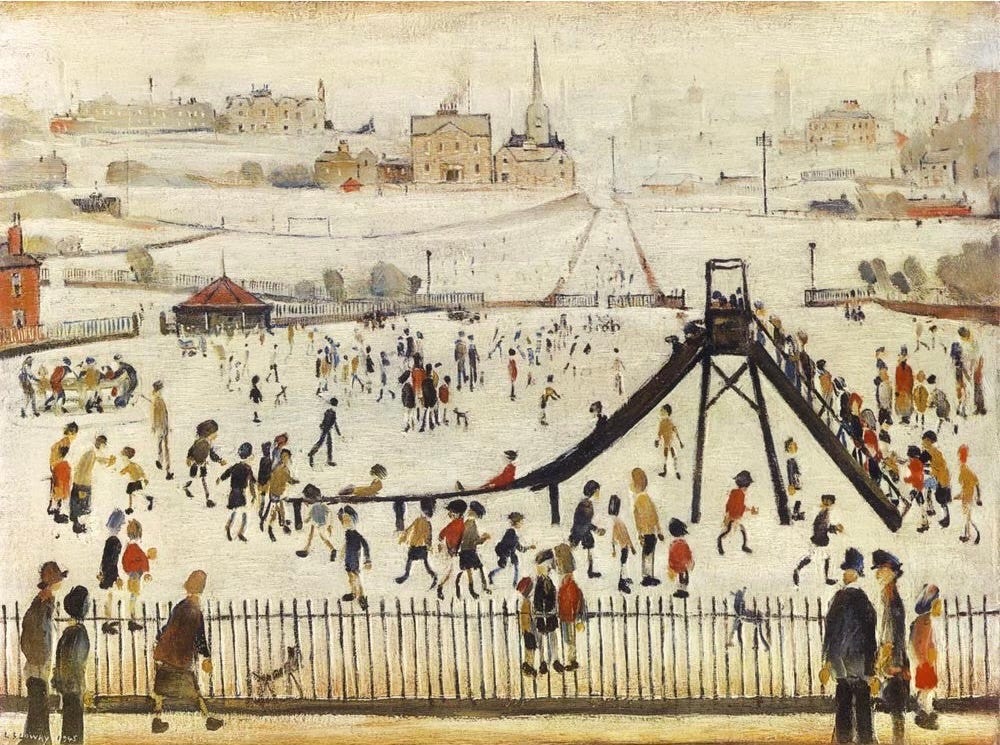
A discussion took place on this topic in our church small group gathering Thursday evening. My friend Peter shared with me an illustration I think illustrates this beautifully.
Imagine a child standing at the top of a tall slide. Only moments before, he had climbed with excitement. Now, looking down from a height he had never experienced, uncertainty begins to settle in. The ground seems farther away than it did from below. His small hands grip the rails a little tighter. He hesitates, and fear sets in.
His father waits at the bottom, arms open and a smile on his face.
“You’re okay,” he calls out. “I’ve got you.”
The child does not yet understand everything. He cannot calculate the speed of the descent or explain why he should feel safe. Questions crowd his mind.
What if I get hurt?
What if I fall?
What if Dad is wrong?
He can remain where he is, paralyzed by fears that grow larger the longer he stares downward, or he can entrust himself to the one who has already proven himself trustworthy.
Faith does not require the absence of questions, rather, it requires trust in the midst of them.
Perhaps that image comes closer to the Christian life than we often realize. Questions arise. Uncertainties surface. There are moments when what once seemed obvious suddenly feels less so.
However, Scripture shows that God’s people are not strangers to such struggles. (Psalm 13:1–2) Again and again, we find men and women who brought their fears, confusion, and questions into the presence of God rather than hiding them from Him.
Their example reminds us that doubt itself is not evidence that faith has died. More often, it reveals where faith must learn to lean more deeply upon the One who is worthy of our trust.
One of the quiet fears that often accompanies doubt is the fear of being alone.
Questions have a way of making us feel isolated, as though everyone around us possesses a certainty we somehow missed. We assume mature believers do not wrestle. We imagine that saints of old walked with unwavering confidence, untouched by the kinds of thoughts that trouble us.
The pages of Scripture do not hide this.
The Bible’s pages are filled with people who knew what it was to wrestle with God. Their faith was not marked by the absence of difficult questions, but by the direction in which they carried them.
Asaph looked around at the prosperity of the wicked and wondered whether faithfulness had been in vain (Psalm 73:2–3, 13–1.) Habakkuk stood amid violence and injustice and asked the Lord how long He intended to remain silent (Habakkuk 1:2–3.) Jeremiah poured out his grief and confusion with words so honest they can make modern readers uncomfortable (Jeremiah 20:7–9.) Even John the Baptist, in prison, sent messengers to Jesus with questions about who He was (Matthew 11:2–3; Luke 7:18–20.)
None of these men are remembered because they never struggled. They are remembered because they brought their struggles before God rather than away from Him.
Perhaps no example is more familiar than Thomas. History has attached the word ‘doubting’ to his name, as though skepticism defined his entire life. Yet Thomas was not seeking reasons to abandon Christ, he was a grieving disciple trying to make sense of the impossible. When the risen Lord appeared, Jesus did not cast him aside. He met him in his weakness and invited him to see (John 20:24–29.)
The testimony of Scripture is remarkably consistent. God’s people have always been people who wrestle. Their questions did not place them outside His mercy, nor did their uncertainties surprise Him.
Doubt, then, should not be confused with unbelief.
Unbelief turns away. It refuses to trust God’s character and rejects His word. Doubt, by contrast, often looks more like a child asking difficult questions while still clinging to his Father’s hand.
One walks away from God. The other struggles in His presence. There is a world of difference between the two.
The pages of Scripture are filled with men and women whose faith was tested, whose understanding was incomplete, and whose hearts sometimes trembled. Nevertheless, again and again, God proved Himself patient with those who sought Him honestly. Their questions became occasions for deeper trust rather than evidence that faith had failed.
Few believers set out to ignore their doubts. More often, they hide them.
The process usually begins with something small. A difficult passage. A question raised by an unbelieving friend. An objection encountered in a book or a video. Sometimes it isn’t intellectual at all. Sometimes it comes in the aftermath of suffering, when old convictions suddenly feel harder to hold than they once did.
At first, the question itself seems manageable. What makes it frightening is what appears to accompany it.
Faithful Christians should not think this way. At least, that is what many have come to believe.
Perhaps others around them seem so certain. Perhaps admitting uncertainty feels like confessing failure. Whatever the reason, the struggle remains private. The question is pushed aside. Life goes on. Church attendance continues. Familiar verses are quoted. Outwardly, nothing has changed.
There is a danger lurking in the darkness though; unanswered questions have a way of lingering. Not because they are malicious, but because questions seek answers. They are difficult to silence. They return unexpectedly during a sermon. They surface in prayer. They appear late at night when distractions have given way to quiet. The mind returns to what the heart has tried to avoid (Psalm 32:3–4.)
Over time, the question does not disappear. It simply changes shape. It grows. What once felt like a single concern begins to echo into others.
Why does this not bother anyone else?
Why can I not let it go?
What if the problem is not the question, but me?
At that point, the struggle is no longer only about God. It becomes a struggle about the self, about belonging, about whether faith itself is something you are quietly failing to possess.
Ironically, the danger was never the original question itself. The danger was believing it had to remain hidden.
Questions were never meant to live in isolation. They were meant to be examined. They were meant to be brought into the light. They were meant to be spoken aloud, weighed carefully, and carried into the presence of God.
Scripture never portrays honest questions as enemies to be feared. It portrays them as opportunities to seek wisdom, understanding, and ultimately, deeper trust.
What turns doubt into something destructive is not that it exists, but that it is left alone.
If questions are meant to be examined rather than ignored, what does that examination look like?
For many Christians, the answer seems obvious enough. Find the right book, listen to the right sermon, or search until every uncertainty disappears.
There is certainly value in answers. Christianity has never asked its followers to close their eyes and leap into the dark. Questions deserve careful thought, and truth welcomes examination. Yet answers alone are not always enough, because doubt is not always born in the mind.
Sometimes it is, where a question is simply intellectual. It can be answered with clarity and thought, and confusion gives way to understanding.
But often the deeper struggle is not merely about information, it is about interpretation.
Suffering reshapes how the world feels and grief alters the weight of familiar truths. In those moments, the question is not only what is true, but how what is true can still be trusted.
We are not always asking for new knowledge, but oftentimes how old knowledge even holds in a changed world. Perhaps that is why Scripture presents faith and understanding as companions rather than rivals.
The psalmist sought understanding. The prophets brought their complaints before the Lord. The Bereans searched the Scriptures to see whether what they had heard was true (Acts 17:11.) Augustine famously described faith as seeking understanding, not replacing it. Belief was never meant to end thought. It was meant to give thought its proper direction.
There is a humility in that pursuit.
To seek understanding is to admit that we do not yet see everything clearly. It is to acknowledge that our questions are real without assuming that our questions are final. It is to live with the confidence that truth need not fear investigation because truth belongs to God.
This pursuit does not demand certainty about everything. Few relationships work that way.
A child often does not wait to understand his father completely before trusting him. Friends do not suspend their confidence in one another until every mystery has been resolved. Trust grows not because every question disappears, but because character has proven itself worthy of confidence.
The Christian life is no different.
Faith is not the absence of unanswered questions. If we had all the answers, it would not even be faith. Faith is the refusal to treat unanswered questions as though they have already been answered against God.
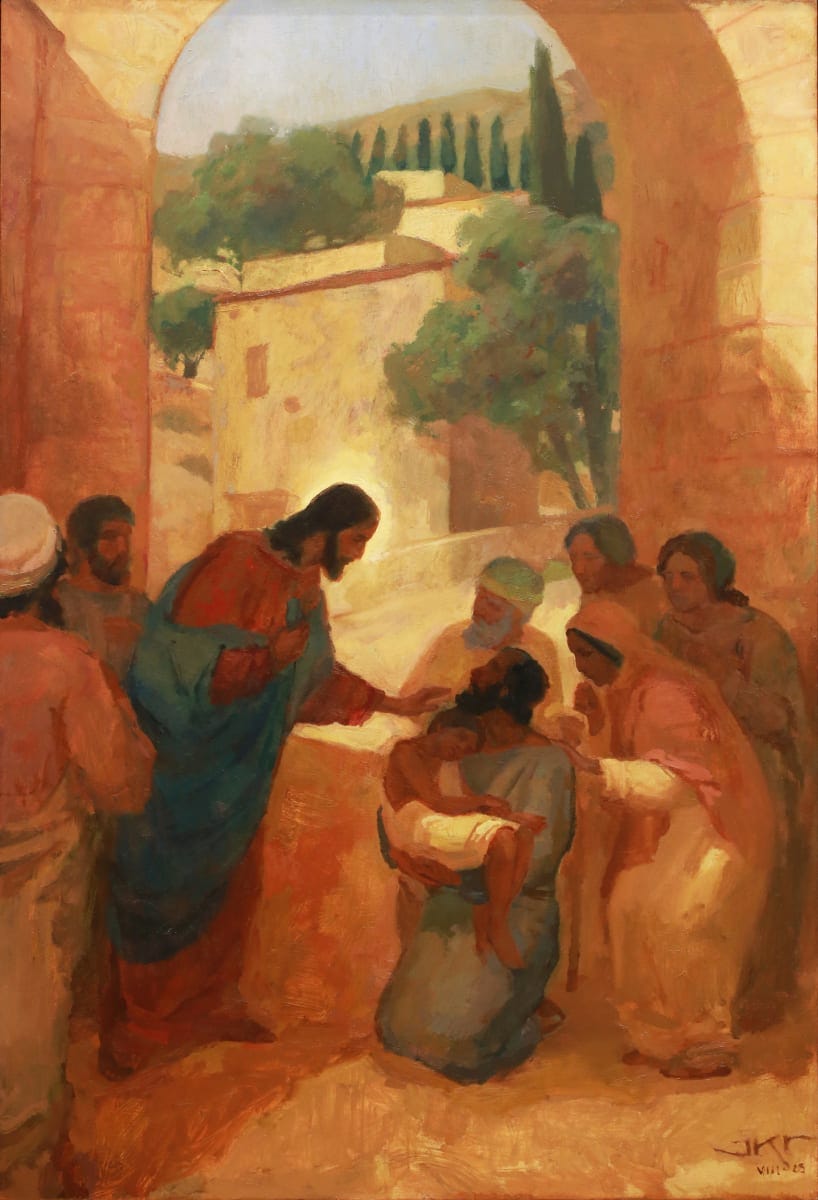
Few scenes in Scripture feel more honest than the father who came to Jesus on behalf of his afflicted son.
By the time he arrived, disappointment had already become familiar. The disciples had failed to help. Years of suffering had left their mark. Hope and weariness had learned to coexist. Somehow, after everything, he still came before Jesus.
When Jesus told him that all things are possible for one who believes, the man’s response was remarkable not because it was polished, but because it was true. It was the raw, crying out of a desperate heart who had faith.
“Lord, I believe; help my unbelief.” — Mark 9:24
Those words have comforted generations of Christians because they expose a reality most believers know all too well. Faith and struggle often occupy the same heart.
We tend to imagine faith and doubt as opposites standing on opposite ends of a battlefield. If one advances, the other must retreat. Scripture paints a more human picture. There are moments when trust and weakness seem strangely intertwined. A person may cling to Christ with trembling hands and still cling to Christ.
Perhaps that is why this father did not wait until every uncertainty had been resolved before coming to Jesus. He came with his questions and with his fears, but more notably, he came with a faith that felt painfully inadequate. Most importantly, he came.
That may be one of the most overlooked truths in seasons of doubt. The answer is not to wait until confidence returns before drawing near to God. The answer is to draw near to God with the confidence you already possess.
We often assume that our questions disqualify us from approaching Him. The opposite is true. Throughout Scripture, God repeatedly receives those who come honestly. The weary are welcomed. The confused are not turned away. The one who asks for wisdom is not rebuked for asking.
Perhaps mature faith does not always look like unwavering certainty; sometimes it looks like refusing to let go.
Sometimes it looks like opening the Scriptures when answers seem slow to come. Sometimes it looks like praying words that feel smaller than they once did. Sometimes it looks like reaching out to trusted believers when isolation feels easier. Sometimes it looks like simply continuing to come to Christ when part of you wonders why the road has become so difficult.
The strength of faith has never rested in the strength of the one believing. It rests in the One who is believed.
Weak faith in a faithful Savior still remains faith.
Most of us instinctively assume that strong faith feels like clarity.
If faith is healthy, then questions should fade.
If faith is strong, uncertainty should disappear.
If faith is growing, doubt should no longer be present in the same way.
That assumption quietly collapses under the weight of real life.
Because many of the Christians of the present day and of old that we admire most did not live without unanswered questions; they lived with them. What distinguished them was not the absence of tension, but the direction of it.
Faith does not always remove the question. Often, it holds it.
There is a kind of spiritual reflex that wants distance from anything unresolved. We want to step out of the room where uncertainty lives and to close the door and lock it up until everything inside feels settled and safe. Scripture rarely portrays faith as retreat, rather it is portrayed as remaining.
Remaining in prayer when clarity has not come.
Remaining in obedience when understanding feels incomplete.
Remaining with God when answers are slow, and silence feels longer than expected.
The Psalms are full of this posture. The order often is not answers first, then presence. Rather, presence first, and then frequently without answers at all.
“Why are you cast down, O my soul?” the psalmist asks (Psalm 42:5–6,) and then speaks to himself as though faith is something that must persist inside the very confusion it is trying to interpret.
This is not a faith that avoids the room of uncertainty, but a faith that refuses to leave it.
I believe that is where many of us have misunderstood the nature of spiritual maturity.
We tend to equate maturity with resolution. Scripture, on the other hand, often describes it as endurance. Endurance is not the absence of tension, but the refusal to abandon trust because of it. To remain with God while questions remain unresolved is not a lesser form of faith. It may be one of its clearest expressions. Because at the center of Christian faith is not the demand that everything be understood, but the conviction that God is still good when it is not. (James 1:3–4; Hebrews 10:36)
Faith, then, is not the elimination of uncertainty. It is the decision not to interpret uncertainty as abandonment.
That changes everything about what it means to wrestle.
The child is still there.
Nothing about the height has changed.
The distance to the ground is still the same.
The unknowns have not been resolved.
If anything, the longer he stands there, the more awareness he has of what he does not control.
He still cannot see every detail of the landing. He still cannot predict how it will feel. He still cannot answer every question his mind keeps offering him.
But, more importantly, his father is still there too. Waiting, patient, and present in a way that does not depend on the child’s clarity.
At some point, the question is no longer whether every fear has been removed, but whether the father is trustworthy enough to be obeyed in the presence of fear.
And so the child moves.
Not because every doubt has been resolved, but because trust has become stronger than hesitation. His hands loosen their grasp on the railing. His body leans forward into what he cannot fully explain. The fall that he feared becomes something else entirely when held by the one who promised to catch him. It becomes joy.
This is often what faith feels like. Not the absence of questions, but the presence of Someone who remains when questions do.
We were never promised that every tension would dissolve before obedience. We were promised that God would not abandon those who come to Him. The Christian life is not lived from the vantage point of complete understanding. It is lived from the place of trust that God is still good, still present, still faithful, even when clarity has not arrived.
Doubt is not the enemy of faith.
It never has been.
But unexamined doubt, doubt left alone, doubt allowed to grow in silence and isolation, that is where faith begins to erode.
To the one reading this who is wrestling with doubt, I urge you to bring the questions.
Bring them into the Light.
Bring them to Scripture.
Bring them to prayer.
Bring them to others.
Bring them to Christ Himself.
Remain there long enough to discover what countless Christians before you have learned: that the Father at the bottom of the slide is more trustworthy than the fear at the top.

Comments
Nothing yet. Say the first thing.
Sign in to join the conversation.