
Dear Architectural Workers,
We hope this dispatch finds you in relative safety. As political chaos escalates, the structure provided by workers’ organizations is more important than ever. Political events speed past in an overwhelming blur, but this only emphasizes the necessity of long term organizing work. The criticality of building power on the shop floor has not changed. The day to day endurance involved in talking to your coworkers and organizing together to win collective demands has not changed. It now more than ever clearly connects winning common good demands and protections for our communities as parts of a larger long term working class political project in the United States.
The Architecture Lobby stands in solidarity with everyone resisting ICE’s attacks on communities across the nation. We stand in solidarity with the people of Venezuela in resisting American imperialist violence. And we stand in solidarity with Palestinians rebuilding on their own terms in resistance to the so-called Board of Peace’s New Gaza plan. These abuses and struggles are intrinsically tied to our own daily struggles as workers against the same globe-spanning capitalist system and the conditions within our sector.
Updates:
Back in late November, the U.S. Department of Education declassified architecture, amongst several other professions such as nursing and teaching, as professional degrees. Under the terms of Trump’s One Beautiful Bill, this caps how much federal student loans graduate students in architecture can now borrow to $20,500. While this doesn’t change the legal status of professional licensure in the United States, it will stifle enrollment in MArch programs, force many students to take on more expensive private loans, and ultimately add to the existing significant barriers for anyone except an elite few entering the field.
It’s debatable as to whether licensure is even turf worth defending. That said, the AIA and NCARB amongst others have already put out statements decrying this change and its implications. Beyond a statement - this is a moment to ask, what kind of meaningful power to resist/influence such a change do these institutions ultimately demonstrate? What kind of meaningful power over industry-wide profits and wages can professional organizations exert and what can workers do in their absence? (Stew on that, and join our next TAL 2026 cohort for the UC Berkeley Labor Center Skills to Win Training Series!).
The Trump administration’s decision to disincentivize architecture students from taking on excessive debt is in line with what architectural professional organizations have been saying for some time - that architectural education programs are not worth the life-long debt, given how little architectural workers are compensated.
Our salaries continue to decline and our agency over the built environment is dwindling. A survey from Dezeen published last year found that only 26% of surveyed architects “definitely want to stay in the field in the long term”. There is an unspoken pessimism towards the future of the profession amongst many, as workers continue to see their grievances and concerns go under-addressed by senior management in the workplace and by larger institutions.
If professional institutions and firm owners want to address this attrition and attract young people to study architecture, they foremost need to address our dismal working conditions. Otherwise good architecture jobs will be limited to a small group of people who can either afford the costliest education, or those willing to put up with lifelong financial and workplace indignities. If management can’t address these issues, architectural workers will have to pick up the slack.
Finally, we commend the NLRB for filing a formal complaint against Snøhetta management’s union-busting antics. Back in 2023, Snøhetta’s workers organized together to unionize with the International Association of Machinists & Aerospace Workers. The vote failed, quickly followed by the firing of eight employees associated with the union organizing. This is illegal under U.S. labor law. We hope that architectural workers are emboldened by Snøhetta’s management’s misstep here. Your right to talk to your coworkers about forming a union is legally protected, and we can enforce this against management who don’t know the law (or feign ignorance) and retaliate against workers organizing. Let’s unionize more workplaces in 2026! Keep reading after the links below for some member writing on this subject matter!
Educate, Agitate, Organize
TAL
Build Collective Power with Other TAL Worker-Members:
Join the Discord server and organize with other nation-wide architectural workers to build collective power: Discord Sign-Up Here and reach out to info@architecture-lobby.org with any questions.
Discord Primer - Thursday, February 19th @ 9:00pm EST.
Join event via Discord Here. New to the Discord interface? Learn the basics to be effective and provide feedback as we evolve our setup.
Organizing Committee (OC) meeting - Thursday, February 12th @ 9:00pm EST.
Join event via Discord Here
All are welcome.
TAL Green New DeaL (GND) Working Group - Every Monday 7:00pm EST
Architectural Workers organizing for a Just Transition in the Building Sector.
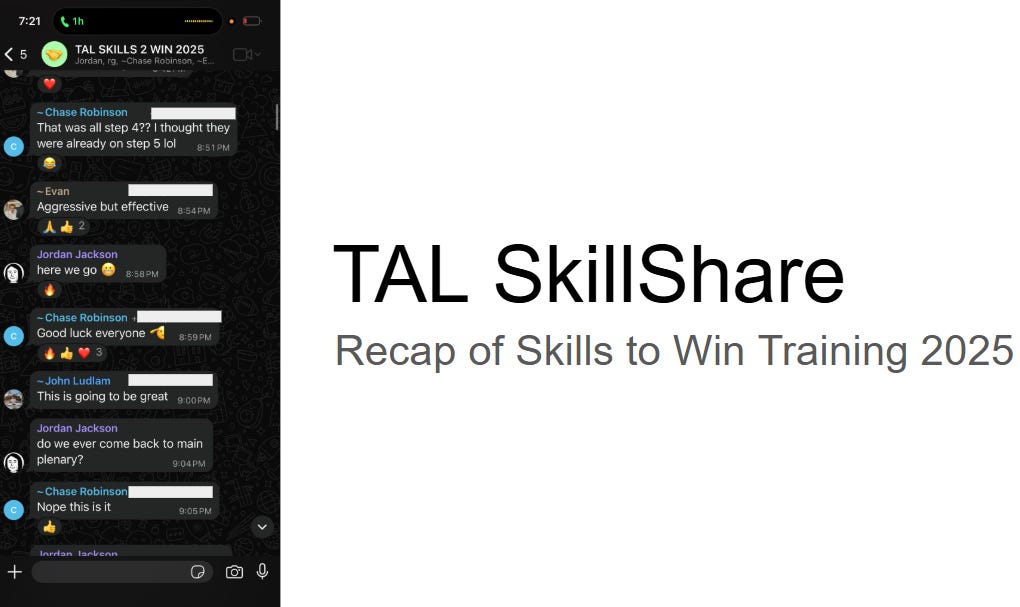
Skill-Share Workshop: Recap of 2025 Skills To Win Training - Thursday, February 12th @ 9:00pm EST (first item on the OC agenda). Join event via Discord here.
This training was awesome - come hear our TAL cohort’s key takeaways!
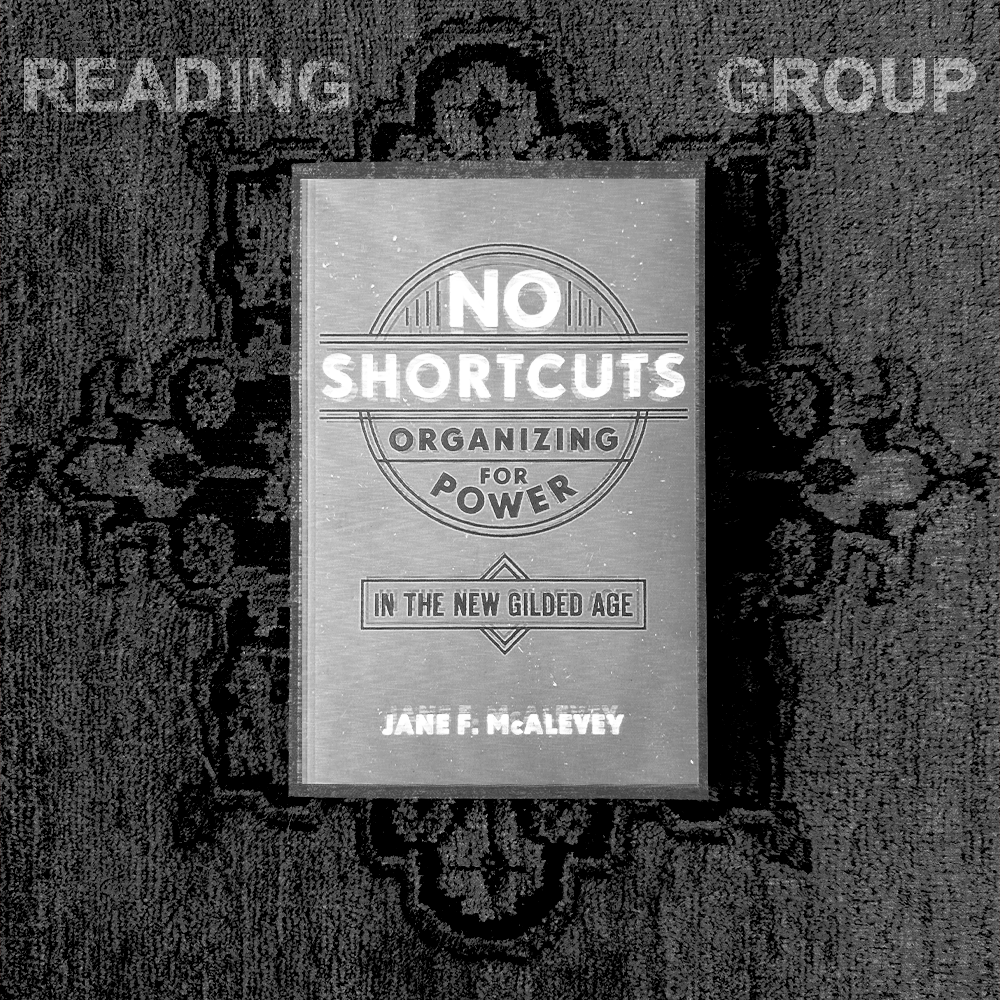
Reading & Discussing Together: No Shortcuts - Jane McAlevey - Starting Sat Feb 21 at 3pm EST Details here - Email info@architecture-lobby.org to signup.
A keystone piece of literature on structure based organizing methods. Level-up your reading with other workers thinking about and applying these methods.
Call for Members to Participate! 1:1 organizing conversations - Practice the fundamentals of workplace organizing conversations while supporting an emergent TAL project - Details here - Email info@architecture-lobby.org to signup – please put “structure-test organizing conversations” in the subject line.
Otherwise
Organizing 4 Power: Structure Tests - February 4th 8pm EST - Register Here for Track B (8pm EST zoom).
UC Berkeley Labor Center: Skills to Win Training 2026 - Learn More
Recruiting now for May Registration. Email info@architecture-lobby.org to sign-up – please put “Skills to Win Training 2026 Registration” in the subject line.
This training is fundamental and insanely applicable to multiple organizing contexts - be that your workplace, community or TAL. 2025 trainees think that if all TAL members went through this training, we’d build power and win our demands much more effectively!
Register for the Labor Notes Conference! June 12-14th - Registration is OPEN
Let’s rally a cross-national TAL membership cohort to attend this.
EWOC Fundamentals of Workplace Organizing - Sign Up
A great place to kick-start the skillsets that are critical to agitating for a union in your workplace.
USFWC Worker Cooperative Startup Webinar: Wednesday March 4th - Sign up
Yay worker ownership of means of production!
Direct Action & Mutual Aid:
Donate to anti-carceral de-arrest fund: Mid-West Immigration Bond Fund
Add Jobsite anti-ICE Worker Protections to Your Drawings and Specs: Resources from Arch League of NYC
What Are We Reading?
Workers in the TAL Green New Deal Working Group is currently reading and feeling inspired byDesigning a Post-Capitalist Practice by Ellen Garrett - Flatbush Workshop for Design (FWD) & Past Member of TAL Co-Op Working Group
What Design Can’t Do, Essays on Design and Disillusion by Silvio Lorusso
Welcome to ASK A WORKER - ! our new semi-regular column where built-environment workers can gripe, make an observation and/or ask questions about their workplace and working conditions.
Send your question, observation, gripe, or other snippet to info@architecturelobby.org
TAL worker-members will then formulate a collective response to publish in our newsletter for other workers to learn from and connect over. Just remember, this isn’t legal advice and we’re not lawyers! All advice column content remains anonymous.
Dear TAL,
I work in a medium sized office that has “on-call” contracts with state and municipal governments. With few exceptions they’re very small, low-key tenant improvements for different departments. Not great ‘design opportunities’, but my boss goes after them in the hopes of building relationships that may lead to larger public works projects.
A few weeks ago, my boss asked me to help with one of those jobs. Come to find out it was an office renovation for a city prosecutor office…
When I started my job, I told them that I didn’t want to work on prison, police, or criminal justice projects. They were on board with that, but didn’t blink an eye when asking me to work on a prosecutor’s office. Now, I’m trying to figure out how to remind, expand and clarify the boundary I set early on. I don’t want to be seen as a complainer, but I also don’t want to compromise my values. Help?
Sincerely,
Are all architects bastards?
Dear Are All Architects Bastards?,
I have a hard time imagining a more timely question as we watch law enforcement agencies (ICE, CBP, Police) perpetrate state violence with impunity across the country, murder peaceful protesters in cold blood, and actively lie to the public in an attempt to justify summary executions.
Current actions by ICE, CBP, and the Department of Justice have brought the connection between prosecutors and law enforcement into even more stark relief, especially as the DoJ gathers evidence with the intent of charging Renee Good’s wife Becca with obstruction (over which six federal prosecutors quit their jobs). Or while the Republican block of the Arizona state legislature attempts to broaden the state’s definition of ‘obstruction’ in order to make it easier to charge and convict peaceful protesters. It’s not much of a jump to understand where prosecutors fit and why they should be included in any call to use labor power to dismantle our broken and violent criminal justice system.
Talking to your boss early about your boundaries (as you did) is always a good place to start.
I understand the immediate response being a desire to have a private meeting with your boss in order to clarify the boundary you set previously. Just know that it can be challenging (and risky) to have conversations like this without specific language in your employment contract or a union contract. You’re really stuck because this kind of negotiation relies on your personal relationship with them. Any response is always discretionary and you basically have no legal protection if they decide negotiating with you about the latest on-call job isn’t worth their time. As at-will employees, we’re basically expendable. Your boss may be thinking, does dealing with this inconvenience outweigh my ‘investment’ in this employee? If the answer is yes, you’re at risk.
The more strategic option is to start talking to trusted co-workers that also want to avoid this type of work, or co-workers with other workplace issues. Once you start talking with co-workers about working conditions it’s more likely that any actions taken (work stoppage, office petition, etc) will be protected as what the National Labor Relations Act (NLRA) considers concerted activity. Asking collectively (even as a proto-union) is always going to provide more protection than asking as an individual and putting a target on your back.
Now, the NLRA’s not perfect. At the same time that it enshrines the right to participate in concerted activity, mutual aid, and protection, it also protects “industry” from being over-burdened or having “commerce obstructed”. It goes so far as to say “The elimination of such practices [strikes] is a necessary condition to the assurance of the rights herein guaranteed”. Nevertheless, when a group of workers gathers to discuss working conditions, pay, hours, safety, etc., they’re legally protected from employer retaliation (in theory). This is less-so the case for ideological or values-based demands (aside from some religious accommodations). If the legal protection is important to you and your co-workers, the real trick is translating this ostensibly ideological demand into one that’s directly related to wages, working hours, and workplace safety. If you and your coworkers were to organize for a union with a contract, you also could negotiate something like this boundary into your contract as a form of “common good bargaining”. Alternatively, maybe you and your co-workers realize you’re all angry enough about having to provide design services to violent state institutions that you opt-in to a walk-out regardless! That’d be amazing, it’s just that it’s a decision that only you and your coworkers can make based on your assessment and tolerance of the risk involved.
Take a look at this helpful one-pager from the Emergency Workplace Organizing Committee for more information on concerted activity. Doing anything like this with a group of co-workers can be hugely helpful. Not only because it could lead to making serious gains in your workplace, but also because it’ll become apparent you’re not alone in struggling with such issues.
I know some of this is beyond the scope of your question. I’m saying it to convince myself as much as anything else because the idea that ‘talking with your co-workers’ about working conditions in the face of state sanctioned murder and cover up sometimes may not immediately offer the catharsis your internal rage desires. It probably won’t immediately assuage any doomscroll, AI-induced guilt-stream you’re being subjected to on social media either. And it doesn’t need to. There are countless ways to support the current confrontation with state violence right now outside your day job as an architect. Donate money to immigrant support groups both in Minneapolis and in your own city, find groups that are actively monitoring ICE and figure out how you can support, and of course, organize your workplace. Organized labor can have an outsized impact on the state’s capacity to commit violence! Any attempt to participate in concerted activity will necessitate relationships with deeper roots than those based simply on design prestige and document execution. It’ll kill the Architect in your head and make room for the worker, neighbor, and friend.
Sincerely,
TAL
No posts
Comments
Nothing yet. Say the first thing.
Sign in to join the conversation.