
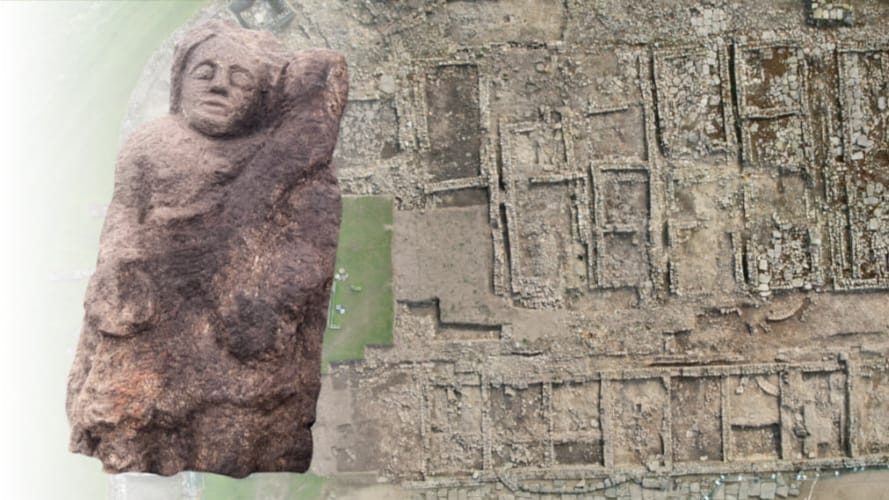
A Roman stone sculpture of a protective deity carved over 1,600 years ago has been discovered underneath a barrack floor in Vindolanda, a fort located near Hadrian’s Wall.
The sculpture was unearthed by Dr Andrew Birley during the excavation of a Roman army barracks dating to the 4th century AD.
Likely originally part of a domestic shrine, or lararium, it is thought that the carved figure is a Genius, a guardian spirit that protected the household (or barracks community). In one of its hands, the figure holds a cornucopia that symbolises prosperity and, particularly, the abundance of produce, while in the other it has a patera, a dish used in divine offerings.
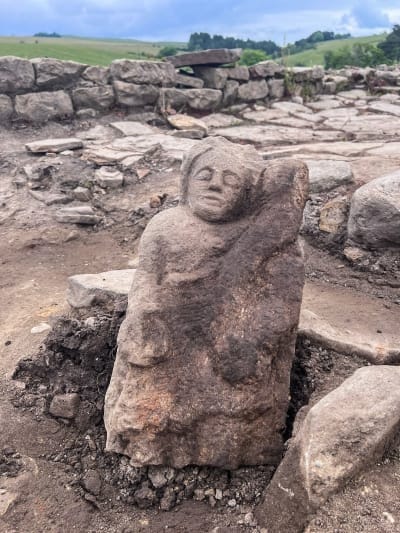
The style of the carving, and most notably the eyes and other facial features, suggest it was produced by a local sculptor blending British and Roman influences.
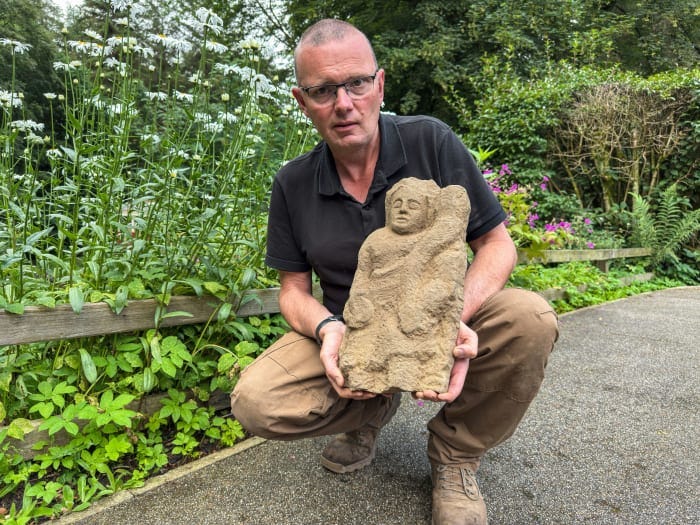
Dr Birley, Vindolanda’s Director of Excavations and the grandson of Professor Eric Birley, who began investigations at the site in the 1930s, said:
‘I have been fortunate enough to have worked at the site for many years and made some wonderful discoveries along the way, but I was completely unprepared for what I found on the other side of this stone. It was an extraordinary moment, one that we were able to share with the team of archaeologists and volunteers whose hard work makes discoveries like this possible.
‘My first thought was simply, ‘Who on earth am I looking at?’ Thankfully, Hadrian’s Wall is home to an incredible community of generous and knowledgeable scholars. After sending photographs to Lindsay Allason-Jones, Dr Fraser Hunter and Alex Rome-Griffin, the unanimous response came back within hours: we had uncovered a previously unknown relief of a Genius – the protective spirit of a place.’
The sculpture will now be conserved and studied before going on display at the Vindolanda Museum.
Vindolanda Charitable Trust: Hidden Roman Guardian Emerges After 1,600 Years in Remarkable Vindolanda Discovery

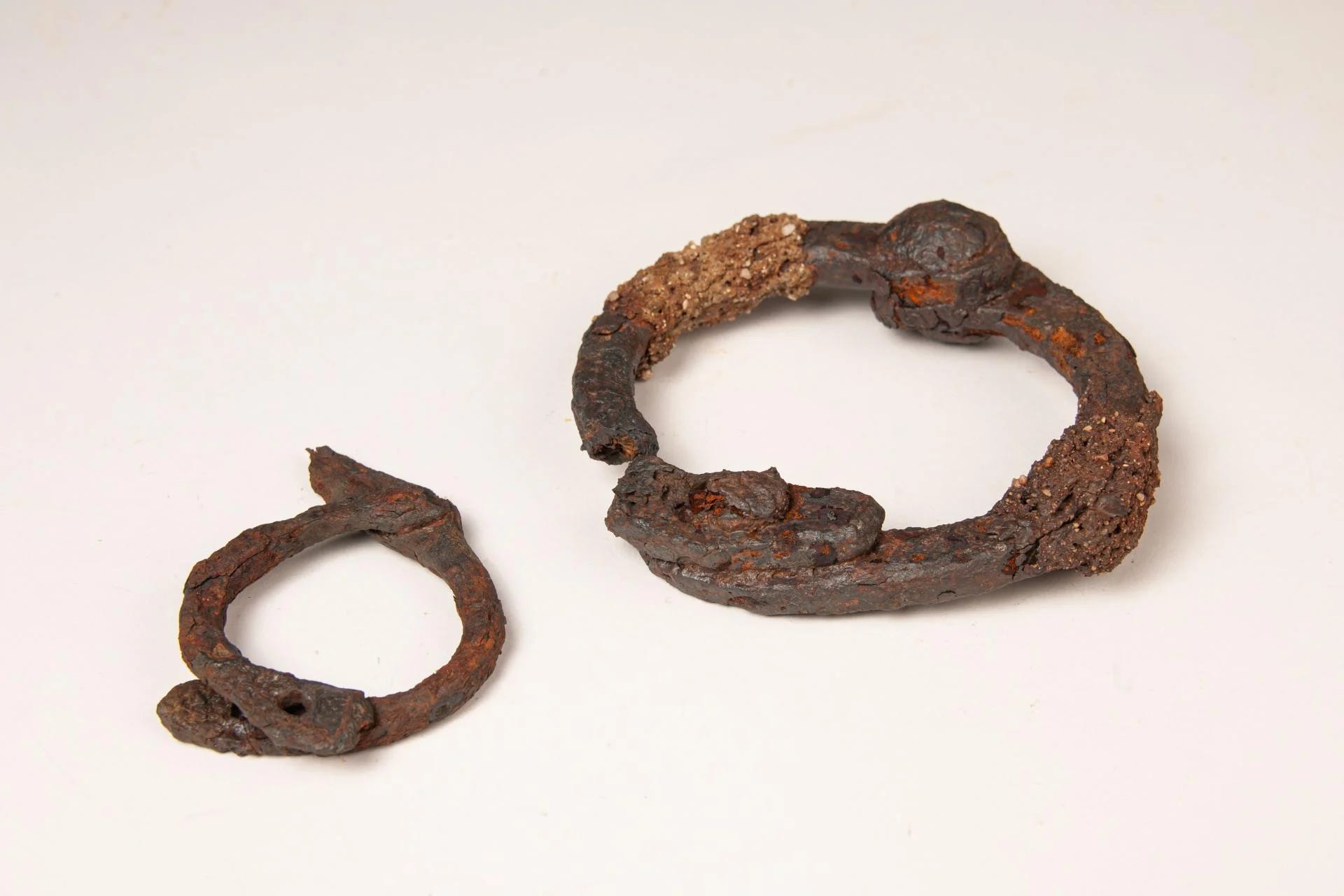
A large ‘productive settlement’ and religious complex at Allonnes la Gauloise in France has produced an array of metal objects, including shackles for human slaves.
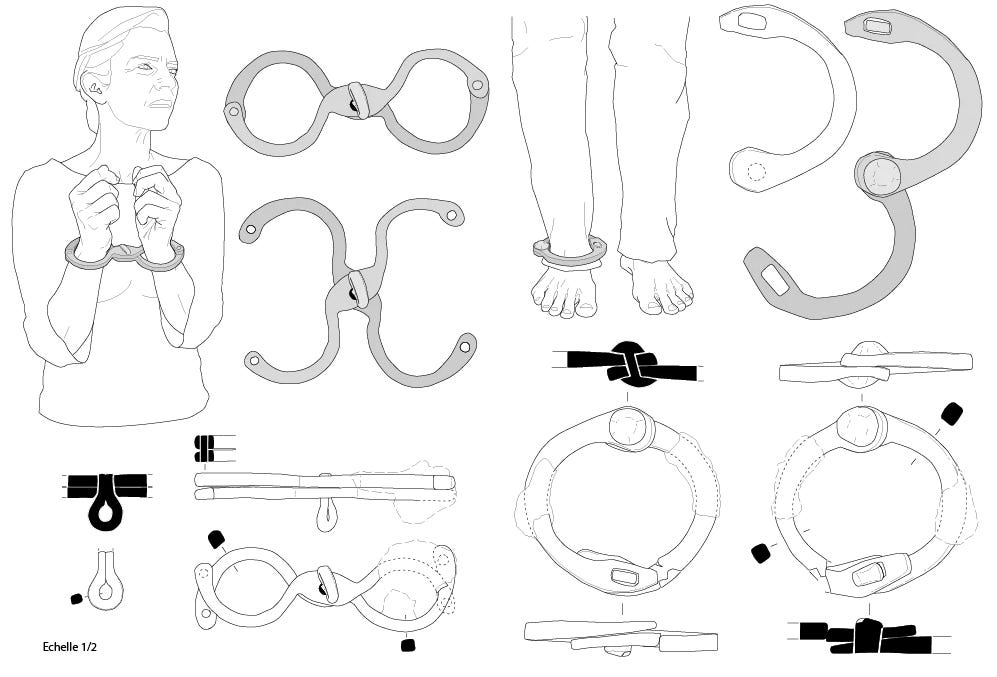
Most notably, perhaps, was the exceptionally rare discovery of five well-preserved iron shackles used to bind human wrists and ankles, with the concentration of these finds indicating that trading of slaves was part of the commercial offering of Allonnes.
The small diameter of the heavy restraints from Allonnes suggests that the shackles were used on women or children.
While the finding of slave shackles is known in the ancient and early medieval sphere, it is entirely possible, if not probable, that most slaves were bound with organic materials that rarely survive.
Those made from base metal, such as the five iron examples from Allonnes, would also likely decay over time, meaning that contemporary historical references to regular or even mass slave-taking and slave-trading in past societies often lack archaeological proof, hence the critical importance of this discovery.
Beyond the shackles, archaeologists have found much evidence for metalworking at the site, with a large volume of tools, semi-finished metalwork products, scrap metal, and slag from furnaces amidst likely traces of workshop or shop structures.
Offerings to the Gods
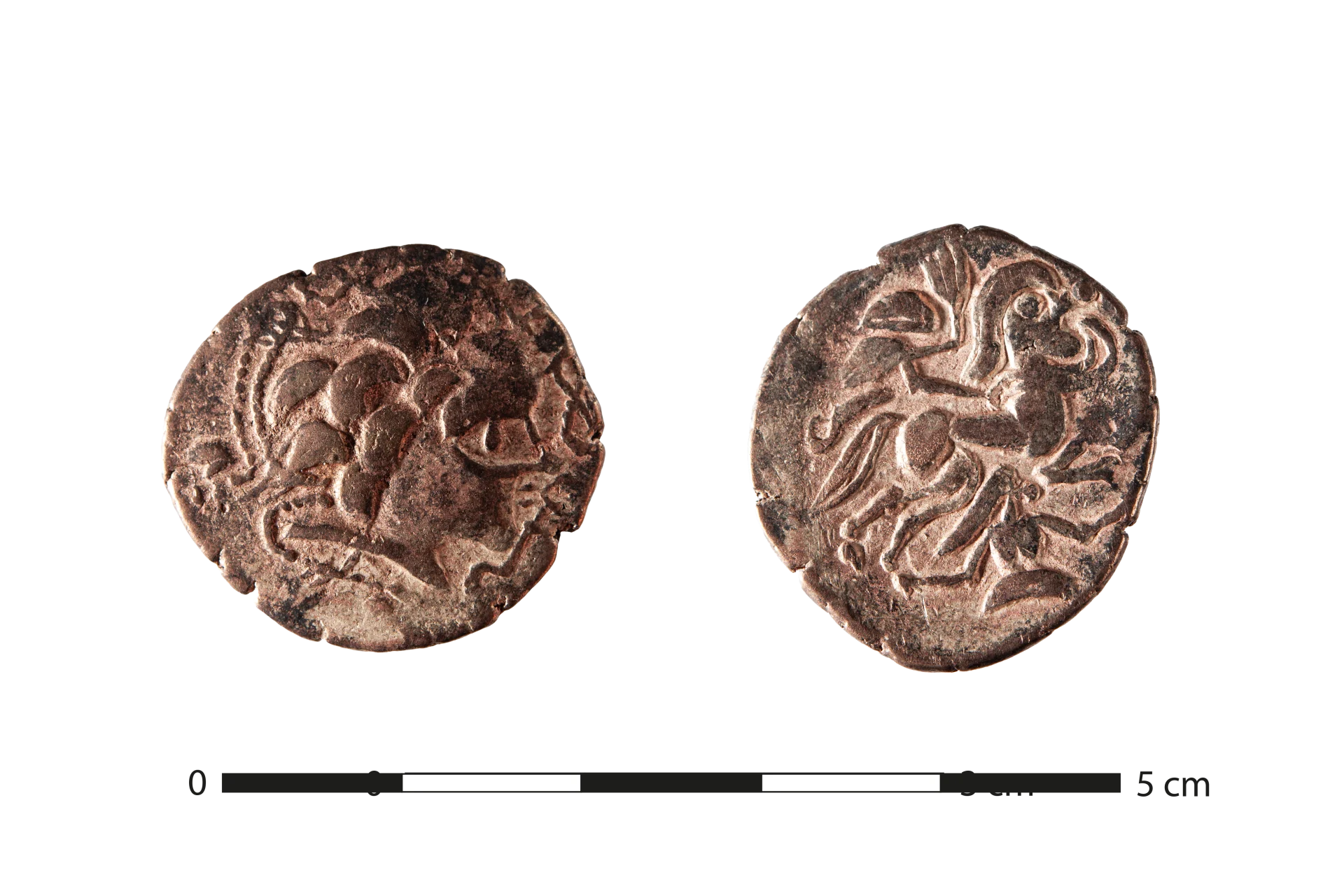
Alongside the presumed commercial activity and slave market at Allonnes is a major and long-lived sanctuary that was used for almost 800 years, with its lifespan continuing after the Roman conquest of the area and the ultimate abandonment of the workshops and market.
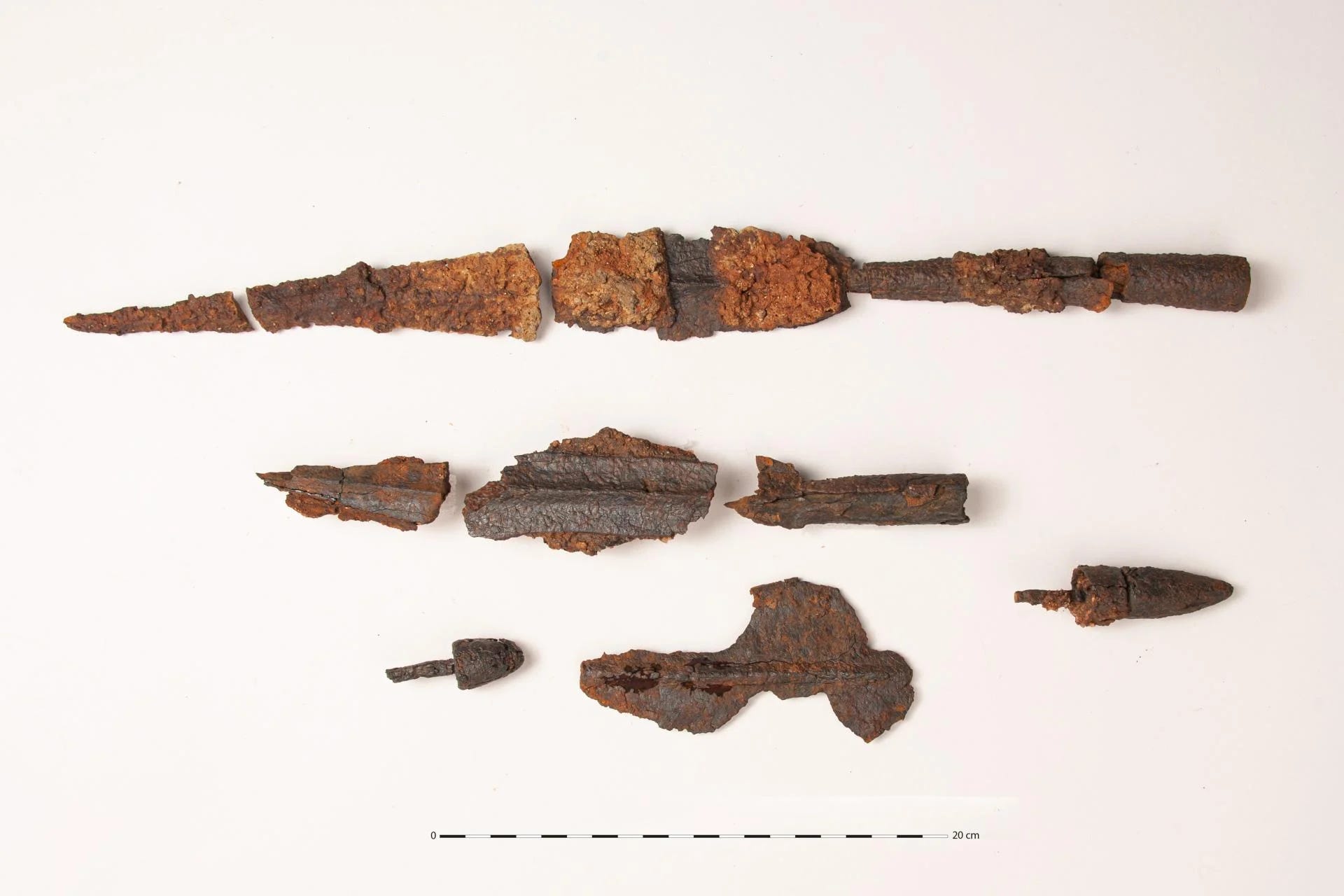
Weapons of all forms and at least five centuries of Gallic and Roman coins were deposited as offerings, as well as items of metal jewellery, keys, and horse fittings.
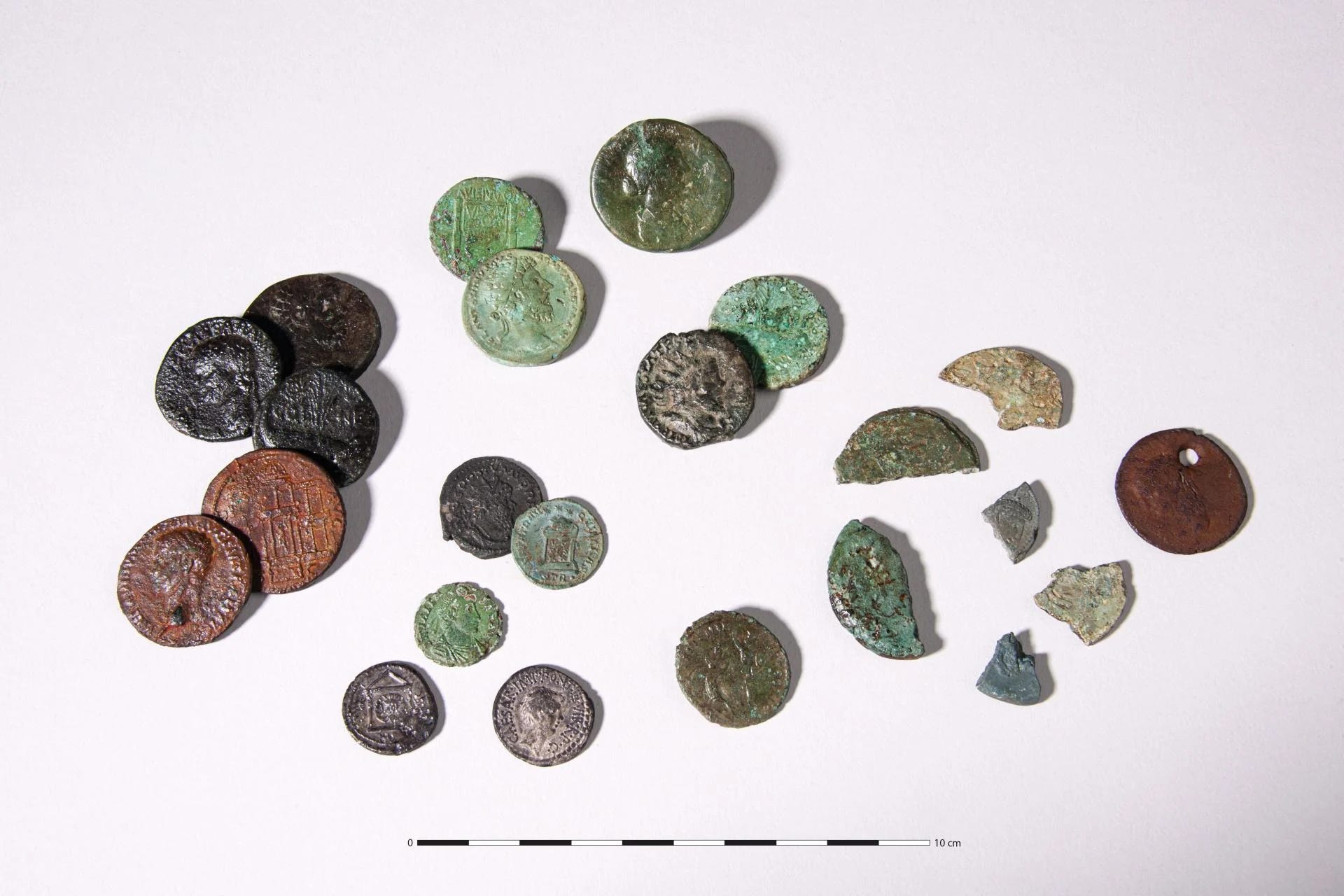
Many were deliberately hacked or otherwise ritually ‘killed’ as part of the act, transforming them from functional, profane pieces to gifts for the divine.
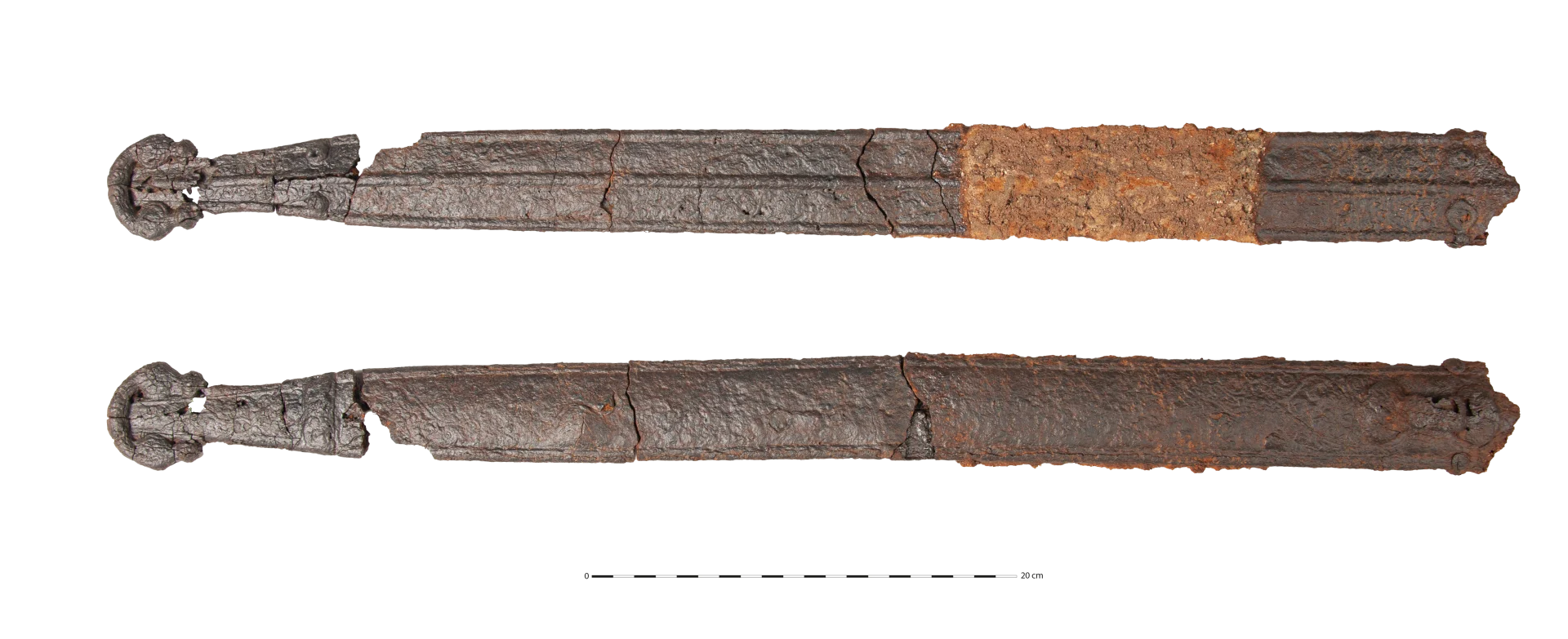
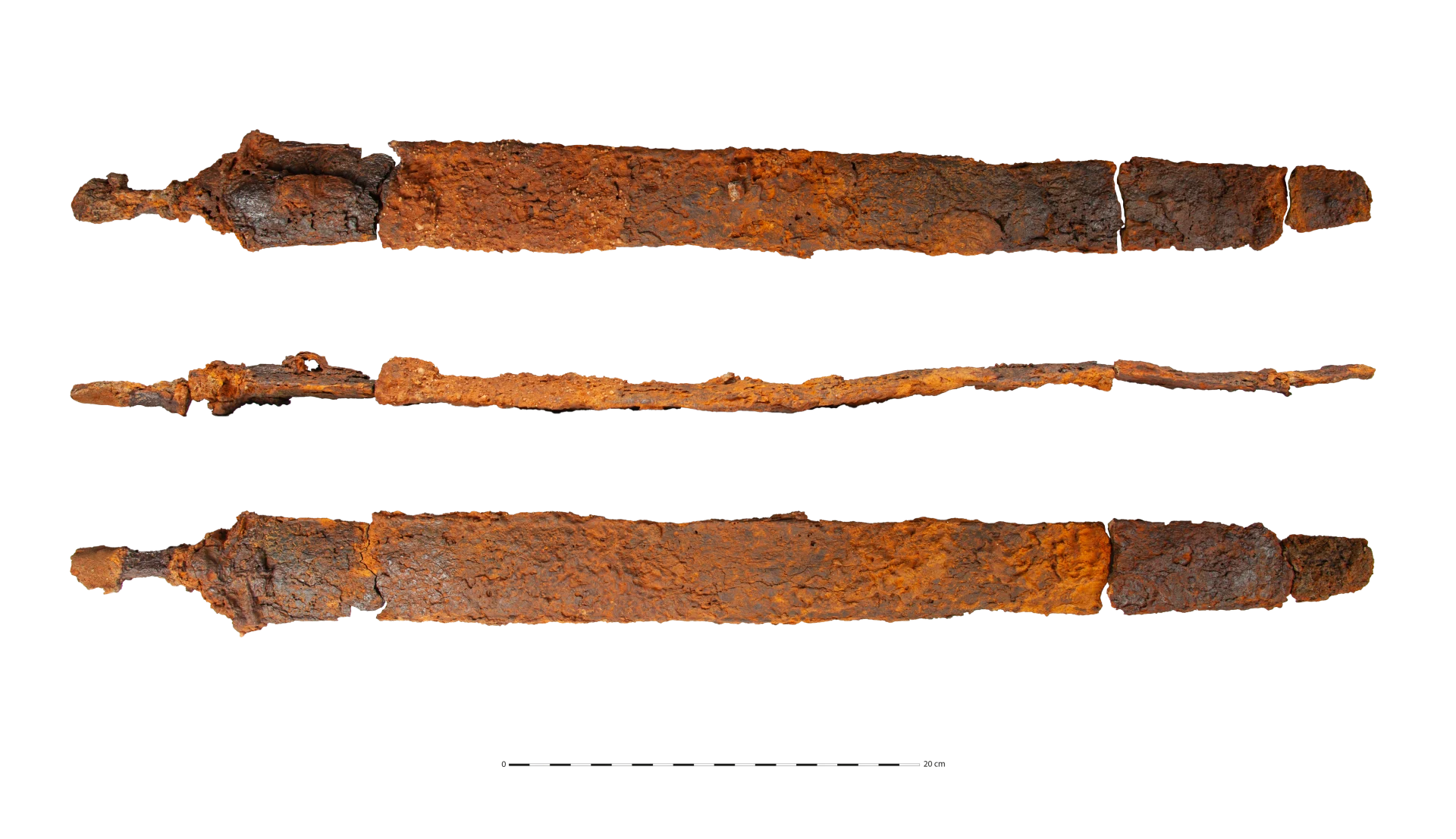
A selection of the finds was put on public display for the 2026 European Archaeology Days by Inrap, the French National Institute for Preventive Archaeological Research.
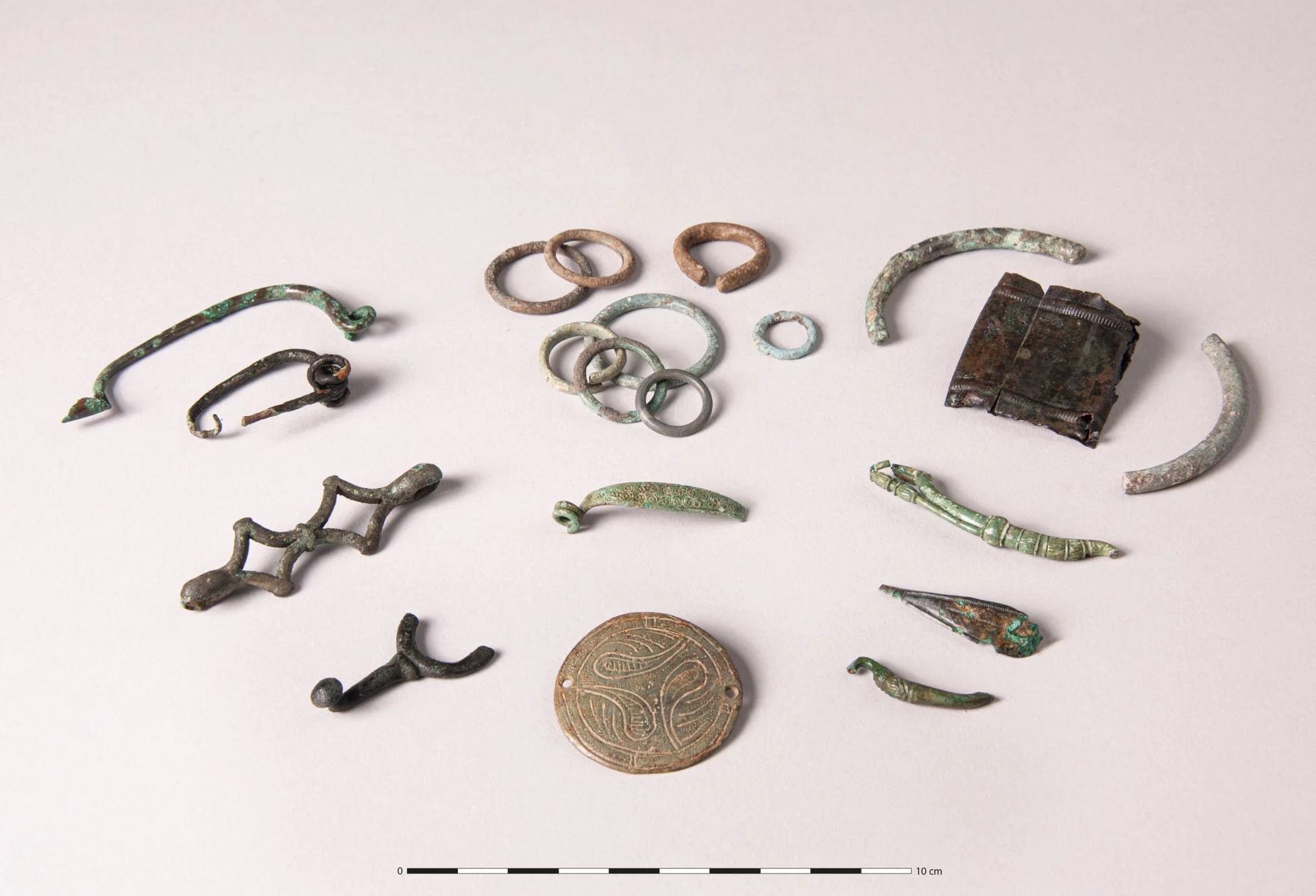
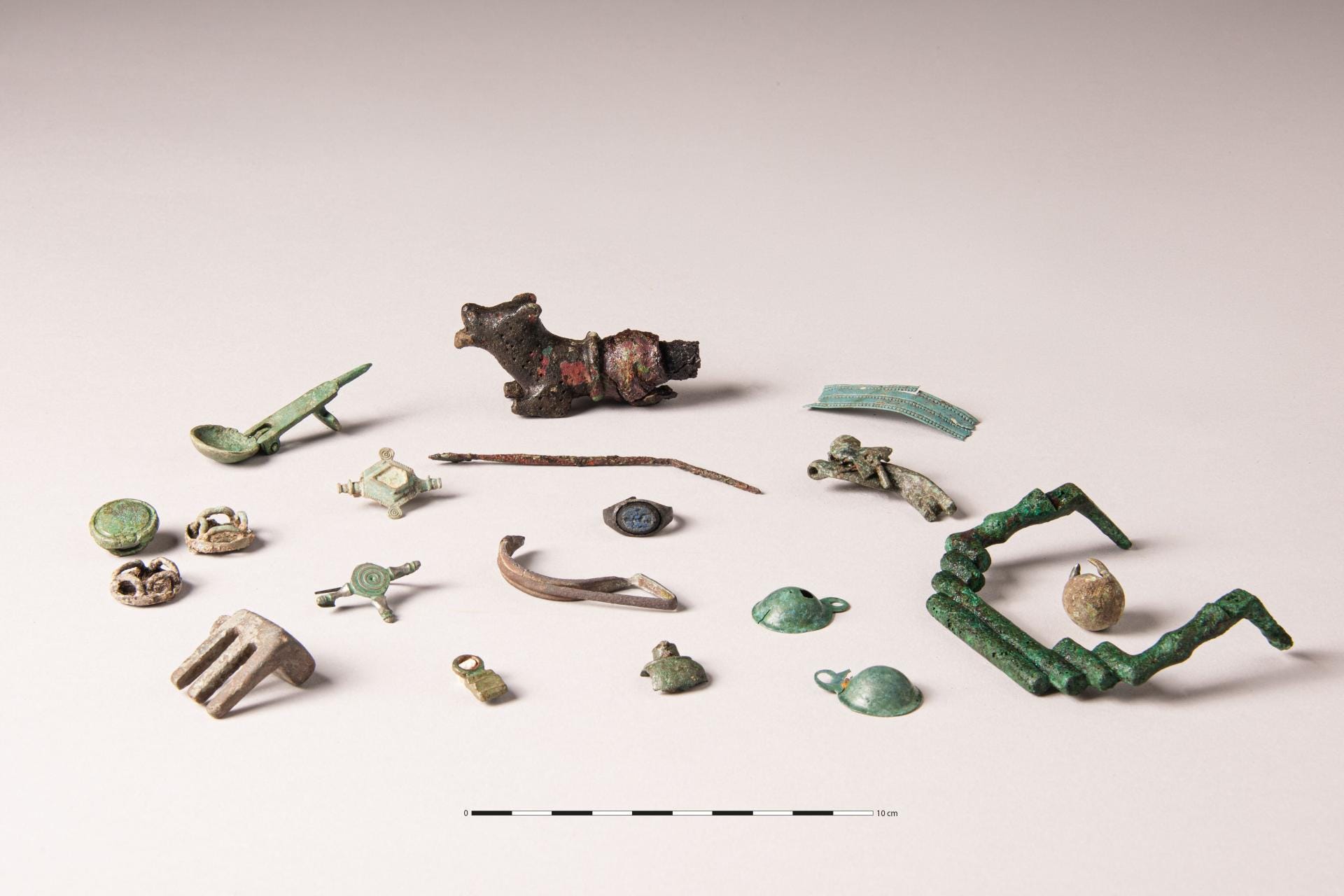
Inrap: Le riche mobilier métallique d’Allonnes la Gauloise (Maine-et-Loire)

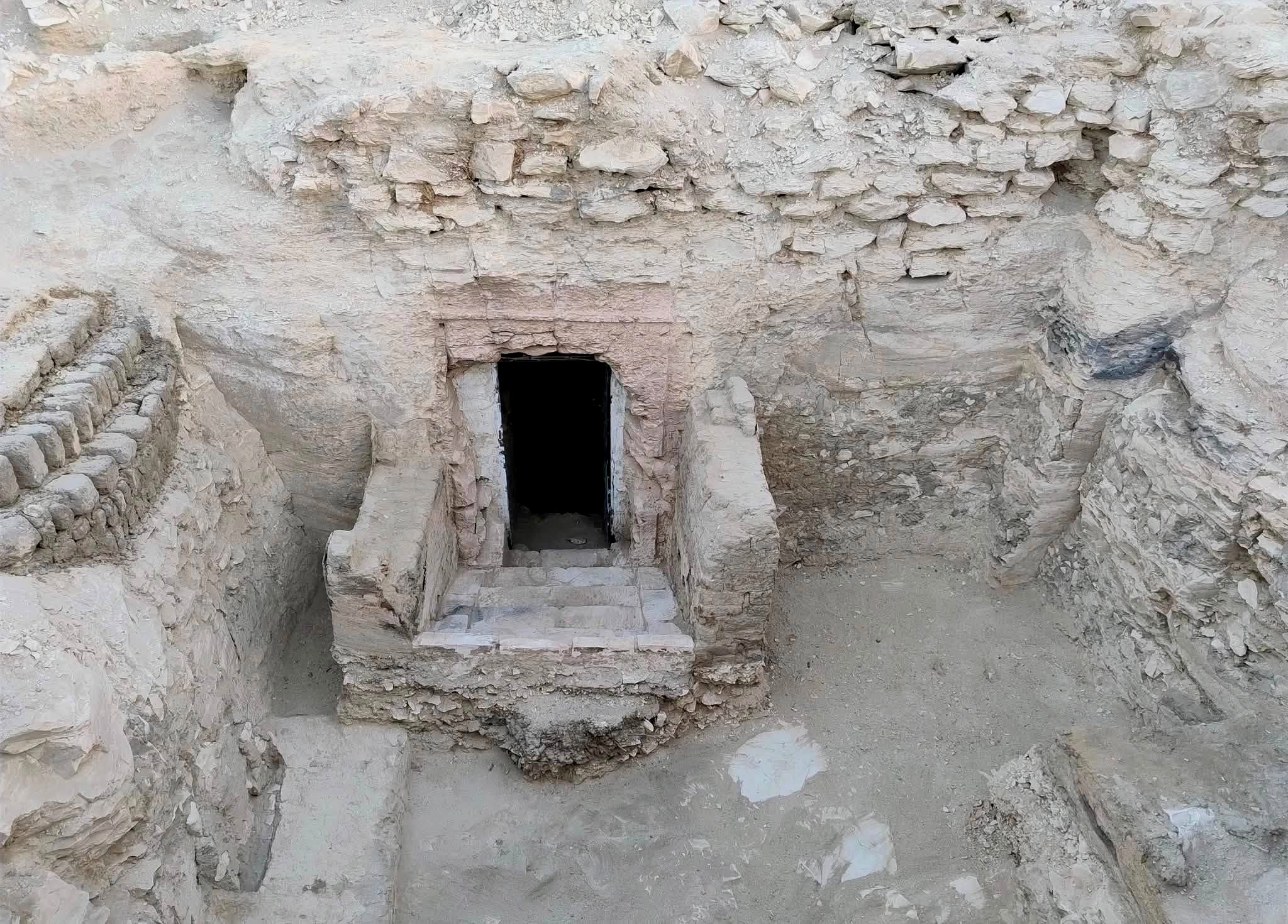
A previously unknown 3,000-year-old tomb has been unearthed in Luxor, Egypt.
The structure is situated in the Sheikh Abd el-Qurna necropolis, to the east of the so-called Theban Tomb No. 45, where the team from Leiden University led by Dr Carina van den Hoeven has been excavating since 2018.
Inscriptions in the tomb, seemingly dating to the Ramesside era (c. 1292-1069 BC) within the New Kingdom period, have revealed that it was the burial place of a high-status person with the name Paser.
The tomb itself, accessed by a staircase and ramps, consists of an external courtyard directly outside an inverted T-shaped rock-cut chamber above lower burial vaults. The courtyard has a mud-brick niche thought to have once contained a funerary plaque.
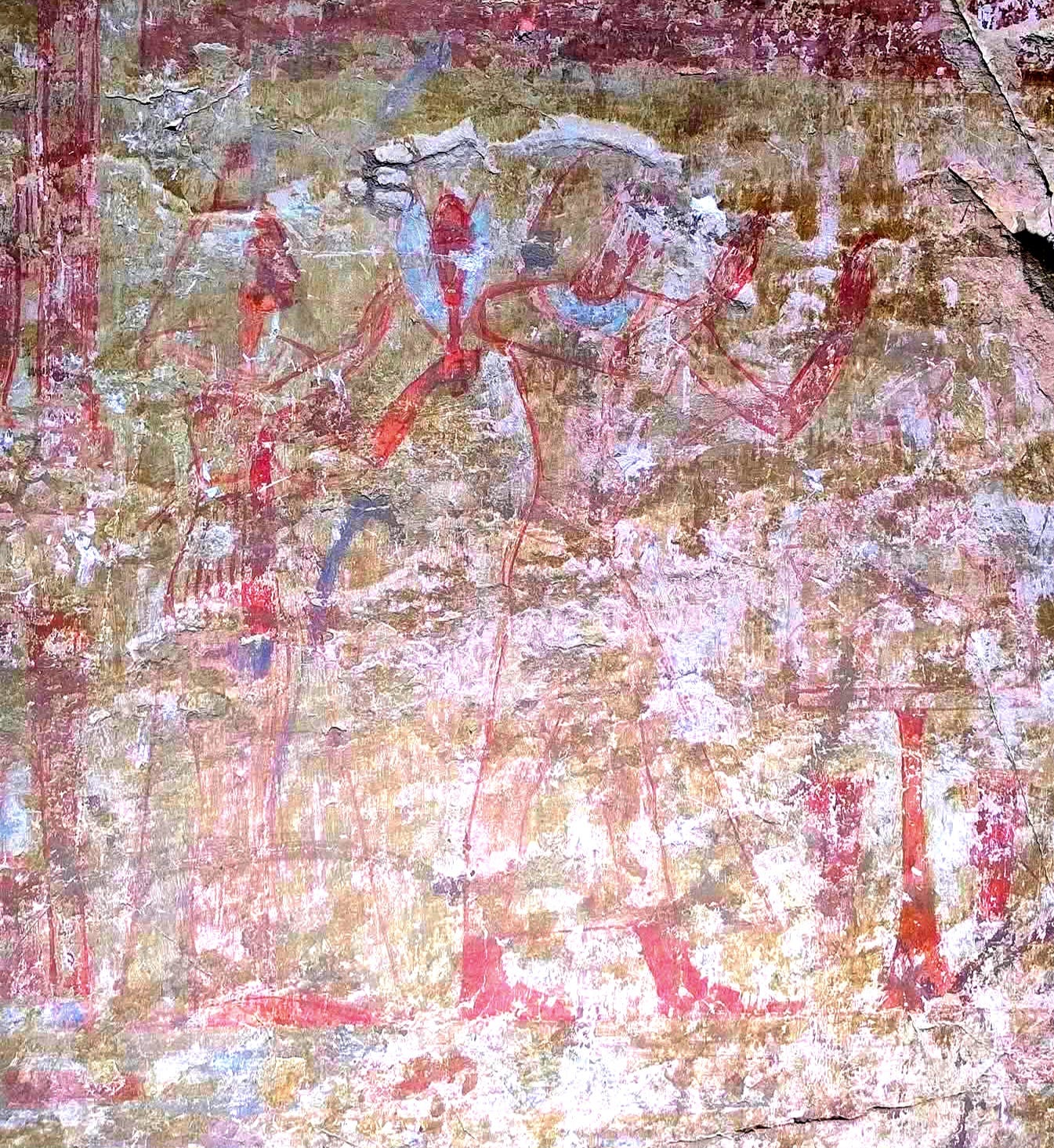
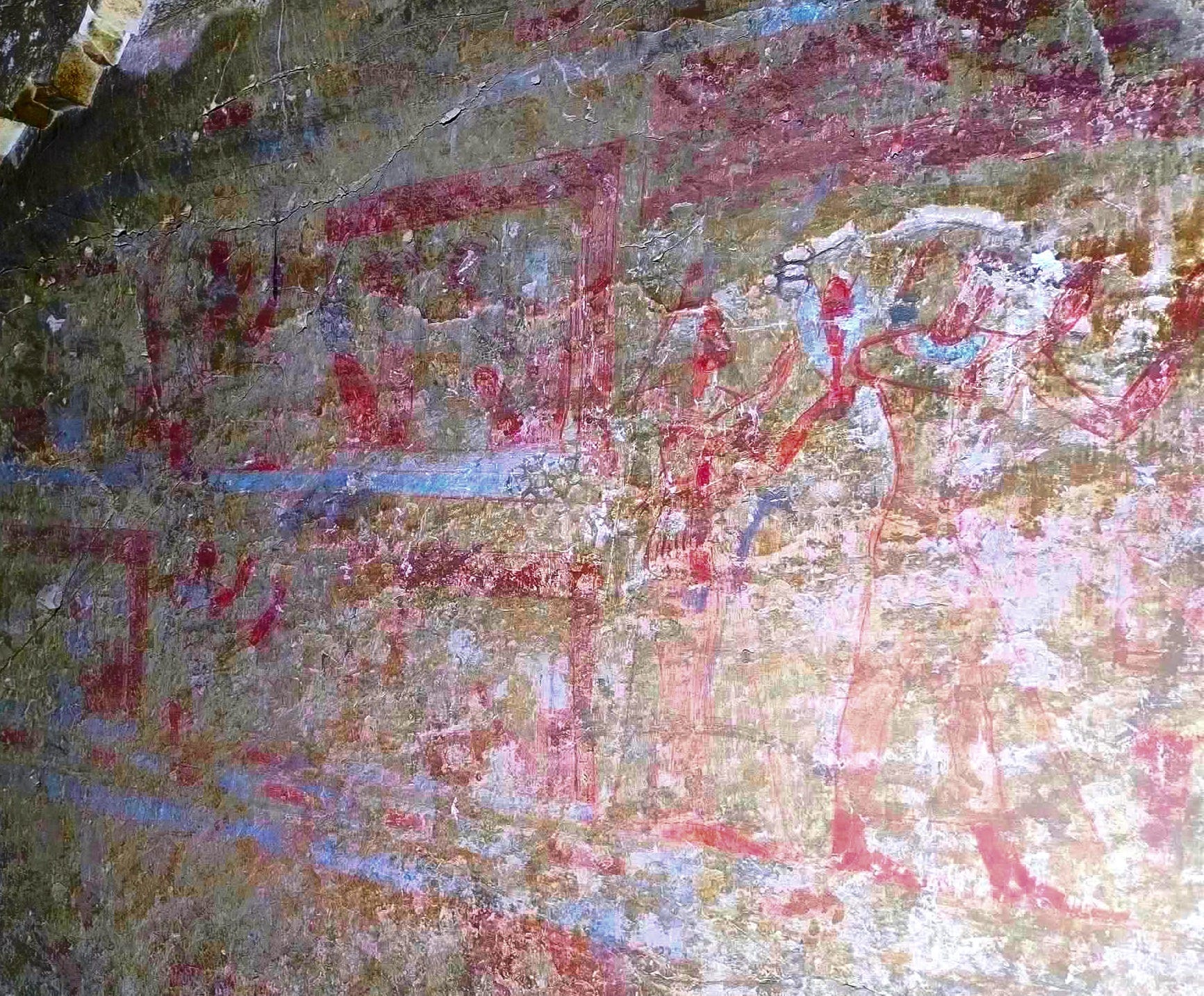
The interior contains several multicoloured murals that depict the deceased in various scenes, including his worshipping of deities inside shrines and a rendering of Paser with his wife next to a table of offerings to the gods.
Dr van den Hoeven’s team will continue to work at and conserve the site.
Ministry of Tourism and Antiquities: Facebook
CBS: Archaeologists uncover 3,000-year-old tomb near Egypt’s Luxor
Heritage Daily: New discovery at Sheikh Abd el-Qurna reveals tomb of Ancient Egyptian official

YouTube

It's the question every archaeologist gets asked all the time: "What's the best thing you've ever found?" Today, Giselle reveals some of her favourite archaeological discoveries that she's gotten to keep at home. From a neolithic hand axe to 10,000 year old hazelnuts, take a look at Giselle's fascinating treasure trove of finds!
Excitingly, we're also launching a membership for the channel! You can become a certified Dirt Nerd and watch Giselle's other favourite finds by becoming a channel member here.


Comments
Nothing yet. Say the first thing.
Sign in to join the conversation.